

Vintro II En Blanka Robo
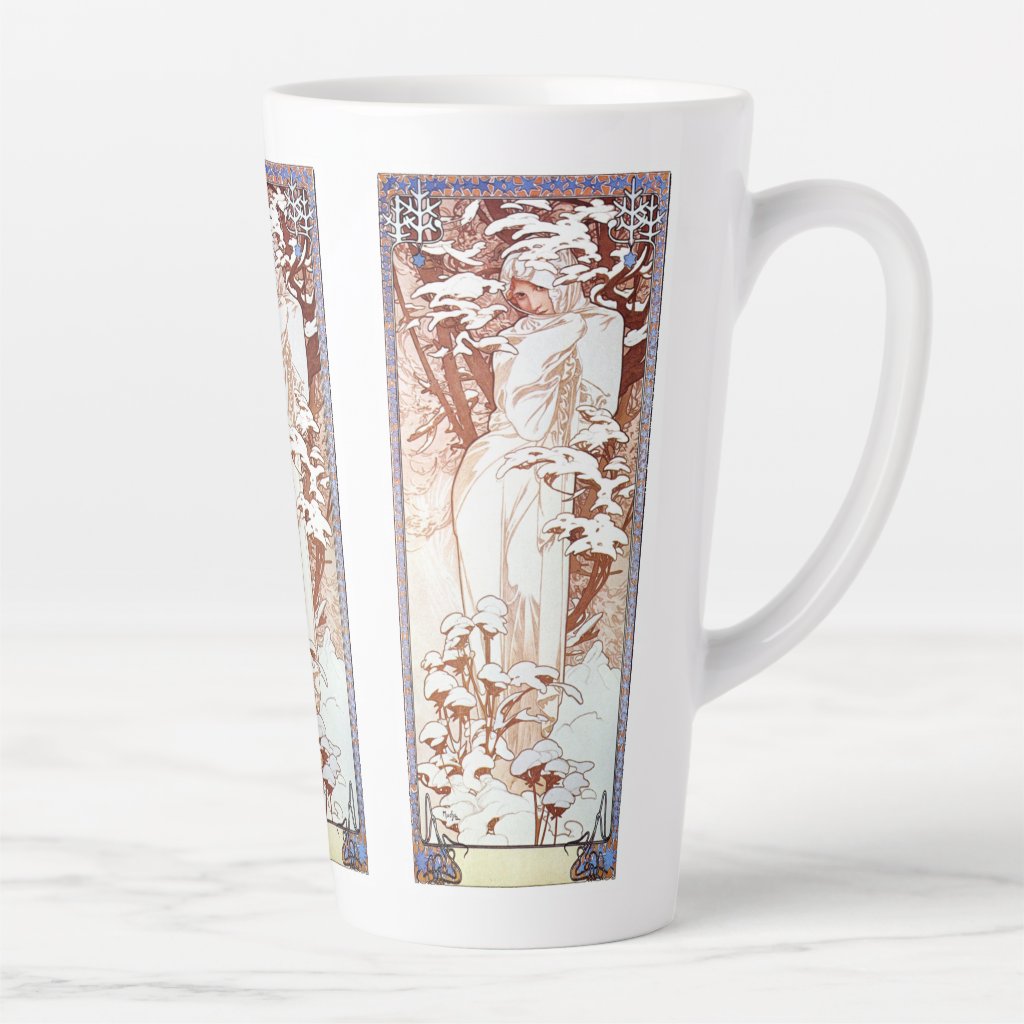
“Vintro II En Blanka Robo” estas fama peco kreita de Alphonse Maria Mucha en la jaro 1899. Mucha (1860 – 1939) estis famkonata ĉeĥa artisto konata pro sia karakteriza stilo kiu ekzempligis la Secesio-movadon, kiu prosperis dum la malfruaj 19-a kaj fruaj 20-a jarcentoj. Ĉi tiu arto estas ĉefa ekzemplo de lia kapablo kunfandi komplikan dezajnon kun simbola reprezentado, kaptante la esencon de la ŝanĝiĝantaj sezonoj elstarigante la elegantecon de siaj inaj temoj. La peco ilustras la personigon de vintro, unu el serioj de kvar laŭsezonaj reprezentantaroj, kie la artisto emfazas la belecon kaj la aŭsteran elegantecon de la malvarma sezono.
Enhavtabelo
Temo kaj Komponado
En la koro de “Vintro II En Blanka Robo” kuŝas serena virino, figuro enkarniganta la esencon de vintro. La virino estas drapirita en fluanta blanka robo, vesto, kiu spegulas la purecon kaj malvarmon de la vintra neĝo. Ŝi staras inter kadro de komplikaj organikaj formoj, ŝia serena esprimo radianta trankvilan trankvilon kiu estas karakteriza por la portretado de Mucha de virinoj en naturo.. Ŝia rigardo estas mola, direktita iomete supren, sugestante kontempladon aŭ la meditan kvaliton ofte asociitan kun la vintraj monatoj.
La trajtoj de la figuro estas delikataj kaj idealigitaj, tamen fortaj en ilia simpleco. Ŝia korpo estas iomete turnita, akcentante la graciajn kurbojn de sia figuro dum ŝi staras halta inter la milde falantaj neĝeroj kaj molaj;, kurbaj linioj de frostigitaj arboj kaj plantoj. La arboj en la fono ŝajnas nudaj, iliaj branĉoj pezaj de neĝo, kontribuante al la kvieto de la sezono. Ĉi tiuj organikaj motivoj - branĉoj, neĝeroj, kaj floroj-fluo tra la komponado, kreante harmonian ekvilibron inter la figuro kaj la natura mondo.
La blanka robo de la virino estas ŝlosila fokuso de la peco, la ŝtofo fluanta libere, ĝiaj faldoj ondiĝantaj en la vento. La robo ne nur aldonas ŝian eteran kvaliton, sed ankaŭ simbolas la purecon kaj freŝecon de vintro. La delikata naturo de la vesto kontrastas kun la severeco de la medio, emfazante ŝian rilaton kun la sezono, unu de trankvilo sed ankaŭ de forto. Neĝeroj flosas delikate ĉirkaŭ ŝi, plue akcentante ŝian ligon kun la vintra beleco kaj trankvila forto.
Objektoj kaj Tereno
The background of the piece is a mixture of pale brown and soft ivory tones, with elements that suggest the barren landscapes of winter. The barren trees stand as silhouettes, their limbs reaching out as if in silent reverence to the figure they surround. The snow rests gently upon the branches, creating a dreamlike effect where the figure and her environment seem to merge into one unified whole.
The ground surrounding the figure is covered in snow, the white powder softening the lines of the terrain. Scattered around the base of the figure are plants and flowers, many of which are also covered in snow, their forms slightly obscured but still visible beneath the ice. The natural world in Mucha’s work always appears symbolic, with each element carefully chosen to complement the overarching theme. Jen, the presence of snow-covered flowers suggests a delicate beauty that thrives even in the harshest of conditions, mirroring the character of the woman herself—graceful, strong, and resilient in the face of adversity.
Stilo kaj Temoj
“Vintro II En Blanka Robo” is a quintessential example of Mucha’s Art Nouveau style. The flowing lines, intricate detailing, and the use of soft, muted color tones are all hallmarks of the movement, which sought to break away from the rigid, industrial forms of the 19th century. The figures in Mucha’s works are often depicted in an almost ethereal manner, suspended between the natural and supernatural worlds, kaj ĉi tiu peco ne estas escepto.
The central theme of the work is the representation of winter, not merely as a season but as a personified force of nature. Mucha imbues the figure with qualities that elevate her beyond mere representation—she becomes a symbol of winter’s elegance, its quiet strength, and its endurance. This symbolic approach to the seasons reflects the broader trend in Art Nouveau to revere and elevate nature and natural beauty, as well as the organic connection between human beings and the world around them.
Mucha’s careful attention to detail is evident in every aspect of the painting, from the fine line work in the border to the delicate rendering of the snowflakes. His treatment of the subject is also deeply romantic, capturing the intersection of beauty, Naturo, and femininity. The color palette—mostly soft, muted earth tones with splashes of blue and white—adds to the sense of quietude and reflection, inviting the viewer to contemplate the beauty of the season and the woman’s tranquil connection to it.
The mood of the artwork is one of stillness and introspection. La figuro, though portrayed in a flowing gown, does not appear to be caught in a moment of motion. Anstataŭe, she seems to be standing still, lost in thought as snow gently falls around her. This serene quietness is the essence of winter itself, where time seems to slow down, and the world is blanketed in calm.
Materialoj kaj teknikoj
Mucha’s use of lithography was key in producing the vibrancy and detail in this work. His technical mastery allowed him to create fine lines and delicate patterns that are a trademark of his style. The artwork’s detailed border, featuring stylized snowflakes and geometric designs, frames the central image, drawing the viewer’s eye toward the figure while providing an intricate context that enhances the overall composition. The muted color palette, dominated by soft browns, eburo, and touches of blue, reflects the wintry landscape and adds to the piece’s tranquil, serene mood.
The snowflakes are meticulously rendered, each one unique and carefully placed, underscoring Mucha’s dedication to natural detail and symbolism. The overall balance between the figure, the natural environment, and the borders suggests a harmonious unity between humanity and nature—a recurring theme in Mucha’s work.
Konkludo
“Vintro II En Blanka Robo” by Alphonse Maria Mucha is a stunning embodiment of the Art Nouveau movement, blending the grace of the female form with the beauty of nature. Through his use of intricate details, fluantaj linioj, and a soft color palette, Mucha captures the quiet majesty of winter while elevating it to a realm of symbolic elegance. This piece serves not only as a visual representation of the season but also as a meditation on the natural world’s beauty, forto, and delicate endurance.
Artisto Bio
Informoj Malsupre De Vikipedio.org
Alfons Maria Mucha Julio 24, 1860 – julio 14, 1939), estis konata internacie kiel Alphonse Mucha. Li estis eminenta ĉeĥa pentristo, ilustristo kaj grafikisto, vivante en Parizo dum la Secesio-periodo, kaj estas plej konata pro siaj klare stiligitaj kaj dekoraciaj teatraj afiŝoj, precipe tiuj de Sarah Bernhardt.
Li produktis ilustraĵojn, reklamoj, ornamaj paneloj, kaj dezajnoj, kiu iĝis inter la plej konataj bildoj de la periodo.
En la dua parto de lia kariero, en la aĝo de 43, li revenis al sia patrujo de Bohemia-Moravia regiono en Aŭstrio kaj dediĉis sin al pentrado de serio de dudek monumentaj kanvasoj konataj kiel La Slava Epopeo., prezentante la historion de ĉiuj slavaj popoloj de la mondo, kiujn li pentris inter 1912 kaj 1926.
En 1928, en la 10-a datreveno de la sendependiĝo de Ĉeĥoslovakio, li prezentis la serion al la ĉeĥa nacio. Li konsideris ĝin lia plej grava verko. Ĝi nun estas elmontrita en Prago.
Ĉi tiu cifereca arta kreaĵo, kiel kun ĉiuj artaĵoj, kiuj troveblas en la retejo de Xzendor7, estas aĉetebla interrete en diversaj materialaj formatoj inkluzive de kanvasaj presaĵoj., akrilaj presaĵoj, metalaj presaĵoj, lignaj presaĵoj, enkadrigitaj presaĵoj, afiŝoj, kaj kiel rulitaj kanvasaj presaĵoj en diversaj grandecoj de 12 colojn al 72 coloj depende de la grandeco de la reala artaĵo kaj la presaĵo laŭpeta butiko, de kiu vi elektas aĉeti la arton.
La artaĵo ankaŭ haveblas sur larĝa gamo de vestaĵoj de viroj kaj virinoj, tasoj, totoj, koltukoj, kajeroj kaj ĵurnaloj kaj multaj hejmornamaj produktoj.