

Winter II In White Gown
“Winter II In White Gown” is a renowned piece created by Alphonse Maria Mucha in the year 1899. Asko (1860 – 1939) was a celebrated Czech artist known for his distinctive style that exemplified the Art Nouveau movement, which flourished during the late 19th and early 20th centuries. This artwork is a prime example of his ability to merge intricate design with symbolic representation, capturing the essence of the changing seasons while highlighting the elegance of his female subjects. The piece illustrates the personification of winter, one of a series of four seasonal representations, where the artist emphasizes the beauty and the austere elegance of the cold season.
Edukien taula
Gaia eta Osaera
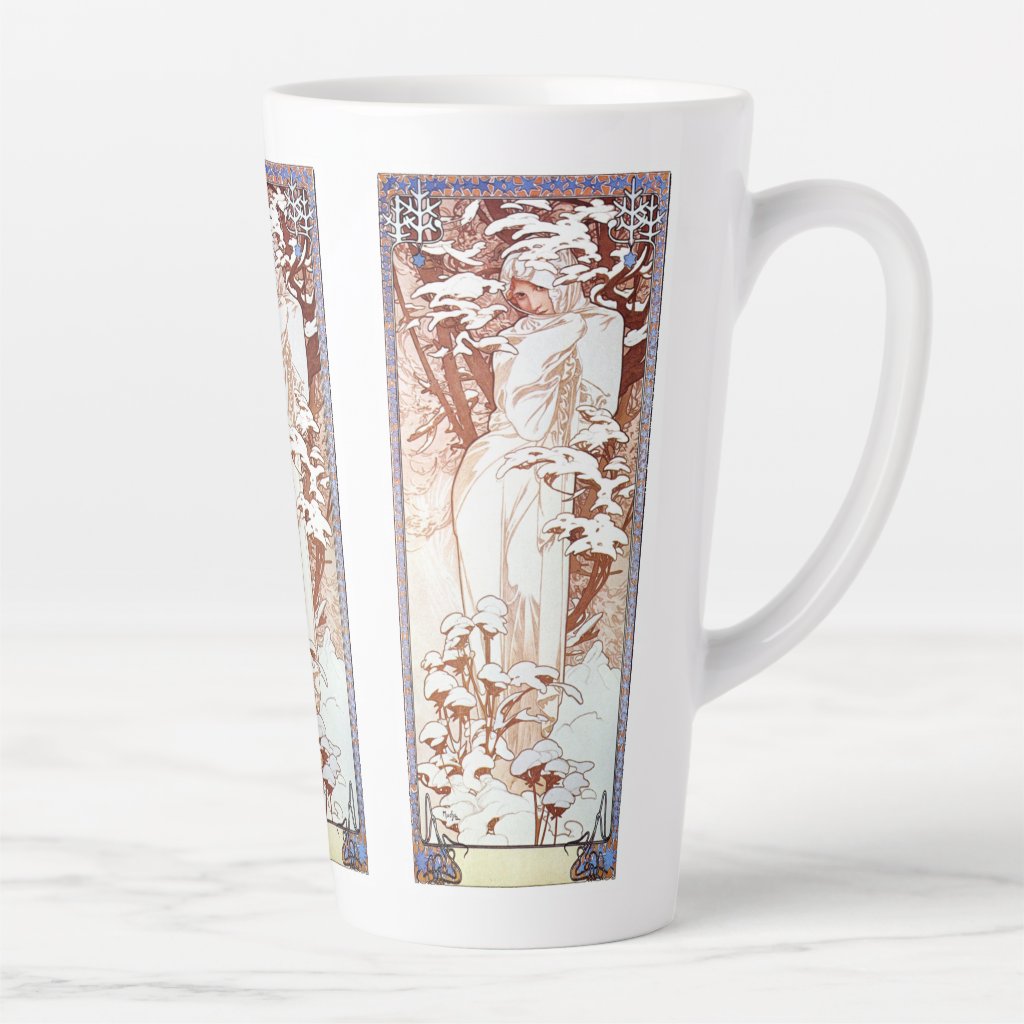
-ren bihotzean “Winter II In White Gown” lies a serene woman, a figure embodying the essence of winter. The woman is draped in a flowing white gown, a garment that mirrors the purity and coldness of winter’s snow. She stands amongst a frame of intricate organic shapes, her serene expression radiating a quiet calmness that is typical of Mucha’s portrayal of women in nature. Her gaze is soft, directed slightly upward, suggesting contemplation or the meditative quality often associated with the winter months.
The figure’s features are delicate and idealized, yet strong in their simplicity. Her body is slightly turned, accentuating the graceful curves of her figure as she stands poised among the gently falling snowflakes and soft, curved lines of frozen trees and plants. The trees in the background appear bare, beren adarrak elurrez astunak, contributing to the season’s stillness. These organic motifs—branches, snowflakes, and flowers—flow throughout the composition, creating a harmonious balance between the figure and the natural world.
The woman’s white gown is a key focal point of the piece, the fabric flowing freely, its folds undulating in the wind. The gown not only adds to her ethereal quality but also symbolizes the purity and freshness of winter. The delicate nature of the garment contrasts with the starkness of the environment, emphasizing her relationship with the season, one of calm but also of strength. Snowflakes float delicately around her, further accentuating her connection with winter’s beauty and quiet force.
Objektuak eta Lurra
The background of the piece is a mixture of pale brown and soft ivory tones, with elements that suggest the barren landscapes of winter. The barren trees stand as silhouettes, their limbs reaching out as if in silent reverence to the figure they surround. The snow rests gently upon the branches, creating a dreamlike effect where the figure and her environment seem to merge into one unified whole.
The ground surrounding the figure is covered in snow, the white powder softening the lines of the terrain. Scattered around the base of the figure are plants and flowers, many of which are also covered in snow, their forms slightly obscured but still visible beneath the ice. The natural world in Mucha’s work always appears symbolic, with each element carefully chosen to complement the overarching theme. Hemen, the presence of snow-covered flowers suggests a delicate beauty that thrives even in the harshest of conditions, mirroring the character of the woman herself—graceful, indartsu, and resilient in the face of adversity.
Style and Themes
“Winter II In White Gown” is a quintessential example of Mucha’s Art Nouveau style. Lerro jarioak, xehetasun korapilatsuak, and the use of soft, muted color tones are all hallmarks of the movement, which sought to break away from the rigid, industrial forms of the 19th century. The figures in Mucha’s works are often depicted in an almost ethereal manner, suspended between the natural and supernatural worlds, eta pieza hau ez da salbuespena.
The central theme of the work is the representation of winter, not merely as a season but as a personified force of nature. Mucha imbues the figure with qualities that elevate her beyond mere representation—she becomes a symbol of winter’s elegance, its quiet strength, and its endurance. This symbolic approach to the seasons reflects the broader trend in Art Nouveau to revere and elevate nature and natural beauty, as well as the organic connection between human beings and the world around them.
Mucha’s careful attention to detail is evident in every aspect of the painting, from the fine line work in the border to the delicate rendering of the snowflakes. His treatment of the subject is also deeply romantic, capturing the intersection of beauty, izadi, eta feminitatea. The color palette—mostly soft, muted earth tones with splashes of blue and white—adds to the sense of quietude and reflection, inviting the viewer to contemplate the beauty of the season and the woman’s tranquil connection to it.
The mood of the artwork is one of stillness and introspection. Irudia, though portrayed in a flowing gown, does not appear to be caught in a moment of motion. Horren ordez, she seems to be standing still, lost in thought as snow gently falls around her. This serene quietness is the essence of winter itself, where time seems to slow down, and the world is blanketed in calm.
Materialak eta Teknikak
Mucha’s use of lithography was key in producing the vibrancy and detail in this work. His technical mastery allowed him to create fine lines and delicate patterns that are a trademark of his style. The artwork’s detailed border, featuring stylized snowflakes and geometric designs, frames the central image, drawing the viewer’s eye toward the figure while providing an intricate context that enhances the overall composition. The muted color palette, dominated by soft browns, ivory, and touches of blue, reflects the wintry landscape and adds to the piece’s tranquil, serene mood.
The snowflakes are meticulously rendered, each one unique and carefully placed, underscoring Mucha’s dedication to natural detail and symbolism. The overall balance between the figure, the natural environment, and the borders suggests a harmonious unity between humanity and nature—a recurring theme in Mucha’s work.
Bukaera
“Winter II In White Gown” by Alphonse Maria Mucha is a stunning embodiment of the Art Nouveau movement, blending the grace of the female form with the beauty of nature. Through his use of intricate details, lerro jarioak, and a soft color palette, Mucha captures the quiet majesty of winter while elevating it to a realm of symbolic elegance. This piece serves not only as a visual representation of the season but also as a meditation on the natural world’s beauty, indarra, and delicate endurance.
Artistaren biografia
Beheko informazioa Wikipedia.org
Alfons Maria Mucha uztaila 24, 1860 – uztaila 14, 1939), nazioartean Alphonse Mucha izenez ezaguna zen. Txekiar margolari nabarmena izan zen, ilustratzailea eta artista grafikoa, Parisen bizi zen Art Nouveau garaian, eta bere antzerki-kartel estilizatu eta apaingarriengatik da ezaguna, bereziki Sarah Bernhardtenak.
Ilustrazioak egin zituen, iragarkiak, panel apaingarriak, eta diseinuak, garaiko irudi ezagunenen artean bihurtu zena.
Bere ibilbidearen bigarren zatian, urterekin 43, Austriako Bohemia-Moravia eskualdeko jaioterrira itzuli zen eta Eslaviar Epopeia izenez ezagutzen den hogei mihise monumental serie bat margotzen aritu zen., munduko herri eslaviar guztien historia irudikatuz, artean margotu zuena 1912 eta 1926.
In 1928, Txekoslovakiaren independentziaren 10. urteurrenean, seriea aurkeztu zion txekiar nazioari. Bere lanik garrantzitsuena hartu zuen. Orain Pragan dago ikusgai.
Arte digitalaren sorkuntza hau, Xzendor7 webgunean aurki daitezkeen artelan guztiak bezala sarean erosteko eskuragarri dago hainbat material formatutan, mihise inprimatuak barne., estanpatu akrilikoak, metal estanpatuak, egur estanpatuak, marko estanpatuak, kartelak, eta ijetzitako mihise estanpatu gisa hainbat tamainatan 12 zentimetroetara 72 hazbeteko artelanaren eta artea erosteko aukeratzen duzun eskaeraren arabera inprimatzeko dendaren tamainaren arabera.
Artelana gizonezkoen eta emakumezkoen arropa sorta zabal batean ere eskuragarri dago, katiluak, totes, zapiak, koadernoak eta aldizkariak eta etxeko dekorazio produktu ugari.