

An Auburn Beauty
Artelanaren deskribapena
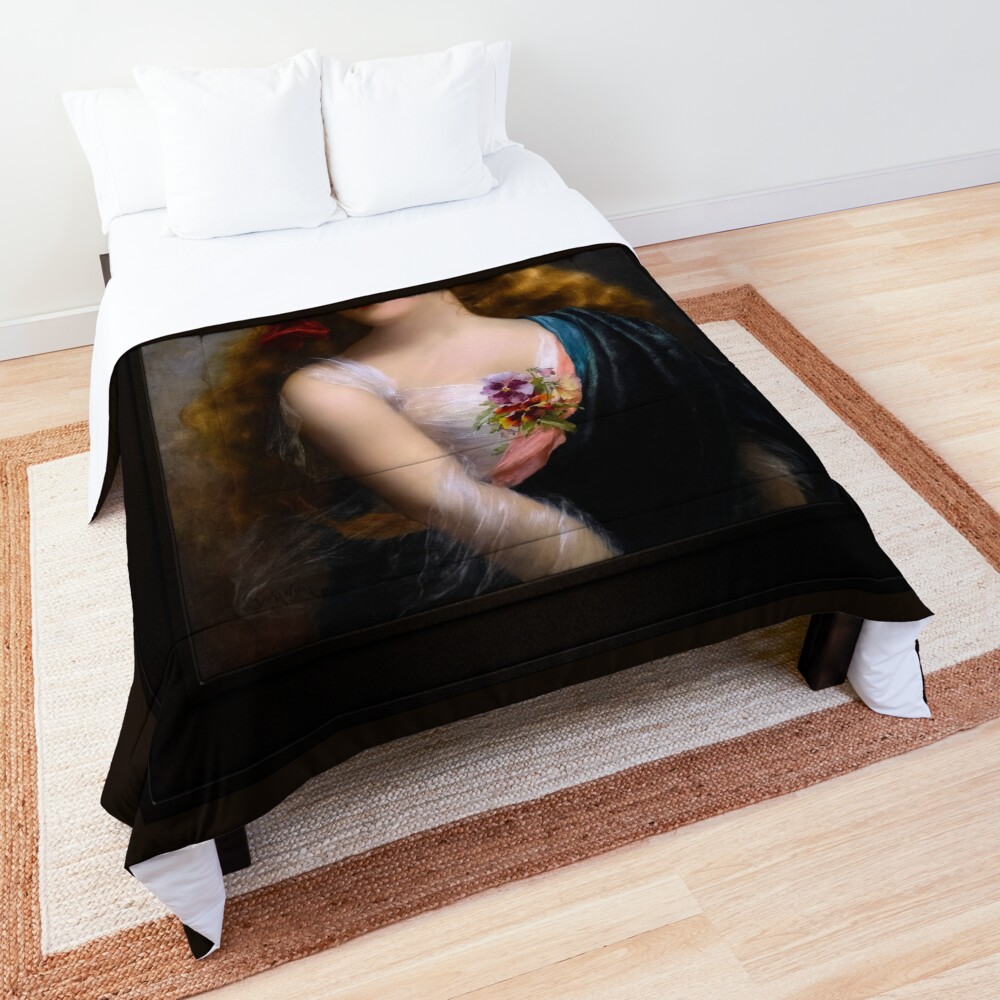
“An Auburn Beauty” Margolari frantsesaren eskutik Emile Vernon (1872 – 1920) is a delicate and vibrant portrayal of a young woman, painted during the late 19th century by the renowned French artist Emile Vernon. Known for his graceful and detailed depictions of women, Vernon encapsulates the idealized beauty of femininity during the Belle Époque era in France. Erretratu hau, executed with remarkable finesse, captures both the elegance of the subject and the romanticism of the time. The artist’s ability to infuse life into the figure through intricate detail, soft color palette, and the careful rendering of textures makes this piece a stunning example of his work.
Edukien taula
Gai nagusia eta osaera
The focal point of the artwork is a young woman with long, auburn hair, styled in loose waves that cascade down her shoulders. Her facial expression is serene, yet there is a quiet intensity in her gaze that seems to draw the viewer in. She turns her head slightly toward the viewer, her soft blue eyes glimmering with subtle emotion.
The woman is dressed in an exquisite gown of contrasting fabrics, predominantly a deep, rich teal, which flows gracefully over her shoulder. The material of the dress appears soft and flowing, with delicate folds that reflect the artist’s mastery in capturing light and shadow.
Resting gently on her shoulder is a cluster of fresh, vividly colored flowers, placed with intentional care. The blossoms, predominantly violets in shades of purple and yellow, are nestled in her gown, bere emakumetasun leunaren osagarri eta ikur gisa balio duena.
Artistak loreak xehetasun handiz errendatu ditu, pintzelkada leunak erabiliz haien izaera delikatua eta kolore biziak adierazteko. Antolaketa hau ez da elementu apaingarri bat soilik, baizik eta gaiaren leuntasuna eta dotorea hobetzen ditu.
Background and Surroundings
Margolanaren atzeko planoa apal eta fokatuta dago, horrek are gehiago areagotzen du gaiaren protagonismoa. Gris eta marroi tonu isiletan margotuta dago, atzealde neutroa eskainiz, emakumea eta bere janzkera nabarmentzea ahalbidetzen duena. Lainotsuak, ezarpen ia bereiziak intimitate sentsazioa sortzen du, gaia pribatu batean harrapatuko balu bezala, momentu pertsonala. Atzeko planoaren aukeraketa horri esker, ikuslea emakumearengan zentratu daiteke erabat, distrakziorik gabe, and enhances the atmosphere of tranquility and poise.
Estiloa eta Teknika
Emile Vernon’s style is characterized by a blend of realism and romanticism, evident in his meticulous attention to detail and his ability to evoke a sense of beauty and grace. “An Auburn Beauty” is a prime example of these stylistic elements, with the artist using soft, flowing lines and delicate shading to capture the softness of the woman’s skin and hair.
The treatment of light in the portrait is masterful, with Vernon using light to emphasize the contours of the face and the texture of her gown. His application of oil paint is smooth and seamless, contributing to the dreamlike quality of the composition. Vernon also employs a subdued color palette, with warm golden hues in the woman’s hair and the deep teal of her gown creating a harmonious balance.
The artist’s technique in rendering the woman’s face is particularly notable. Each feature is finely crafted, with a gentle yet precise approach. The softness in the shadows around the eyes and cheeks, paired with the careful highlighting of her lips and brow, creates a lifelike quality that reflects the artist’s deep understanding of human anatomy and portraiture. Teknika hau, combined with the romantic subject matter, evokes a sense of timeless beauty, typical of the Belle Époque period.
Gaia eta Aldartea
The mood of the painting is one of calm elegance and introspective beauty. The subject’s tranquil expression, paired with the soft texture of the fabric and the natural elegance of her posture, conveys a sense of serene femininity. The addition of the flowers may suggest a connection to nature, as well as a timeless symbol of innocence and grace. The subject is not posed in an overtly seductive or dramatic manner, but rather exudes a quiet strength through her graceful demeanor.
The theme of idealized feminine beauty, central to the painting, is enhanced by the choice of the woman’s attire, bere espresioa, eta konposizio orokorra. Vernon’s work, like many artists of the time, reflects an era that valued beauty in its most delicate and refined form. His portrayal of women often emphasized an ethereal, almost unattainable, ideal, making the subjects of his paintings both captivating and aspirational.
Materialak eta Exekuzioa
Emile Vernon executed this work in oil paint, a medium well-suited for the delicate textures and soft blending of light that define the portrait. The artist’s brushwork is smooth, without visible strokes, giving the painting a flawless finish. The colors are carefully layered to create depth, particularly in the rendering of the fabrics and the skin tones. The deep contrasts between the lightness of the skin and the dark folds of the gown enhance the three-dimensional quality of the subject, making her appear as though she could step out of the canvas at any moment.
The artist’s approach to the flowers is equally detailed, with the soft petals almost appearing to come alive under the careful attention paid to their texture and colors. Loreek piezaren edertasun estetikoan laguntzeaz gain, sinbolismo geruza gehigarria ere gehitzen dute., gaiaren edertasuna mundu naturalarekin lotuz.
Bukaera
“An Auburn Beauty” Emile Vernonek Belle Époque artearen pieza eredugarria izaten jarraitzen du, garaiko maisutasun artistikoa zein kultur idealak irudikatuz. Erretratuak edertasun femeninoaren dotorezia eta sotiltasuna jasotzen du Vernonen teknika trebearen bidez, kolore leunak berriz, argiztapen leuna, eta gaiaren adierazpen bareak lasaitasun eta denborarik gabeko sentipena sorrarazten dute. Lan hau artistak errealismoa eta erromantizismoa nahasteko duen gaitasunaren erakusgarri da, ikusleak liluratzen jarraitzen duen irudi bat sortuz, feminitate idealizatuaren gorenean dagoen emakume baten erretratu dotorearekin.
Domeinu publikoko irudi baten erreprodukzioa da canvas inprimatua sarean.
Artistaren biografia Galeria Ary Jan
Émile Vernon Tourseko Arte Ederren eskolan ikaslea zen eta bertan marrazketako lehen saria irabazi zuen 1888; ondoren, William Bouguereau eta Auguste Truphèmeren tutorea izan zen.
Gero sartu 1898 Arte Ederretako eta Arte Dekorazioko Tours erakusketan parte hartu zuen eta urte horretan bertan, Frantziako Artisten Erakusketan eta maiz bertan erakutsi zituen bere lanak 1898 to 1913; erretratuak aurkezten, paisaiak, Bretainiako eszenak, akuarelaz margotu zituen bodegoien sortak, baita figura femeninoak ere, gerora espezialitate bihurtu zena.
Émile nabarmendu zen argiztaturiko margolanetan, Haurren eta emakume gazte dotoreen figura adoragarriak, harekin maiz lotzen zuen maskota bat, adibidez, katua, txakurra edo txoria, eta bere irudiak garlandaz edo lore-sortaz apaindu zituen, bere ibilbide osoan; baina oso artista polifazetikoa ere bazen, zorroztasunez eta indarrez margo zezakeena, bere lanetan Madame Vernon eta Sous la Lamperen erretratua bezala. (Lanpara azpian).