

Angelica and Medoro
Angelica and Medoro: A Rococo Dreamscape by François Boucher
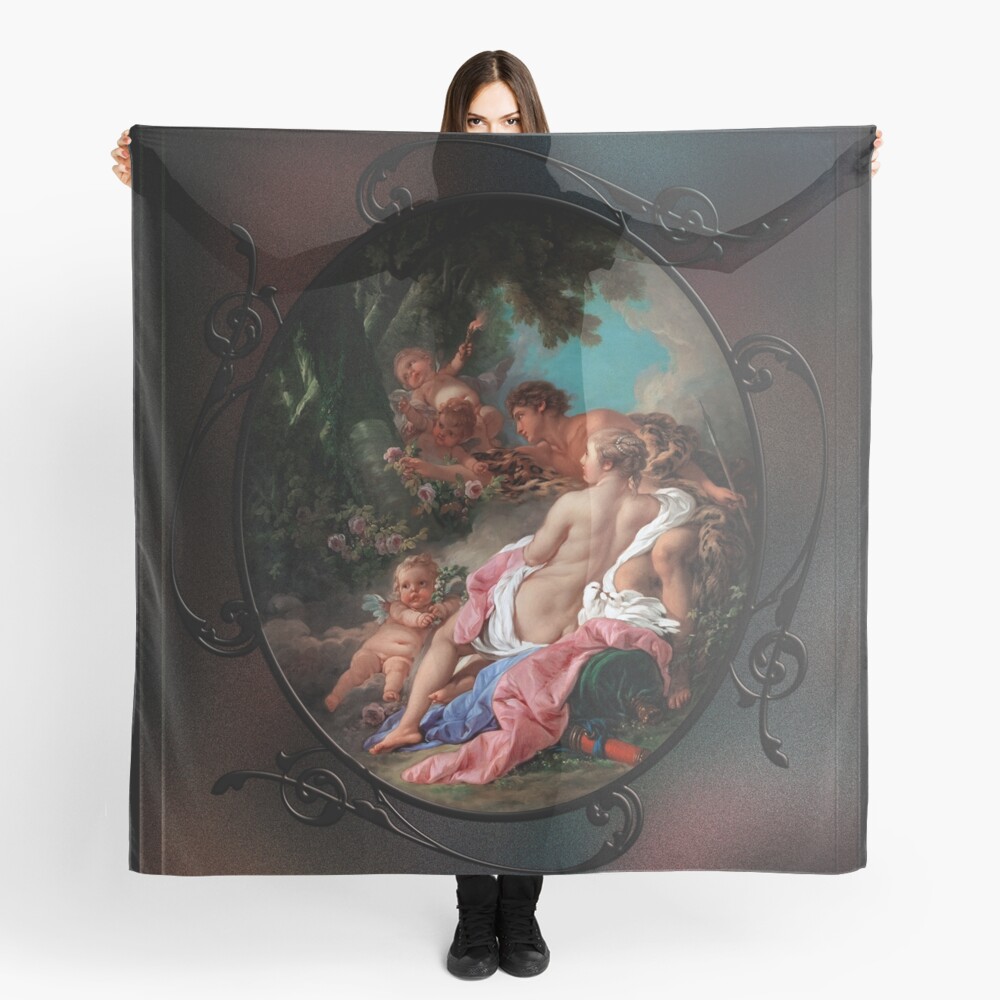
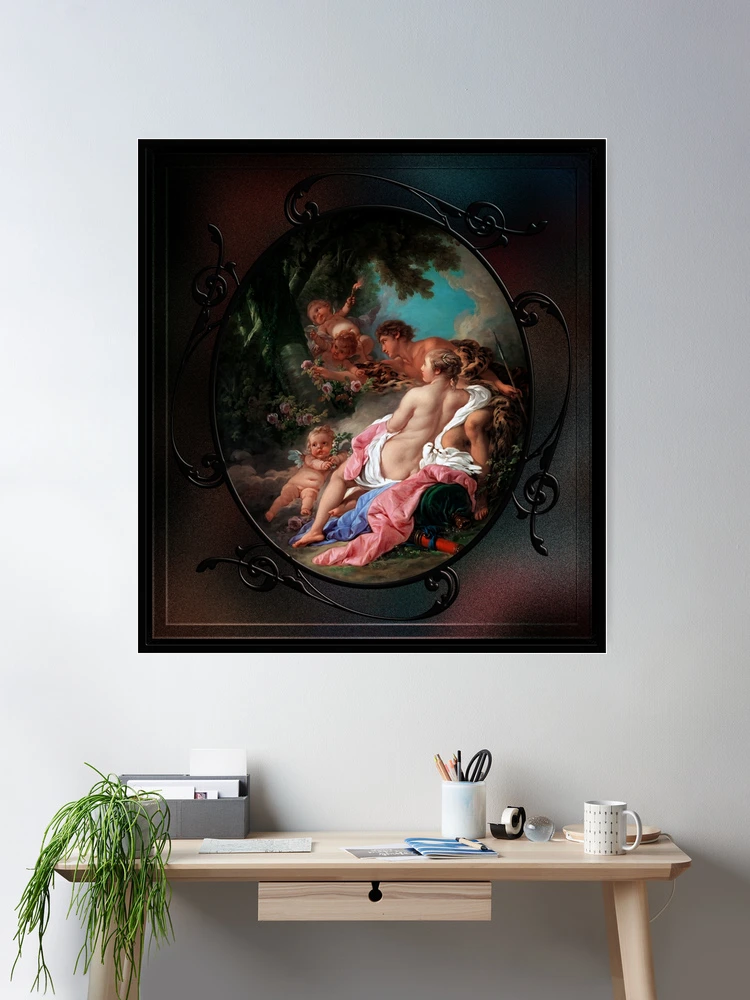
Francois Boucher’s “Angelica and Medoro,” péinteáilte timpeall 1763, exemplifies the height of the Rococo style in French art. This captivating work, currently housed at the Musée du Louvre, transports viewers to a realm of idyllic beauty and sensual delight, characteristic of Boucher’s artistic vision. The painting depicts a scene drawn from Ariosto’s epic poem Orlando Furioso, where Angelica, a beautiful pagan princess, has fallen asleep in a woodland glade, attended by playful putti and the captive knight Medoro.
Clár na nÁbhar
Harmony Comhdhéanta & Narrative Context
The composition is carefully orchestrated to create a sense of harmonious balance and visual pleasure. Boucher employs a pyramidal structure, with Angelica at its apex, drawing the eye immediately to her figure. The lush foliage forms a verdant backdrop, framing the central figures and enhancing the feeling of seclusion and enchantment. Medoro sits beside Angelica, his gaze fixed upon her face, conveying a sense of tender devotion. He is partially draped in armor, hinting at his former role as a warrior, now softened by his proximity to the sleeping princess. The scene unfolds within a dense forest setting; trees with vibrant green foliage create an immersive atmosphere.
Figures and Their Representation
Angelica’s portrayal embodies the Rococo ideal of feminine beauty: soft skin, flowing hair, and a languid pose that suggests both vulnerability and allure. A gúna, rendered in delicate pinks and whites, cascades around her form, emphasizing her graceful contours. The artist’s masterful use of light and shadow sculpts her body, highlighting its curves and creating a sense of ethereal beauty. Medoro is depicted with a more muscular physique, yet his posture is relaxed and gentle as he gazes at Angelica. His attire blends elements of armor and softer fabrics, reflecting his transition from warrior to lover.
The Role of the Putti
Adding to the scene’s whimsical charm are several putti – cherubic figures often associated with love and playfulness in Renaissance and Baroque art. These small figures frolic around Angelica and Medoro, scattering flowers and engaging in playful antics. Their presence reinforces the painting’s overall atmosphere of carefree joy and sensual indulgence. One putto sits at Angelica’s feet, gently touching her hand, while others playfully toss blossoms into the air. The putti are rendered with a delicate touch, their forms soft and rounded, further contributing to the painting’s aesthetic appeal.
Boucher’s Artistic Technique & Stíl
Boucher’s technique is characterized by his fluid brushstrokes, subtle gradations of color, and an emphasis on texture. He skillfully employs sfumato, a technique popularized by Leonardo da Vinci, to soften edges and create a hazy, caighdeán aislingeach. The colors are rich and vibrant, with a particular focus on pastel hues – pinks, gormacha, glasaigh, and creams – that evoke the atmosphere of a sun-drenched garden. Boucher’s style is distinctly Rococo; it prioritizes elegance, grásta, and sensual pleasure over realism or historical accuracy. He was known for his decorative paintings intended to adorn the homes of wealthy patrons, and “Angelica and Medoro” perfectly embodies this aesthetic.
Solas & Atmosphere
The lighting in “Angelica and Medoro” is soft and diffused, creating a gentle glow that bathes the scene in warmth. The light source appears to be coming from above, illuminating Angelica’s face and highlighting her delicate features. This creates a sense of intimacy and tranquility, drawing the viewer into the idyllic setting. The atmospheric perspective – the gradual blurring of details in the background – enhances the feeling of depth and distance, further immersing the viewer in the painting’s world.
Léiriú Foriomlán & Oidhreacht
“Angelica and Medoro” is more than just a depiction of a literary scene; it’s an embodiment of Rococo ideals—beauty, pleasure, and escapism. Boucher’s masterful technique and evocative imagery have made this painting one of his most celebrated works, and a quintessential example of the Rococo style. It continues to captivate audiences with its exquisite beauty and timeless appeal, offering a glimpse into the world of 18th-century French art and culture. The work’s enduring popularity stems from its ability to evoke feelings of romance, suaimhneas, and sensual delight, qualities that remain highly valued even today.
Decorative Accents Used In This Piece Are Available At HeritageType
Ealaíontóir Bith Díorthaithe Ó Wikipedia.org
Páras ó dhúchas, Ba mhac é Boucher le péintéir nach raibh chomh cáiliúil sin Nicolas Boucher, a thug a chéad oiliúint ealaíne dó. Ag seacht mbliana déag d’aois, bhí meas ag an bpéintéir François Lemoyne ar phictiúr le Boucher. Cheap Lemoyne Boucher ina phrintíseach ina dhiaidh sin, ach tar éis trí mhí amháin, chuaigh sé ag obair don engraver Jean-François Cars.
I 1720, bhuaigh sé an Grand Prix de Rome mionlach as péinteáil, ach níor thapaigh sé an deis iarmhartach staidéar a dhéanamh san Iodáil go dtí cúig bliana ina dhiaidh sin, mar gheall ar fhadhbanna airgeadais san Acadamh Ríoga Péinteála agus Dealbhóireachta.[1] Nuair a d'fhill sé ar staidéar san Iodáil, glacadh leis an dealbhóireacht Académie de peinture et de 24 Samhain 1731. A phíosa fáiltithe (píosa fáiltithe) Ba é a Rinaldo agus Armida de 1734.
Phós Boucher Marie-Jeanne Buzeau i 1733. Bhí triúr páistí ag an lánúin le chéile. Tháinig Boucher chun bheith ina bhall dáimhe i 1734 agus luathaigh a shlí bheatha ón bpointe seo toisc gur tugadh ardú céime dó mar Ollamh ansin mar Reachtaire an Acadaimh, ag éirí mar chigire ag an Royal Gobelins Manufactory agus ar deireadh Premier Peintre du Roi (Céad Péintéir an Rí) in 1765. Portráid de Marie-Louise O’Murphy c. 1752
Fuair Boucher bás ar 30 Bealtaine 1770 ina Pháras dúchais. A ainm, mar aon le pátrún Madame de Pompadour, tar éis éirí comhchiallach le stíl Rocócó na Fraince, ag treorú na ndeartháireacha Goncourt a scríobh: “Tá Boucher ar cheann de na fir sin a léiríonn blas céad bliain, a chuireann in iúl, é a phearsanú agus a chorprú.”
Tá clú ar Boucher as a rá go bhfuil an dúlra “ró-ghlas agus droch-lit” (ró-ghlas agus droch-lit).
Bhí baint ag Boucher leis an engraver gemstone Jacques Guay, a mhúin sé a tharraingt. Rinne sé meantóireacht freisin ar an bpéintéir Moravian-Ostarach Martin Ferdinand Quadal chomh maith leis an bpéintéir neoclasaiceach Jacques-Louis David i 1767.[4] Níos déanaí, Rinne Boucher sraith líníochtaí de shaothair le Guay a rinne Madame de Pompadour a ghreamú agus a dháileadh mar imleabhar faoi cheangal dathúil ar chúirtéirí is fearr leo