

Architects Dream c1840
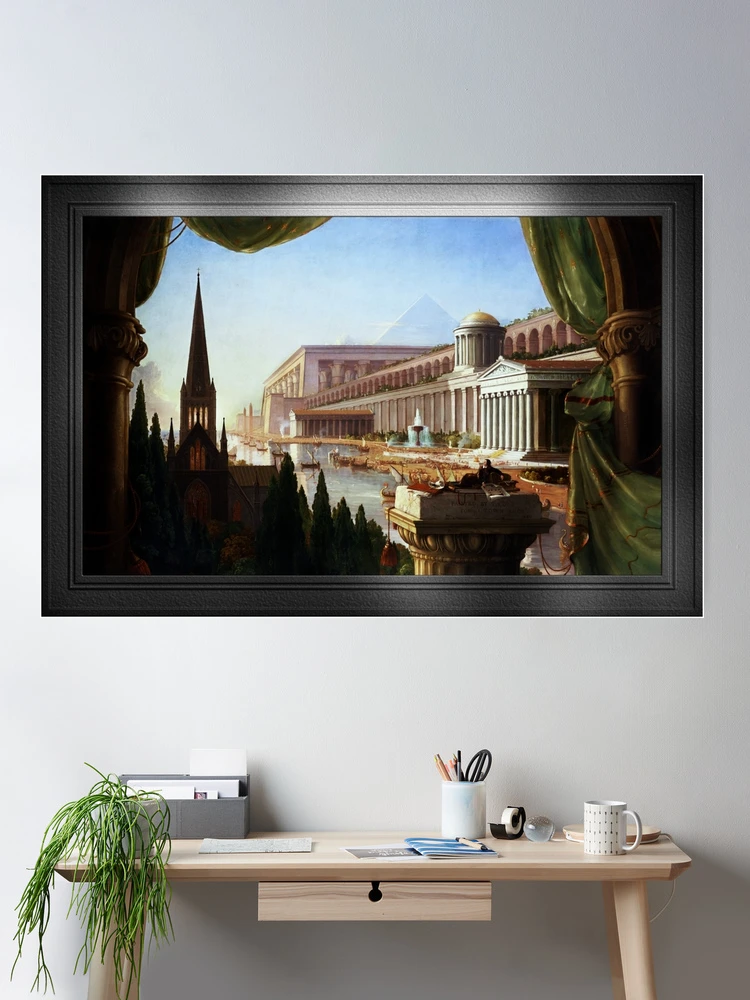
“Arkitektens drøm,” opprettet i 1840 av amerikansk kunstner Thomas Cole (1801 – 1848), er et fryktinngytende oljemaleri som inviterer seerne til å tenke på storheten til arkitektoniske ambisjoner satt på bakgrunn av et stort, idealisert landskap. Cole, kjent som grunnleggeren av Hudson River School, ofte tilført verkene hans dype filosofiske og åndelige betydninger, reflektert her gjennom utforskningen av menneskets drift til å skape og bygge monumentale strukturer. Dette stykket, spesielt, tar opp temaer om fremgang, samspillet mellom natur og menneskelig bestrebelse, og visjonen om hva som kan oppnås når den naturlige verden og menneskelig arkitektur kolliderer i harmoni.
Innholdsfortegnelse
Hovedfag: Drømmen om arkitektur
Maleriet skildrer en scene som visker ut grensen mellom det virkelige og det forestilte, med en vidstrakt utsikt over en elvedal som viser frem en prosesjon av klassiske bygninger og monumenter. Det sentrale fokuset er arkitektfiguren, plassert i forgrunnen. Han står på en balkong, ser ut over drømmelandskapet til synet hans. Arkitekturen i dette landskapet ser ut til å være både inspirert av og hyllest til antikkens store sivilisasjoner, spesielt greske og romerske påvirkninger, med strukturene som antar monumentale proporsjoner. Tilstedeværelsen av arkitekten i maleriet trekker oppmerksomheten til temaet menneskelig ambisjon og den dype intellektuelle og kunstneriske streben som er involvert i skapelsen av arkitektur.
Gjenstander og terreng
Terrenget i “Arkitektens drøm” er viltvoksende og idyllisk. Til venstre, de mørke gotiske spirene til en katedral reiser seg, antyder påvirkningen av europeisk middelalderarkitektur. Bygningene i maleriet er satt i et rikt landskap som står i skarp kontrast til storheten til de konstruerte elementene. Frodige grønne trær og åpne marker omgir de fjerne vannveiene som reflekterer det varme, gyldent lys fra solnedgangen. Terrenget går over i fjellområder i det fjerne, som antyder en perfekt syntese mellom naturens skjønnhet og menneskeskapte miljøer.
Midt i maleriet, elven renner forsiktig gjennom landet, snor seg mellom de monumentale strukturene som ser ut til å dukke opp fra jorden. En serie båter sprer overflaten av elven, med noen få synlige figurer som navigerer i vannet, further adding to the sense of scale and movement within the painting. The intricate details of the boats, some drawn by oars and others by sails, suggest that human industry and commerce still play a vital role in this serene but constructed world.
The architecture itself is classical in style, evoking grand temples, colonnades, and public squares, with columns and porticos making up the central designs of the structures. I bakgrunnen, an ancient pyramid looms, its purpose and construction a testament to a civilization long past, and a symbol of human achievement and ambition. The distant cityscape, bathed in the soft light of the horizon, implies that the creation of such architecture is timeless, as if the dream of civilization never ends.
Stil og teknikk
Thomas Cole’s signature style is evident in the intricate detailing and emotional tone of the painting. The foreground features the crisp and realistic depiction of the figures and the architectural details. His mastery of light is also notable, particularly in the way it subtly illuminates both the architect and the buildings, creating a dynamic interplay between the shadows and light. In Cole’s paintings, light often plays a symbolic role, representing the presence of divine inspiration or the illumination of intellectual and artistic enlightenment. The colors in the painting are rich and warm, with a golden tone washing over the entire scene, lending an almost ethereal quality to the landscape and structures.
The use of perspective is masterful, as the artist stretches the dimensions of the scene to evoke a sense of grandeur and importance. The distant horizon is dominated by a sky full of soft, fading light, enhancing the reflective and dreamlike quality of the composition. The water in the river mirrors this delicate lighting, reflecting the towering buildings and sky with an uncanny clarity.
Tema: Drømmen om menneskelig prestasjon
Tittelen, “Arkitektens drøm,” suggests the deep philosophical underpinnings of the painting. It explores the idea that the act of designing and constructing monumental buildings is a deeply imaginative and transcendent endeavor. The artist presents the architect not merely as a builder but as a visionary, dreaming of great works that blend the natural with the human-made. Cole subtly criticizes the potential for human endeavor to become excessive or disconnected from nature, but he also acknowledges the magnificence of human creativity and ambition.
The image can be interpreted as a metaphor for civilization itself, symbolizing both the potential for human greatness and the fleeting nature of all things. The presence of the pyramid in the background could be seen as a symbol of ancient civilization, while the more modern buildings could represent the future. The juxtaposition of nature’s sublime beauty with the engineered environment alludes to the tension between progress and preservation, a recurring theme in Cole’s works. Through this balance, the artist suggests that while architectural dreams may soar to incredible heights, they remain tethered to the earth and ultimately subject to time’s passing.
Stemning og emosjonell påvirkning
Stemningen av “Arkitektens drøm” is contemplative and awe-inspiring. The artist’s use of soft light and gentle colors creates a serene atmosphere, inviting viewers to reflect on the boundless possibilities of human achievement. Ennå, this serenity is tinged with a sense of melancholy as the viewer is reminded that such grand visions may be impossible to realize fully. The dreamlike quality of the scene further enhances this sense of timelessness and the fleeting nature of human ambitions.
The presence of the architect in the foreground creates a focal point for this reflection. His gaze directed towards the horizon suggests that he, også, is lost in contemplation, possibly questioning the limits of human imagination or contemplating the intersection of beauty, natur, and creation. The architectural dream before him is a vision not just of stone and mortar but of something far grander, an idealized world shaped by human hands, yet rooted in the natural landscape.
Konklusjon
“Arkitektens drøm” is a deeply philosophical and evocative painting that explores themes of human creativity, the tension between nature and architecture, and the grandeur of human achievement. Through meticulous detail and masterful use of light and perspective, Thomas Cole creates an artwork that serves as both a reflection on the past and a visionary gaze into the future. It is a meditation on the dream of building something lasting, something transcendent, while acknowledging the impermanence of all things.
Architects Dream is a retouched digital art old masters reproduction of a public domain image.
Artistbio avledet fra Wikipedia.org
Thomas was born in Bolton le Moors, Lancashire England in 1801 and at 17 years of age emigrated to the United States with his family, settling in Steubenville, Ohio in 1818.
I 1823 he left Ohio and moved to Philadelphia and then from there in 1825 moved to Catskill, New York, where he lived for the next 23 years with his wife and children.
Thomas started his career as an engraver and was almost completely self taught as a painter, using books to learn his craft and also studying the works of other artists.
Deretter inn 1822 Thomas began working as a portrait painter and over time shifted his focus from portraiture to landscape and historical painting.
Thomas is considered to be one of the prominent 19th century American painters and the founder of the Hudson River School movement which was influenced by the Romanticism era of the late 18th century and mid 19th century.
Though Cole was primarily a landscape painter, he also produced allegorical artwork; with the his most famous being the five part series The Course of Empire; which depict the same landscape over generations, from a near state of nature to consummation of empire, and then decline and desolation.