

Ariadne
American Painterin Ariadne c1831-35 & Kaivertaja Asher Brown Durand (1796 – 1886) oli osa romantiikan taideliikettä ja valmistui Hudson River Schoolista. Asher keskittyi pääasiassa maisemamaalauksiin.
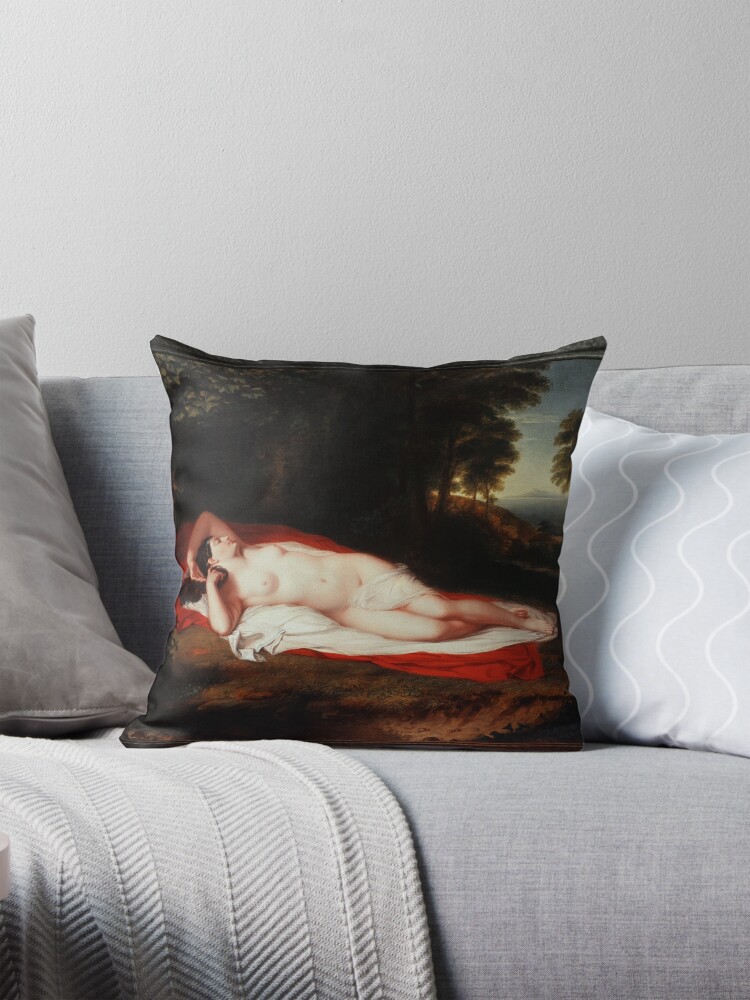
Tämä maalaus Ariadne by Asher is from a copy of a painting by John Vanderlyn (1776 – 1852) which he did in preparation for the engraving he produced as was often the case; he would create an oil canvas of the size of the intended engraving.
Ariadne is the Cretan Princess of Greek Mythology who was briefly loved by Theseus (the mythical king and founder-hero of Athens), who abandoned her on the island of Naxos after he tired of her company.
Sisällysluettelo
Overview of “Ariadne” by Asher Brown Durand
Asher Brown Durand, an American painter and engraver, is widely regarded as one of the central figures in the Hudson River School of landscape painting, a movement that celebrated the natural beauty of the American landscape. kuitenkin, Durand’s work often extended beyond landscapes, as seen in his 1831 – 1835 maalaus Ariadne. This piece reveals Durand’s mastery not only in capturing natural forms but also in his ability to imbue his subjects with an ethereal, almost mythological presence.
The Subject of the Artwork: Ariadne
At the center of Durand’s Ariadne stands a woman in repose, surrounded by the lush, undisturbed wilderness of an ancient, almost idyllic landscape. The subject of the painting is Ariadne, a figure from Greek mythology, known for her connection to the myth of Theseus and the Minotaur. Ariadne is often depicted as a symbol of love, loss, and betrayal, and Durand captures her at a moment of serene contemplation.
Ariadne’s pose is languid and contemplative, lying on a bed of red drapery that contrasts with the soft hues of the surrounding natural world. The figure appears relaxed, almost sleeping, with her head gently turned to the side. Her body is draped in a flowing, translucent white cloth, with the rich crimson fabric beneath her evoking a sense of luxury and opulence. Despite her reclined position, the contours of her body remain graceful, with the painter capturing the natural curves of her form with great care and sensitivity. Hänen kasvonsa, though partially obscured by her positioning, seems peaceful, suggesting a deep inner calm or introspection.
The Landscape and Natural Setting
The backdrop of the painting is a lush, verdant landscape that stretches into the distance, bathed in the soft glow of an evening or early morning light. The scene is characterized by gently rolling hills, dense trees, and a distant body of water. Durand’s attention to detail in the depiction of nature reflects his dedication to the principles of the Hudson River School, where the natural world was revered and idealized. The foliage is painted in rich, deep greens, while the sky above is a delicate blend of soft blues and warm yellows, contributing to an atmosphere of tranquility and nostalgia.
The distant view across the water provides a sense of depth and space, inviting the viewer to imagine the vastness of the scene. The use of light in this painting is particularly notable; the artist’s careful rendering of shadows and highlights creates a sense of volume and texture, lending an almost three-dimensional quality to both the figure of Ariadne and the surrounding landscape. The light appears to envelop the figure, casting a soft glow on her skin and the folds of her drapery, while the shadowed areas deepen the sense of solitude and reflection.
The Symbolism of the Drapery
The red drapery beneath Ariadne is not just a visual element but also a symbolic one. In classical art, drapery often served as a vehicle for expressing both the subject’s emotional state and their physical form. In this case, the deep red fabric can be interpreted as a symbol of passion, rakkaus, or even sacrifice. Ariadne, having been abandoned by Theseus after helping him escape the labyrinth, might be seen as embodying themes of loss and emotional turmoil, yet her peaceful repose and the lush, fertile landscape around her suggest a kind of quiet resolution or acceptance.
The white cloth she is draped in can be viewed as a symbol of purity or a new beginning, which is fitting given that the myth of Ariadne is often associated with transformation; both in the literal sense of her life being changed by her relationship with Theseus and in the mythological sense, where her fate takes a turn after her abandonment.
Taiteellinen tyyli ja tekniikka
Durand’s Ariadne is painted in a classical Romantic style, where realism and idealism merge to create a vision of beauty that transcends the ordinary. The artist employs a fine balance of realism in the portrayal of both the figure and the landscape, yet there is an underlying idealization that makes the scene feel timeless. Durand’s technical skill is evident in the delicate rendering of light and shadow, the softness of the fabric, and the naturalistic details of the landscape.
The figures and forms are modeled with great precision, and the soft transitions of color suggest the artist’s deep understanding of the human body and the play of light across different surfaces. Durand’s fine attention to detail extends beyond the human form to the natural environment, where every leaf, branch, and rock is meticulously painted, contributing to the painting’s overall sense of realism and harmony.
Mood and Emotional Atmosphere
Mieliala Ariadne is one of tranquility, yksinäisyys, and quiet reflection. The soft light, gentle landscape, and languid pose of the subject all combine to create an atmosphere of serene contemplation. There is a sense of quiet beauty in the way the figure rests within the natural surroundings, suggesting both an intimate connection to nature and a contemplative escape from the tumult of the mythological world.
While the figure of Ariadne is deeply associated with themes of abandonment, betrayal, and emotional pain in the myth, Durand’s portrayal focuses on a more introspective aspect of her character. The absence of a direct narrative moment, such as her abandonment or subsequent marriage to Dionysus, allows the viewer to contemplate Ariadne in a state of quiet resolution. Her calm expression and relaxed pose suggest an emotional distance from her previous life’s trials and tribulations, allowing for a more meditative engagement with her figure.
Johtopäätös
Sisään Ariadne, Asher Brown Durand merges his skill in landscape painting with his sensitivity to human emotion, producing a work that is both visually stunning and emotionally resonant. The painting is a delicate balance of idealized beauty and reflective solitude, drawing upon the classical traditions of mythology and landscape painting while imbuing the scene with a uniquely Romantic sensibility. Tämän kappaleen kautta, Durand invites the viewer to contemplate not only the mythical figure of Ariadne but also the eternal beauty of the natural world, which offers a quiet sanctuary from the tumult of human life.

In the background past the trees and the hill she is resting on we can see a boat on the bank of a lake, people and a dog on the shore, with the smoke of a campfire rising into the air; lastly in the far distance we can see what appears to be a large island.
Tämä on retusoitu digitaalisen taiteen vanhojen mestareiden kopio julkisessa käytössä olevasta kuvasta, jonka voit ostaa a rullattu kanvastulostus verkossa.
Tiedot alla Wikipedia.org
Durand syntyi ja lopulta kuoli Maplewoodissa, New Jersey (sitten nimeltään Jefferson Village). Hän oli kahdeksas yhdestätoista lapsesta. Durandin isä oli kelloseppä ja hopeaseppä.
Durand opetettiin kaivertajalle 1812 että 1817 ja solmi myöhemmin kumppanuuden yrityksen omistajan kanssa, Charles Cushing Wright (1796- 1854), joka pyysi häntä johtamaan yrityksen New Yorkin toimistoa.
Hän kaivertoi John Trumbullin itsenäisyysjulistuksen aikana 1823, joka vahvisti Durandin maineen yhtenä maan hienoimmista kaivertajista.
Durand auttoi New Yorkin piirustusyhdistyksen järjestämisessä 1825, josta tulee Kansallinen muotoiluakatemia; hän palvelisi järjestöä presidenttinä 1845 että 1861.
Asherin kaiverruksia seteleihin käytettiin Amerikan ensimmäisten postimerkkien muotokuvina, the 1847 sarja. Yhdessä veljensä Cyrusin kanssa hän kaiverrettiin myös joitakin menestyneitä 1851 kysymyksiä.
Hänen pää kiinnostuksensa muuttui kaiverruksesta öljyvärimaalaukseen 1830 suojelijansa kannustuksella, Luman Reed. Aikana 1837, hän seurasi ystäväänsä Thomas Colea luonnosretkellä Schroon -järvelle Adirondacks -vuoristossa ja pian sen jälkeen hän alkoi keskittyä maisemamaalaukseen.
Hän vietti kesät luonnostellen Catskillsissa, Adirondot, ja New Hampshiren valkoiset vuoret, tehdä satoja piirustuksia ja öljyluonnoksia, jotka myöhemmin sisällytettiin valmiisiin akatemian osiin, jotka auttoivat määrittämään Hudson River Schoolin.
Durand muistetaan erityisesti yksityiskohtaisista puukuvauksistaan, kiviä, ja lehtineen. Hän kannatti piirtämistä suoraan luonnosta mahdollisimman realistisesti. Durand kirjoitti, “Antaa [artisti] hyväksy tarkasti mitä tahansa [luonto] esittelee hänet, kunnes hän tulee, asteessa, ovat tulleet läheisiksi hänen äärettömyytensä kanssa ... älä koskaan anna hänen häpäistä pyhyyttään tahallisella poikkeamisella totuudesta.”
Kuten muutkin Hudson River School -taiteilijat, Durand uskoi myös, että luonto oli sanoinkuvaamaton Jumalan ilmentymä. Hän ilmaisi tämän tunteen ja yleiset näkemyksensä taiteesta esseessään “Kirjeitä maisemamaalauksesta” Crayonissa, 1800-luvun puolivälin New Yorkin taidejulkaisu. Kirjoitti Durand, “[T]todellinen maisemataiteen maakunta on Jumalan työn esitys näkyvässä luomakunnassa ...”
Durand on tunnettu hänen puolestaan 1849 maalaus Kindred Spirits, jossa Hudson River School -taiteilija Thomas Cole ja runoilija William Cullen Bryant näkyvät Catskills Mountains -maisemassa. Tämä maalattiin kunnianosoitukseksi Colelle Colen kuoleman aikana 1848, ja lahjaksi Bryantille.