

Ariadne
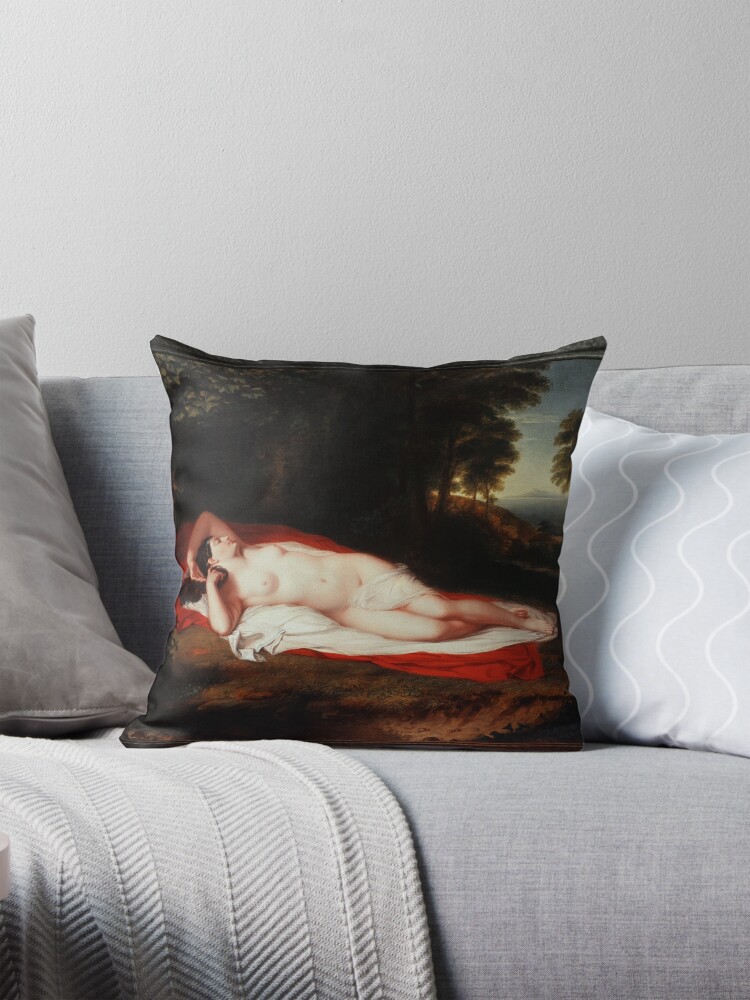
Ariadne c1831-35 le Péintéir Meiriceánach & Engraver Asher Donn Durand (1796 – 1886) Bhí sé ina chuid den Ghluaiseacht Ealaíne Rómánsachais agus ba chéimí de Scoil Abhainn Hudson é. Bhí príomhfhócas Asher ar phictiúir tírdhreacha.
An phéinteáil seo de Ariadne Is as cóip de phictiúr le John Vanderlyn é Asher (1776 – 1852) rud a rinne sé mar ullmhúchán don ghreanadóireacht a rinne sé mar a bhíodh go minic; chruthódh sé canbhás ola de mhéid na greanta a bhí beartaithe.
Is í Ariadne an Banphrionsa Cretan de Mhiotaseolaíocht na Gréige a raibh grá ag Theseus uirthi ar feadh tamaill (an rí miotasach agus bunaitheoir-laoch na hAithne), a thréig sí ar oileán Naxos tar éis dó tuirseach dá cuideachta.
Clár na nÁbhar
Forbhreathnú ar “Ariadne” le Asher Brown Durand
Asher Donn Durand, an American painter and engraver, is widely regarded as one of the central figures in the Hudson River School of landscape painting, a movement that celebrated the natural beauty of the American landscape. ach, Durand’s work often extended beyond landscapes, as seen in his 1831 – 1835 ag péinteáil Ariadne. This piece reveals Durand’s mastery not only in capturing natural forms but also in his ability to imbue his subjects with an ethereal, almost mythological presence.
Ábhar an tSaothair Ealaíne: Ariadne
At the center of Durand’s Ariadne stands a woman in repose, surrounded by the lush, undisturbed wilderness of an ancient, almost idyllic landscape. The subject of the painting is Ariadne, a figure from Greek mythology, known for her connection to the myth of Theseus and the Minotaur. Ariadne is often depicted as a symbol of love, loss, and betrayal, agus gabhann Durand í ag nóiméad machnaimh chiúin.
Tá staidiúir Ariadne gann agus machnamhach, ina luí ar leaba éadaitheoireachta dearg atá i gcodarsnacht le dathanna boga an domhain nádúrtha máguaird. Is cosúil go bhfuil an figiúr suaimhneach, beagnach codlata, lena ceann iompú go réidh go dtí an taobh. Tá a corp draped i flowing, éadach bán tréshoilseach, agus an creatlach saibhir corcairdhearg faoina bráid ag léiriú sócúlachta agus aoibhnis. In ainneoin a seasamh reclined, fanann comhrianta a colainne galánta, agus an péintéir ag gabháil chuair nádúrtha a foirme le cúram agus le híogaireacht mhór. A aghaidh, cé go bhfuil sí doiléir go páirteach ag a suíomh, is cosúil go síochánta, rud a mholann calmacht dhomhain inmheánach nó introspection.
An Tírdhreach agus an Suíomh Nádúrtha
Is lush é cúlra an phéinteáil, tírdhreach verdant a shíneann i gcéin, bathed in the soft glow of an evening or early morning light. The scene is characterized by gently rolling hills, dense trees, and a distant body of water. Durand’s attention to detail in the depiction of nature reflects his dedication to the principles of the Hudson River School, where the natural world was revered and idealized. The foliage is painted in rich, deep greens, while the sky above is a delicate blend of soft blues and warm yellows, contributing to an atmosphere of tranquility and nostalgia.
The distant view across the water provides a sense of depth and space, inviting the viewer to imagine the vastness of the scene. The use of light in this painting is particularly notable; the artist’s careful rendering of shadows and highlights creates a sense of volume and texture, lending an almost three-dimensional quality to both the figure of Ariadne and the surrounding landscape. The light appears to envelop the figure, casting a soft glow on her skin and the folds of her drapery, while the shadowed areas deepen the sense of solitude and reflection.
Siombalachas an Éadaitheoireachta
The red drapery beneath Ariadne is not just a visual element but also a symbolic one. San ealaín chlasaiceach, drapery often served as a vehicle for expressing both the subject’s emotional state and their physical form. Sa chás seo, the deep red fabric can be interpreted as a symbol of passion, grá, or even sacrifice. Ariadne, having been abandoned by Theseus after helping him escape the labyrinth, might be seen as embodying themes of loss and emotional turmoil, yet her peaceful repose and the lush, fertile landscape around her suggest a kind of quiet resolution or acceptance.
The white cloth she is draped in can be viewed as a symbol of purity or a new beginning, which is fitting given that the myth of Ariadne is often associated with transformation; both in the literal sense of her life being changed by her relationship with Theseus and in the mythological sense, where her fate takes a turn after her abandonment.
An Stíl agus an Teicníc Ealaíne
Durand’s Ariadne is painted in a classical Romantic style, where realism and idealism merge to create a vision of beauty that transcends the ordinary. The artist employs a fine balance of realism in the portrayal of both the figure and the landscape, yet there is an underlying idealization that makes the scene feel timeless. Durand’s technical skill is evident in the delicate rendering of light and shadow, the softness of the fabric, and the naturalistic details of the landscape.
The figures and forms are modeled with great precision, and the soft transitions of color suggest the artist’s deep understanding of the human body and the play of light across different surfaces. Durand’s fine attention to detail extends beyond the human form to the natural environment, where every leaf, branch, and rock is meticulously painted, contributing to the painting’s overall sense of realism and harmony.
Mood and Emotional Atmosphere
An giúmar de Ariadne is one of tranquility, solitude, and quiet reflection. The soft light, gentle landscape, and languid pose of the subject all combine to create an atmosphere of serene contemplation. There is a sense of quiet beauty in the way the figure rests within the natural surroundings, suggesting both an intimate connection to nature and a contemplative escape from the tumult of the mythological world.
While the figure of Ariadne is deeply associated with themes of abandonment, betrayal, and emotional pain in the myth, Durand’s portrayal focuses on a more introspective aspect of her character. The absence of a direct narrative moment, such as her abandonment or subsequent marriage to Dionysus, allows the viewer to contemplate Ariadne in a state of quiet resolution. Her calm expression and relaxed pose suggest an emotional distance from her previous life’s trials and tribulations, allowing for a more meditative engagement with her figure.
Conclúid
I Ariadne, Asher Brown Durand merges his skill in landscape painting with his sensitivity to human emotion, producing a work that is both visually stunning and emotionally resonant. The painting is a delicate balance of idealized beauty and reflective solitude, drawing upon the classical traditions of mythology and landscape painting while imbuing the scene with a uniquely Romantic sensibility. Tríd an bpíosa seo, Durand invites the viewer to contemplate not only the mythical figure of Ariadne but also the eternal beauty of the natural world, which offers a quiet sanctuary from the tumult of human life.

In the background past the trees and the hill she is resting on we can see a boat on the bank of a lake, people and a dog on the shore, with the smoke of a campfire rising into the air; lastly in the far distance we can see what appears to be a large island.
Seo atáirgeadh seanmháistrí ealaíne digiteach athshuite d’íomhá fearainn phoiblí ar féidir leat a cheannach mar priontáil chanbhás rollta ar líne.
Eolas Thíos Ó Wikipedia.org
Rugadh Durand i Maplewood agus sa deireadh fuair sé bás, Nua Gheirsí (ansin ar a dtugtar Jefferson Village). Bhí sé ar an ochtú leanbh déag. Déantóir uaireadóir agus gabha airgid ab ea athair Durand.
Do phrintíseach Durand le greanadóir ó 1812 chun 1817 agus ina dhiaidh sin chuaigh sé i gcomhpháirtíocht le húinéir na cuideachta, Charles Cushing Wright (1796–1854), a d’iarr air oifig na cuideachta i Nua-Eabhrac a bhainistiú.
Ghrean sé Dearbhú Saoirse do John Trumbull le linn 1823, a bhunaigh cáil Durand mar cheann de na greanadóirí is fearr sa tír.
Chabhraigh Durand le Cumann Líníochta Nua-Eabhrac a eagrú le linn 1825, a dhéanfadh an tAcadamh Náisiúnta Dearaidh; bheadh sé ag freastal ar an eagraíocht mar uachtarán ó 1845 chun 1861.
Baineadh úsáid as greanta Asher ar nótaí bainc mar phortráidí do na chéad stampaí postais i Meiriceá, an 1847 sraith. In éineacht lena dheartháir Cyrus greanta sé cuid de na cinn a tháinig ina dhiaidh 1851 saincheisteanna.
D’athraigh a phríomhshuim ó ghreanadóireacht go péintéireacht ola thart 1830 le spreagadh a phátrúin, Giolcach Luman. I rith 1837, chuaigh sé in éineacht lena chara Thomas Cole ar thuras sceitseála go Loch Schroon i Sléibhte Adirondacks agus go luath ina dhiaidh sin thosaigh sé ag díriú ar phéinteáil tírdhreacha.
Chaith sé samhraí ag sceitseáil sna Catskills, Adirondacks, agus Sléibhte Bána New Hampshire, ag déanamh na gcéadta léaráidí agus sceitsí ola a ionchorpraíodh níos déanaí i bpíosaí críochnaithe acadaimh a chabhraigh le Scoil Abhainn Hudson a shainiú.
Cuimhnítear Durand go háirithe mar gheall ar a mhionléirithe ar chrainn, carraigeacha, agus duilliúr. Ba thacadóir é chun tarraingt go díreach ón dúlra leis an oiread réalachais agus ab fhéidir. Durand a scríobh, “Lig [an t-ealaíontóir] go scrupallach glacadh le cibé [nádúr] i láthair go dtí go mbeidh sé, i gcéim, tá gaol agat lena héigríoch ... ná lig dó a naomhacht a thruailliú trí imeacht go toiliúil ón bhfírinne.”
Cosúil le healaíontóirí eile Hudson River School, Chreid Durand freisin go raibh an dúlra ina léiriú do-éifeachtach ar Dhia. Chuir sé an dearcadh seo agus a thuairimí ginearálta ar an ealaín in iúl ina aiste “Litreacha ar Phéinteáil Tírdhreacha” sa Crayon, tréimhseachán ealaíne i Nua Eabhrac ó lár an 19ú haois. Scríobh Durand, “[T.]is é fíor-chúige na hEalaíne Tírdhreacha léiriú ar obair Dé sa chruthú infheicthe…”
Tá Durand suntasach as a chuid 1849 ag péinteáil Kindred Spirits a thaispeánann a chomh-ealaíontóir Scoil Abhainn Hudson Thomas Cole agus an file William Cullen Bryant i dtírdhreach Sléibhte Catskills. Péinteáladh é seo mar ómós do Cole ar bhás Cole le linn 1848, agus mar bhronntanas do Bryant.