

Ariadne
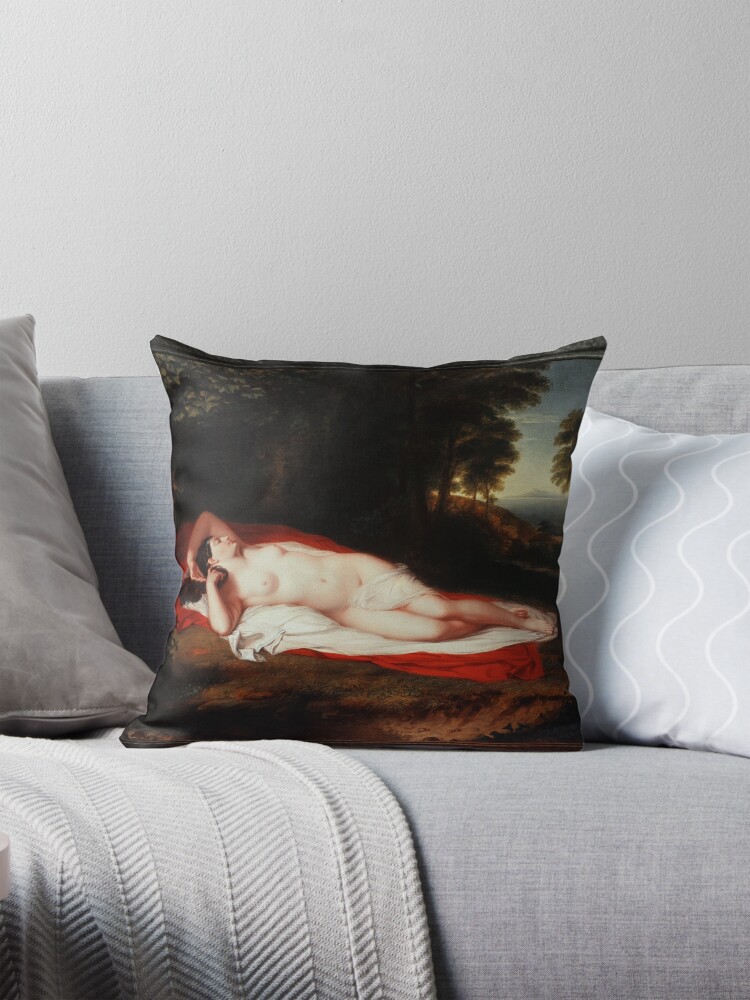
Ariadne c1831-35 le peantair Ameireaganach & Engraver Duver Asher Brown (1796 – 1886) na phàirt den Ghluasad Ealain Romanticism agus cheumnaich e bho Sgoil Abhainn Hudson. Bha prìomh fhòcas Asher air dealbhan cruth-tìre.
Tha an dealbh seo de Ariadne le Asher bho leth-bhreac de dhealbh le Iain Vanderlyn (1776 – 1852) ni a rinn e mar ullachadh air son a' ghràbhalaidh a rinn e mar a bha gu minic; chruthaicheadh e canabhas ola den mheudachd a bha san amharc.
Is e Ariadne Bana-phrionnsa Cretan Miotas-eòlas na Grèige air an robh Theseus airson ùine ghoirid (an rìgh miotasach agus an gaisgeach a stèidhich Athens), a thrèig i ann an eilean Naxois an dèidh dha a bhith sgìth de a cuideachd.
Clàr-innse
Sealladh farsaing air “Ariadne” le Asher Brown Durand
Duver Asher Brown, peantair agus gràbhalaiche Ameireaganach, is widely regarded as one of the central figures in the Hudson River School of landscape painting, a movement that celebrated the natural beauty of the American landscape. Ach, Durand’s work often extended beyond landscapes, as seen in his 1831 – 1835 peantadh Ariadne. This piece reveals Durand’s mastery not only in capturing natural forms but also in his ability to imbue his subjects with an ethereal, almost mythological presence.
Cuspair an obair-ealain: Ariadne
At the center of Durand’s Ariadne stands a woman in repose, surrounded by the lush, undisturbed wilderness of an ancient, almost idyllic landscape. The subject of the painting is Ariadne, a figure from Greek mythology, known for her connection to the myth of Theseus and the Minotaur. Ariadne is often depicted as a symbol of love, call, agus bhrath, and Durand captures her at a moment of serene contemplation.
Ariadne’s pose is languid and contemplative, lying on a bed of red drapery that contrasts with the soft hues of the surrounding natural world. The figure appears relaxed, almost sleeping, with her head gently turned to the side. Her body is draped in a flowing, translucent white cloth, with the rich crimson fabric beneath her evoking a sense of luxury and opulence. Despite her reclined position, the contours of her body remain graceful, with the painter capturing the natural curves of her form with great care and sensitivity. A h-aodann, though partially obscured by her positioning, seems peaceful, suggesting a deep inner calm or introspection.
Cruth-tìre agus suidheachadh nàdarra
The backdrop of the painting is a lush, verdant landscape that stretches into the distance, bathed in the soft glow of an evening or early morning light. The scene is characterized by gently rolling hills, dense trees, and a distant body of water. Durand’s attention to detail in the depiction of nature reflects his dedication to the principles of the Hudson River School, where the natural world was revered and idealized. The foliage is painted in rich, deep greens, while the sky above is a delicate blend of soft blues and warm yellows, contributing to an atmosphere of tranquility and nostalgia.
The distant view across the water provides a sense of depth and space, inviting the viewer to imagine the vastness of the scene. The use of light in this painting is particularly notable; the artist’s careful rendering of shadows and highlights creates a sense of volume and texture, lending an almost three-dimensional quality to both the figure of Ariadne and the surrounding landscape. The light appears to envelop the figure, casting a soft glow on her skin and the folds of her drapery, while the shadowed areas deepen the sense of solitude and reflection.
Symbolism of the Drapery
The red drapery beneath Ariadne is not just a visual element but also a symbolic one. In classical art, drapery often served as a vehicle for expressing both the subject’s emotional state and their physical form. Anns a ’chùis seo, the deep red fabric can be interpreted as a symbol of passion, gaol, or even sacrifice. Ariadne, having been abandoned by Theseus after helping him escape the labyrinth, might be seen as embodying themes of loss and emotional turmoil, yet her peaceful repose and the lush, fertile landscape around her suggest a kind of quiet resolution or acceptance.
The white cloth she is draped in can be viewed as a symbol of purity or a new beginning, which is fitting given that the myth of Ariadne is often associated with transformation; both in the literal sense of her life being changed by her relationship with Theseus and in the mythological sense, where her fate takes a turn after her abandonment.
An stoidhle ealain agus an dòigh-obrach
Durand’s Ariadne is painted in a classical Romantic style, where realism and idealism merge to create a vision of beauty that transcends the ordinary. The artist employs a fine balance of realism in the portrayal of both the figure and the landscape, yet there is an underlying idealization that makes the scene feel timeless. Durand’s technical skill is evident in the delicate rendering of light and shadow, the softness of the fabric, and the naturalistic details of the landscape.
The figures and forms are modeled with great precision, and the soft transitions of color suggest the artist’s deep understanding of the human body and the play of light across different surfaces. Durand’s fine attention to detail extends beyond the human form to the natural environment, where every leaf, branch, and rock is meticulously painted, contributing to the painting’s overall sense of realism and harmony.
Mood agus Atmosphere Emotional
Faireachdainn de Ariadne tha aon de shàmhchair, aonaranachd, and quiet reflection. An solas bog, gentle landscape, and languid pose of the subject all combine to create an atmosphere of serene contemplation. Tha faireachdainn de bhòidhchead sàmhach anns an dòigh anns a bheil am figear na laighe taobh a-staigh an àrainneachd nàdarra, a’ moladh an dà chuid ceangal dlùth ri nàdar agus teicheadh meòrachail bho bhuaireadh an t-saoghail mhiotas-eòlais.
Ged a tha figear Ariadne ceangailte gu domhainn ri cuspairean trèigsinn, bhrath, agus pian tòcail anns an uirsgeul, Tha an dealbh aig Durand a’ cuimseachadh air taobh nas inntinniche den charactar aice. Às aonais mionaid aithriseach dìreach, leithid a trèigsinn no pòsadh an dèidh sin ri Dionysus, a’ leigeil leis an neach-coimhead Ariadne a bheachdachadh ann an suidheachadh sàmhach. Tha an faireachdainn socair agus an suidheachadh socair aice a’ nochdadh astar tòcail bho dheuchainnean agus àmhgharan a beatha roimhe, a 'toirt cothrom airson conaltradh nas meòrachail leis an ìomhaigh aice.
Co-dhùnadh
Ann an Ariadne, Asher Brown Durand merges his skill in landscape painting with his sensitivity to human emotion, producing a work that is both visually stunning and emotionally resonant. The painting is a delicate balance of idealized beauty and reflective solitude, drawing upon the classical traditions of mythology and landscape painting while imbuing the scene with a uniquely Romantic sensibility. Tron am pìos seo a, Durand invites the viewer to contemplate not only the mythical figure of Ariadne but also the eternal beauty of the natural world, which offers a quiet sanctuary from the tumult of human life.

In the background past the trees and the hill she is resting on we can see a boat on the bank of a lake, people and a dog on the shore, with the smoke of a campfire rising into the air; lastly in the far distance we can see what appears to be a large island.
Is e seo ath-riochdachadh seann mhaighstirean ealain didseatach de ìomhaigh raon poblach as urrainn dhut a cheannach mar sheilbh clò-bhualadh canabhas air-loidhne.
Fiosrachadh gu h-ìosal bho Wikipedia.org
Rugadh Durand ann agus mu dheireadh bhàsaich e ann am Maplewood, Jersey Nuadh (an uairsin thugadh Jefferson Village air). B’ esan an ochdamh duine deug de chlann-nighean. Bha athair Durand na fhear-faire agus na cheàrd-airgid.
Chaidh Durand a phreantasachadh gu gràbhalaiche à 1812 gu 1817 agus an dèidh sin chaidh e gu com-pàirteachas le sealbhadair a 'chompanaidh, Teàrlach Cushing Wright (1796-1854), a dh’ iarr air oifis New York a’ chompanaidh a riaghladh.
Rinn e gràbhaladh air Dearbhadh Neo-eisimeileachd do Iain Trumbull rè 1823, a stèidhich cliù Durand mar aon de na gràbhalairean as fheàrr san dùthaich.
Chuidich Durand le bhith ag eagrachadh Comann Dealbhan New York rè 1825, a bhiodh na Acadamaidh Dealbhaidh Nàiseanta; bhiodh e a’ frithealadh na buidhne mar cheann-suidhe bho 1845 gu 1861.
Chaidh gràbhalaidhean Asher air notaichean banca a chleachdadh mar dhealbhan airson a’ chiad stampaichean postachd ann an Ameireagaidh, an 1847 sreath. Còmhla ri a bhràthair Cyrus rinn e gràbhaladh cuideachd air cuid de na thachair 1851 cùisean.
Dh'atharraich a phrìomh ùidh bho ghràbhaladh gu peantadh ola mu dheidhinn 1830 le brosnachadh a phàrant, Luman Reed. Rè 1837, chaidh e còmhla ri a charaid Tòmas Cole air turas sgeidseadh gu Schroon Lake ann am Beanntan Adirondacks agus goirid às deidh sin thòisich e air fòcas a chuir air peantadh cruth-tìre.
Chuir e seachad samhraidhean a’ sgeidseadh anns na Catskills, Adirondacks, agus Beanntan Geala New Hampshire, a’ dèanamh ceudan de dhealbhan agus sgeidsichean ola a chaidh an toirt a-steach do phìosan crìochnachaidh acadamaidh a chuidich le bhith a’ mìneachadh Sgoil Abhainn Hudson.
Tha cuimhne shònraichte air Durand airson na dealbhan mionaideach a rinn e de chraobhan, creagan, agus duilleach. Bha e na thagraiche airson tarraing gu dìreach bho nàdar le uiread de fhìor-eòlas 'sa ghabhas. Sgrìobh Durand, “Leig [An neach-ealain] gabh gu foighidneach ri ni sam bith [nàdur] thaisbean se e gus an dean e, ann an ìre, air fàs dlùth d'a neo-chriochnach- adh.”
Coltach ri luchd-ealain eile bho Sgoil Abhainn Hudson, Bha Durand cuideachd den bheachd gu robh nàdar na dhearbhadh neo-sheasmhach air Dia. Chuir e am beachd seo an cèill agus a bheachdan coitcheann air ealain anns an aiste aige “Litrichean air peantadh cruth-tìre” anns a' Chraobhan, iris ealain ann am meadhan na 19mh linn ann an New York. Sgrìobh Durand, “[T.]tha fìor roinn Ealain Cruth-tìre na riochdachadh de obair Dhè anns a’ chruthachadh fhaicsinneach…”
Tha Durand ainmeil airson a chuid 1849 a’ peantadh Kindred Spirits a tha a’ sealltainn neach-ealain eile bho Sgoil Abhainn Hudson, Tòmas Cole agus am bàrd Uilleam Cullen Bryant ann an cruth-tìre Beanntan Catskills. Chaidh seo a pheantadh mar mholadh air Cole air bàs Cole rè 1848, agus mar thiodhlac do Bryant.