

Ariadne
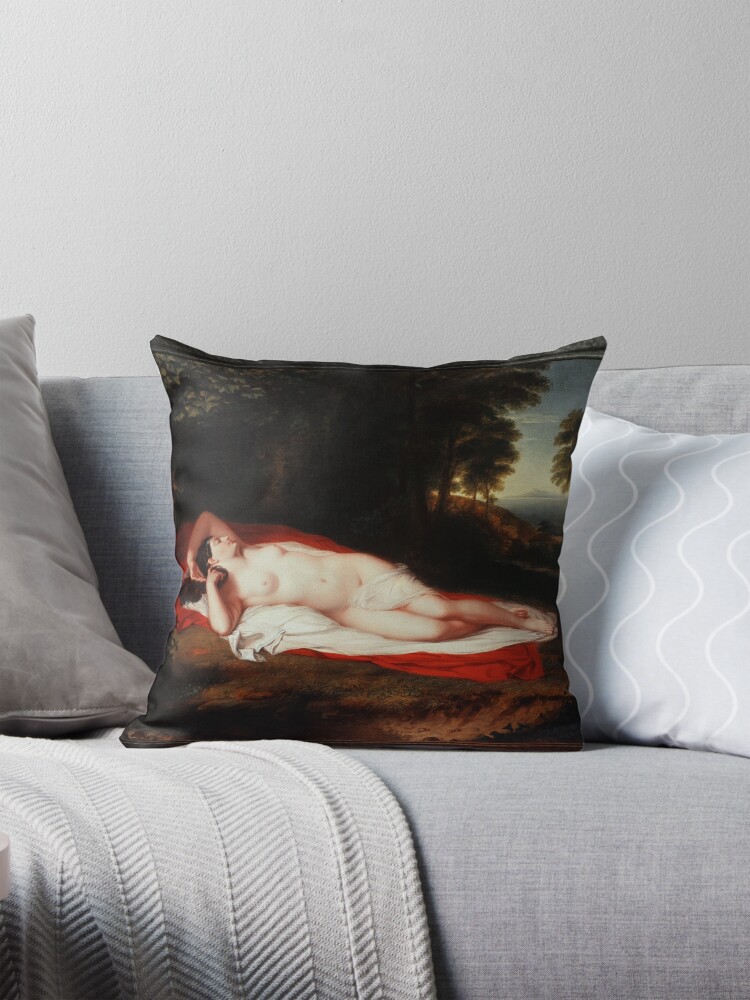
Ariadne c1831-35 by American Painter & Leturgröftur Asher Brown Durand (1796 – 1886) var hluti af rómantíklistahreyfingunni og var útskrifaður frá Hudson River School. Asher’s main focus was on landscape paintings.
This painting of Ariadne by Asher is from a copy of a painting by John Vanderlyn (1776 – 1852) which he did in preparation for the engraving he produced as was often the case; he would create an oil canvas of the size of the intended engraving.
Ariadne is the Cretan Princess of Greek Mythology who was briefly loved by Theseus (the mythical king and founder-hero of Athens), who abandoned her on the island of Naxos after he tired of her company.
Efnisyfirlit
Overview of “Ariadne” by Asher Brown Durand
Asher Brown Durand, bandarískur málari og leturgröftur, er almennt álitinn einn af aðalpersónunum í Hudson River School of landslagsmálun, hreyfing sem fagnaði náttúrufegurð bandarísks landslags. Hins vegar, Verk Durand náðu oft út fyrir landslag, eins og sést á hans 1831 – 1835 málverk Ariadne. Þetta verk sýnir leikni Durands ekki aðeins í að fanga náttúruleg form heldur einnig í hæfni hans til að fylla viðfangsefni sín náttúrulegu, nánast goðsagnakennd nærvera.
The Subject of the Artwork: Ariadne
Í miðju Durand's Ariadne stendur kona í hvíld, umkringdur gróðursælu, óröskuð víðerni fornra, nánast idyllískt landslag. Viðfangsefni málverksins er Ariadne, mynd úr grískri goðafræði, þekkt fyrir tengsl sín við goðsögnina um Þeseif og Mínótárus. Ariadne is often depicted as a symbol of love, loss, and betrayal, and Durand captures her at a moment of serene contemplation.
Ariadne’s pose is languid and contemplative, lying on a bed of red drapery that contrasts with the soft hues of the surrounding natural world. The figure appears relaxed, almost sleeping, with her head gently turned to the side. Her body is draped in a flowing, translucent white cloth, with the rich crimson fabric beneath her evoking a sense of luxury and opulence. Despite her reclined position, the contours of her body remain graceful, with the painter capturing the natural curves of her form with great care and sensitivity. Andlit hennar, though partially obscured by her positioning, seems peaceful, suggesting a deep inner calm or introspection.
The Landscape and Natural Setting
The backdrop of the painting is a lush, gróðursælt landslag sem teygir sig í fjarska, baðaður í mjúkum ljóma kvölds eða snemma morguns ljóss. Atriðið einkennist af hægfara hæðum, þétt tré, og fjarlægt vatn. Athygli Durand á smáatriðum í lýsingunni á náttúrunni endurspeglar hollustu hans við meginreglur Hudson River School, þar sem náttúruheimurinn var virtur og hugsjónalaus. Laufið er málað í ríku, djúpir grænir, á meðan himinninn fyrir ofan er viðkvæm blanda af mjúkum bláum og heitum gulum litum, stuðla að andrúmslofti kyrrðar og nostalgíu.
Fjarlægt útsýni yfir vatnið gefur tilfinningu fyrir dýpt og rými, að bjóða áhorfandanum að ímynda sér víðáttu sviðsins. Notkun ljóss í þessu málverki er sérstaklega áberandi; the artist’s careful rendering of shadows and highlights creates a sense of volume and texture, lending an almost three-dimensional quality to both the figure of Ariadne and the surrounding landscape. The light appears to envelop the figure, casting a soft glow on her skin and the folds of her drapery, while the shadowed areas deepen the sense of solitude and reflection.
The Symbolism of the Drapery
The red drapery beneath Ariadne is not just a visual element but also a symbolic one. In classical art, drapery often served as a vehicle for expressing both the subject’s emotional state and their physical form. In this case, the deep red fabric can be interpreted as a symbol of passion, Ást, or even sacrifice. Ariadne, having been abandoned by Theseus after helping him escape the labyrinth, might be seen as embodying themes of loss and emotional turmoil, yet her peaceful repose and the lush, fertile landscape around her suggest a kind of quiet resolution or acceptance.
The white cloth she is draped in can be viewed as a symbol of purity or a new beginning, which is fitting given that the myth of Ariadne is often associated with transformation; both in the literal sense of her life being changed by her relationship with Theseus and in the mythological sense, where her fate takes a turn after her abandonment.
Listrænn stíll og tækni
Durand’s Ariadne is painted in a classical Romantic style, where realism and idealism merge to create a vision of beauty that transcends the ordinary. The artist employs a fine balance of realism in the portrayal of both the figure and the landscape, yet there is an underlying idealization that makes the scene feel timeless. Durand’s technical skill is evident in the delicate rendering of light and shadow, the softness of the fabric, and the naturalistic details of the landscape.
The figures and forms are modeled with great precision, and the soft transitions of color suggest the artist’s deep understanding of the human body and the play of light across different surfaces. Durand’s fine attention to detail extends beyond the human form to the natural environment, where every leaf, branch, and rock is meticulously painted, contributing to the painting’s overall sense of realism and harmony.
Stemning og tilfinningalegt andrúmsloft
Stemningin á Ariadne er friðsæld, einsemd, and quiet reflection. Mjúka ljósið, gentle landscape, and languid pose of the subject all combine to create an atmosphere of serene contemplation. Það er kyrrlát fegurð í því hvernig myndin hvílir í náttúrulegu umhverfi, sem gefur til kynna bæði náin tengsl við náttúruna og íhugandi flótta frá ólgu goðafræðiheimsins.
Þó að myndin Ariadne sé djúpt tengd þemu um yfirgefningu, svik, og tilfinningalega sársauka í goðsögninni, Lýsing Durand einblínir á meira innsýn í persónu hennar. Skortur á beinni frásagnarstund, eins og að hún yfirgaf hana eða giftist Díónýsos í kjölfarið, gerir áhorfandanum kleift að hugleiða Ariadne í rólegri upplausn. Róleg tjáning hennar og afslappaða stellingin bendir til tilfinningalegrar fjarlægðar frá erfiðleikum og þrengingum fyrri lífs hennar, sem gerir ráð fyrir meiri hugleiðslu við mynd hennar.
Niðurstaða
Í Ariadne, Asher Brown Durand sameinar kunnáttu sína í landslagsmálun og næmni sinni fyrir mannlegum tilfinningum, framleiðir verk sem er bæði sjónrænt töfrandi og tilfinningalega hljómandi. Málverkið er viðkvæmt jafnvægi hugsjónalegrar fegurðar og hugsandi einveru, styðst við klassískar hefðir goðafræði og landslagsmálverks á sama tíma og sviðsmyndin er einstaklega rómantísk tilfinning. Í gegnum þetta verk, Durand býður áhorfandanum að hugleiða ekki aðeins goðsagnakennda mynd Ariadne heldur einnig eilífa fegurð náttúruheimsins., sem býður upp á rólegan griðastað frá ólgu mannlífsins.

Í bakgrunni framhjá trjánum og hæðinni sem hún hvílir á sjáum við bát á bakka vatns., people and a dog on the shore, with the smoke of a campfire rising into the air; lastly in the far distance we can see what appears to be a large island.
This is a retouched digital art old masters reproduction of a public domain image that you can purchase as a Rúlluð striga prentun á netinu.
Upplýsingar að neðan Frá Wikipedia.org
Durand was born in and eventually died in Maplewood, New Jersey (then called Jefferson Village). He was the eighth of eleven children. Durand’s father was a watchmaker and a silversmith.
Durand was apprenticed to an engraver from 1812 til 1817 and later entered into a partnership with the owner of the company, Charles Cushing Wright (1796–1854), who asked him to manage the company’s New York office.
He engraved Declaration of Independence for John Trumbull during 1823, sem skapaði orðspor Durand sem einn af bestu leturgröftum landsins.
Durand hjálpaði til við að skipuleggja New York Drawing Association á meðan 1825, sem yrði National Academy of Design; hann myndi þjóna samtökunum sem forseti frá 1845 til 1861.
Áleturgröftur Ashers á seðla voru notaðar sem andlitsmyndir fyrir fyrstu frímerki Bandaríkjanna, the 1847 röð. Ásamt Kýrusi bróður sínum greypti hann einnig eitthvað af því sem næst kom 1851 mál.
Aðaláhugamál hans breyttist úr leturgröftu yfir í olíumálun um 1830 með hvatningu verndara hans, Luman Reed. Á meðan 1837, hann fylgdi vini sínum Thomas Cole í skissuleiðangur til Schroon-vatns í Adirondacks-fjöllum og skömmu síðar fór hann að einbeita sér að landslagsmálun..
Hann eyddi sumrum við að skissa í Catskills, Adirondacks, og Hvítu fjöllin í New Hampshire, gera hundruð teikninga og olíuteikninga sem síðar voru felldar inn í fullunna akademíuverk sem hjálpuðu til við að skilgreina Hudson River School.
Durand er sérstaklega minnst fyrir ítarlegar myndir sínar af trjám, Rocks, og laufblöð. Hann var talsmaður þess að sækja beint úr náttúrunni af eins miklu raunsæi og hægt var. Durand skrifaði, “Látum [listamanninn] samþykkja nákvæmlega hvað sem er [Náttúran] kynnir hann þar til hann skal, í gráðu, hafa orðið náin við óendanleika hennar ... aldrei láta hann vanhelga helgi hennar með vísvitandi fráhvarf frá sannleikanum.”
Eins og aðrir listamenn Hudson River School, Durand trúði því líka að náttúran væri ólýsanleg birtingarmynd Guðs. Hann lýsti þessu viðhorfi og almennum skoðunum sínum á myndlist í ritgerð sinni “Bréf um landslagsmálun” í The Crayon, tímarit í New York um miðja 19. öld. Wrote Durand, “[T]he true province of Landscape Art is the representation of the work of God in the visible creation…”
Durand is noted for his 1849 painting Kindred Spirits which shows fellow Hudson River School artist Thomas Cole and poet William Cullen Bryant in a Catskills Mountains landscape. This was painted as a tribute to Cole upon Cole’s death during 1848, and as a gift to Bryant.