

Ariadne
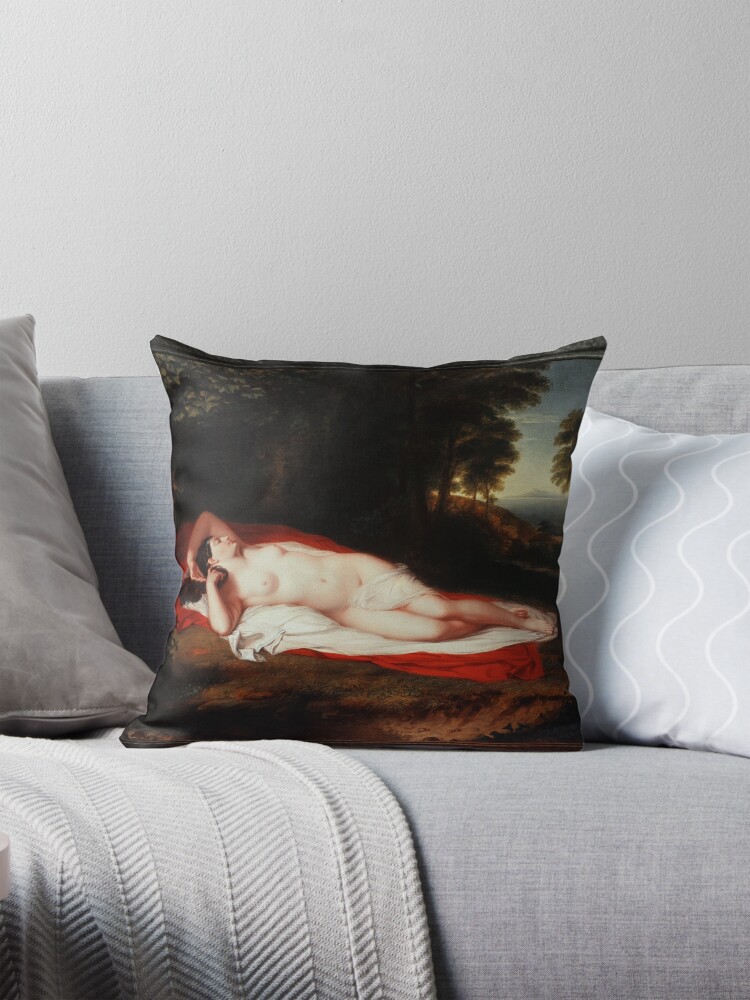
Ariadne c1831-35 by American Painter & Engraver Asher Brown Durand (1796 – 1886) fez parte do Movimento Artístico do Romantismo e formou-se na Hudson River School. Asher’s main focus was on landscape paintings.
This painting of Ariadne by Asher is from a copy of a painting by John Vanderlyn (1776 – 1852) which he did in preparation for the engraving he produced as was often the case; he would create an oil canvas of the size of the intended engraving.
Ariadne is the Cretan Princess of Greek Mythology who was briefly loved by Theseus (the mythical king and founder-hero of Athens), who abandoned her on the island of Naxos after he tired of her company.
Índice
Overview of “Ariadne” by Asher Brown Durand
Asher Brown Durand, an American painter and engraver, is widely regarded as one of the central figures in the Hudson River School of landscape painting, a movement that celebrated the natural beauty of the American landscape. No entanto, Durand’s work often extended beyond landscapes, as seen in his 1831 – 1835 pintura Ariadne. This piece reveals Durand’s mastery not only in capturing natural forms but also in his ability to imbue his subjects with an ethereal, almost mythological presence.
The Subject of the Artwork: Ariadne
At the center of Durand’s Ariadne stands a woman in repose, surrounded by the lush, undisturbed wilderness of an ancient, almost idyllic landscape. The subject of the painting is Ariadne, a figure from Greek mythology, known for her connection to the myth of Theseus and the Minotaur. Ariadne is often depicted as a symbol of love, loss, and betrayal, and Durand captures her at a moment of serene contemplation.
Ariadne’s pose is languid and contemplative, lying on a bed of red drapery that contrasts with the soft hues of the surrounding natural world. The figure appears relaxed, almost sleeping, with her head gently turned to the side. Her body is draped in a flowing, translucent white cloth, with the rich crimson fabric beneath her evoking a sense of luxury and opulence. Despite her reclined position, the contours of her body remain graceful, with the painter capturing the natural curves of her form with great care and sensitivity. O rosto dela, though partially obscured by her positioning, seems peaceful, suggesting a deep inner calm or introspection.
The Landscape and Natural Setting
The backdrop of the painting is a lush, verdant landscape that stretches into the distance, bathed in the soft glow of an evening or early morning light. The scene is characterized by gently rolling hills, dense trees, and a distant body of water. Durand’s attention to detail in the depiction of nature reflects his dedication to the principles of the Hudson River School, where the natural world was revered and idealized. The foliage is painted in rich, deep greens, while the sky above is a delicate blend of soft blues and warm yellows, contributing to an atmosphere of tranquility and nostalgia.
The distant view across the water provides a sense of depth and space, inviting the viewer to imagine the vastness of the scene. The use of light in this painting is particularly notable; the artist’s careful rendering of shadows and highlights creates a sense of volume and texture, lending an almost three-dimensional quality to both the figure of Ariadne and the surrounding landscape. The light appears to envelop the figure, casting a soft glow on her skin and the folds of her drapery, while the shadowed areas deepen the sense of solitude and reflection.
The Symbolism of the Drapery
The red drapery beneath Ariadne is not just a visual element but also a symbolic one. In classical art, drapery often served as a vehicle for expressing both the subject’s emotional state and their physical form. In this case, the deep red fabric can be interpreted as a symbol of passion, amor, or even sacrifice. Ariadne, having been abandoned by Theseus after helping him escape the labyrinth, might be seen as embodying themes of loss and emotional turmoil, yet her peaceful repose and the lush, fertile landscape around her suggest a kind of quiet resolution or acceptance.
The white cloth she is draped in can be viewed as a symbol of purity or a new beginning, which is fitting given that the myth of Ariadne is often associated with transformation; both in the literal sense of her life being changed by her relationship with Theseus and in the mythological sense, where her fate takes a turn after her abandonment.
The Artistic Style and Technique
Durand’s Ariadne is painted in a classical Romantic style, where realism and idealism merge to create a vision of beauty that transcends the ordinary. The artist employs a fine balance of realism in the portrayal of both the figure and the landscape, yet there is an underlying idealization that makes the scene feel timeless. Durand’s technical skill is evident in the delicate rendering of light and shadow, the softness of the fabric, and the naturalistic details of the landscape.
The figures and forms are modeled with great precision, and the soft transitions of color suggest the artist’s deep understanding of the human body and the play of light across different surfaces. Durand’s fine attention to detail extends beyond the human form to the natural environment, where every leaf, branch, and rock is meticulously painted, contributing to the painting’s overall sense of realism and harmony.
Mood and Emotional Atmosphere
O humor de Ariadne é de tranquilidade, solidão, and quiet reflection. The soft light, gentle landscape, and languid pose of the subject all combine to create an atmosphere of serene contemplation. There is a sense of quiet beauty in the way the figure rests within the natural surroundings, suggesting both an intimate connection to nature and a contemplative escape from the tumult of the mythological world.
While the figure of Ariadne is deeply associated with themes of abandonment, betrayal, and emotional pain in the myth, Durand’s portrayal focuses on a more introspective aspect of her character. The absence of a direct narrative moment, such as her abandonment or subsequent marriage to Dionysus, allows the viewer to contemplate Ariadne in a state of quiet resolution. Her calm expression and relaxed pose suggest an emotional distance from her previous life’s trials and tribulations, allowing for a more meditative engagement with her figure.
Conclusão
Em Ariadne, Asher Brown Durand merges his skill in landscape painting with his sensitivity to human emotion, producing a work that is both visually stunning and emotionally resonant. The painting is a delicate balance of idealized beauty and reflective solitude, drawing upon the classical traditions of mythology and landscape painting while imbuing the scene with a uniquely Romantic sensibility. Através desta peça, Durand invites the viewer to contemplate not only the mythical figure of Ariadne but also the eternal beauty of the natural world, which offers a quiet sanctuary from the tumult of human life.

In the background past the trees and the hill she is resting on we can see a boat on the bank of a lake, people and a dog on the shore, with the smoke of a campfire rising into the air; lastly in the far distance we can see what appears to be a large island.
This is a retouched digital art old masters reproduction of a public domain image that you can purchase as a impressão em tela enrolada.
Informações abaixo de Wikipédia.org
Durand nasceu e morreu em Maplewood, Nova Jersey (então chamado de Jefferson Village). Ele era o oitavo de onze filhos. O pai de Durand era relojoeiro e ourives.
Durand foi aprendiz de um gravador de 1812 para 1817 e posteriormente firmou parceria com o dono da empresa, Charles Cushing Wright (1796–1854), que lhe pediu para administrar o escritório da empresa em Nova York.
Ele gravou a Declaração de Independência de John Trumbull durante 1823, que estabeleceu a reputação de Durand como um dos melhores gravadores do país.
Durand ajudou a organizar a Associação de Desenho de Nova York durante 1825, which would become the National Academy of Design; he would serve the organization as president from 1845 para 1861.
Asher’s engravings on bank notes were used as the portraits for America’s first postage stamps, o 1847 series. Along with his brother Cyrus he also engraved some of the succeeding 1851 issues.
His main interest changed from engraving to oil painting about 1830 with the encouragement of his patron, Luman Reed. During 1837, he accompanied his friend Thomas Cole on a sketching expedition to Schroon Lake in the Adirondacks Mountains and soon after he began to concentrate on landscape painting.
He spent summers sketching in the Catskills, Adirondacks, and the White Mountains of New Hampshire, fazendo centenas de desenhos e esboços a óleo que mais tarde foram incorporados em peças acabadas da academia que ajudaram a definir a Escola do Rio Hudson.
Durand é lembrado principalmente por seus retratos detalhados de árvores, pedras, e folhagem. Ele era um defensor do desenho diretamente da natureza com o máximo de realismo possível.. Durand escreveu, “Deixar [o artista] aceitar escrupulosamente tudo o que [natureza] o apresenta até que ele, em um grau, tornaram-se íntimos de seu infinito... nunca o deixe profanar sua sacralidade por um afastamento deliberado da verdade.”
Como outros artistas da Hudson River School, Durand também acreditava que a natureza era uma manifestação inefável de Deus. Ele expressou esse sentimento e suas opiniões gerais sobre arte em seu ensaio “Cartas sobre pintura de paisagem” no giz de cera, um periódico de arte de Nova York de meados do século 19. Escreveu Durand, “[T]A verdadeira área da Arte Paisagista é a representação da obra de Deus na criação visível…”
Durand é conhecido por seu 1849 pintura Kindred Spirits, que mostra o colega artista da Escola do Rio Hudson, Thomas Cole, e o poeta William Cullen Bryant em uma paisagem das montanhas Catskills. Isto foi pintado como uma homenagem a Cole após a morte de Cole durante 1848, e como um presente para Bryant.