

Ariadne Engraving
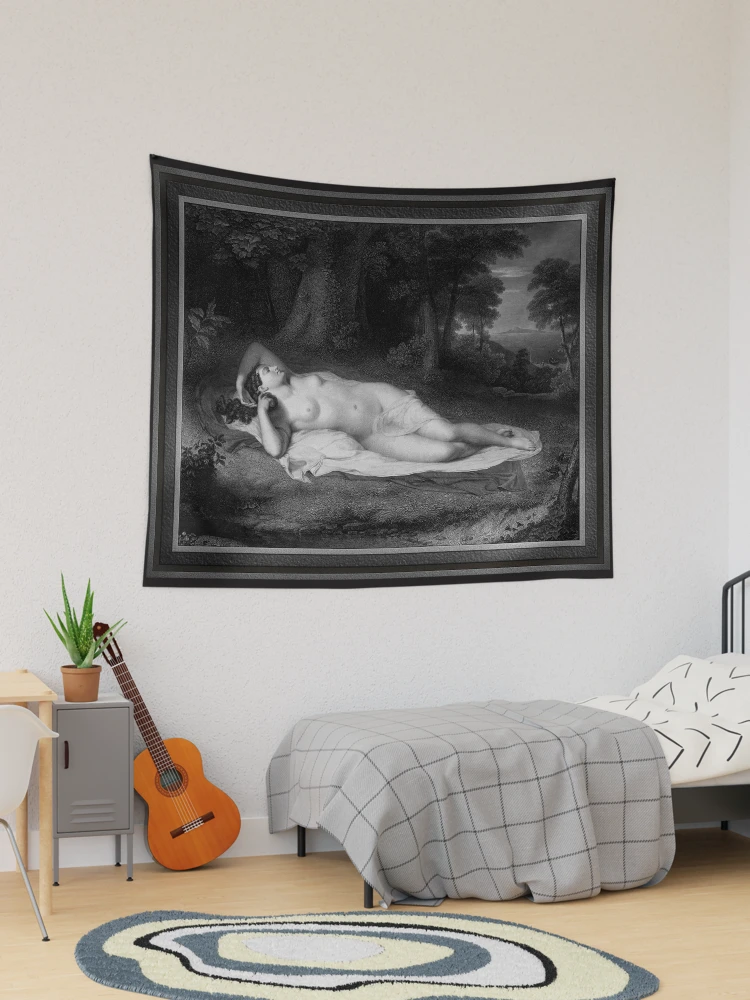
Ariadne Engraving c1835 by American Painter & Grabatzailea Asher Brown Durand (1796 – 1886) Erromantizismoaren Arte Mugimenduaren parte izan zen eta Hudson River Schooleko lizentziatua izan zen. Asherren ardatz nagusia paisaia margoetan zen.
Ikuspegi orokorra
The Ariadne engraving by Asher is from a copy of a painting he made from an original painting by John Vanderlyn (1776 – 1852). Ariadne is the Cretan Princess who was briefly loved by Theseus (the mythical king and founder-hero of Athens), who abandoned her on the island of Naxos.
“Ariadne” is an exquisite engraving created by Asher Brown Durand, one of the prominent American artists and engravers of the 19th century. Artelan hau, completed circa 1835, is a masterful interpretation of classical themes in the Neoclassical style.
The subject of this engraving, Ariadne, is a figure from Greek mythology, whose image has been captured through Durand’s engraving with remarkable sensitivity and depth. The mood and narrative conveyed in this piece are deeply entwined with the themes of abandonment, bakardadea, eta irrika, presenting Ariadne as a symbol of romantic melancholy.
Edukien taula
Gaia eta osaera
At the heart of the composition lies Ariadne, the central figure who is often depicted in ancient myths as the abandoned lover of Theseus. Durand has rendered her lying on the ground, draped in soft, flowing cloths that seem to merge with the natural world around her.
Her posture suggests a sense of relaxation or even resignation, with one arm resting behind her head, while the other lies gracefully on her torso. Bere aurpegia, serene yet distant, looks toward the horizon as though lost in thought or perhaps anticipating the return of her lover, a theme which resonates with the classical myths of lost love and abandonment.
The depiction of Ariadne in this engraving speaks volumes about Durand’s understanding of the human form, especially in the rendering of the female body. The curves of her limbs, the delicate folding of the fabric, and the naturalistic contours of her face all contribute to the timeless beauty and vulnerability of the figure. Durand’s use of shading and fine details in the engraving enhances the texture of the flesh and the fabric, lending a sense of life to the image despite its static nature.
The Setting and Environment
The background and setting of the engraving contribute significantly to its thematic weight. Ariadne is positioned in a lush, idyllic natural setting—likely an open glade or secluded forest. The terrain, gently sloping and dotted with trees, provides a soft contrast to the hard, chiseled forms of the figure.
A distant view of rolling hills and a river suggest a harmonious integration of human and natural elements. The setting appears to be at the cusp of day and night, as a hazy light filters through the trees, subtly illuminating Ariadne’s form while casting the landscape in a soft, dreamlike glow.
The artist skillfully renders the trees and foliage with intricate lines, creating a sense of depth and dimension. The distant hills add a sense of scale to the composition, further enhancing the naturalistic style that Durand excelled at. The fine linework and delicate shading are characteristic of the engraving medium, a technique that requires patience and precision, both of which Durand applied expertly to bring the landscape into harmonious balance with the figure of Ariadne.
The Medium: Engraving
As an engraving, this piece is executed with meticulous attention to detail. Durand, known for his skill in this medium, uses sharp, clear lines and intricate crosshatching to achieve a wide range of tonal values. The engraving’s fine lines lend it a delicate quality, but the use of contrast and shadow provides a deep, almost three-dimensional sense of volume. Durand’s technique is particularly adept at capturing textures, from the softness of Ariadne’s skin to the rough bark of the trees surrounding her.
The use of engraving as a medium also reflects Durand’s engagement with the tradition of classical art and his desire to produce works that could be widely disseminated, popularizing such mythological themes among American and European audiences. Engraving, being more accessible than original paintings, allowed for greater distribution of this image, making it not only an artistic achievement but also a vehicle for promoting classical ideals.
Themes and Symbolism
The figure of Ariadne in this engraving embodies themes of isolation, abandonment, eta denboraren joana. In Greek mythology, Ariadne helps Theseus escape the Labyrinth, only to be later abandoned by him on the island of Naxos. This image captures her at a moment of quiet reflection, perhaps contemplating her fate or lost love.
The serene expression on her face juxtaposes with the emotional turmoil that her myth entails. The soft folds of her drapery and the calm surroundings may symbolize a fleeting moment of peace before the inevitable sorrow that comes with being left alone.
Horrez gain, the natural setting of the piece complements these themes. The trees and foliage suggest a timeless, unchanging world, while Ariadne’s figure contrasts with this permanence, hinting at the transient nature of human life and emotion. Her presence in such a setting evokes the tension between humanity and nature, a theme that is deeply ingrained in classical art and literature.
Aldartea eta Giroa
ren aldartea “Ariadne” is deeply melancholic. Durand has chosen to portray the moment of Ariadne’s solitude after her abandonment, and the peaceful yet somber expression on her face enhances this emotional atmosphere. The engraving’s lighting, with its soft contrast between light and shadow, imbues the piece with a quiet, kalitate ia etereoa. The trees in the background create a feeling of shelter, yet their distance and the softness of their outlines evoke a sense of isolation, reinforcing the emotional undercurrent of the narrative.
While the scene is bathed in the calm of nature, there is an undercurrent of sadness that is palpable. The solitude of the figure, combined with the longing gaze and the distant landscape, creates an atmosphere that is both tender and tragic. It speaks to the human experience of abandonment and the quiet resignation that often accompanies it.
Bukaera
Asher Brown Durand’s “Ariadne” stands as a fine example of 19th-century American engraving and a representation of classical themes through a Neoclassical lens. The serene yet poignant depiction of Ariadne, set against a natural backdrop, invites the viewer to contemplate the fragility of human emotion, denboraren joana, and the isolation that often accompanies love and loss. The technical mastery and emotional depth of this work, combined with the delicate interplay of light and shadow, make it a timeless piece of art.
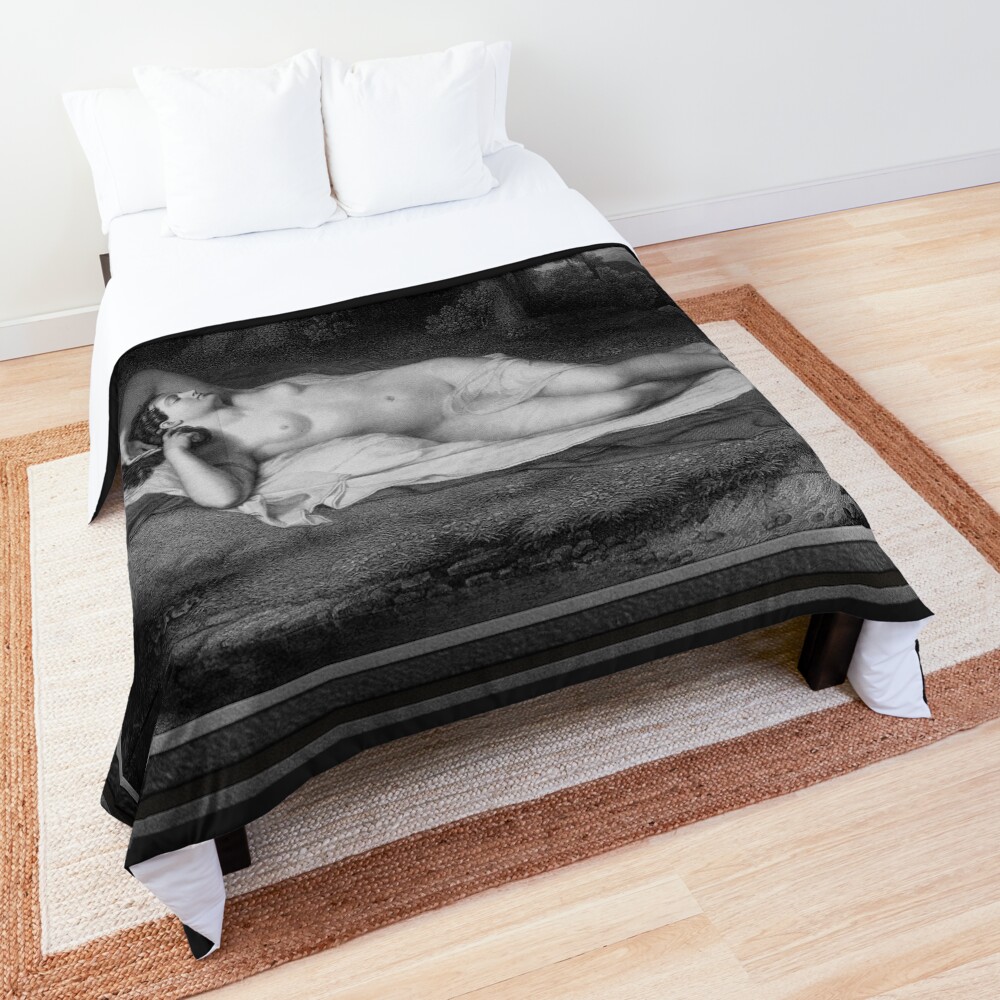
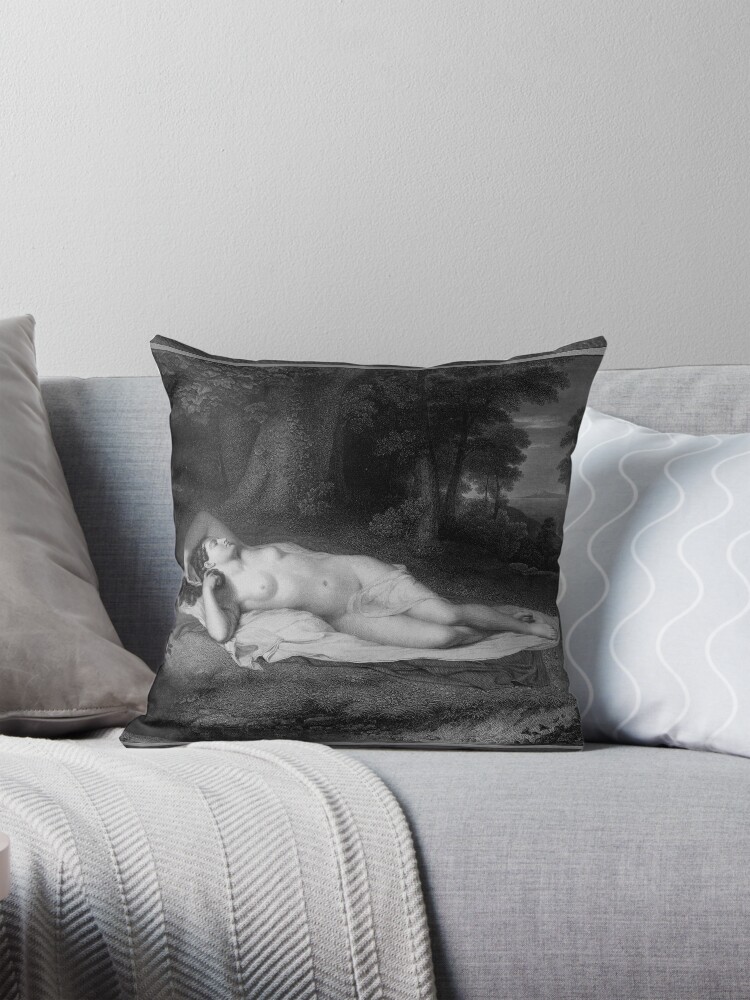
Ariadne Engraving depicts Ariadne laying down in the forest, on top of a bundle of clothing partially nude by a stream with her left arm positioned over her head and her right hand grasping her hair as it rest on the back portion of her neck.
In the background of the Ariadne Engraving past the trees and the hill she is resting on, we can see a boat on the bank of a lake, and in the far distance we can see what appears to be a large island.
This Ariadne Engraving is a retouched digital art old masters reproduction of a public domain image.
Beheko informazioa Wikipedia.org
Durand urtean jaio zen eta azkenean Maplewood-en hil zen, New Jersey (orduan Jefferson Village deitua). Hamaika umeetatik zortzigarrena izan zen. Duranden aita erlojugilea eta zilargilea zen.
Durand grabatzaile baten aprendiz izan zen 1812 to 1817 eta geroago enpresaren jabearekin lankidetza bat egin zuen, Charles Cushing Wright (1796–1854), konpainiaren New Yorkeko bulegoa kudeatzeko eskatu zion.
John Trumbull-i Independentzia Adierazpena grabatu zuen bitartean 1823, horrek Durand-en ospea ezarri zuen herrialdeko grabatzaile onenetako bat bezala.
Durandek New York Drawing Association antolatzen lagundu zuen 1825, Diseinu Akademia Nazionala bihurtuko zena; bertatik erakundeko presidente gisa arituko zen 1845 to 1861.
Asherrek billeteetan egindako grabatuak Ameriketako lehen posta-zigiluen erretratu gisa erabili ziren, du 1847 seriea. Bere anaia Zirorekin batera ondorengo batzuk ere grabatu zituen 1851 gaiak.
Bere interes nagusia grabatutik olio-pinturara aldatu zen 1830 bere patroiaren bultzadaz, Luman Reed. zehar 1837, bere lagun Thomas Colerekin batera joan zen zirriborro-espedizio batean Adirondacks mendietan dagoen Schroon Lake-ra eta handik gutxira paisaia-pinturan zentratzen hasi zen..
Udak zirriborroak egiten pasatzen zituen Catskills-en, Adirondacks, eta New Hampshireko Mendi Zuriak, Hudson River School definitzen lagundu zuten akademiako pieza amaituetan sartu ziren ehunka marrazki eta olio zirriborro eginez..
Durand bereziki gogoratzen da zuhaitzen erretratu zehatzengatik, arroka, eta hostoak. Naturatik zuzenean ahalik eta errealismo gehienarekin marraztearen defendatzailea izan zen. Durandek idatzi zuen, “Utzi [artista] dena eskrupuloz onartu [izadi] aurkeztuko dio egin arte, gradu batean, bere infinituarekin intimo bihurtu dira... ez utzi inoiz bere sakratutasuna profanatzen egiatik aldenduz.”
Hudson River Schooleko beste artista batzuek bezala, Durandek ere uste zuen natura Jainkoaren agerpen esanezina zela. Sentimendu hori eta arteari buruzko iritzi orokorrak adierazi zituen bere saiakeran “Paisaia-pinturari buruzko gutunak” Crayon-en, mendearen erdialdeko New Yorkeko arte-aldizkaria. Idatzi zuen Durandek, “[T]Paisaia Artearen benetako probintzia Jainkoaren lana sorkuntza ikusgaian irudikatzea da...”
Durand beregatik nabarmentzen da 1849 Kindred Spirits margotzea, Hudson River Schooleko artista Thomas Cole eta William Cullen Bryant poeta Catskills Mountains paisaian erakusten dituena.. Hau Cole-ri omenaldi gisa margotu zen Cole hil zenean 1848, eta Bryant-i opari gisa.