

Atlas a Hesperidky
Atlas a Hesperidky: A Study in Labor and Mythological Beauty
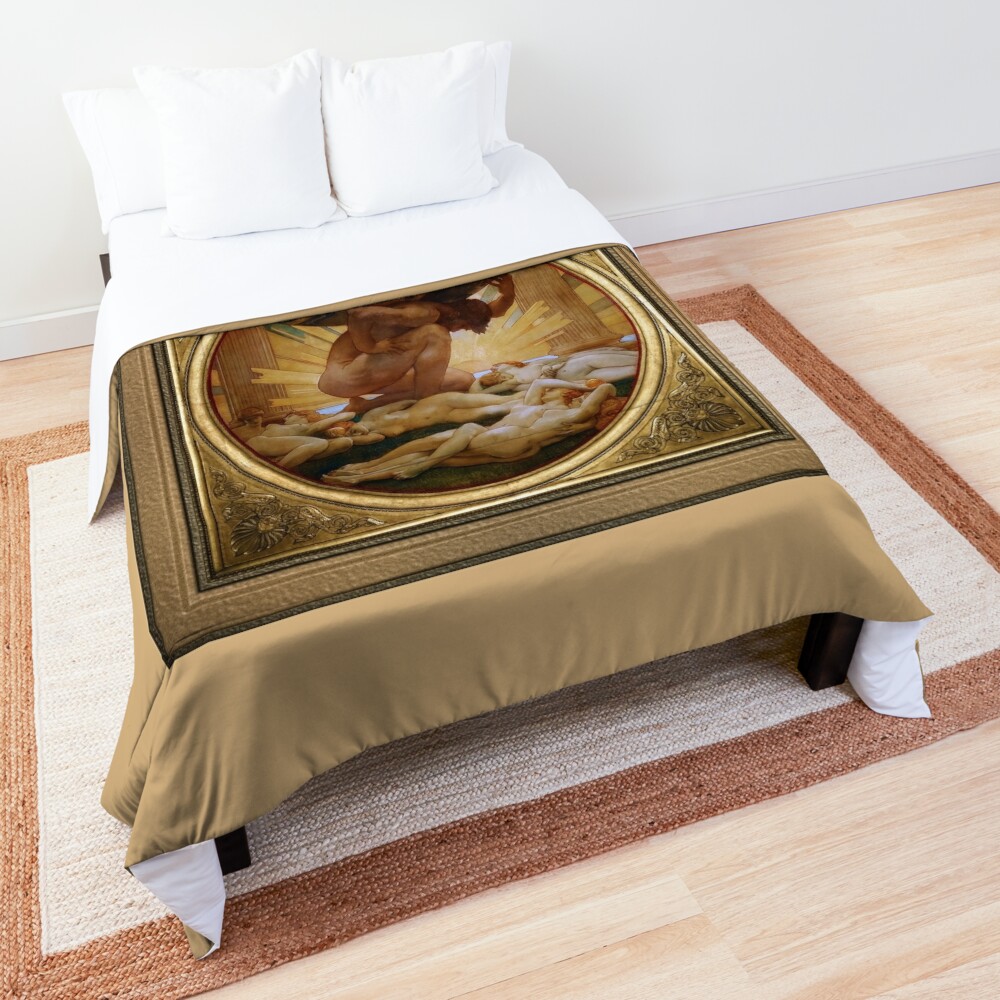
John Singer Sargent’s “Atlas and the Hesperides,” painted circa 1890-1895, is a striking example of his mastery of classical subject matter and dramatic composition. This oval-shaped canvas, originally intended as part of a larger decorative scheme for a Boston mansion, presents a compelling narrative drawn from Greek mythology, focusing on the titan Atlas’s arduous task and the serene beauty of the Hesperides, nymphs associated with the Garden of the Hesperides. Sargent’s work is not merely an illustration of myth; it’s a profound exploration of physical strain, mythological context, and aesthetic harmony.
Obsah
Složení struktury & The Oval Format
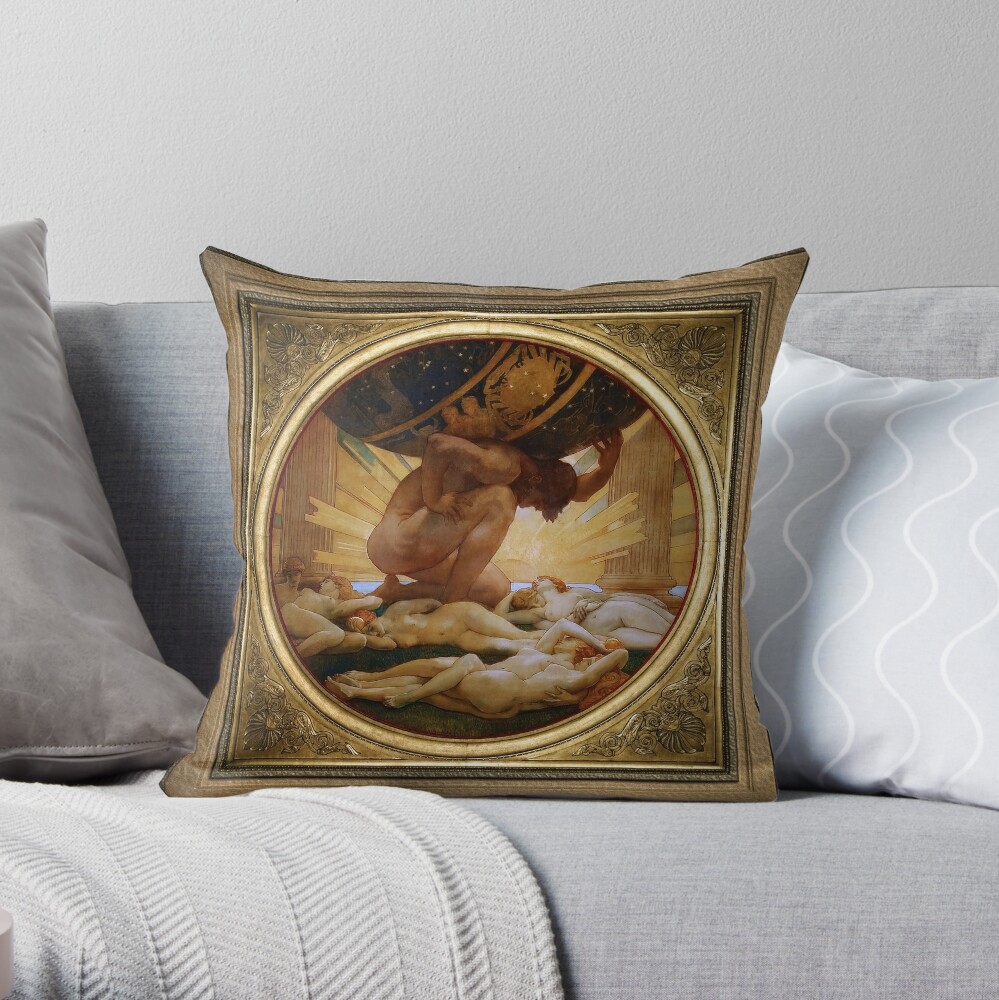
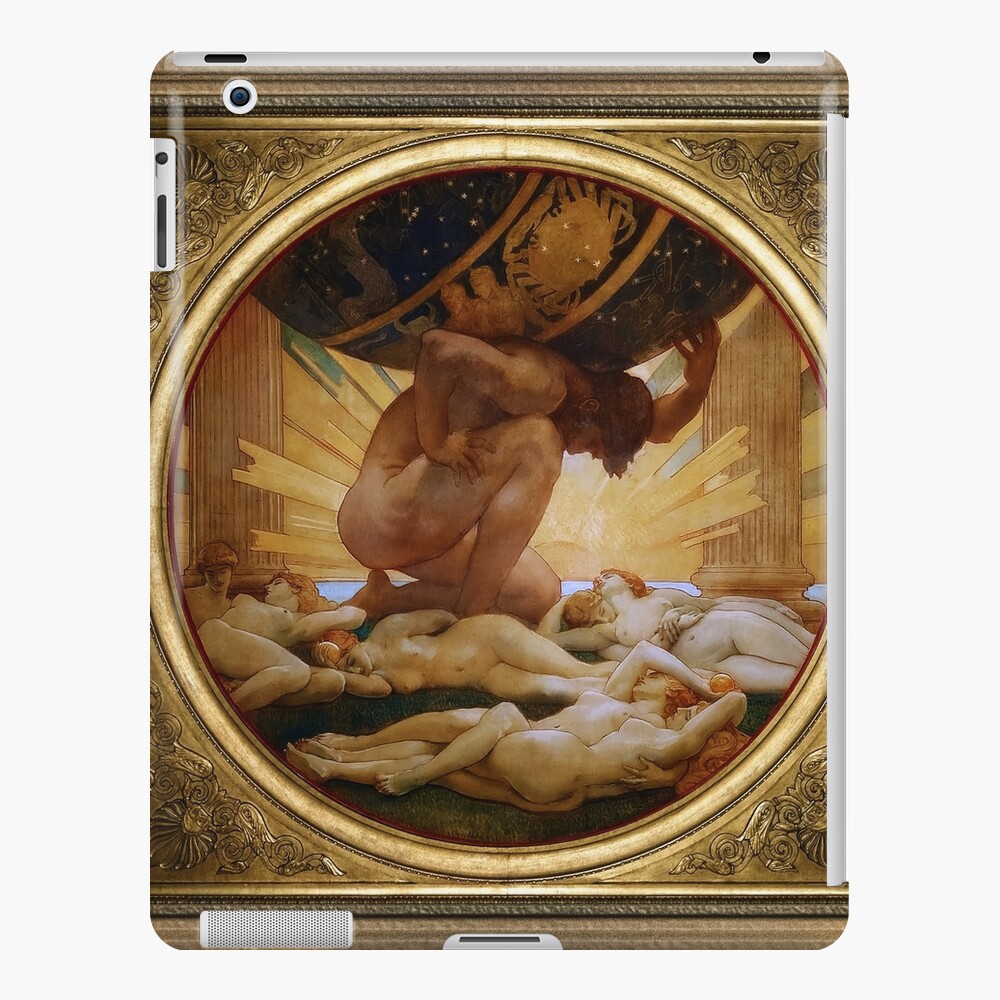
The painting’s unusual oval format immediately draws attention to its unique design. This shape dictates a circular flow within the composition, guiding the viewer’s eye around Atlas and the Hesperides. Sargent skillfully utilizes this constraint, creating a sense of contained drama. The central focus is undeniably on Atlas, whose immense form dominates the lower half of the canvas. He is depicted bearing an enormous celestial sphere, studded with stars, upon his shoulders and back. This weight visually crushes him; his posture conveys exhaustion and unrelenting effort. The oval shape emphasizes the cyclical nature of Atlas’s punishment – a perpetual burden.
Atlas: The Embodiment of Labor
Sargent’s portrayal of Atlas is remarkable for its realism despite the mythological context. He isn’t idealized in the traditional heroic sense; místo toho, he appears weary and burdened. His musculature is realistically rendered, showing signs of strain rather than exaggerated strength. The artist uses a muted palette of browns, ochres, and grays to depict Atlas’s skin and beard, further emphasizing his earthbound nature and the toll of his labor. The texture of his hair and beard is meticulously detailed, adding to the sense of realism. His gaze is averted, focused on the task at hand rather than any external observer, reinforcing the idea of solitary endurance.
The Hesperides: A Counterpoint of Serenity
In stark contrast to Atlas’s exertion, the Hesperides are depicted in a state of tranquil repose. They lie scattered across the lower foreground, their bodies bathed in golden light emanating from behind Atlas. Their poses are relaxed and languid, suggesting a carefree existence far removed from Atlas’s suffering. Sargent employs a lighter palette for these figures – creams, růžové, and pale yellows – to differentiate them visually from Atlas’s darker tones. The nymphs appear almost ethereal, their forms blending seamlessly with the surrounding light. Their presence serves as a poignant counterpoint to Atlas’s struggle, highlighting the disparity between his burden and their ease.
Světlo & Atmosphere: A Radiant Backdrop
The lighting in “Atlas and the Hesperides” is crucial to the painting’s overall effect. The radiant glow emanating from behind Atlas creates a dramatic backlight, silhouetting his figure against the celestial sphere. This light also illuminates the Hesperides, giving them an almost divine quality. Sargent masterfully uses chiaroscuro – the contrast between light and dark – to create depth and drama. The background is indistinct, suggesting a hazy atmosphere that further isolates Atlas and emphasizes the weight of his task. The golden light isn’t harsh; it’s diffused and warm, creating a sense of timelessness and mythological grandeur.
Umělecké vlivy & Sargent’s Style
Sargent’s style in this painting reflects his deep engagement with classical art traditions, particularly those of the Renaissance. The composition echoes works by Raphael and Michelangelo, while the realistic depiction of the human form owes a debt to artists like Leonardo da Vinci. nicméně, Sargent’s approach is distinctly his own. He avoids excessive idealization, opting instead for a more naturalistic portrayal of both Atlas and the Hesperides. His brushwork is loose and expressive, particularly in the rendering of the celestial sphere and the background atmosphere. The painting demonstrates Sargent’s ability to synthesize classical influences with a modern sensibility.
Symbolismus & Výklad
Beyond its narrative depiction of Greek mythology, “Atlas and the Hesperides” can be interpreted on multiple levels. Atlas’s burden represents the weight of responsibility and the enduring nature of labor. The celestial sphere symbolizes knowledge, moudrost, or perhaps even the universe itself – a vast and unknowable entity that Atlas is tasked with supporting. The Hesperides, associated with the golden apples of immortality, represent beauty, klid, and the rewards that may lie beyond arduous effort. Sargent’s painting invites contemplation on themes of human endurance, the contrast between labor and leisure, and the enduring power of myth.
Umělec bio Wikipedia.org
John Singer Sargent byl americký krajan, považováno za “přední portrétista své generace” pro jeho evokace luxusu eduardovské éry.
Vytvořil zhruba 900 olejomalby a více než 2,000 akvarely, stejně jako nespočet skic a kreseb uhlem.
Jeho dílo dokumentuje cesty po celém světě, od Benátek po Tyrolsko, Korfu, střední východ, Montana, Maine, a na Floridě.
Narodil se ve Florencii americkým rodičům, před přestěhováním do Londýna absolvoval výcvik v Paříži, většinu svého života prožil v Evropě.
V 80. letech 19. století předal pařížskému salonu svůj portrét Madame X c1884, jehož záměrem bylo upevnit svou pozici společenského malíře v Paříži; ale místo toho malba vyústila ve skandál.
Portrét Madame X byl přední socialita, Madame Pierre Gautreau oblečená v černých večerních šatech s hlubokým výstřihem a zlatými ramínky s diamantovým řetízkem, který ji pevně hladil kolem pasu.
Pro časy, naznačovalo to mnoha Pařížanům, indiskrétní pózování v odhalujícím oblečení a vyvolalo bouři nevole, donutil Sargenta opustit zemi.
Následující rok Sargent odešel do Anglie, kde pokračoval v úspěšné kariéře portrétisty; a jako portrétista se těšil mezinárodnímu uznání.
Od začátku, Sargentova tvorba se vyznačovala pozoruhodnou technickou vybaveností, zejména v jeho schopnosti kreslit štětcem; což v pozdějších letech vyvolalo obdiv i kritiku domnělé povrchnosti.
Jeho zakázková díla byla v souladu s velkým způsobem portrétování, zatímco jeho neformální studie a krajinomalby vykazovaly obeznámenost s impresionismem.
V pozdějším životě Sargent vyjádřil ambivalenci ohledně omezení formální portrétní práce, a velkou část své energie věnoval nástěnné malbě a práci v plenéru.
Toto je retušovaná reprodukce starých mistrů digitálního umění obrázku ve veřejné doméně, kterou lze zakoupit online jako a rolovaný tisk na plátno.