

Atlas And The Hesperides
Atlas And The Hesperides: A Study in Labor and Mythological Beauty
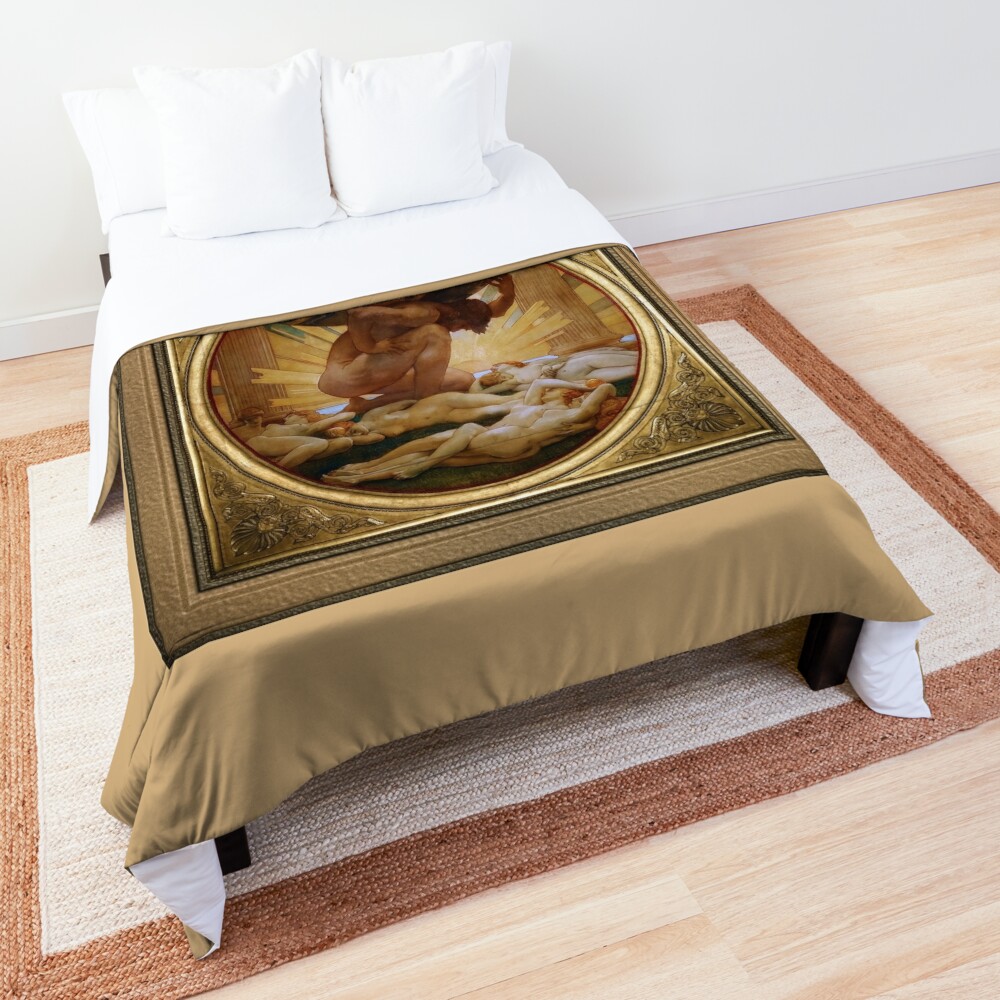
John Singer Sargent’s “Atlas and the Hesperides,” pentrita ĉirkaŭ 1890-1895, is a striking example of his mastery of classical subject matter and dramatic composition. This oval-shaped canvas, originally intended as part of a larger decorative scheme for a Boston mansion, presents a compelling narrative drawn from Greek mythology, focusing on the titan Atlas’s arduous task and the serene beauty of the Hesperides, nymphs associated with the Garden of the Hesperides. Sargent’s work is not merely an illustration of myth; it’s a profound exploration of physical strain, mythological context, kaj estetika harmonio.
Enhavtabelo
Kompozicia Strukturo & The Oval Format
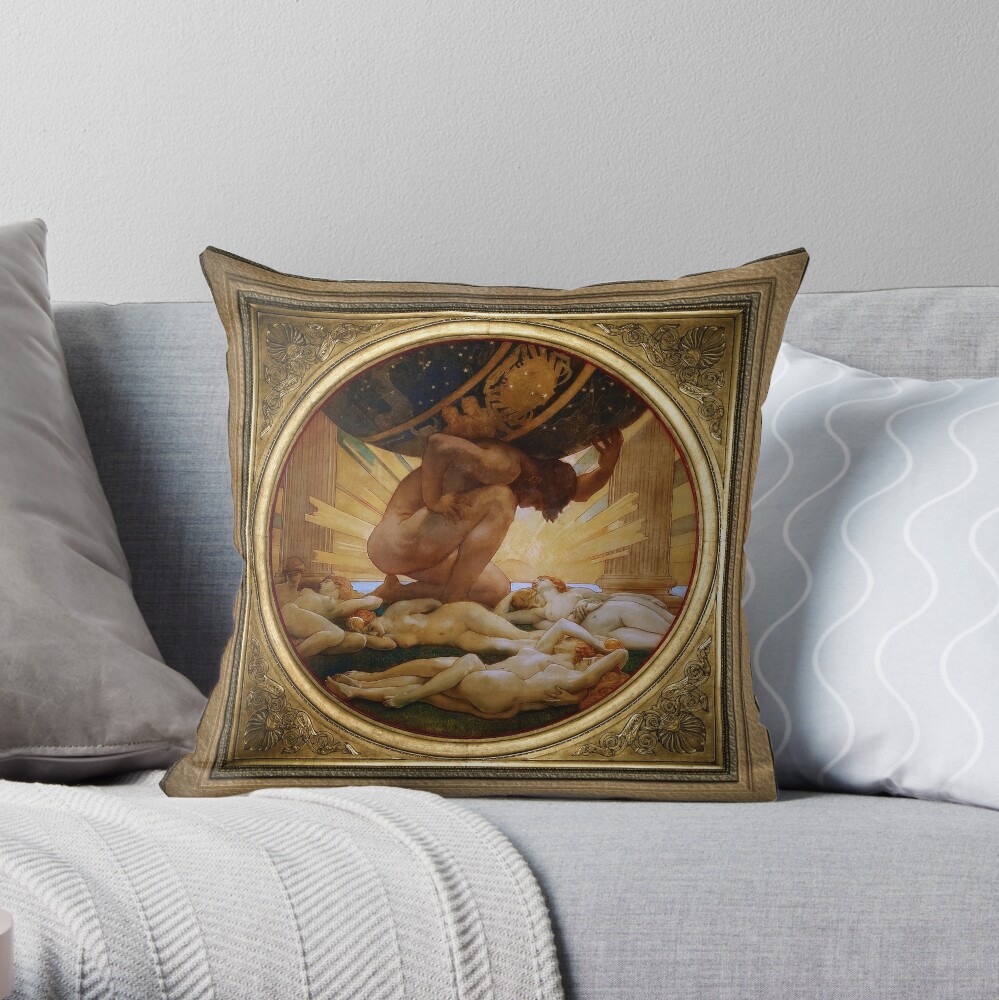
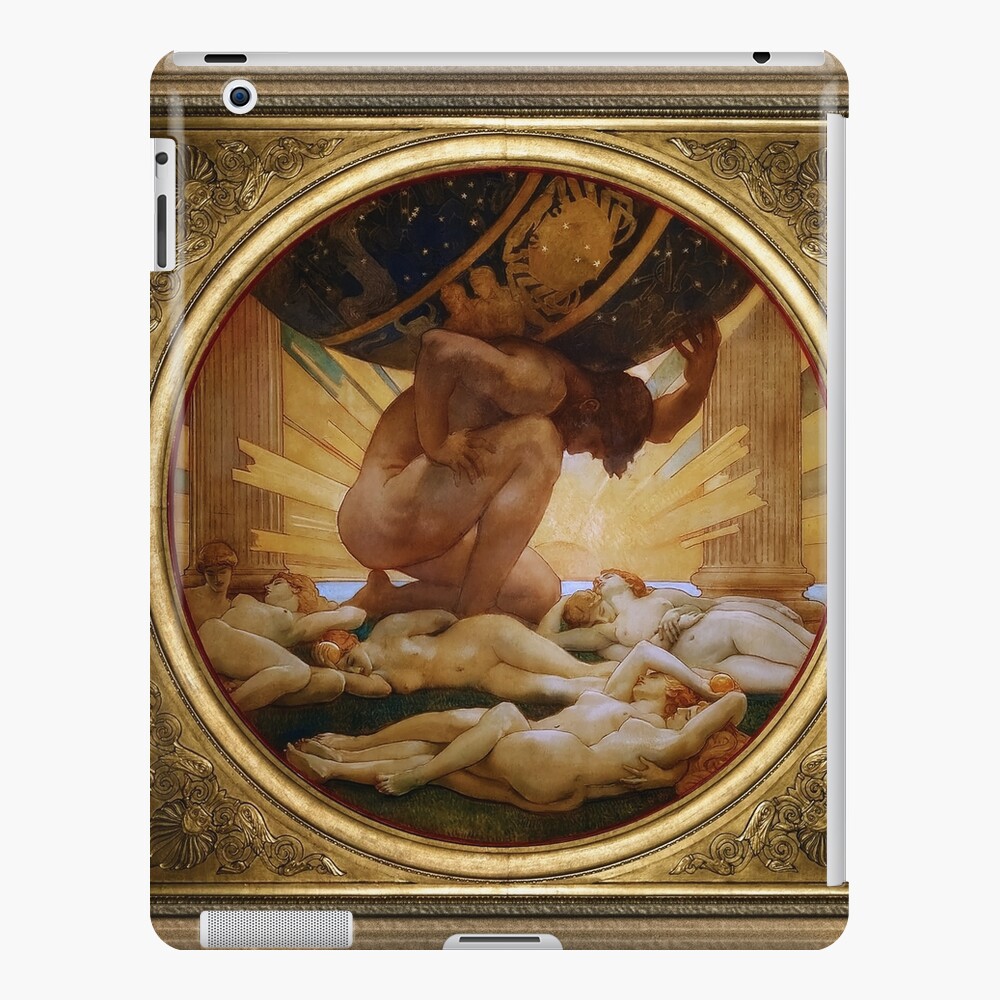
The painting’s unusual oval format immediately draws attention to its unique design. This shape dictates a circular flow within the composition, guiding the viewer’s eye around Atlas and the Hesperides. Sargent skillfully utilizes this constraint, creating a sense of contained drama. The central focus is undeniably on Atlas, whose immense form dominates the lower half of the canvas. He is depicted bearing an enormous celestial sphere, studded with stars, upon his shoulders and back. This weight visually crushes him; his posture conveys exhaustion and unrelenting effort. The oval shape emphasizes the cyclical nature of Atlas’s punishment – a perpetual burden.
Atlas: The Embodiment of Labor
Sargent’s portrayal of Atlas is remarkable for its realism despite the mythological context. He isn’t idealized in the traditional heroic sense; Anstataŭe, he appears weary and burdened. His musculature is realistically rendered, showing signs of strain rather than exaggerated strength. The artist uses a muted palette of browns, okroj, and grays to depict Atlas’s skin and beard, further emphasizing his earthbound nature and the toll of his labor. The texture of his hair and beard is meticulously detailed, adding to the sense of realism. His gaze is averted, focused on the task at hand rather than any external observer, reinforcing the idea of solitary endurance.
The Hesperides: A Counterpoint of Serenity
In stark contrast to Atlas’s exertion, the Hesperides are depicted in a state of tranquil repose. They lie scattered across the lower foreground, their bodies bathed in golden light emanating from behind Atlas. Their poses are relaxed and languid, suggesting a carefree existence far removed from Atlas’s suffering. Sargent employs a lighter palette for these figures – creams, Pinks, and pale yellows – to differentiate them visually from Atlas’s darker tones. The nymphs appear almost ethereal, their forms blending seamlessly with the surrounding light. Their presence serves as a poignant counterpoint to Atlas’s struggle, highlighting the disparity between his burden and their ease.
Lumo & Atmosfero: A Radiant Backdrop
La lumigado en “Atlas and the Hesperides” is crucial to the painting’s overall effect. The radiant glow emanating from behind Atlas creates a dramatic backlight, silhouetting his figure against the celestial sphere. This light also illuminates the Hesperides, giving them an almost divine quality. Sargent masterfully uses chiaroscuro – the contrast between light and dark – to create depth and drama. The background is indistinct, suggesting a hazy atmosphere that further isolates Atlas and emphasizes the weight of his task. The golden light isn’t harsh; it’s diffused and warm, creating a sense of timelessness and mythological grandeur.
Artaj Influoj & Sargent’s Style
Sargent’s style in this painting reflects his deep engagement with classical art traditions, particularly those of the Renaissance. The composition echoes works by Raphael and Michelangelo, while the realistic depiction of the human form owes a debt to artists like Leonardo da Vinci. Tamen, Sargent’s approach is distinctly his own. He avoids excessive idealization, opting instead for a more naturalistic portrayal of both Atlas and the Hesperides. His brushwork is loose and expressive, particularly in the rendering of the celestial sphere and the background atmosphere. The painting demonstrates Sargent’s ability to synthesize classical influences with a modern sensibility.
Simboleco & Interpreto
Beyond its narrative depiction of Greek mythology, “Atlas and the Hesperides” can be interpreted on multiple levels. Atlas’s burden represents the weight of responsibility and the enduring nature of labor. The celestial sphere symbolizes knowledge, Saĝo, or perhaps even the universe itself – a vast and unknowable entity that Atlas is tasked with supporting. The Hesperides, associated with the golden apples of immortality, represent beauty, trankvilo, and the rewards that may lie beyond arduous effort. Sargent’s painting invites contemplation on themes of human endurance, the contrast between labor and leisure, and the enduring power of myth.
Artisto Bio derivita de Vikipedio.org
John Singer Sargent estis usona elmigrinta artisto, konsiderata la “ĉefa portretisto de sia generacio” pro liaj elvokadoj de Edwardian-epoko lukso.
Li kreis proksimume 900 oleo -pentraĵoj kaj pli ol 2,000 Akvareloj, same kiel sennombraj skizoj kaj karbaj desegnoj.
Liaj Oeuvre -dokumentoj tutmonde vojaĝas, De Venecio ĝis la Tirolo, Korfuo, Mezoriento, Montano, Majno, kaj Florido.
Naskita en Florenco al usonaj gepatroj, Li estis trejnita en Parizo antaŭ ol li translokiĝis al Londono, vivante la plej grandan parton de sia vivo en Eŭropo.
En la 1880 -aj jaroj li faris fruan submetiĝon al la Pariza Salono de sia Madame X Portrait C1884, kiun la intenco solidigi sian pozicion kiel socio pentristo en Parizo; Sed anstataŭe la pentraĵo rezultigis skandalon.
La Madame X -portreto estis de ĉefa societo, Sinjorino Pierre Gautreau vestita per nigra plonĝanta kolo vespera robo kun oraj diamantaj ĉenaj ŝultraj rimenoj, tio firme karesis ŝian talion.
Por la tempoj, ĝi sugestis al multaj parizanoj, nediskreta pozado en malkaŝanta vestaro kaj provokis ŝtormon de indigno, devigante Sargent forlasi la landon.
La sekvan jaron Sargent foriris por Anglujo, kie li daŭrigis sukcesan karieron kiel portretisto; Kaj ĝuis internacian aklamon kiel portretiston.
De la komenco, La laboro de Sargent estis karakterizita de rimarkinda teknika instalaĵo, aparte en sia kapablo desegni per peniko; kiu en postaj jaroj inspiris admiron same kiel kritikon por supozata malprofundeco.
Liaj komisiitaj verkoj konformis al la grandioza portretado, Dum liaj neformalaj studoj kaj pejzaĝaj pentraĵoj montris familiarecon kun impresionismo.
En posta vivo Sargent esprimis ambivalencon pri la limigoj de formala portreta laboro, and devoted much of his energy to mural painting and working en plein air.
Ĉi tio estas retuŝita cifereca arto malnova majstra reproduktaĵo de publika domajna bildo aĉetebla interrete kiel a ruliĝinta tolo presaĵo.