

Atlas Eta Hesperides
Atlas Eta Hesperides: Lanari eta edertasun mitologikoari buruzko azterketa
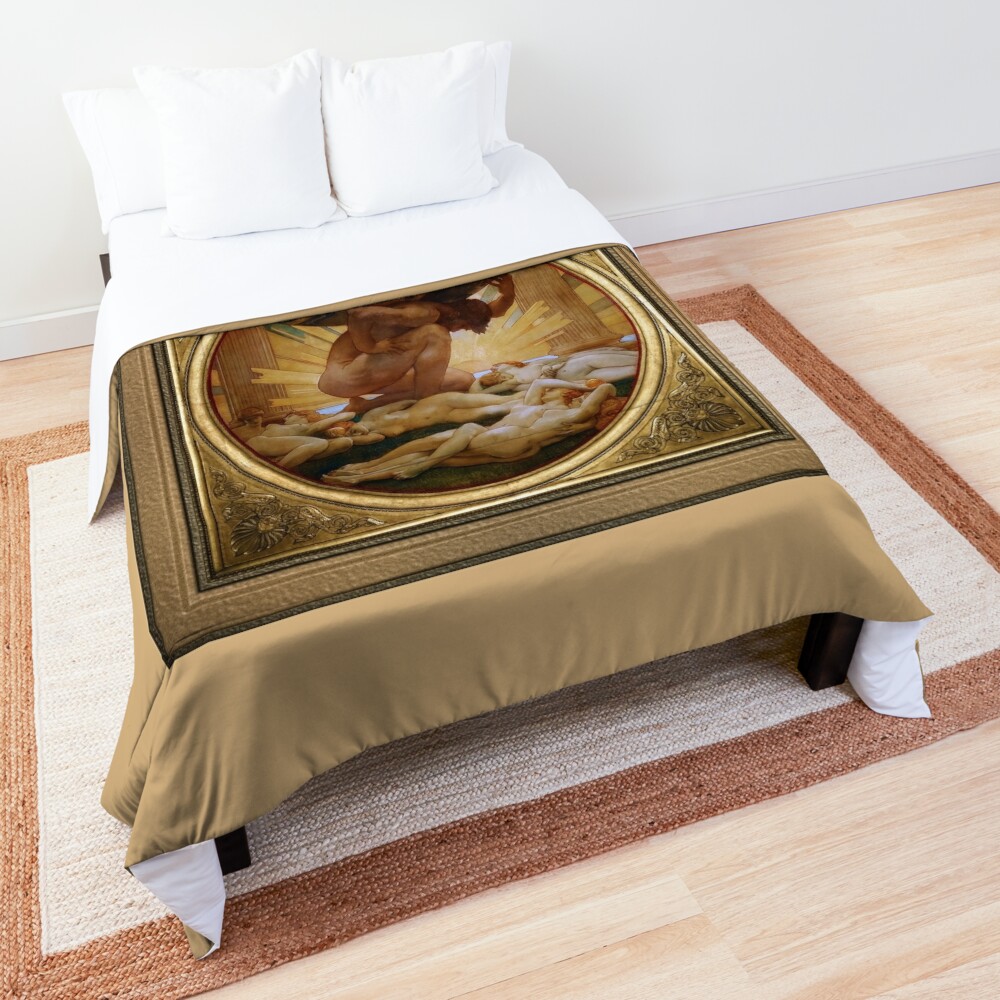
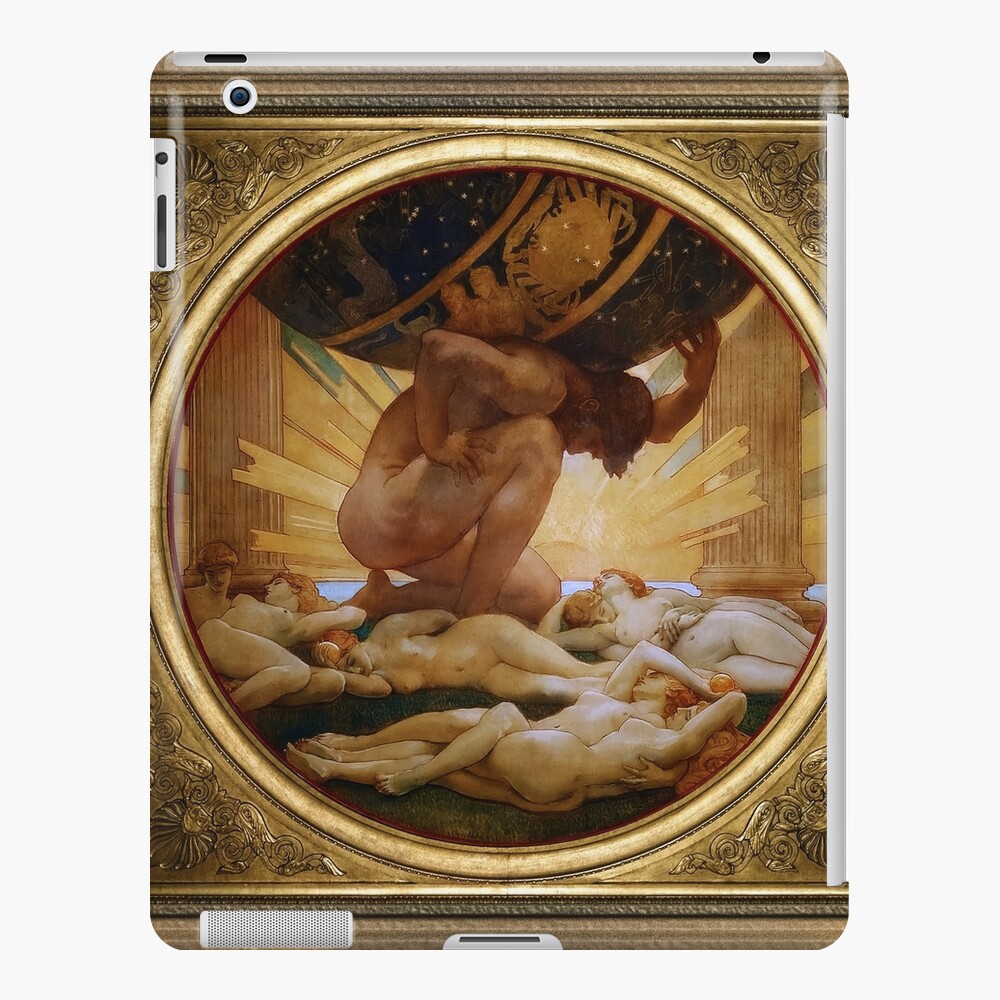
John Singer Sargent"Atlas eta Hesperides,” inguru margotua 1890-1895, gai klasikoa eta konposizio dramatikoa menderatzen dituen adibide nabarmena da. Obalo itxurako mihise hau, hasiera batean Bostongo jauregi baten dekorazio-eskema handiago baten parte izan zen, greziar mitologiatik ateratako narrazio erakargarria aurkezten du, Atlas titanaren zeregin neketsuan eta Hesperidesen edertasun lasaian zentratuz, Hesperides Lorategiarekin lotutako ninfak. Sargenten lana ez da mitoaren ilustrazio hutsa; tentsio fisikoaren esplorazio sakona da, testuinguru mitologikoa, eta armonia estetikoa.
Edukien taula
Konposizio Egitura & The Oval Format
The painting’s unusual oval format immediately draws attention to its unique design. This shape dictates a circular flow within the composition, guiding the viewer’s eye around Atlas and the Hesperides. Sargent skillfully utilizes this constraint, creating a sense of contained drama. The central focus is undeniably on Atlas, whose immense form dominates the lower half of the canvas. He is depicted bearing an enormous celestial sphere, studded with stars, upon his shoulders and back. This weight visually crushes him; his posture conveys exhaustion and unrelenting effort. The oval shape emphasizes the cyclical nature of Atlas’s punishment – a perpetual burden.
Atlas: The Embodiment of Labor
Sargent’s portrayal of Atlas is remarkable for its realism despite the mythological context. He isn’t idealized in the traditional heroic sense; horren ordez, he appears weary and burdened. His musculature is realistically rendered, showing signs of strain rather than exaggerated strength. The artist uses a muted palette of browns, ochres, and grays to depict Atlas’s skin and beard, further emphasizing his earthbound nature and the toll of his labor. The texture of his hair and beard is meticulously detailed, adding to the sense of realism. His gaze is averted, focused on the task at hand rather than any external observer, reinforcing the idea of solitary endurance.
The Hesperides: A Counterpoint of Serenity
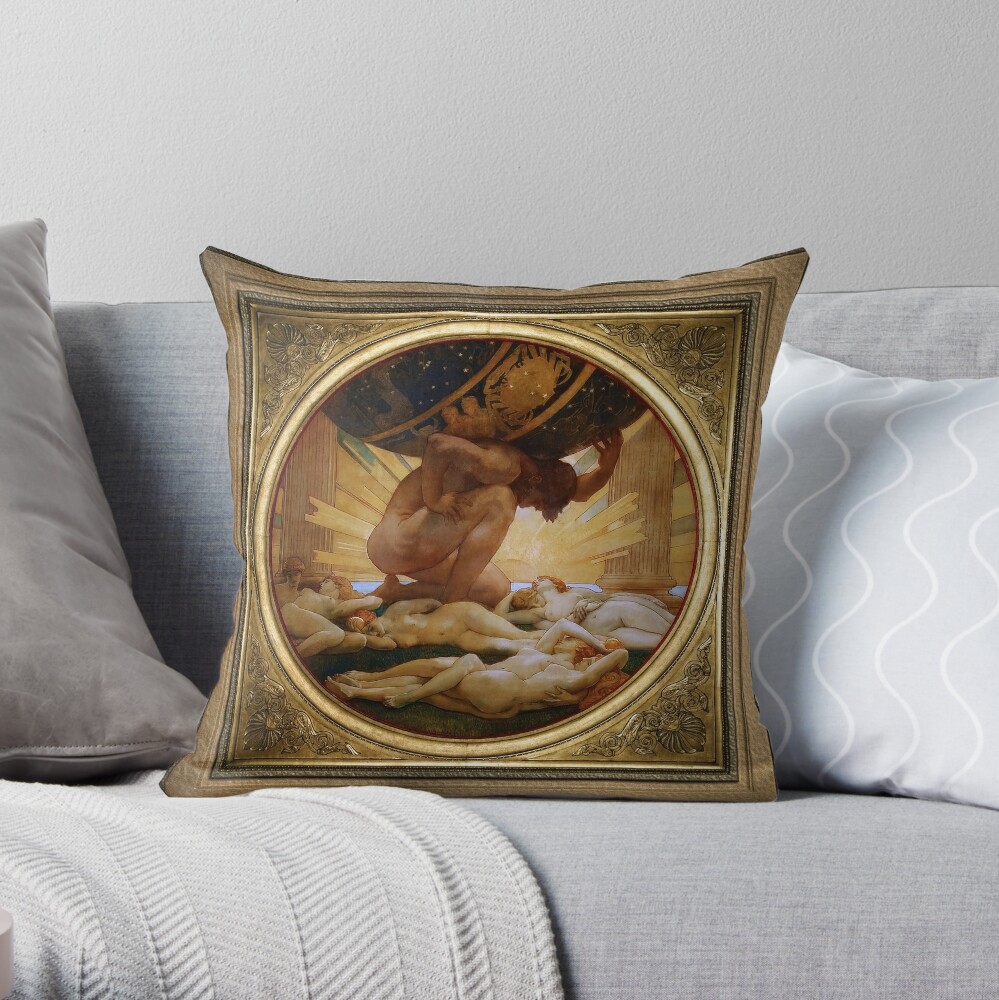
In stark contrast to Atlas’s exertion, the Hesperides are depicted in a state of tranquil repose. They lie scattered across the lower foreground, their bodies bathed in golden light emanating from behind Atlas. Their poses are relaxed and languid, suggesting a carefree existence far removed from Atlas’s suffering. Sargent employs a lighter palette for these figures – creams, pinks, and pale yellows – to differentiate them visually from Atlas’s darker tones. The nymphs appear almost ethereal, their forms blending seamlessly with the surrounding light. Their presence serves as a poignant counterpoint to Atlas’s struggle, highlighting the disparity between his burden and their ease.
Argia & Giroa: A Radiant Backdrop
Argiztapena sartu “Atlas and the Hesperides” is crucial to the painting’s overall effect. The radiant glow emanating from behind Atlas creates a dramatic backlight, silhouetting his figure against the celestial sphere. This light also illuminates the Hesperides, giving them an almost divine quality. Sargent masterfully uses chiaroscuro – the contrast between light and dark – to create depth and drama. The background is indistinct, suggesting a hazy atmosphere that further isolates Atlas and emphasizes the weight of his task. The golden light isn’t harsh; it’s diffused and warm, creating a sense of timelessness and mythological grandeur.
Eragin artistikoak & Sargent’s Style
Sargent’s style in this painting reflects his deep engagement with classical art traditions, particularly those of the Renaissance. The composition echoes works by Raphael and Michelangelo, while the realistic depiction of the human form owes a debt to artists like Leonardo da Vinci. Alabaina, Sargent’s approach is distinctly his own. He avoids excessive idealization, opting instead for a more naturalistic portrayal of both Atlas and the Hesperides. His brushwork is loose and expressive, particularly in the rendering of the celestial sphere and the background atmosphere. The painting demonstrates Sargent’s ability to synthesize classical influences with a modern sensibility.
Sinbolismoa & Interpretazioa
Beyond its narrative depiction of Greek mythology, “Atlas and the Hesperides” can be interpreted on multiple levels. Atlas’s burden represents the weight of responsibility and the enduring nature of labor. The celestial sphere symbolizes knowledge, jakinduria, or perhaps even the universe itself – a vast and unknowable entity that Atlas is tasked with supporting. The Hesperides, associated with the golden apples of immortality, represent beauty, tranquility, and the rewards that may lie beyond arduous effort. Sargent’s painting invites contemplation on themes of human endurance, the contrast between labor and leisure, and the enduring power of myth.
Bio artista honetatik eratorria Wikipedia.org
John Singer Sargent estatubatuar artista erbesteratua izan zen, kontuan hartuta “bere belaunaldiko erretratugile nagusia” Edwardiar garaiko luxuaren ebokazioengatik.
Gutxi gorabehera sortu zuen 900 olio-pinturak eta baino gehiago 2,000 akuarelak, baita ezin konta ahala zirriborro eta ikatz marrazkiak ere.
Bere obrak mundu osoko bidaiak dokumentatzen ditu, Veneziatik Tirolera, Korfu, Ekialde Hurbila, Montana, Maine, eta Florida.
Florentzian jaio zen guraso amerikarrengandik, Parisen trebatu zen Londresera joan aurretik, bere bizitzaren zatirik handiena Europan bizi zuen.
1880ko hamarkadan Parisko Aretoan aurkeztu zuen bere Madame X Portrait c1884., zeina Parisen gizarteko margolari gisa duen posizioa sendotzeko asmoa; baina horren ordez margoak iskanbila sortu zuen.
Madame X Portraita sozialista nagusi batena zen, Madame Pierre Gautreau lepo murgildu beltz batekin jantzita, urrezko diamante-katearen sorbalda-uhalekin, estuki laztantzen zion gerria.
Garaietarako, iradoki zien paristar askori, janzkera agerian jarrita posatzen indiskretu batek eta haserre ekaitza eragin zuen, Sargent herrialdea uztera behartuz.
Hurrengo urtean Sargent Ingalaterrara joan zen, non erretratu-artista gisa ibilbide arrakastatsua jarraitu zuen; eta nazioartean ospea izan zuen erretratugile gisa.
Hasieratik, Sargenten lana erraztasun tekniko nabarmena izan zen, batez ere pintzelarekin marrazteko gaitasunean; geroko urteetan miresmena eta baita kritika ere eragin zituen ustezko azalkeriagatik.
Enkarguz egindako lanak erretratu modu handiarekin bat zetozen, bere ikasketa informalek eta paisaia-pinturak inpresionismoarekin ezagutzen zuten bitartean.
Geroago bizitzan Sargentek anbibalentzia adierazi zuen erretratu lan formalaren murrizketei buruz, and devoted much of his energy to mural painting and working en plein air.
Hau domeinu publikoko irudi baten erreprodukzioa da arte digitaleko maisu zaharren erreprodukzioa, sarean erosteko moduan dagoena ijetzitako mihise inprimatua.