

Atlas ja Hesperidit
Atlas ja Hesperidit: A Study in Labor and Mythological Beauty
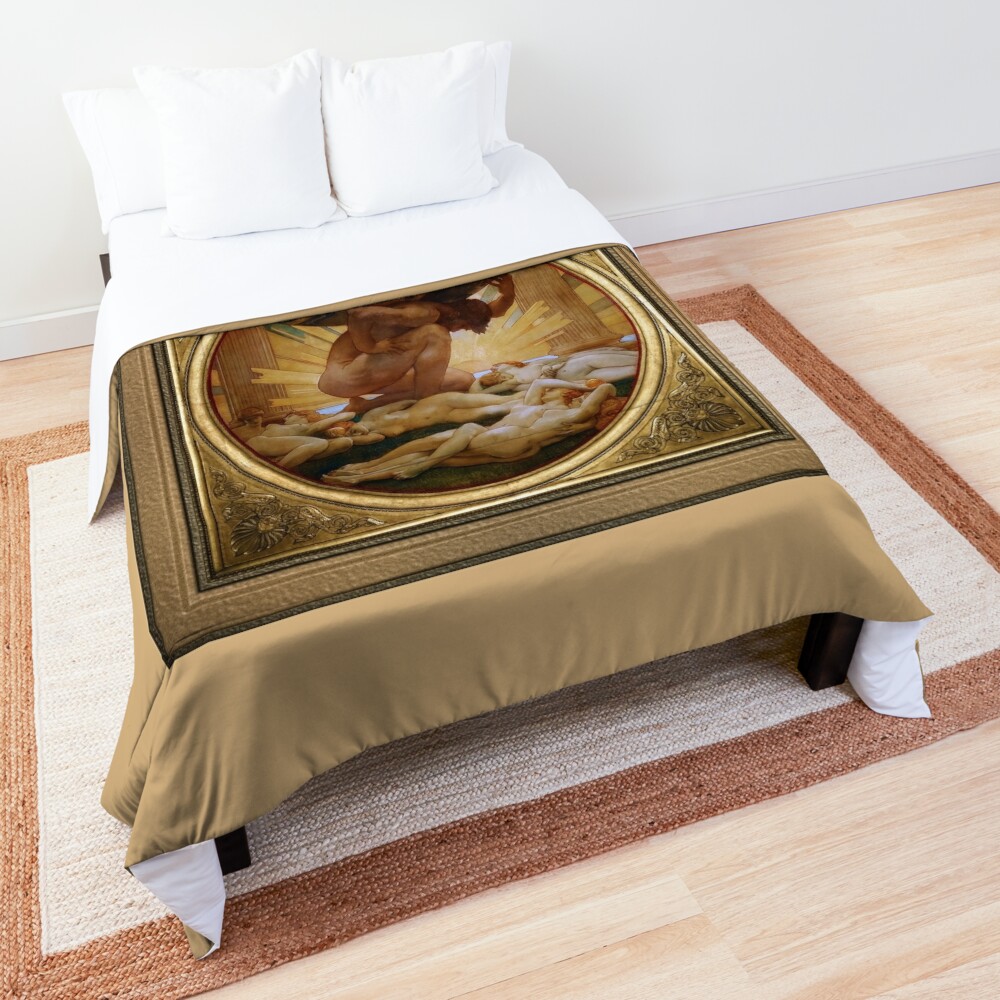
John Singer Sargent’s “Atlas and the Hesperides,”Maalattu noin 1890-1895, is a striking example of his mastery of classical subject matter and dramatic composition. This oval-shaped canvas, originally intended as part of a larger decorative scheme for a Boston mansion, presents a compelling narrative drawn from Greek mythology, focusing on the titan Atlas’s arduous task and the serene beauty of the Hesperides, nymphs associated with the Garden of the Hesperides. Sargent’s work is not merely an illustration of myth; it’s a profound exploration of physical strain, mythological context, and aesthetic harmony.
Sisällysluettelo
Koostumusrakenne & The Oval Format
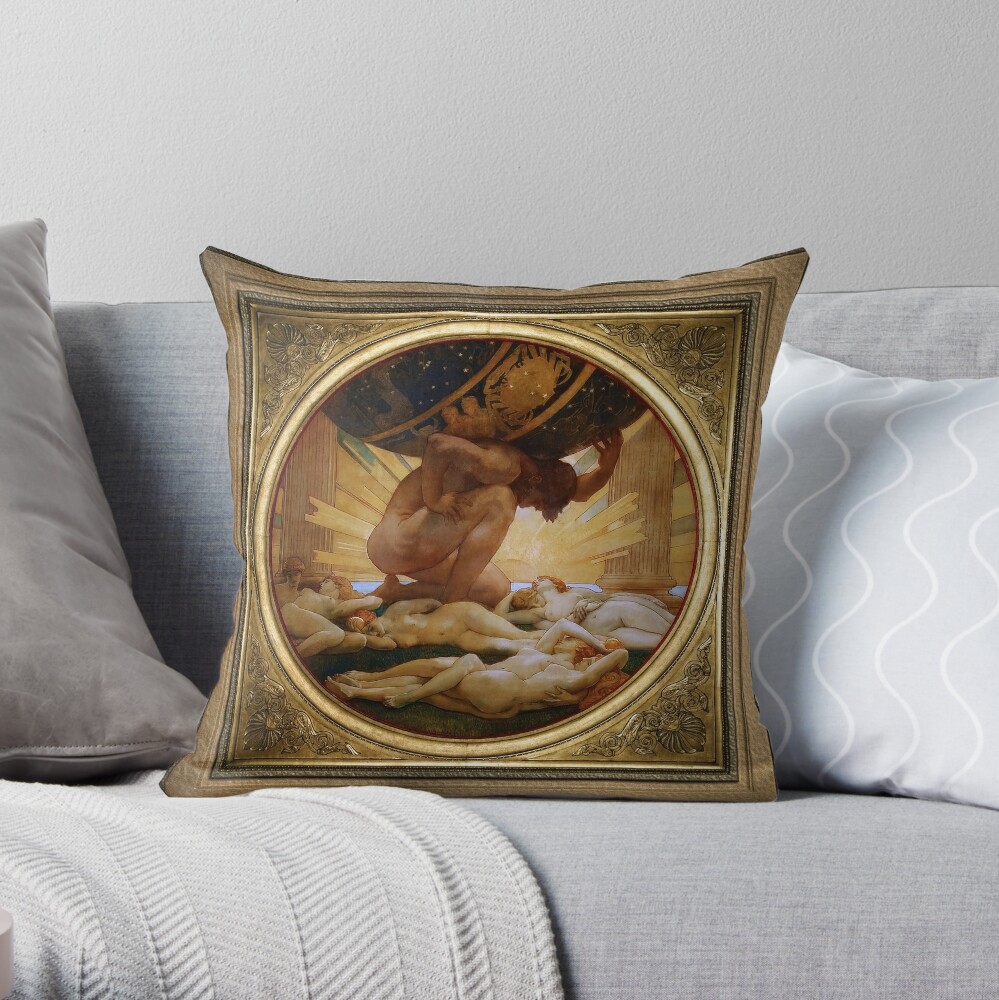
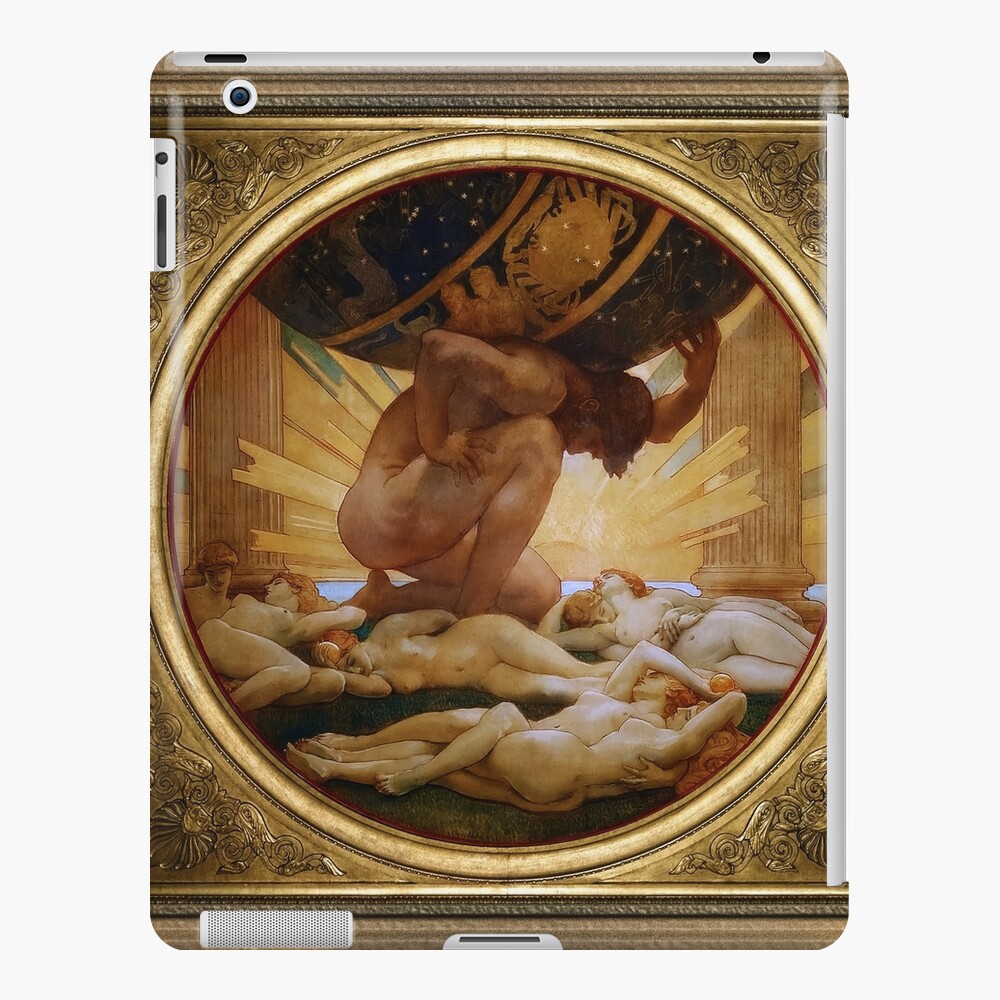
The painting’s unusual oval format immediately draws attention to its unique design. This shape dictates a circular flow within the composition, guiding the viewer’s eye around Atlas and the Hesperides. Sargent skillfully utilizes this constraint, creating a sense of contained drama. The central focus is undeniably on Atlas, whose immense form dominates the lower half of the canvas. He is depicted bearing an enormous celestial sphere, studded with stars, upon his shoulders and back. This weight visually crushes him; his posture conveys exhaustion and unrelenting effort. The oval shape emphasizes the cyclical nature of Atlas’s punishment – a perpetual burden.
Atlas: The Embodiment of Labor
Sargent’s portrayal of Atlas is remarkable for its realism despite the mythological context. He isn’t idealized in the traditional heroic sense; sen sijaan, he appears weary and burdened. His musculature is realistically rendered, showing signs of strain rather than exaggerated strength. The artist uses a muted palette of browns, ochres, and grays to depict Atlas’s skin and beard, further emphasizing his earthbound nature and the toll of his labor. The texture of his hair and beard is meticulously detailed, adding to the sense of realism. His gaze is averted, focused on the task at hand rather than any external observer, reinforcing the idea of solitary endurance.
The Hesperides: A Counterpoint of Serenity
In stark contrast to Atlas’s exertion, the Hesperides are depicted in a state of tranquil repose. They lie scattered across the lower foreground, their bodies bathed in golden light emanating from behind Atlas. Their poses are relaxed and languid, suggesting a carefree existence far removed from Atlas’s suffering. Sargent employs a lighter palette for these figures – creams, pinkit, and pale yellows – to differentiate them visually from Atlas’s darker tones. The nymphs appear almost ethereal, their forms blending seamlessly with the surrounding light. Their presence serves as a poignant counterpoint to Atlas’s struggle, highlighting the disparity between his burden and their ease.
Kevyt & Tunnelma: A Radiant Backdrop
Valaistus sisään “Atlas and the Hesperides” is crucial to the painting’s overall effect. The radiant glow emanating from behind Atlas creates a dramatic backlight, silhouetting his figure against the celestial sphere. This light also illuminates the Hesperides, giving them an almost divine quality. Sargent masterfully uses chiaroscuro – the contrast between light and dark – to create depth and drama. The background is indistinct, suggesting a hazy atmosphere that further isolates Atlas and emphasizes the weight of his task. The golden light isn’t harsh; it’s diffused and warm, creating a sense of timelessness and mythological grandeur.
Taiteellisia vaikutteita & Sargent’s Style
Sargent’s style in this painting reflects his deep engagement with classical art traditions, particularly those of the Renaissance. The composition echoes works by Raphael and Michelangelo, while the realistic depiction of the human form owes a debt to artists like Leonardo da Vinci. kuitenkin, Sargent’s approach is distinctly his own. He avoids excessive idealization, opting instead for a more naturalistic portrayal of both Atlas and the Hesperides. His brushwork is loose and expressive, particularly in the rendering of the celestial sphere and the background atmosphere. The painting demonstrates Sargent’s ability to synthesize classical influences with a modern sensibility.
Symboliikka & Tulkinta
Beyond its narrative depiction of Greek mythology, “Atlas and the Hesperides” can be interpreted on multiple levels. Atlas’s burden represents the weight of responsibility and the enduring nature of labor. The celestial sphere symbolizes knowledge, viisaus, or perhaps even the universe itself – a vast and unknowable entity that Atlas is tasked with supporting. The Hesperides, associated with the golden apples of immortality, represent beauty, rauhallisuus, and the rewards that may lie beyond arduous effort. Sargent’s painting invites contemplation on themes of human endurance, the contrast between labor and leisure, and the enduring power of myth.
Taiteilija Bio on johdettu Wikipedia.org
John Singer Sargent oli yhdysvaltalainen ulkomaalainen taiteilija, piti “sukupolvensa johtava muotokuvamaalari” hänen mieltymyksistään Edwardin aikakauden ylellisyydestä.
Hän loi suunnilleen 900 öljymaalauksia ja enemmän 2,000 vesivärit, sekä lukemattomia luonnoksia ja hiilen piirustuksia.
Hänen tuotantonsa asiakirjat matkustavat ympäri maailmaa, Venetsiasta Tiroliin, Korfu, Lähi-Itä, Montana, Maine, ja Florida.
Syntynyt Firenzessä amerikkalaisille vanhemmille, hänet koulutettiin Pariisissa ennen muuttoa Lontooseen, elää suurimman osan elämästään Euroopassa.
1880-luvulla hän esitti varhain Pariisin salonkiin Madame X Portrait c1884 -kuvansa., jonka tarkoituksena on vahvistaa asemaansa yhteiskunnan taidemaalarina Pariisissa; mutta maalaus johti skandaaliin.
Madame X -muotokuva oli johtava sosialisti, Madame Pierre Gautreau pukeutui mustaan pukeutuvaan kaula -iltapukuun, jossa oli kultaiset timanttiketjuiset olkahihnat, joka hyväili tiukasti hänen vyötäröä.
Aikojen puolesta, se ehdotti monille pariisilaisille, huomaamaton poseeraa paljastavassa pukeutumisessa ja herätti raivon myrskyn, pakottaa Sargentin lähtemään maasta.
Seuraavana vuonna Sargent lähti Englantiin, missä hän jatkoi menestyksekästä uraa muotokuvaajana; ja sai kansainvälistä tunnustusta muotokuvamaalarina.
Alusta alkaen, Sargentin työlle oli ominaista merkittävä tekninen valmius, erityisesti kyvyssä piirtää siveltimellä; joka myöhempinä vuosina herätti ihailua ja kritiikkiä oletetusta pinnallisuudesta.
Hänen tilaamansa teokset olivat sopusoinnussa suurenmoisen muotokuvamallin kanssa, kun hänen epäviralliset tutkimukset ja maisemamaalaukset osoittivat tunteen impressionismille.
Myöhemmässä elämässä Sargent ilmaisi epäselvyyttä muodollisen muotokuvan rajoituksista, ja omistautui paljon energiaansa seinämaalaukseen ja työskentelyyn ulkoilmassa.
Tämä on retusoitu digitaalisen taiteen vanhojen mestareiden kopio julkisessa käytössä olevasta kuvasta, joka on ostettavissa verkossa rullattu kangasprintti.