

Atlas And The Hesperides
Atlas And The Hesperides: A Study in Labor and Mythological Beauty
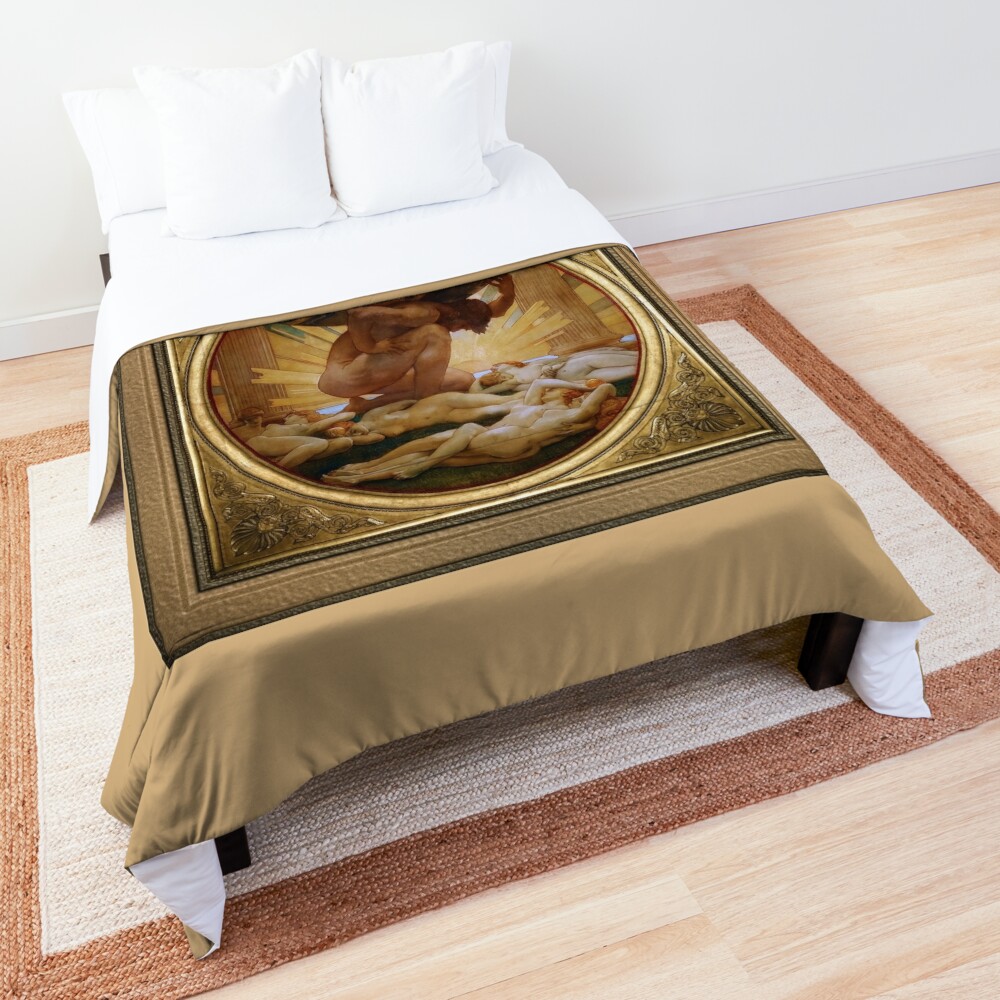
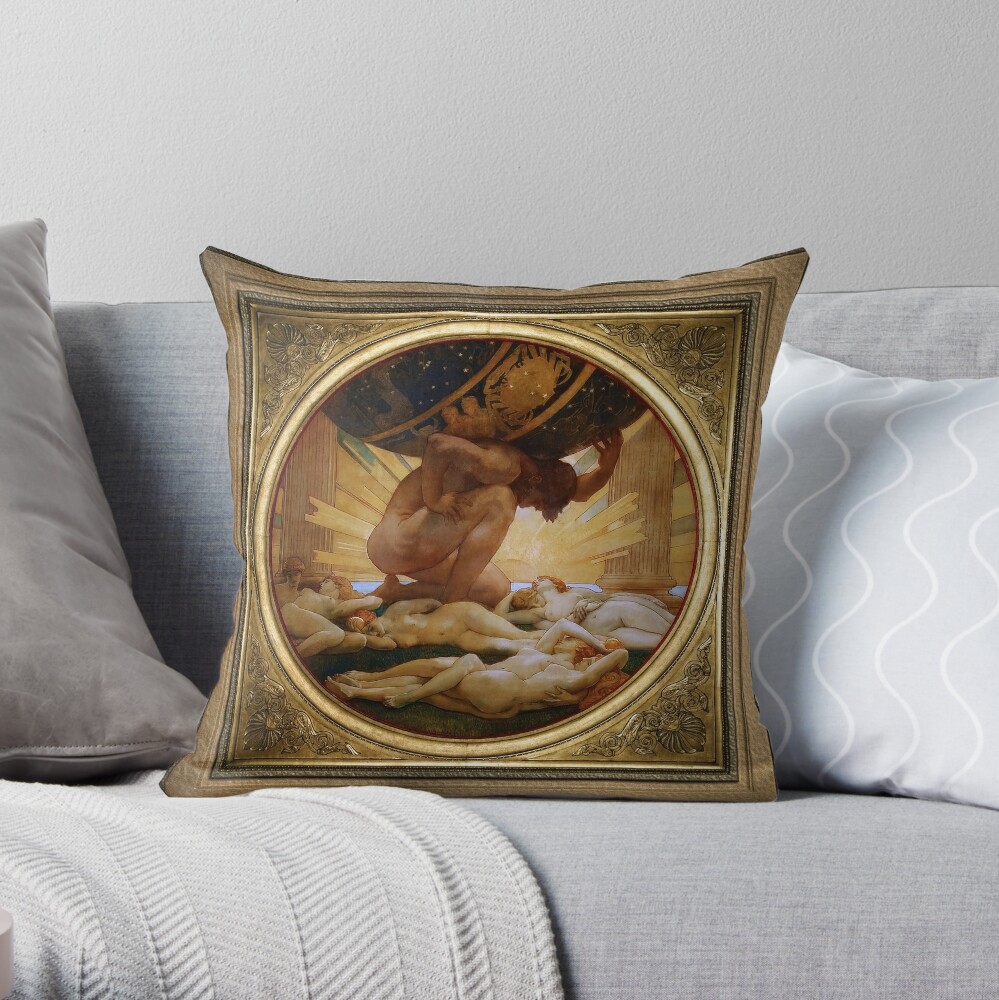
John Singer Sargent’s “Atlas and the Hesperides,” painted circa 1890-1895, is a striking example of his mastery of classical subject matter and dramatic composition. This oval-shaped canvas, originally intended as part of a larger decorative scheme for a Boston mansion, presents a compelling narrative drawn from Greek mythology, focusing on the titan Atlas’s arduous task and the serene beauty of the Hesperides, nymphs associated with the Garden of the Hesperides. Sargent’s work is not merely an illustration of myth; it’s a profound exploration of physical strain, mythological context, and aesthetic harmony.
Clár na nÁbhar
Struchtúr Comhdhéanta & The Oval Format
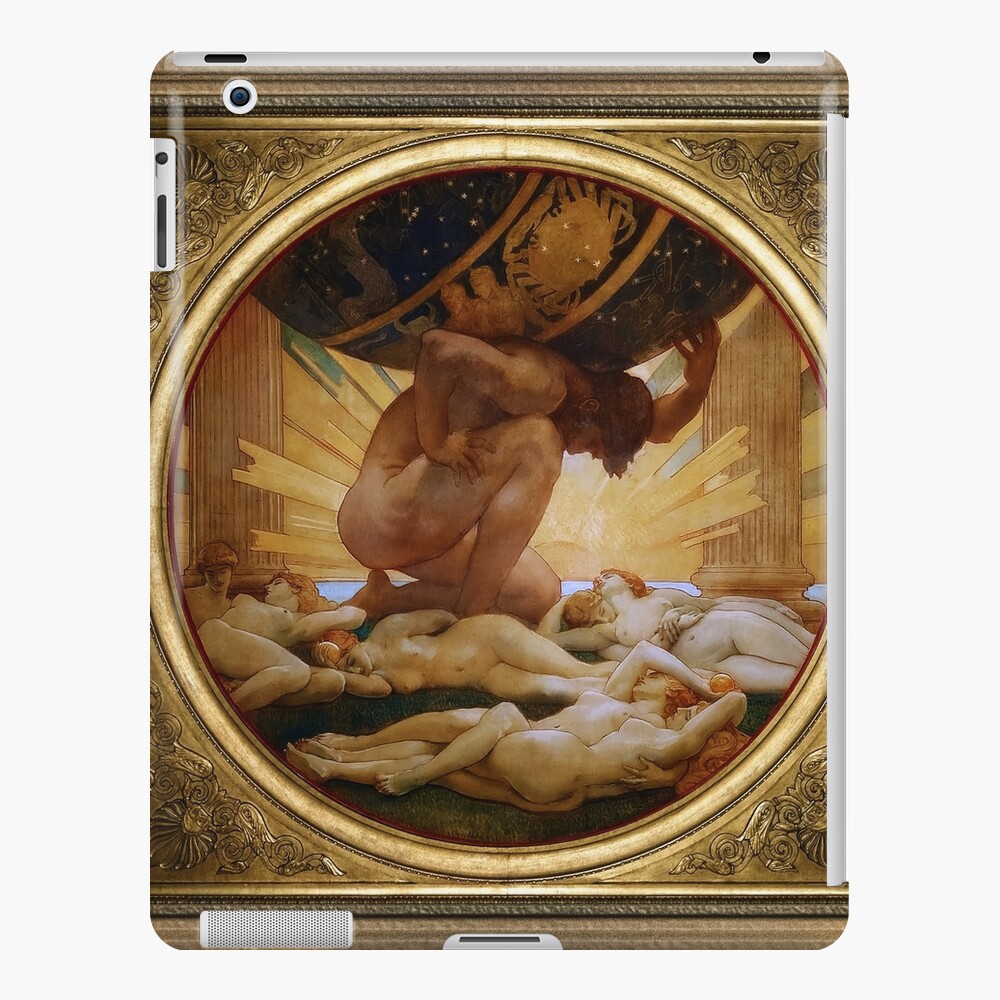
The painting’s unusual oval format immediately draws attention to its unique design. This shape dictates a circular flow within the composition, guiding the viewer’s eye around Atlas and the Hesperides. Sargent skillfully utilizes this constraint, creating a sense of contained drama. The central focus is undeniably on Atlas, whose immense form dominates the lower half of the canvas. He is depicted bearing an enormous celestial sphere, studded with stars, upon his shoulders and back. This weight visually crushes him; his posture conveys exhaustion and unrelenting effort. The oval shape emphasizes the cyclical nature of Atlas’s punishment – a perpetual burden.
Atlas: The Embodiment of Labor
Sargent’s portrayal of Atlas is remarkable for its realism despite the mythological context. He isn’t idealized in the traditional heroic sense; ina ionad, he appears weary and burdened. His musculature is realistically rendered, showing signs of strain rather than exaggerated strength. The artist uses a muted palette of browns, ochres, and grays to depict Atlas’s skin and beard, further emphasizing his earthbound nature and the toll of his labor. The texture of his hair and beard is meticulously detailed, adding to the sense of realism. His gaze is averted, focused on the task at hand rather than any external observer, reinforcing the idea of solitary endurance.
The Hesperides: A Counterpoint of Serenity
In stark contrast to Atlas’s exertion, the Hesperides are depicted in a state of tranquil repose. They lie scattered across the lower foreground, their bodies bathed in golden light emanating from behind Atlas. Their poses are relaxed and languid, suggesting a carefree existence far removed from Atlas’s suffering. Sargent employs a lighter palette for these figures – creams, pinks, and pale yellows – to differentiate them visually from Atlas’s darker tones. The nymphs appear almost ethereal, their forms blending seamlessly with the surrounding light. Their presence serves as a poignant counterpoint to Atlas’s struggle, highlighting the disparity between his burden and their ease.
Solas & Atmosphere: A Radiant Backdrop
The lighting in “Atlas and the Hesperides” is crucial to the painting’s overall effect. The radiant glow emanating from behind Atlas creates a dramatic backlight, silhouetting his figure against the celestial sphere. This light also illuminates the Hesperides, giving them an almost divine quality. Sargent masterfully uses chiaroscuro – the contrast between light and dark – to create depth and drama. The background is indistinct, suggesting a hazy atmosphere that further isolates Atlas and emphasizes the weight of his task. The golden light isn’t harsh; it’s diffused and warm, creating a sense of timelessness and mythological grandeur.
Tionchair Ealaíne & Sargent’s Style
Sargent’s style in this painting reflects his deep engagement with classical art traditions, particularly those of the Renaissance. The composition echoes works by Raphael and Michelangelo, while the realistic depiction of the human form owes a debt to artists like Leonardo da Vinci. ach, Sargent’s approach is distinctly his own. He avoids excessive idealization, opting instead for a more naturalistic portrayal of both Atlas and the Hesperides. His brushwork is loose and expressive, particularly in the rendering of the celestial sphere and the background atmosphere. The painting demonstrates Sargent’s ability to synthesize classical influences with a modern sensibility.
siombalachas & Léiriú
Beyond its narrative depiction of Greek mythology, “Atlas and the Hesperides” can be interpreted on multiple levels. Atlas’s burden represents the weight of responsibility and the enduring nature of labor. The celestial sphere symbolizes knowledge, eagna, or perhaps even the universe itself – a vast and unknowable entity that Atlas is tasked with supporting. The Hesperides, associated with the golden apples of immortality, represent beauty, suaimhneas, and the rewards that may lie beyond arduous effort. Sargent’s painting invites contemplation on themes of human endurance, the contrast between labor and leisure, and the enduring power of myth.
Ealaíontóir Bith Díorthaithe Ó Wikipedia.org
Bhí John Singer Sargent ina ealaíontóir easaoránach Meiriceánach, mheas an “Péintéir portráidí ceannródaíoch dá ghlúin” Mar gheall ar a chuid athghabhálacha ar só ré Edwardian.
Chruthaigh sé go garbh 900 pictiúir ola agus níos mó ná 2,000 uiscedhathanna, chomh maith le sceitsí gan áireamh agus líníochtaí gualaigh.
A dhoiciméid oeuvre taisteal ar fud an domhain, ón Veinéis go dtí an Tyrol, Corr, An Meánoirthear, Montana, Mainn, agus Florida.
Rugadh i bhFlórans do thuismitheoirí Mheiriceá, Cuireadh oiliúint air i bPáras sular bhog sé go Londain, Ag maireachtáil an chuid is mó dá shaol san Eoraip.
Sna 1880í rinne sé aighneacht luath chuig Salon Pháras a Madame X Portráid C1884, an rún a sheasamh mar phéintéir sochaí i bPáras a chomhdhlúthú; Ach ina ionad sin bhí scannal mar thoradh ar an bpéintéireacht.
Bhí an phortráid Madame X de phríomhshóisialach ceannródaíoch, Madame Pierre Gautreau cóirithe i gúna tráthnóna muineál dubh plunging le strapaí gualainn slabhra diamaint óir, a chuir cúram docht ar a choim.
Don amanna, Mhol sé do go leor Parisians, indiscreet a chruthaíonn feisteas a nochtadh agus a spreag stoirm an -ghéar, ag cur iallach ar Sargent an tír a fhágáil.
The following year Sargent departed for England where he continued a successful career as a portrait artist; and enjoyed international acclaim as a portrait painter.
From the beginning, Sargent’s work was characterized by remarkable technical facility, particularly in his ability to draw with a brush; which in later years inspired admiration as well as criticism for a supposed superficiality.
His commissioned works were consistent with the grand manner of portraiture, while his informal studies and landscape paintings displayed a familiarity with Impressionism.
In later life Sargent expressed ambivalence about the restrictions of formal portrait work, and devoted much of his energy to mural painting and working en plein air.
Seo atáirgeadh seanmháistrí ealaíne digiteach athshuite d'íomhá fearainn phoiblí atá ar fáil le ceannach ar líne mar priontáil chanbhás rollta.