

Atlas en de Hesperiden
Atlas en de Hesperiden: A Study in Labor and Mythological Beauty
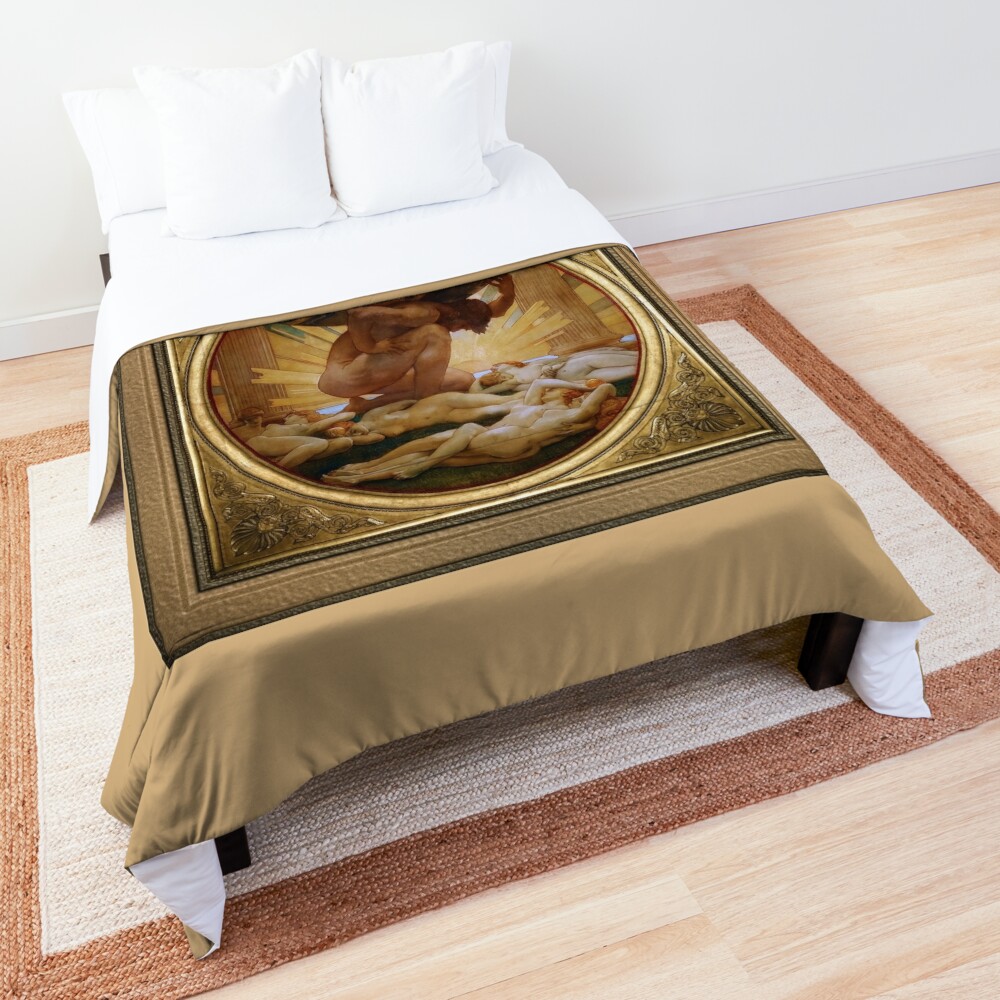
John Singer Sargent’s “Atlas and the Hesperides,” painted circa 1890-1895, is a striking example of his mastery of classical subject matter and dramatic composition. This oval-shaped canvas, originally intended as part of a larger decorative scheme for a Boston mansion, presents a compelling narrative drawn from Greek mythology, focusing on the titan Atlas’s arduous task and the serene beauty of the Hesperides, nymphs associated with the Garden of the Hesperides. Sargent’s work is not merely an illustration of myth; it’s a profound exploration of physical strain, mythological context, and aesthetic harmony.
Inhoudsopgave
Compositorische structuur & The Oval Format
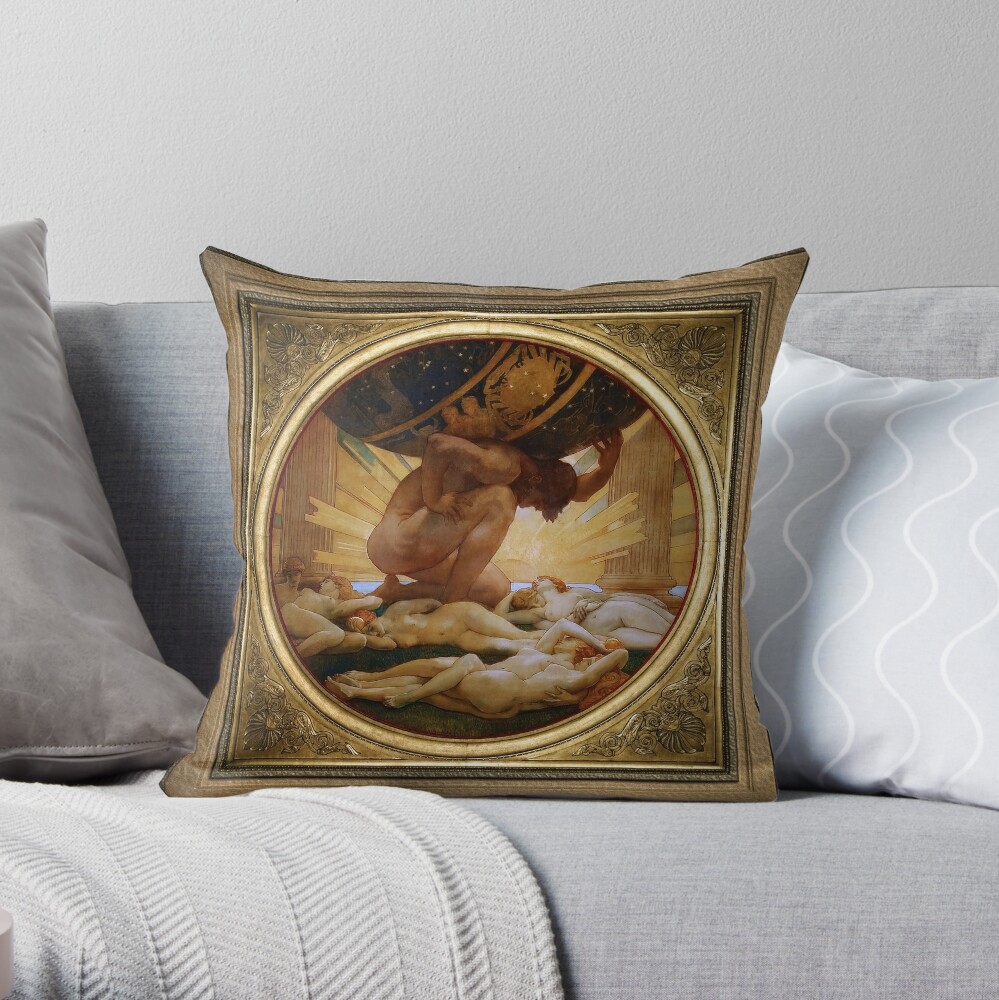
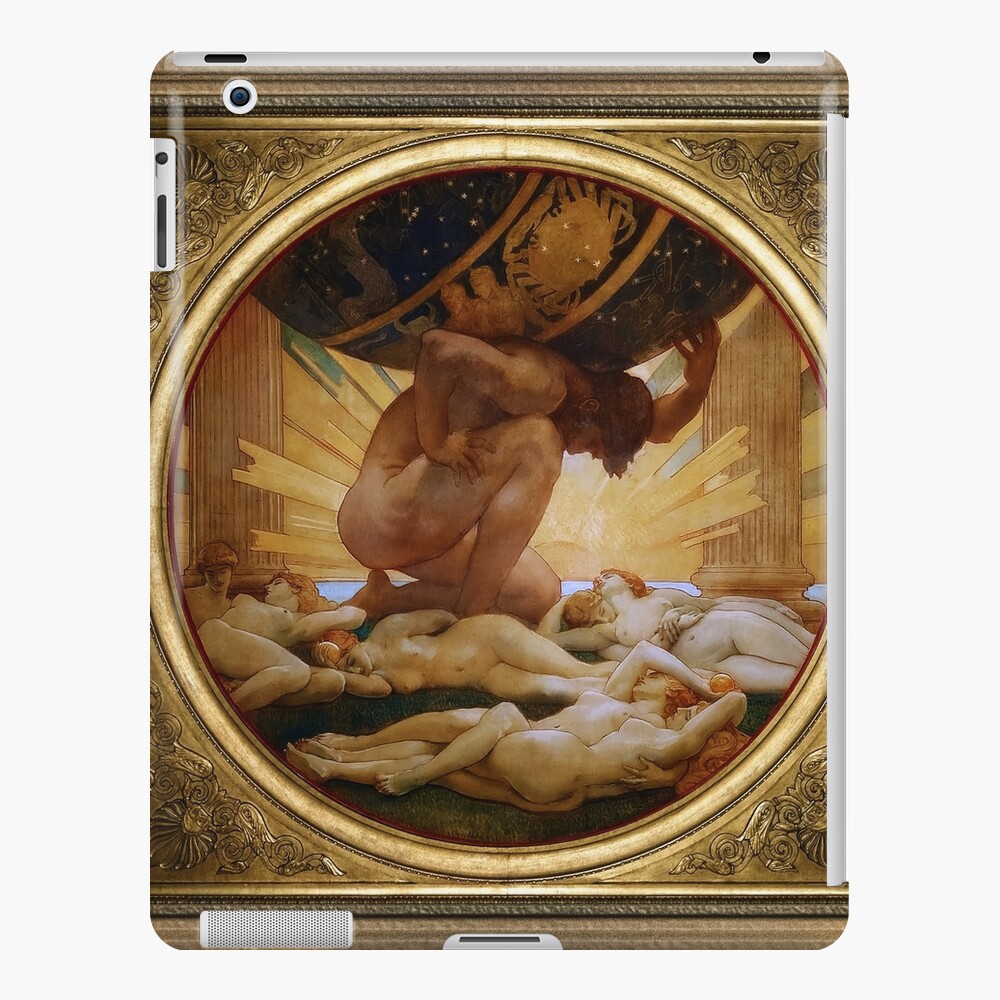
The painting’s unusual oval format immediately draws attention to its unique design. This shape dictates a circular flow within the composition, guiding the viewer’s eye around Atlas and the Hesperides. Sargent skillfully utilizes this constraint, creating a sense of contained drama. The central focus is undeniably on Atlas, whose immense form dominates the lower half of the canvas. He is depicted bearing an enormous celestial sphere, studded with stars, upon his shoulders and back. This weight visually crushes him; his posture conveys exhaustion and unrelenting effort. The oval shape emphasizes the cyclical nature of Atlas’s punishment – a perpetual burden.
Atlas: The Embodiment of Labor
Sargent’s portrayal of Atlas is remarkable for its realism despite the mythological context. He isn’t idealized in the traditional heroic sense; in plaats van, he appears weary and burdened. His musculature is realistically rendered, showing signs of strain rather than exaggerated strength. The artist uses a muted palette of browns, ochres, and grays to depict Atlas’s skin and beard, further emphasizing his earthbound nature and the toll of his labor. The texture of his hair and beard is meticulously detailed, adding to the sense of realism. His gaze is averted, focused on the task at hand rather than any external observer, reinforcing the idea of solitary endurance.
The Hesperides: A Counterpoint of Serenity
In stark contrast to Atlas’s exertion, the Hesperides are depicted in a state of tranquil repose. They lie scattered across the lower foreground, their bodies bathed in golden light emanating from behind Atlas. Their poses are relaxed and languid, suggesting a carefree existence far removed from Atlas’s suffering. Sargent employs a lighter palette for these figures – creams, roze, and pale yellows – to differentiate them visually from Atlas’s darker tones. The nymphs appear almost ethereal, their forms blending seamlessly with the surrounding light. Their presence serves as a poignant counterpoint to Atlas’s struggle, highlighting the disparity between his burden and their ease.
Licht & Sfeer: A Radiant Backdrop
The lighting in “Atlas and the Hesperides” is crucial to the painting’s overall effect. The radiant glow emanating from behind Atlas creates a dramatic backlight, silhouetting his figure against the celestial sphere. This light also illuminates the Hesperides, giving them an almost divine quality. Sargent masterfully uses chiaroscuro – the contrast between light and dark – to create depth and drama. The background is indistinct, suggesting a hazy atmosphere that further isolates Atlas and emphasizes the weight of his task. The golden light isn’t harsh; it’s diffused and warm, creating a sense of timelessness and mythological grandeur.
Artistieke invloeden & Sargent’s Style
Sargent’s style in this painting reflects his deep engagement with classical art traditions, particularly those of the Renaissance. The composition echoes works by Raphael and Michelangelo, while the realistic depiction of the human form owes a debt to artists like Leonardo da Vinci. Echter, Sargent’s approach is distinctly his own. He avoids excessive idealization, opting instead for a more naturalistic portrayal of both Atlas and the Hesperides. His brushwork is loose and expressive, particularly in the rendering of the celestial sphere and the background atmosphere. The painting demonstrates Sargent’s ability to synthesize classical influences with a modern sensibility.
Symboliek & Interpretatie
Beyond its narrative depiction of Greek mythology, “Atlas and the Hesperides” can be interpreted on multiple levels. Atlas’s burden represents the weight of responsibility and the enduring nature of labor. The celestial sphere symbolizes knowledge, wijsheid, or perhaps even the universe itself – a vast and unknowable entity that Atlas is tasked with supporting. The Hesperides, associated with the golden apples of immortality, represent beauty, rust, and the rewards that may lie beyond arduous effort. Sargent’s painting invites contemplation on themes of human endurance, the contrast between labor and leisure, and the enduring power of myth.
Bio van kunstenaar afgeleid van Wikipedia.org
John Singer Sargent was een Amerikaanse expatriate kunstenaar, beschouwd als de “toonaangevende portretschilder van zijn generatie” voor zijn evocaties van luxe uit het Edwardiaanse tijdperk.
Hij creëerde ongeveer 900 olieverfschilderijen en meer dan 2,000 aquarellen, evenals talloze schetsen en houtskooltekeningen.
Zijn oeuvre documenteert wereldwijde reizen, van Venetië naar Tirol, Korfoe, het Midden-Oosten, Montana, Maine, en Florida.
Geboren in Florence uit Amerikaanse ouders, hij werd opgeleid in Parijs voordat hij naar Londen verhuisde, woont het grootste deel van zijn leven in Europa.
In de jaren 1880 maakte hij een vroege inzending voor de Parijse Salon van zijn Madame X Portrait c1884, met de bedoeling om zijn positie als societyschilder in Parijs te consolideren; maar in plaats daarvan resulteerde het schilderij in een schandaal.
Het portret van Madame X was van een vooraanstaande socialite, Madame Pierre Gautreau gekleed in een zwarte avondjurk met diepe nek en gouden schouderbanden met diamanten ketting, die haar middel strak streelde.
Voor de tijd, suggereerde het voor veel Parijzenaars, een indiscreet poseren in onthullende kleding en veroorzaakte een storm van verontwaardiging, Sargent dwingen het land te verlaten.
Het jaar daarop vertrok Sargent naar Engeland, waar hij een succesvolle carrière als portretkunstenaar voortzette; en genoot internationale bekendheid als portretschilder.
Vanaf het begin, Het werk van Sargent werd gekenmerkt door opmerkelijke technische mogelijkheden, vooral in zijn vermogen om te tekenen met een penseel; die in latere jaren zowel bewondering als kritiek opriep voor een veronderstelde oppervlakkigheid.
Zijn werken in opdracht waren consistent met de grootse manier van portretteren, terwijl zijn informele studies en landschapsschilderijen vertrouwd waren met het impressionisme.
Op latere leeftijd uitte Sargent ambivalentie over de beperkingen van formeel portretwerk, en wijdde veel van zijn energie aan muurschilderingen en werken en plein air.
Dit is een retoucheerde reproductie van digitale kunst oude meesters van een openbaar domeinafbeelding die voor aankoop online beschikbaar is als a opgerold canvas afdrukken.