

Bath time c1897
“Bath time,” gemaakt in 1897 by the Italian painter Virgilio Tojetti (1851-1901), is a captivating work that exemplifies the opulent and sensuous style of late 19th-century European art. Deze genre schilderen, which represents an intimate moment in a classical setting, reflects the artist’s mastery of detail, the human form, and the fusion of romantic themes with classical influences. Tojetti’s skillful use of light, textuur, and composition invites viewers into a dreamlike world where the boundaries between the viewer and the subject seem to dissolve, emphasizing both the elegance of the figure and the beauty of the surroundings.
Inhoudsopgave
Het belangrijkste onderwerp: The Female Nude
De centrale focus van “Bath time” is a female figure, gepositioneerd in een delicate en sierlijke houding terwijl ze gedeeltelijk is gedrapeerd met een vloeiende stof. Dit onderwerp, het vrouwelijk naakt, was in die periode een populair thema in de kunst, gebaseerd op klassieke idealen van schoonheid en sensualiteit.
De vrouw wordt afgebeeld terwijl ze voor een stenen bassin of fontein staat, haar lichaam is gedeeltelijk bedekt met de stof die ze aan het aanpassen is. Deze daad van zichzelf onthullen draagt bij aan het gevoel van kwetsbaarheid en intimiteit, terwijl ze bijna gevangen lijkt te zijn in een privémoment van zelfbewustzijn of bescheidenheid. De kijker wordt uitgenodigd in dit vluchtige moment, het gevoel alsof ze inbreuk maken op een anderszins privéritueel.
Het figuur van de vrouw is zacht, toch gedefinieerd, waarbij Tojetti bijzondere aandacht besteedt aan de stroom van de stof, de subtiele spieren van het lichaam, en de beweging in haar houding. Haar lang, golvend haar stroomt langs haar rug, wat het sensuele karakter van de compositie versterkt. De algehele pose, één van stille gratie, is indicatief voor het vermogen van de kunstenaar om realisme in evenwicht te brengen met een geïdealiseerde versie van schoonheid, een kenmerk van de laat 19e-eeuwse academische traditie.
Objecten: The Fountain and Draperies
De achtergrond van het stuk wordt gedomineerd door een stenen structuur, waarschijnlijk een fontein of bassin, dat dient als decor voor dit serene tafereel. De nabijheid van de figuur tot de fontein suggereert een ritueel bad- of reinigingsproces, het doet denken aan de eeuwenoude associatie tussen water en zuivering, zowel fysiek als symbolisch. Het water dat zachtjes uit het bassin stroomt, geeft een gevoel van rust aan het werk, waardoor het thema verjonging en sereniteit verder wordt versterkt. The soft ripples created by the water are reflected in the surrounding stonework, demonstrating Tojetti’s meticulous attention to detail in the rendering of textures.
The red drapery at the figure’s feet contrasts sharply with the lightness of her skin and the cloth wrapped around her body. The rich color of the fabric draws attention and serves as a symbol of luxury, while also providing a balance to the otherwise soft and subtle hues of the background and figure. The fabric, luxurious and sumptuous in appearance, appears to flow with the natural curves of the woman’s body, enhancing the sensual and inviting nature of the scene. The drapery, combined with the flowing water, conveys a sense of dynamic motion in an otherwise still and composed scene, waarbij de finesse van de kunstenaar in het vastleggen van texturen wordt benadrukt.
Terrain: The Classical Setting
De instelling van “Bath time” is onmiskenbaar klassiek, met zijn stenen architectuur en rustige tuinsfeer. Achter de vrouw, we zien hints van weelderig groen en verre bladeren die de compositie omlijsten, waardoor het stuk een gevoel van diepte en natuurlijke schoonheid krijgt.
Het lichtspel op de stenen zuilen en de levendige groene bomen suggereren een mediterrane of romaanse invloed, gebruikelijk in de werken van Tojetti, evenals in de bredere traditie van de academische schilderkunst in Italië aan het einde van de 19e eeuw. Deze achtergrond van klassieke elementen dient om het baden van de vrouw naar een hoger niveau te tillen, waardoor het een tijdloze kwaliteit krijgt, alsof dit moment in elk tijdperk zou kunnen bestaan.
The harmonious relationship between the figure and the environment creates a tranquil and almost ethereal atmosphere. The woman does not stand in stark contrast to the surroundings; in plaats van, she seems a part of the landscape, the natural world. The clear blue sky peeking through the columns suggests a serene day, contributing to the overall sense of calmness and stillness that pervades the piece.
Stijl en techniek
Virgilio Tojetti’s style is rooted in the academic tradition, which was focused on realism and idealized representations of the human form. The artist employs soft, smooth brushwork to create a polished surface that enhances the realism of the figure. His attention to the play of light on the human body, as well as the reflective qualities of the surrounding water, demonstrates his technical prowess. The use of light is particularly striking, as it bathes the woman in a soft, almost heavenly glow, emphasizing her physical beauty and creating a sense of divine presence.
Tojetti’s use of color is also noteworthy. The cool tones of the background contrast with the warm flesh tones of the figure, drawing the viewer’s eye directly to the subject. The rich reds and golds in the drapery create a visual harmony that ties the composition together, while the gentle hues of the sky and water evoke a peaceful, serene mood. The precision with which he renders every detail, from the textures of the fabric to the movement of the water, speaks to his mastery of the classical style, which was still highly prized in the academic art world of the late 19th century.
Thema en stemming
Het thema van “Bath time” is one of quiet, intimate beauty. The act of bathing is often associated with cleansing, both physically and spiritually, and in this painting, it seems to represent a moment of personal reflection or renewal. The woman’s serene expression and graceful posture suggest a sense of tranquility and inner peace. The mood is calm, almost meditative, and the viewer is invited to partake in this quiet moment of beauty. The classical setting and the sensuality of the figure further elevate the painting to a level of reverence, as though the scene is a timeless celebration of the feminine form and the natural world.
Conclusie
“Bath time” by Virgilio Tojetti is a stunning example of late 19th-century academic painting. Through his mastery of the female nude, the classical setting, and his attention to texture and light, Tojetti creates a work that is both timeless and intimate. The painting captures a serene, almost otherworldly moment, where the viewer is invited to witness an act of private beauty, set against the backdrop of a classical Mediterranean landscape. Het bekwame kleurgebruik van de kunstenaar, textuur, and composition makes this painting a standout piece in the tradition of academic realism, showcasing both the physical beauty of the figure and the quiet serenity of the scene.
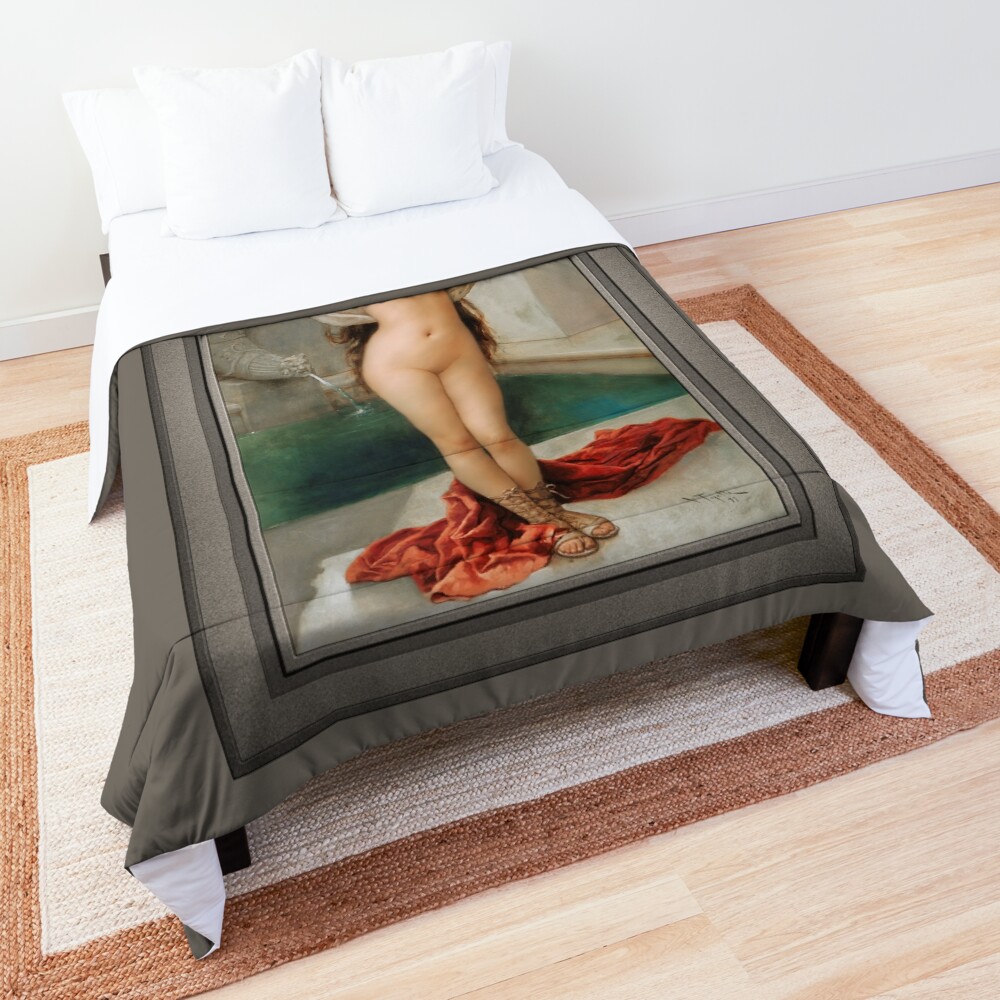
Dit is een remastered reproductie van digitale kunst oude meesters van een openbaar domeinafbeelding dat beschikbaar is als a opgerold canvas afdrukken online.
Deze digitale kunstcreatie, zoals bij alle kunstwerken die op de Xzendor7-website te vinden zijn, is deze online te koop in verschillende materiaalformaten, waaronder canvasafdrukken, acryl afdrukken, metalen prints, hout prints, ingelijste afdrukken, affiches, en zoals opgerolde canvasafdrukken in verschillende maten uit 12 inch tot 72 inch, afhankelijk van de grootte van het daadwerkelijke kunstwerk en de print on demand-winkel waar je de kunst wilt kopen.
Het artwork is ook beschikbaar op een breed scala aan heren- en dameskleding, mokken, bakken, sjaals, notitieboekjes en tijdschriften en veel woondecoratieproducten.
Over de kunstenaar
Virgilio was born on March 15, 1849 to the Italian-American Painter Domenico Tojetti (1807 – 1892), and received his initial training from his father and then in Paris, France from the renowned French Painters Jean-Léon Gérôme (1824 – 1904) and William Adolphe Bouguereau (1825 – 1905).
Before coming to New York City in the United States in 1883, Virgilio lived in San Francisco for twelve years; and while in New York painted murals in various hotels; becoming popular as genre and fresco painter.
all the feminine beauty is absorbed into a single figure. a very amazing golden body language.