

Beautyparade februari 1949 – An Artistic Journey Into Glamour And Intrigue
Invoering: A Glimpse into the Past
Peter Driben Beautyparade februari 1949 captures an iconic moment of American glamour and vintage allure, bringing together the bold and seductive spirit of mid-20th-century pin-up art. Known for his mastery of the pin-up genre, Driben’s work was celebrated for its sophisticated yet playful depictions of women, often embracing a combination of sensuality and class. Dit kunstwerk, erin geschilderd 1949, exemplifies the refined yet bold portrayal of feminine beauty through a strategic balance of color, het formulier, en compositie.
Inhoudsopgave
Hoofdonderwerp: The Femme Fatale in a Red Dress
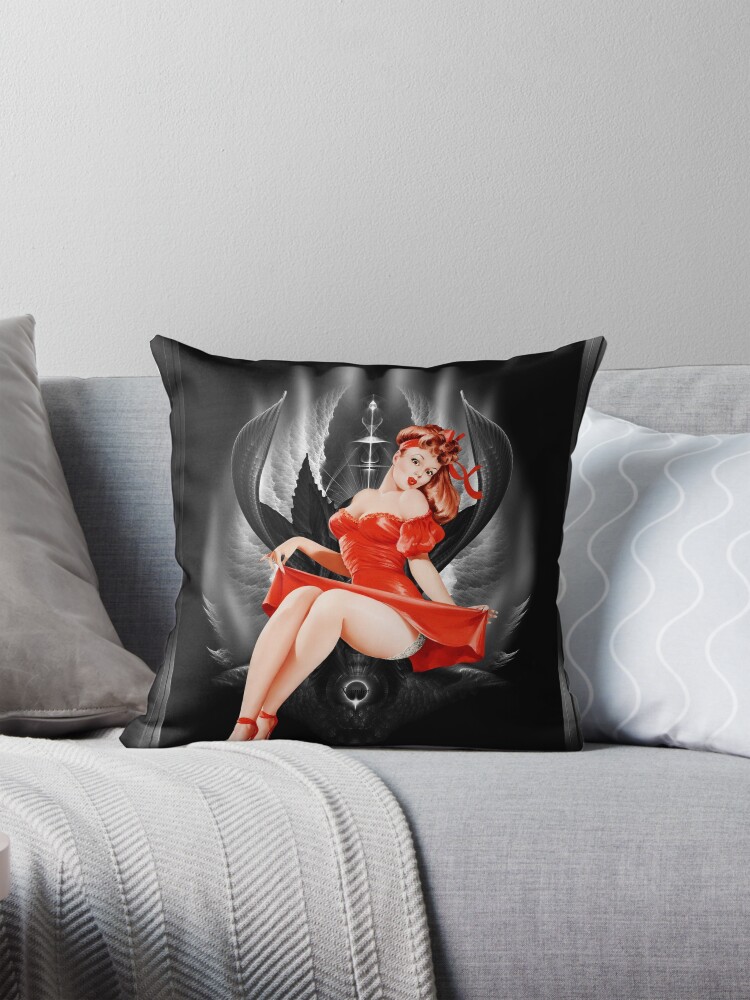
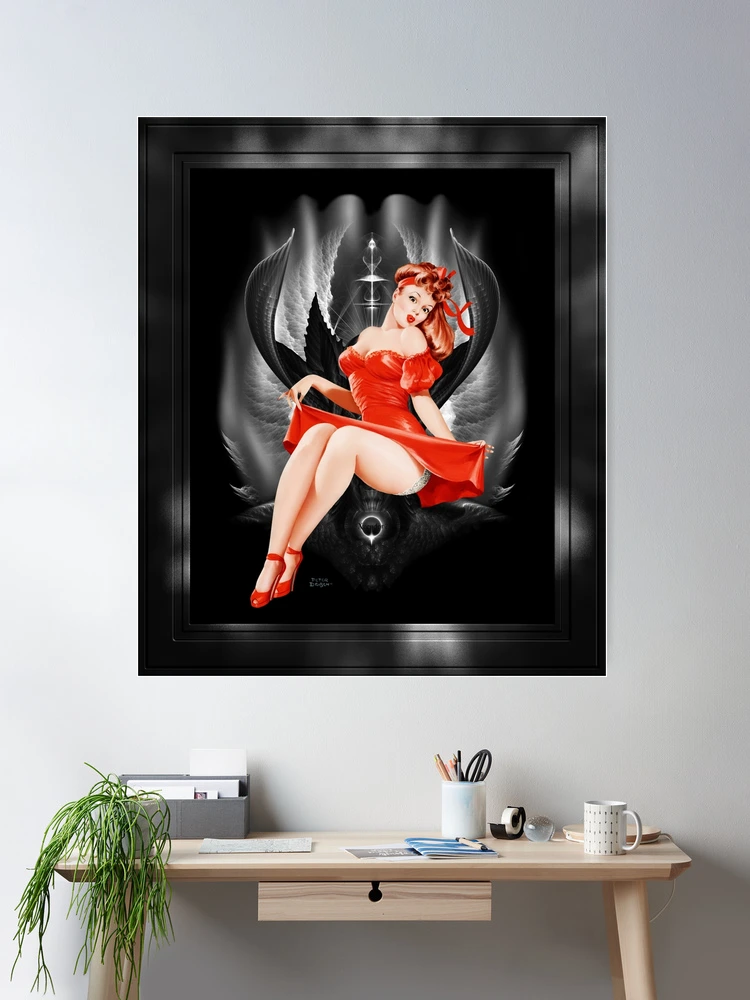
At the heart of the composition is the captivating figure of a woman, portrayed in a seductive and confident pose. She sits with one leg poised delicately over the other, her body turned slightly to the side, yet her gaze directly confronts the viewer. The figure exudes a sense of both allure and power, her crimson dress billowing slightly as if caught in a breeze, emphasizing her voluptuous form. De jurk, with its off-the-shoulder cut, accentuates her graceful, feminine curves, while the bright red hue suggests passion and vitality.
Her expression is one of mischievous charm, a classic hallmark of Driben’s subjects, whose gaze often invites curiosity and intrigue. The woman’s red heels match her dress, a visual cue that reinforces her boldness and confidence. Atop her head, a carefully styled mass of waves and curls frames her face, with a ribbon adding a touch of playful elegance. The artist’s attention to detail is evident in her delicate features—high cheekbones, a soft smile, and slightly arched eyebrows—creating a harmonious balance of beauty and grace.
Her pose also suggests a subtle narrative. Resting lightly on her thigh, one hand holds a long, slender object (perhaps a cigarette holder), adding to the sense of poised sophistication and the timeless glamour of the era.
Surrounding Elements: The Shadowed Background and Wings
The background of the piece is as compelling as the figure herself. Dark, almost ethereal shadows emerge from either side of the central subject, forming what appear to be angelic or bird-like wings. These dark, contrasting elements not only serve to frame the woman but also add a dramatic sense of mystery and power. The wings are smooth and stylized, echoing the fashion trends of the time, which often included dramatic statements in art and design. These wings lend an air of fantasy and exaggerate the beauty of the subject, providing a striking contrast against the vivid red of her dress.
The composition is completed by a soft play of light that surrounds the figure, accentuating the curves of her body and the flowing fabric of her dress. The darker tones in the wings and background provide an aura of tension, as if the woman is both part of and removed from the mysterious world around her. There is an underlying sense of both elegance and danger, a reflection of the femme fatale archetype.
Materialen en technieken: Masterful Illustration
Peter Driben’s style is rooted in the traditions of commercial illustration, where detail and glamour are paramount. His use of bold, clean lines and the careful attention to proportions gives the figure a lifelike quality that remains faithful to the conventions of pin-up art. The application of colors is deliberate and evocative; the rich red of the dress contrasts starkly against the dark, muted background. Driben’s use of highlights and shadowing on the woman’s skin creates depth, emphasizing her form and the play of light across her body.
The technique is characterized by smooth gradations of light and dark, which give a three-dimensional quality to the figure. The background is softer, with fewer details, placing all focus on the central subject. This simplicity of the background serves to highlight the intricate details of the woman’s pose, facial features, and attire.
Stijl: Pin-Up Art at Its Peak
This piece embodies the pinnacle of mid-20th-century pin-up art. It was during this period that pin-up art became a symbol of youthful exuberance, seduction, and American culture. The stylistic approach employed by Driben in Beautyparade februari 1949 is rich in its visual appeal, with a heightened sense of femininity, vertrouwen, en aantrekkingskracht. His figures, though idealized, are imbued with personality, suggesting that these women are not just objects of beauty, but active participants in their narratives.
Driben’s work often blurred the lines between commercial art and fine art, appealing to both mass audiences and collectors. His pin-up models, with their glamorized but relatable characteristics, were meant to celebrate the sensuality of the female form while remaining within the bounds of taste and style.
Thema en stemming: Seduction, Confidence, and Power
The primary theme of Beautyparade februari 1949 is one of sensuality paired with a quiet but undeniable strength. The woman’s posture and expression suggest an empowered persona—someone who is fully aware of her beauty and the power it holds. There is a confident playfulness in her stance, enhanced by the subtle details of her hand positioning and the graceful way in which she sits. The wings behind her, though dark, are elegant, providing an almost mystical quality to the composition that reinforces the idea of beauty as something transcendent and otherworldly.
The mood of the piece is seductive and alluring but also imbued with a sense of mystery. The figure’s direct gaze draws the viewer in, yet the surrounding shadows and surreal wings leave a lingering sense of ambiguity. Is the woman an angel or a temptress, a mythic figure or a flesh-and-blood reality? This tension between the ethereal and the grounded plays a significant role in the overall atmosphere of the artwork.
Conclusie: An Iconic Representation of 1940s Glamour
Peter Driben Beautyparade februari 1949 remains an iconic representation of mid-20th-century glamour and the era’s fascination with sensuality, schoonheid, and fantasy. Through his use of bold color, dramatic composition, en aandacht voor detail, Driben crafted a work that continues to evoke the allure and power of the pin-up model. His combination of elegance, charme, and mysterious strength makes this artwork a lasting testament to the timeless appeal of the feminine form as depicted in the art of the 1940s.
Over het kunstwerk
Beautyparade februari 1949 by American Painter Peter Driben (1903 – 1968); schilder, illustrator en een van de meest productieve pin-upartiesten van de jaren 40 en 50.
This is a fun piece from the February 1949 Edition of Beauty Parade Magazine, which shows an attractive redhead, with red lipstick in mid length off shoulder red dress, a red bow bandana in her hair that is also wearing red strap high heel shoes.
Originally she was seated on a greyish-blue decorative pouf and was set against a black background; but decided to replace those and add in my fractal art composition portrait Taidushan Sai The Talons Of Time, to change the look as if she may be in for some enticing hot water.
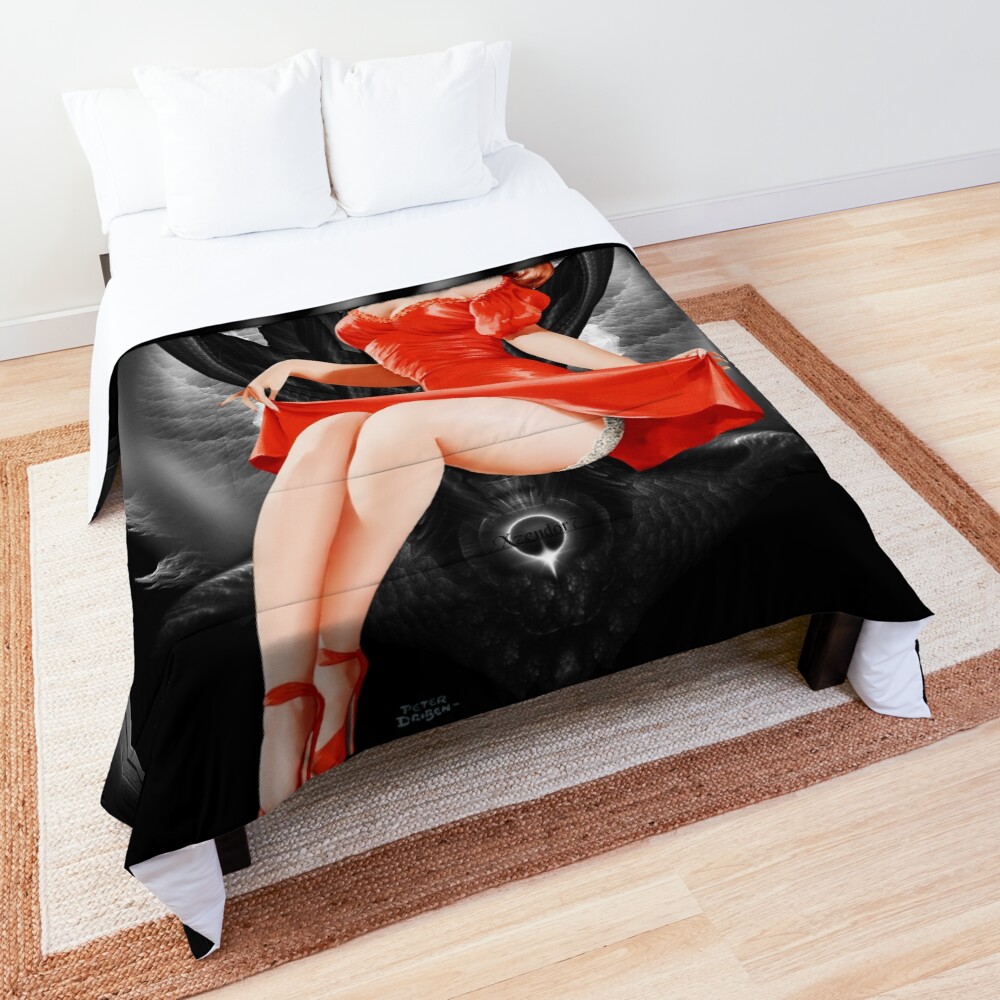
The young redhead has her dressed lifted and spread over her thighs using her two hands, which reveals her decorative panty and her beautiful full figured legs.
This is a remastered digital art old masters reproduction of a public domain image that is available as a canvas, acryl en metalen print online.
Artist Info
Info hieronder van Wikipedia.org
Peter Driben werd geboren in Boston, en hij studeerde aan de Vesper George Art School voordat hij in Parijs naar Parijs verhuisde 1925. Tijdens het volgen van lessen aan de Sorbonne in 1925, hij begon een reeks zeer populaire pen-en-inkttekeningen van de showgirls van de stad.
In maart van 1934 Driben creëerde zijn eerste bekende pin-up die de cover was van La Paree Stories; en bij 1935, hij produceerde covers voor Snappy, Fut, New Yorkse nachten, Frans nachtleven en Caprice.
Terwijl de populariteit van Driben aan het eind van de jaren dertig bleef stijgen, creëerde hij meer covers voor andere tijdschriften, waaronder Silk Stocking Stories, Film Merry-Go-Round en echt schermplezier.
Dribens carrière breidde zich uit naar reclame toen hij eind jaren geleden naar New York verhuisde 1936. Hier creëerde hij originele driedimensionale gestanste etalages voor Philco Radios, Kanon Badhanddoeken, en de Weber Baking Company.
Misschien wel zijn bekendste werk zijn de originele posters en publiciteitskunstwerken voor The Maltese Falcon. Peter Driben was ook een goede vriend van uitgever Robert Harrison, en in 1941 hij werd gecontracteerd om covers te produceren voor Harrison's nieuwe tijdschrift Beauty Parade.
Van daaruit schilderde Peter honderden omslagen voor die publicatie en voor de andere zeven titels die Harrison zou lanceren – Flirt, Fluisteren, Gluren, knipoog, oplettend, Giechelt, en Joker.
Driben had vaak wel zes of zeven van zijn omslagen die elke maand werden gepubliceerd. Dribens werk voor Harrison maakte van hem een van Amerika's meest erkende en succesvolle pin-up- en glamourartiesten. Vlak voordat hij voor Harrison begon te werken..., Driben trouwde met de kunstenaar, actrice en dichter, Louise Kirby.
In 1944 hij kreeg de ongewone kans aangeboden, voor een pin-up artiest; die art director zou worden van de New York Sun, een functie die hij behield tot 1946. Tijdens de oorlog, zijn populaire schilderij van Amerikaanse soldaten die de vlag hijsen bij Iwo Jima zorgde voor veel media-aandacht.
In 1956, Driben en Louise verhuisden naar Miami Beach, waar hij zijn pensioenjaren doorbracht met het schilderen van portretten (waaronder een van Dwight D. Eisenhower) en andere kunstwerken, die werden georganiseerd in succesvolle tentoonstellingen door zijn vrouw. Driben stierf in 1968, Louise in 1984.