

Gravat de la festa de Belssazar c1598
Gravat de la festa de Belssazar c1598 del gravador holandès Jan Harmensz. Muller (1571 – 1628); així com un pintor del Segle d'Or holandès.
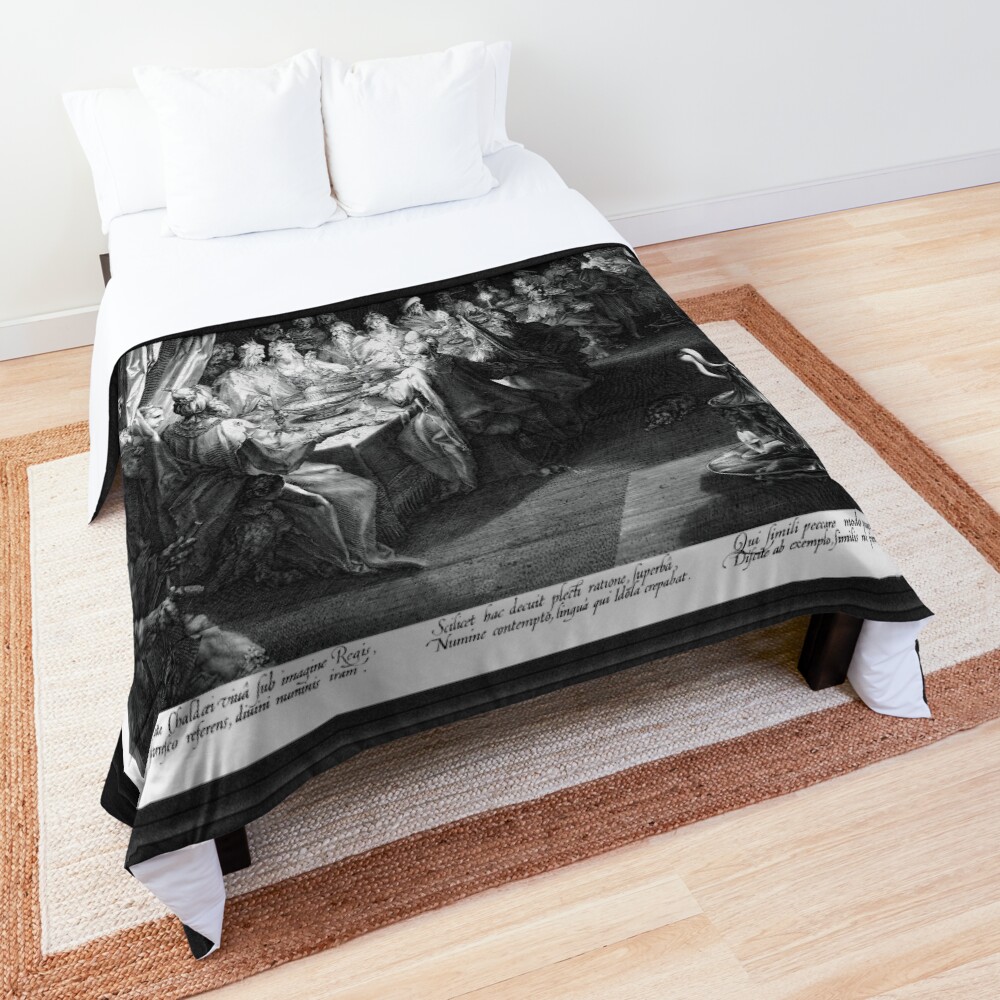
Aquest gravat que representa la història bíblica de Festa de Belssasar, representa la història de L'escriptura a la paret del llibre de Daniel, capítol 5.
Mostra a Belsasar, el príncep hereu de Nabonidus, celebrant una gran festa i bevent dels vaixells que van ser saquejats del Primer Temple de Jerusalem; que va ser destruït pel rei de Babilònia Nabucodonosor II a 586/587 aC i que va exiliar el poble jueu a Babilònia.
En el gravat , a hand of a spirit appears and writes on the wall above the arched entrance to the feasting hall, terrifying Belshazzar and his guests as related in the Bible.
To understand what the writing means, Belshazzar calls for his wise men to decipher the writing, but they are unable to do so; thus his queen advises him to send for Daniel, who is renowned for his wisdom.
As it is hoped Daniel is able to interpret the message, which states that Belshazzar’s kingdom will be divided among the Medes and Persians and be no more.
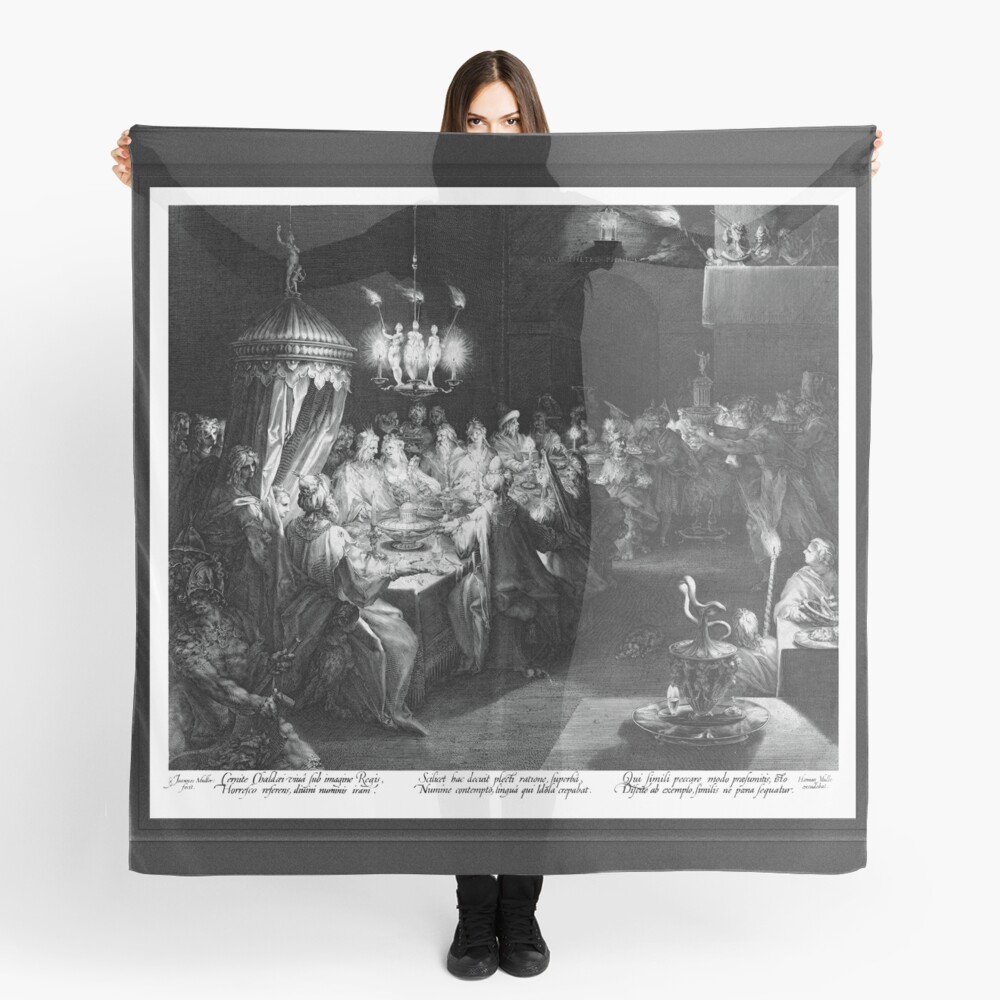
Es tracta d'una reproducció de mestres antics d'art digital remasteritzada d'una imatge de domini públic que està disponible en línia com a impressió de tela enrotllada.
Sobre l'artista
Jan Muller va ser un gravador i pintor holandès de l'edat d'or que va néixer a Amsterdam el dia 1571 i va aprendre l'ofici del gravat del seu pare Harmen Jansz. Muller (1540 – 1617) que era impressor de llibres, gravador, i editor.
Jan era un gravador prolífic i hàbil conegut per la seva atenció als detalls, i va produir dibuixos fets, gravats, pintures, i era especialment conegut pels seus retrats de personatges polítics, reialesa, i altres personatges destacats de l'època.
Les obres més famoses de Jan inclouen els seus gravats de les figures mitològiques de Minerva i Mercuri, els seus retrats de la família reial holandesa, i les seves col·laboracions amb l'escultor Adriaen de Vries (1545 – 1626), Pintor holandès del Segle d'Or, Rembrandt Harmenszoon van Rijn (1606 – 1669), i el gravador flamenc, Jan Sadeler (1550 – 1600).
També era conegut pels seus dibuixos del gran paisatgista holandès, Jan van Goyen (1596 – 1656), which were made for an edition of van Goyen’s works; and he became an important figure in Dutch engraving, and his works are seen as a testament to the golden age of Dutch art.
Jan was also a respected teacher, passing on his skills to his students, who included the Dutch engraver and painter, Pieter de Molyn (1597 – 1661); and was an important contributor to the Dutch Golden Age of art.