

Belshazzars Feast Engraving c1598
Gravura da Festa de Belsazar c1598 do gravador holandês Jan Harmensz. Müller (1571 – 1628); bem como um pintor da Idade de Ouro Holandesa.
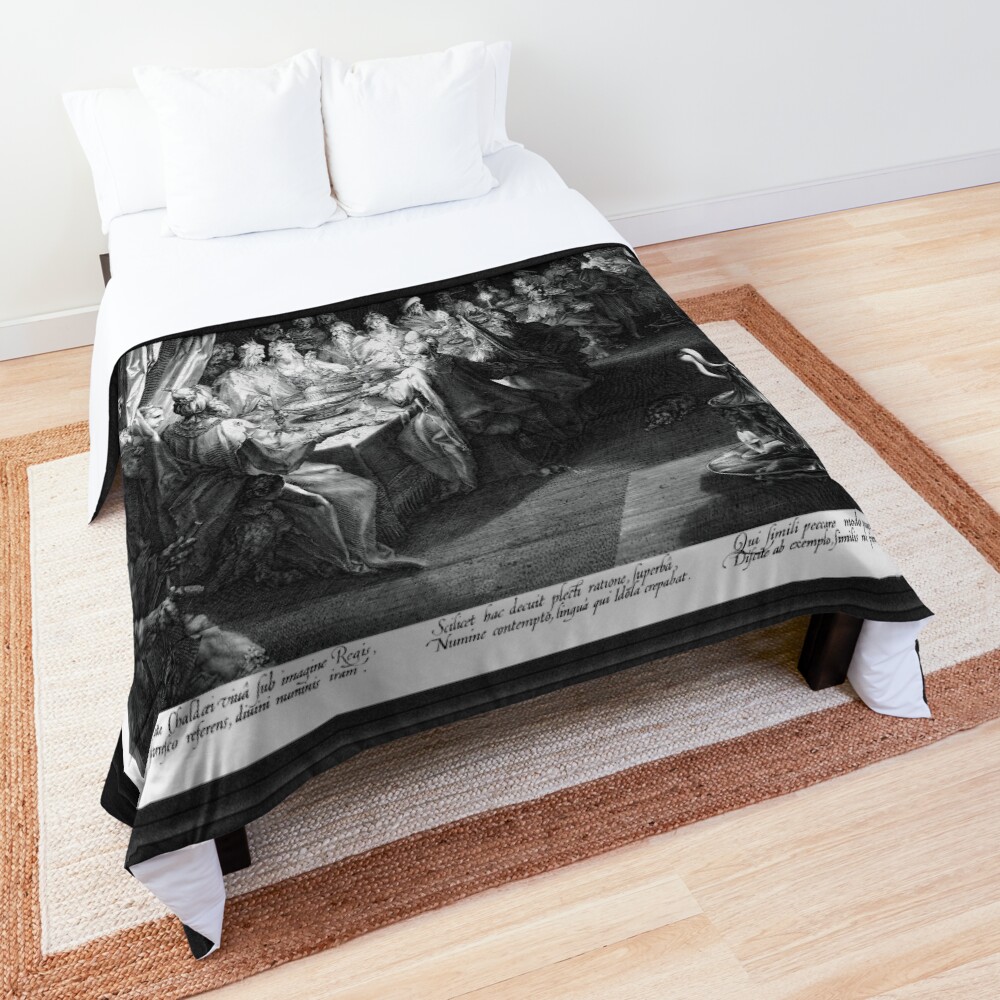
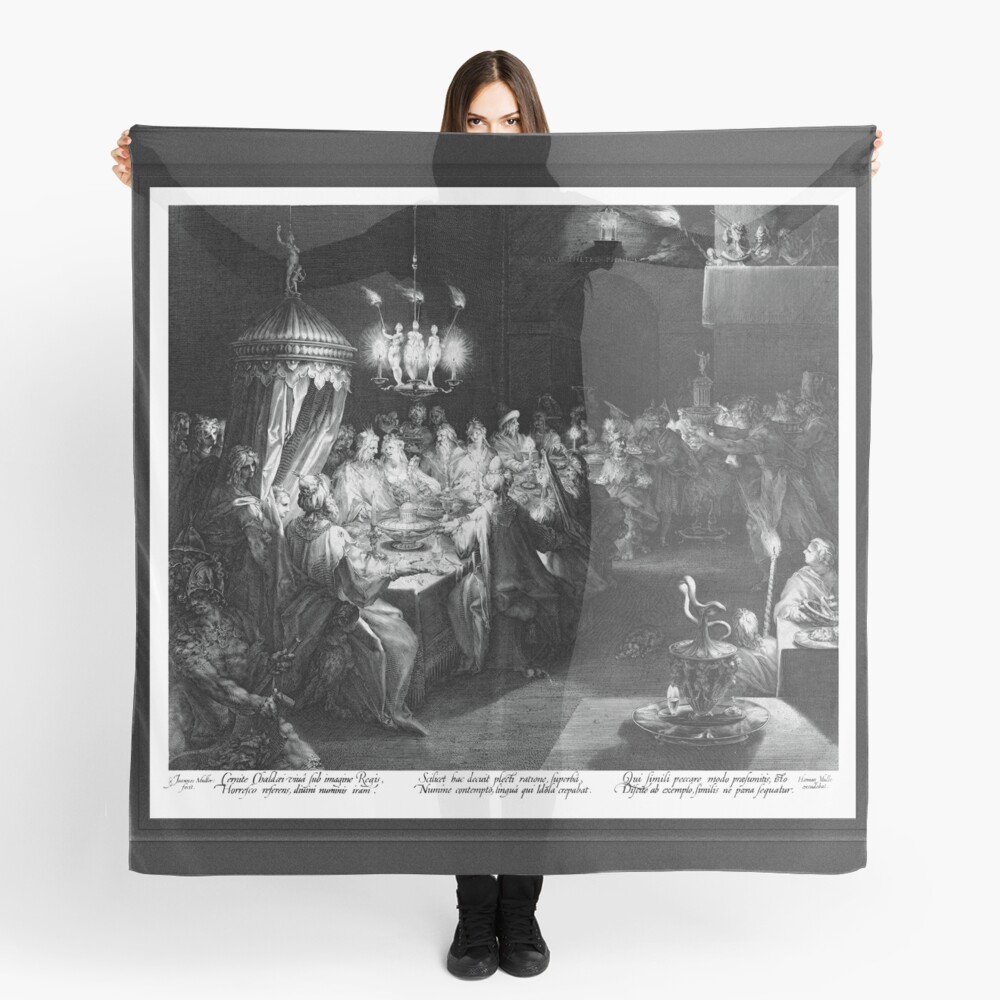
This engraving depicting the Biblical tale of Belshazzar’s Feast, depicts the story of The Writing on the Wall from the Book of Daniel, chapter 5.
It shows Belshazzar, the Crown Prince of Nabonidus, holding a grand feast and drinking from vessels that were looted from the First Temple in Jerusalem; that was destroyed by the Babylonian King Nebuchadnezzar II in 586/587 BCE and who exiled the Jewish people to Babylon.
In the engraving , a hand of a spirit appears and writes on the wall above the arched entrance to the feasting hall, terrifying Belshazzar and his guests as related in the Bible.
To understand what the writing means, Belshazzar calls for his wise men to decipher the writing, but they are unable to do so; thus his queen advises him to send for Daniel, who is renowned for his wisdom.
As it is hoped Daniel is able to interpret the message, which states that Belshazzar’s kingdom will be divided among the Medes and Persians and be no more.
This is a remastered digital art old masters reproduction of a public domain image that is available online as a impressão em tela enrolada.
Sobre o Artista
Jan Muller foi um gravador e pintor holandês da Idade de Ouro que nasceu em Amsterdã em 1571 e aprendeu o ofício da gravura com seu pai Harmen Jansz. Müller (1540 – 1617) quem era impressor de livros, gravador, e editor.
Jan foi um gravador prolífico e habilidoso, conhecido por sua atenção aos detalhes., e produziu desenhos feitos, gravuras, pinturas, e era especialmente conhecido por seus retratos de figuras políticas, realeza, e outras figuras proeminentes da época.
As obras mais famosas de Jan incluem as gravuras das figuras mitológicas de Minerva e Mercúrio., seus retratos da família real holandesa, e suas colaborações com o escultor Adriaen de Vries (1545 – 1626), Pintor Holandês da Idade de Ouro, Rembrandt Harmenszoon van Rijn (1606 – 1669), e o gravador flamengo, Jan Sadeler (1550 – 1600).
Ele também era conhecido por seus desenhos do grande pintor paisagista holandês, Jan van Goyen (1596 – 1656), que foram feitos para uma edição das obras de van Goyen; e ele se tornou uma figura importante na gravura holandesa, e as suas obras são vistas como um testemunho da era de ouro da arte holandesa.
Jan também era um professor respeitado, transmitindo suas habilidades para seus alunos, que incluiu o gravador e pintor holandês, Pieter de Molyn (1597 – 1661); e foi um importante contribuidor para a Idade de Ouro Holandesa da arte.