

Bewitching Eyes Art Deco Portrait
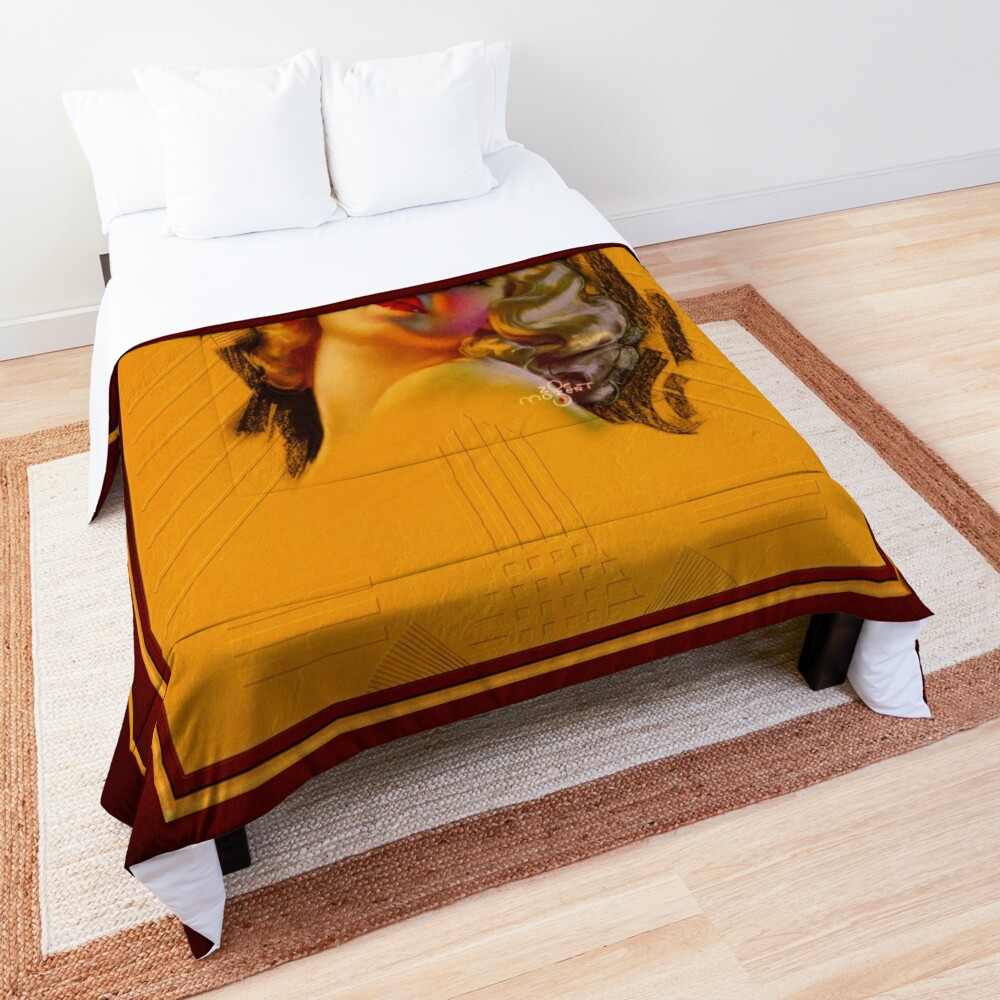
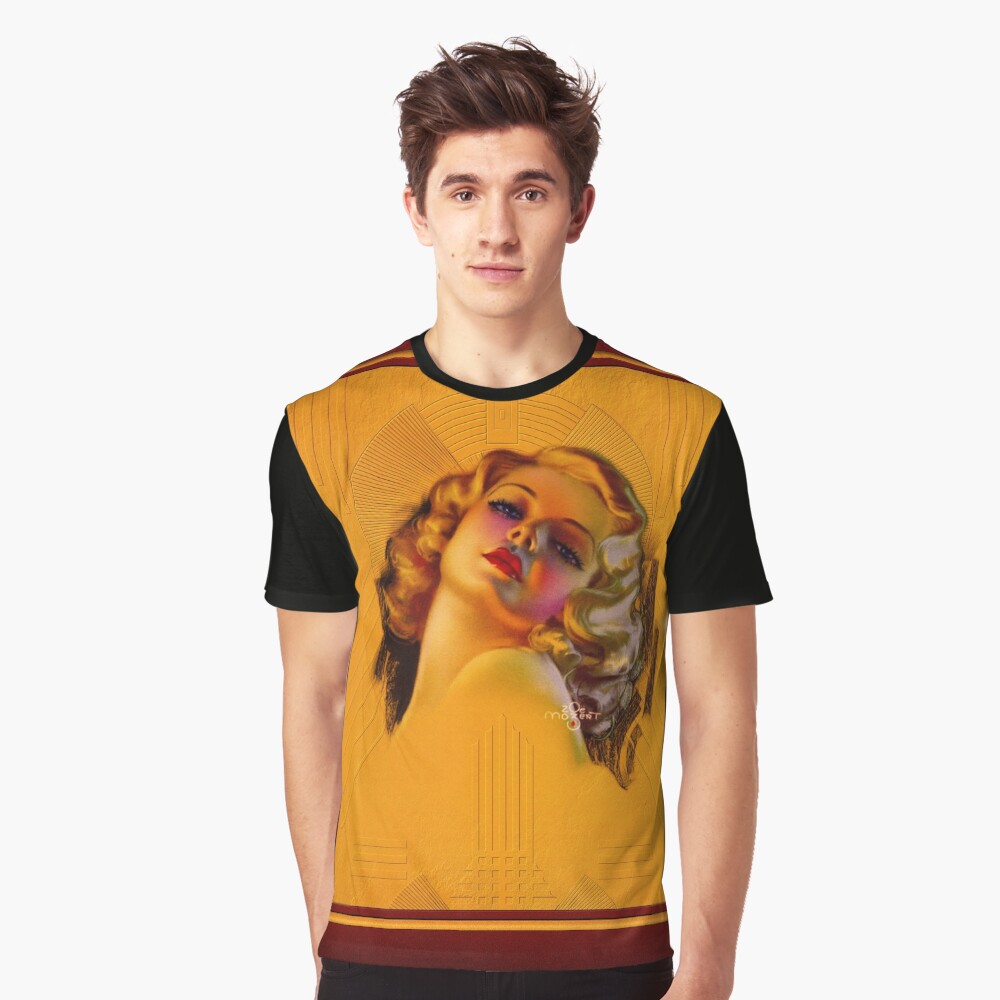
Zoe Mozert’s “Bewitching Eyes Art Deco Portrait” (1930s) is an exquisite example of the American artist’s ability to blend glamour, sensuality, and elegance within the framework of the Art Deco style. The portrait features a young woman whose gaze is arresting and hypnotic, encapsulating the glamour and beauty associated with the mid-20th century.
The painting itself is emblematic of Mozert’s signature work during the height of the American pin-up era, where she frequently depicted women as figures of allure and femininity. The image exudes both nostalgia and sophistication, set against a dynamic background that is as integral to the subject as the figure itself.
Mozert, born Alice Adelaide Moser (1907 – 1993), fuair sí aitheantas suntasach as an léiriú a rinne sí ar mhná i gcomhthéacs tráchtála agus mínealaíne araon. A saothair, go minic insileadh le undertones sensual, mhúscail tuiscint ar chumhachtú agus rúndiamhair araon, lucht féachana a tharraingt isteach i réimse na háilleachta a tógadh go cúramach. I “Bewitching Eyes,” Baineann Mozert cothromaíocht foirfe amach idir réalachas agus idéalachas, sainmharc den stíl Art Deco a dhíríonn ar caol, patrúin gheoiméadracha agus idéalú na foirme daonna. An úsáid shainiúil a bhaineann sí as dath, éadrom, agus tugann an scáth fuinneamh don phéintéireacht, ag an am céanna le mothú ar elegance timeless.
Clár na nÁbhar
Príomh-Ábhar agus Comhdhéanamh
I lár an phortráid, the subject is a woman with striking features that draw the viewer’s attention. Bhí a bog, platinum blonde hair frames her face in voluminous curls, adding a sense of glamour and sophistication that is synonymous with the golden age of Hollywood. A aghaidh, with delicate yet confident features, is tilted slightly upward, her eyes piercing the viewer with a directness that is both seductive and enigmatic.
The subject’s large, almond-shaped eyes seem to glimmer with a knowing, almost hypnotic intensity, enhanced by the subtle highlights placed on her cheeks, nose, and lips. The use of shading on her face and the strategic placement of light across her skin suggests a high level of artistry in capturing depth and texture.
A liopaí, full and slightly parted, add an element of allure and sensuality. The color palette of the subject’s face is soft yet bold, with vibrant pinks and reds on her lips and cheeks that contrast beautifully with the golden undertones of her complexion. Na súile, painted in deep hues of blue and violet, serve as the focal point, creating a sense of magnetism that commands attention. The subject’s eyes are rendered with such detail and care that they appear to almost gleam, pulling the viewer into an unspoken dialogue.
Cúlra agus Eilimintí Timpeallachta
The background of the portrait, typical of Art Deco design, is a geometric composition of vibrant, angular patterns. These geometric elements not only contrast with the organic curves of the woman’s form but also emphasize the stylized, modernist approach that was central to Art Deco. The background’s use of sharp, angular lines and concentric curves creates a dynamic sense of movement, framing the subject in a way that evokes the energy and modernity of the time. The golden yellow tone of the background serves as a warm and rich contrast to the cooler colors of the subject, drawing attention to her without overpowering the overall composition.
The presence of deep red borders around the painting further enhances the luxurious feel of the artwork, offering a visual frame that enhances the subject’s prominence. The red, a color often associated with power and passion, is subtle yet bold, adding to the mood of mystery and allure that the subject conveys. This deliberate use of color throughout the painting mirrors the principles of Art Deco design, which often emphasized luxurious materials and bold color choices to create striking, visually arresting works.
Stíl Ealaíne, Téama, agus Mood
The Art Deco style, which was prominent during the early-to-mid 20th century, is characterized by its geometric shapes, siméadracht, and use of rich, vibrant colors. In Mozert’s “Bewitching Eyes,” these elements come together to create a work of art that is both elegant and modern. The sleekness of the lines and the streamlined aesthetic of the figure suggest a world of sophistication, wealth, and style. The subject’s upward tilt and intense gaze, paired with the sharp geometry of the background, communicate a sense of confidence and mystery, while also referencing the power of women during this era.
The overall mood of the painting can be described as one of allure and seduction, though it is tempered with a sense of grace and poise. The subject is not overtly sexual, but her presence is undeniably powerful, capturing the viewer’s attention without the need for explicitness. This subtlety in her expression and body language is key to the painting’s enduring appeal. The artist’s use of light and shadow, along with the careful balance of warm and cool tones, creates an atmosphere of depth and intrigue, inviting the viewer to explore the nuances of the woman’s enigmatic gaze.
The use of gold tones throughout the piece suggests wealth and opulence, themes that were deeply embedded in the Art Deco movement, which often celebrated luxury and the aesthetics of the high society. The geometric patterns that form the backdrop, coupled with the modern yet classic rendering of the figure, position the painting squarely within the traditions of early 20th-century American portraiture while also contributing to the enduring legacy of Art Deco design.
Ábhair agus Teicnící
Mozert’s mastery of oil painting is evident in the seamless application of color and light. The smooth texture of the paint and the careful blending of tones give the figure a lifelike quality, while also allowing for a dreamlike atmosphere. The careful use of light, particularly in the way it highlights the subject’s face and creates a subtle halo effect around her, enhances the painting’s emotional impact. Mozert’s technique of layering colors and her skillful use of gradients give the painting a softness that is contrasted with the sharpness of the geometric elements in the background.
The framed composition, with its angular borders and incorporation of geometric patterns, further reflects the artist’s understanding of the Art Deco style. These patterns are not merely decorative but serve to heighten the drama of the portrait. The combination of both organic and geometric elements within the painting is a testament to Mozert’s ability to merge the human form with the stylized abstraction that defines Art Deco, creating a striking visual harmony that is both captivating and timeless.
Seo atáirgeadh seanmháistrí ealaíne digiteach athmháistrithe d’íomhá fearainn phoiblí atá ar fáil ar líne mar a priontáil chanbhás rollta.
Ealaíontóir Bith Díorthaithe Ó Wikipedia.org
I 1925 Chuir Zoë tús lena cuid staidéir ag Scoil Ealaíne Tionscail Mhúsaem Pennsylvania, áit a ndearna sí staidéar faoi Thornton Oakley, iar-mhac léinn de chuid Howard Pyle; chun íoc as a cuid oideachais ealaíne dhéanfadh sí eiseamláir chun airgead a bhailiú dá teagasc.
Le linn a gairme ealaíne, Phéinteáil Mozert na céadta clúdach irise agus póstaer scannáin; í féin a úsáid go minic mar mhúnla dá cuid léaráidí, ceamaraí nó scátháin a úsáid chun an staidiúir a ghabháil.
I 1941, foilsitheoirí Brown & Cheannaigh Bigelow an chéad saothar ealaíne nude de chuid Mozert agus shínigh sé conradh féilire eisiach í; agus le linn an Dara Cogadh Domhanda, a sraith pin-up don chuideachta, ar a dtugtar Victory Girls, Foilsíodh é i bhfoirm féilire agus i bhfoirm chártaí mutascóp.
I 1946, Chruthaigh Mozert an póstaer poiblíochta do Republic Pictures’ Cailín Féilire, Scannán faoi cailín Gibson; agus níos déanaí sa bhliain chéanna, phéinteáil sí na pinups don ghreannán Errol Flynn Never Say Goodbye, inar imir Flynn ealaíontóir pinup (Chruthaigh sí freisin na léaráidí a léiríodh i gcreidmheasanna tosaigh an scannáin.) .
Le 1950, Bhí Mozert ar cheann de na “ceathair mhór” maisitheoirí go náisiúnta, in éineacht le Rolf Armstrong, Iarla Moran agus Gil Elvgren; agus is fearr aithne ar a cuid saothar mar gheall ar a stíl pastail agus a léiriú réalaíoch de mhná.
I measc cuid de na saothair is cáiliúla a rinne Zoë tá an póstaer le haghaidh Paramount Pictures True Confession le Carole Lombard, an póstaer don scannán Howard Hughes The Outlaw a bhfuil Jane Russell ina phríomhpháirt, agus an íomhá is mó tóir uirthi ná Song of the Desert c 1950.