

Retrato Art Déco de olhos encantadores
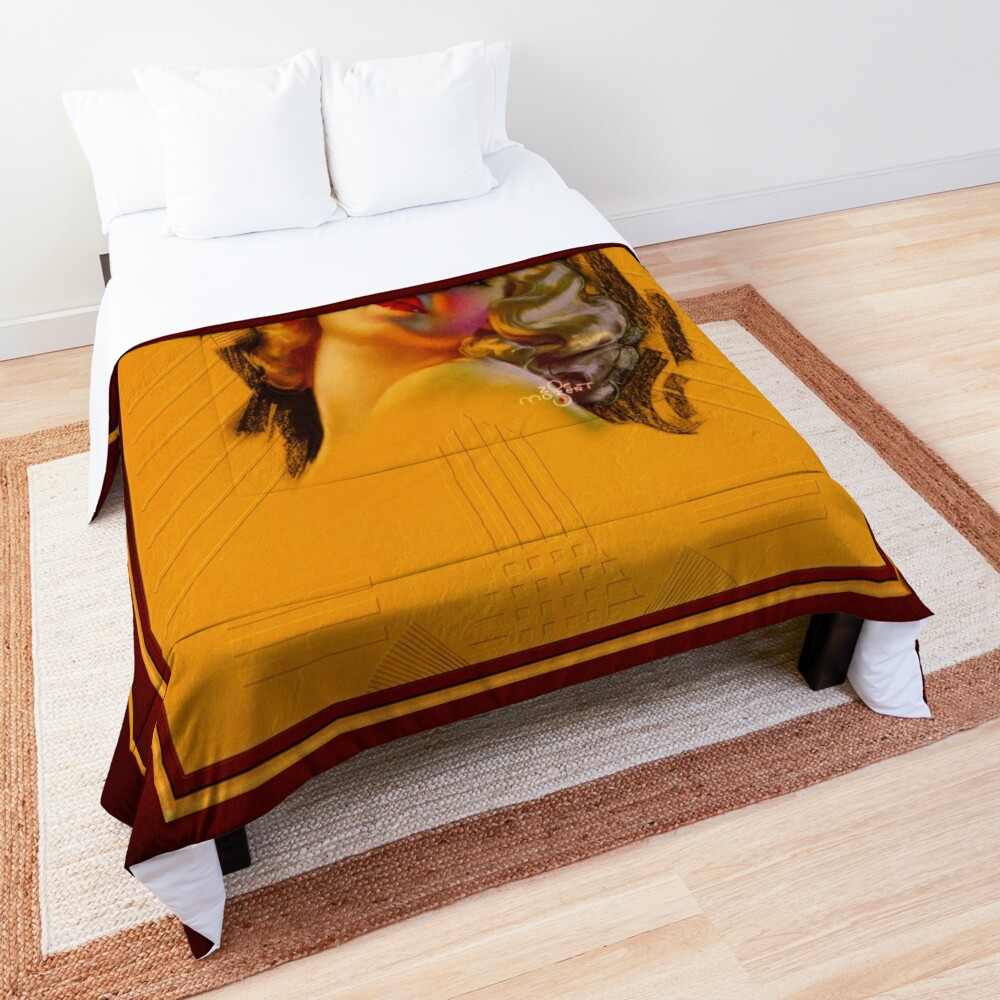
Zoe Mozert “Olhos encantadores Retrato Art Déco” (1930é) é um excelente exemplo da capacidade do artista americano de misturar glamour, sensualidade, e elegância no âmbito do estilo Art Déco. O retrato apresenta uma jovem cujo olhar é cativante e hipnótico, encapsulando o glamour e a beleza associados a meados do século XX.
A pintura em si é emblemática do trabalho característico de Mozert durante o auge da era pin-up americana., onde ela frequentemente retratava as mulheres como figuras de fascínio e feminilidade. A imagem exala nostalgia e sofisticação, colocado contra um fundo dinâmico que é tão integral ao assunto quanto a própria figura.
Mozert, nascida Alice Adelaide Moser (1907 – 1993), ganhou reconhecimento significativo por sua representação de mulheres em contextos comerciais e de belas-artes. Suas obras, muitas vezes infundido com tons sensuais, evocar uma sensação de poder e mistério, atraindo os espectadores para um reino de beleza cuidadosamente construída. Dentro “Olhos encantadores,” Mozert alcança um equilíbrio perfeito entre realismo e idealismo, uma marca registrada do estilo Art Déco que se concentra na elegância, padrões geométricos e a idealização da forma humana. Seu uso distinto da cor, luz, e a sombra dá à pintura um ar vibrante, mantendo uma sensação de elegância atemporal.
Índice
Assunto principal e composição
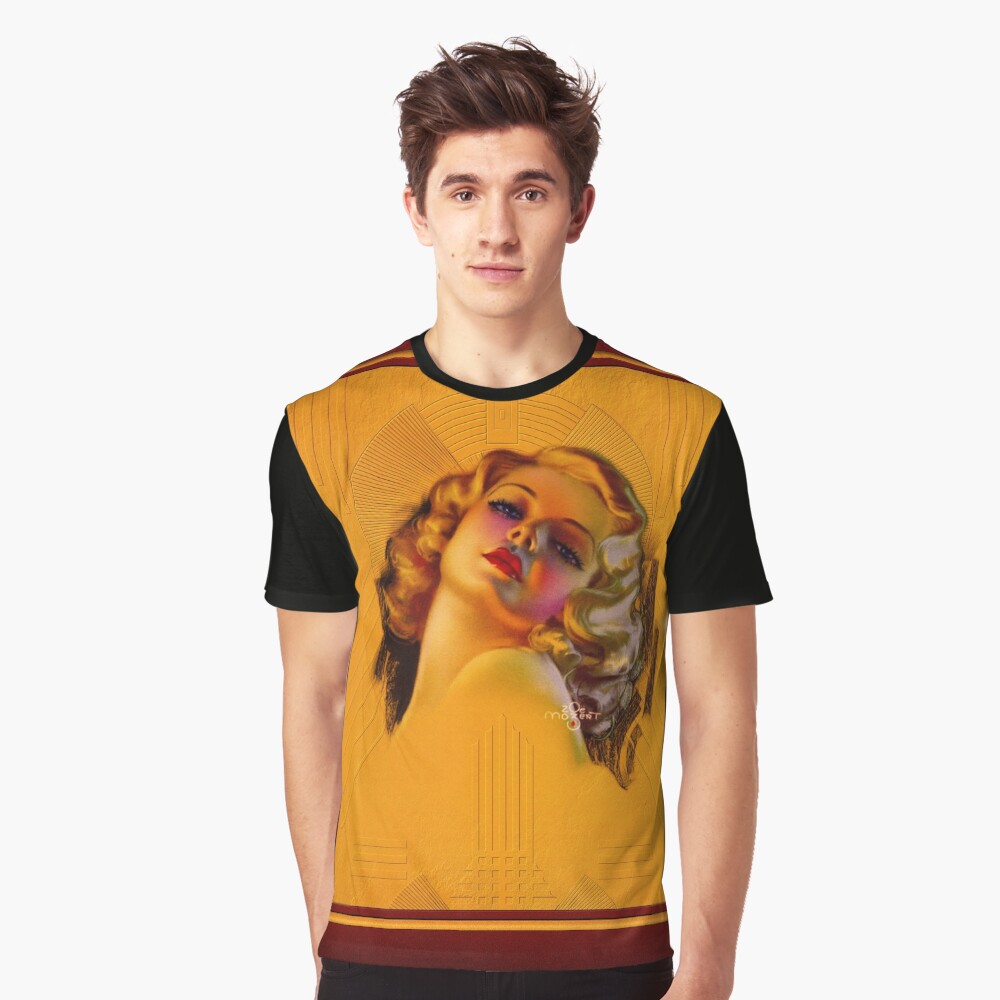
No centro do retrato, o sujeito é uma mulher com traços marcantes que chamam a atenção do espectador. Ela macia, cabelo loiro platinado emoldura seu rosto em cachos volumosos, adicionando uma sensação de glamour e sofisticação que é sinônimo da era de ouro de Hollywood. O rosto dela, com características delicadas, mas confiantes, está ligeiramente inclinado para cima, seus olhos perfuram o espectador com uma franqueza que é ao mesmo tempo sedutora e enigmática.
O assunto é grande, olhos amendoados parecem brilhar com um conhecimento, intensidade quase hipnótica, realçado pelos destaques sutis colocados em suas bochechas, nariz, e lábios. O uso de sombras em seu rosto e o posicionamento estratégico da luz em sua pele sugerem um alto nível de habilidade artística na captura de profundidade e textura..
Seus lábios, cheio e ligeiramente dividido, adicione um elemento de fascínio e sensualidade. A paleta de cores do rosto da pessoa é suave, mas ousada, with vibrant pinks and reds on her lips and cheeks that contrast beautifully with the golden undertones of her complexion. Os olhos, painted in deep hues of blue and violet, serve as the focal point, creating a sense of magnetism that commands attention. The subject’s eyes are rendered with such detail and care that they appear to almost gleam, pulling the viewer into an unspoken dialogue.
Elementos de fundo e arredores
The background of the portrait, typical of Art Deco design, is a geometric composition of vibrant, angular patterns. These geometric elements not only contrast with the organic curves of the woman’s form but also emphasize the stylized, modernist approach that was central to Art Deco. The background’s use of sharp, angular lines and concentric curves creates a dynamic sense of movement, framing the subject in a way that evokes the energy and modernity of the time. The golden yellow tone of the background serves as a warm and rich contrast to the cooler colors of the subject, drawing attention to her without overpowering the overall composition.
The presence of deep red borders around the painting further enhances the luxurious feel of the artwork, offering a visual frame that enhances the subject’s prominence. The red, a color often associated with power and passion, is subtle yet bold, adding to the mood of mystery and allure that the subject conveys. This deliberate use of color throughout the painting mirrors the principles of Art Deco design, which often emphasized luxurious materials and bold color choices to create striking, visually arresting works.
Estilo artístico, Tema, e humor
The Art Deco style, which was prominent during the early-to-mid 20th century, is characterized by its geometric shapes, simetria, and use of rich, vibrant colors. In Mozert’s “Olhos encantadores,” these elements come together to create a work of art that is both elegant and modern. The sleekness of the lines and the streamlined aesthetic of the figure suggest a world of sophistication, fortuna, and style. The subject’s upward tilt and intense gaze, paired with the sharp geometry of the background, communicate a sense of confidence and mystery, while also referencing the power of women during this era.
The overall mood of the painting can be described as one of allure and seduction, though it is tempered with a sense of grace and poise. The subject is not overtly sexual, but her presence is undeniably powerful, capturing the viewer’s attention without the need for explicitness. This subtlety in her expression and body language is key to the painting’s enduring appeal. The artist’s use of light and shadow, along with the careful balance of warm and cool tones, creates an atmosphere of depth and intrigue, inviting the viewer to explore the nuances of the woman’s enigmatic gaze.
The use of gold tones throughout the piece suggests wealth and opulence, themes that were deeply embedded in the Art Deco movement, which often celebrated luxury and the aesthetics of the high society. The geometric patterns that form the backdrop, coupled with the modern yet classic rendering of the figure, position the painting squarely within the traditions of early 20th-century American portraiture while also contributing to the enduring legacy of Art Deco design.
Materiais e Técnicas
Mozert’s mastery of oil painting is evident in the seamless application of color and light. The smooth texture of the paint and the careful blending of tones give the figure a lifelike quality, while also allowing for a dreamlike atmosphere. The careful use of light, particularly in the way it highlights the subject’s face and creates a subtle halo effect around her, enhances the painting’s emotional impact. Mozert’s technique of layering colors and her skillful use of gradients give the painting a softness that is contrasted with the sharpness of the geometric elements in the background.
The framed composition, with its angular borders and incorporation of geometric patterns, further reflects the artist’s understanding of the Art Deco style. These patterns are not merely decorative but serve to heighten the drama of the portrait. The combination of both organic and geometric elements within the painting is a testament to Mozert’s ability to merge the human form with the stylized abstraction that defines Art Deco, creating a striking visual harmony that is both captivating and timeless.
Esta é uma reprodução remasterizada de antigos mestres de arte digital de uma imagem de domínio público que está disponível online como um impressão em tela enrolada.
BIO do artista derivado de Wikipedia.org
Dentro 1925 Zoë começou seus estudos na Pennsylvania Museum School of Industrial Art, onde ela estudou com Thornton Oakley, um ex-aluno de Howard Pyle; para pagar sua educação artística, ela seria modelo para arrecadar dinheiro para suas mensalidades.
Durante sua carreira artística, Mozert pintou centenas de capas de revistas e pôsteres de filmes; frequentemente usando a si mesma como modelo de suas ilustrações, usando câmeras ou espelhos para capturar a pose.
Dentro 1941, editores Brown & Bigelow comprou a primeira arte nua de Mozert e assinou com ela um contrato de calendário exclusivo; e durante a Segunda Guerra Mundial, sua série de pin-ups para a empresa, chamada de meninas da vitória, foi publicado em forma de calendário e cartão mutoscópio.
Dentro 1946, Mozert criou o cartaz publicitário da Republic Pictures’ Garota do Calendário, um filme sobre a Gibson Girl; e mais tarde nesse mesmo ano, ela pintou as pin-ups para a comédia de Errol Flynn Never Say Goodbye, em que Flynn interpretou um artista pinup (Ela também criou as ilustrações mostradas nos créditos de abertura do filme.) .
De 1950, Mozert tornou-se um dos “quatro grandes” ilustradores nacionalmente, junto com Rolf Armstrong, Conde Moran e Gil Elvgren; com suas pinturas sendo mais conhecidas por seu estilo pastel e representação realista de mulheres.
Algumas das obras mais famosas de Zoë incluem o pôster de True Confession da Paramount Pictures, estrelado por Carole Lombard., o cartaz para o filme de Howard Hughes The Outlaw estrelado por Jane Russell, e sua imagem mais popular sendo Song of the Desert c1950.