

Förtrollande ögon Art Deco Porträtt
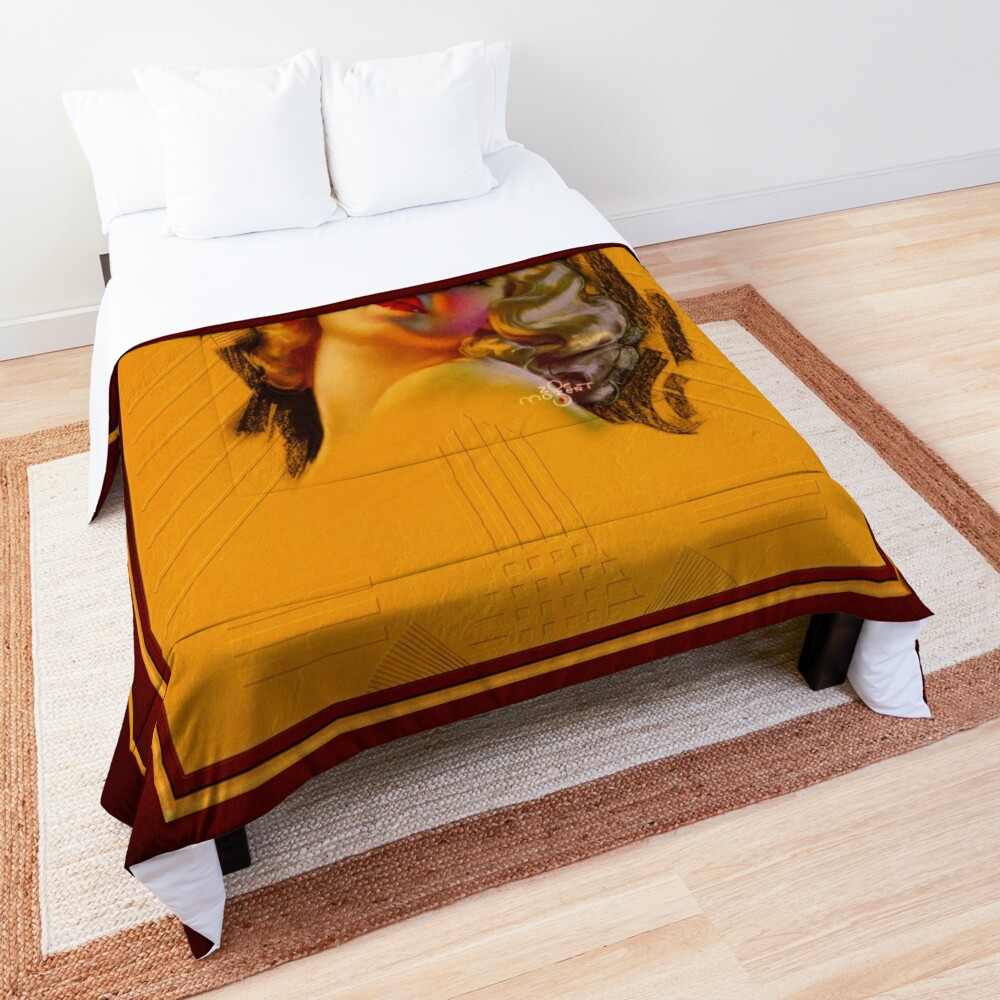
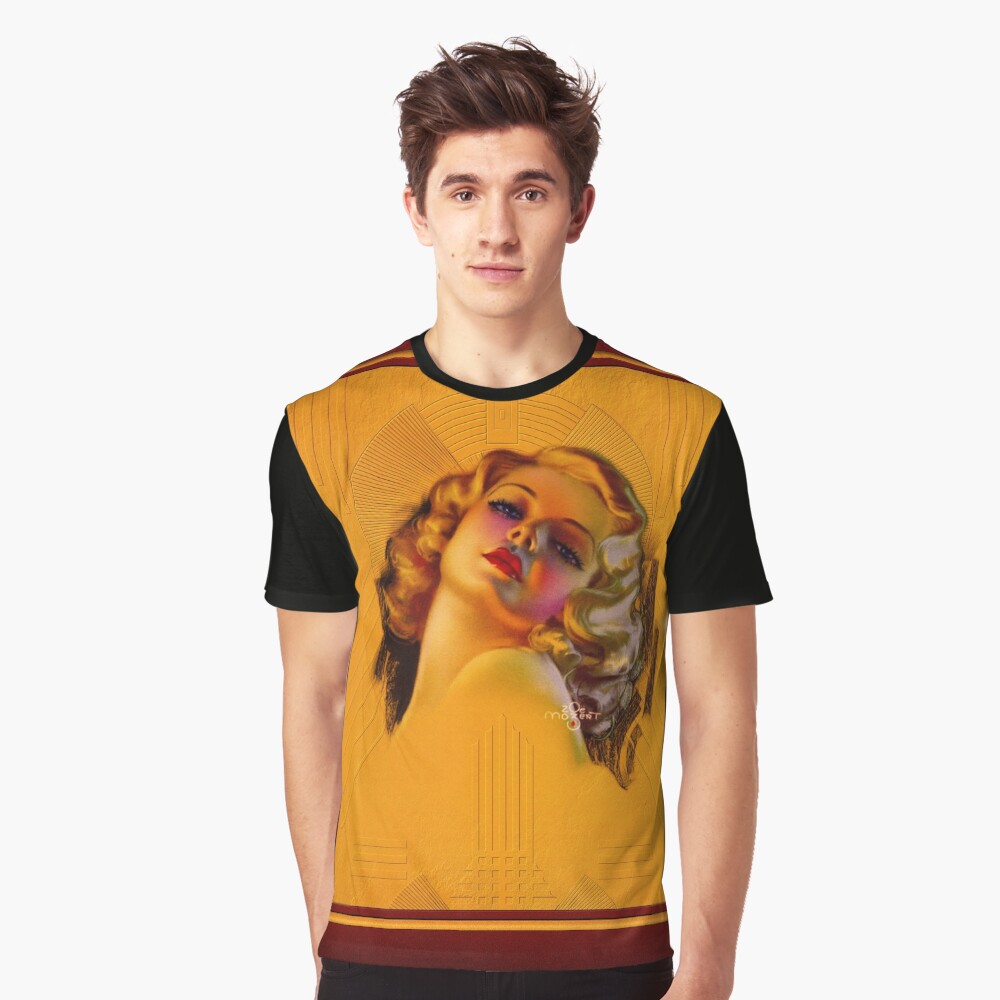
Zoe Mozarts “Förtrollande ögon Art déco porträtt” (1930s) är ett utsökt exempel på den amerikanska konstnärens förmåga att blanda glamour, sensualitet, och elegans inom ramen för art déco-stilen. Porträttet visar en ung kvinna vars blick är arresterande och hypnotisk, kapslar in glamouren och skönheten som förknippas med mitten av 1900-talet.
Målningen i sig är emblematisk för Mozerts signaturverk under höjden av den amerikanska pin-up-eran, där hon ofta avbildade kvinnor som figurer av lockelse och kvinnlighet. Bilden utstrålar både nostalgi och sofistikering, mot en dynamisk bakgrund som är lika integrerad i motivet som figuren själv.
Mozart, född Alice Adelaide Moser (1907 – 1993), fick betydande erkännande för sin gestaltning av kvinnor i både kommersiella och konstsammanhang. Hennes verk, ofta fylld med sensuella undertoner, framkalla en känsla av både egenmakt och mystik, dra in tittarna till ett rike av noggrant konstruerad skönhet. I “Förtrollande ögon,” Mozert uppnår en perfekt balans mellan realism och idealism, ett kännetecken för art déco-stilen som fokuserar på elegant, geometriska mönster och idealiseringen av den mänskliga formen. Hennes distinkta användning av färg, ljus, och skugga ger målningen en luft av liv, samtidigt som du behåller en känsla av tidlös elegans.
Innehållsförteckning
Huvudämne och komposition
I mitten av porträttet, the subject is a woman with striking features that draw the viewer’s attention. Hennes mjuka, platinum blonde hair frames her face in voluminous curls, adding a sense of glamour and sophistication that is synonymous with the golden age of Hollywood. Hennes ansikte, with delicate yet confident features, is tilted slightly upward, her eyes piercing the viewer with a directness that is both seductive and enigmatic.
The subject’s large, almond-shaped eyes seem to glimmer with a knowing, almost hypnotic intensity, enhanced by the subtle highlights placed on her cheeks, nose, and lips. The use of shading on her face and the strategic placement of light across her skin suggests a high level of artistry in capturing depth and texture.
Hennes läppar, full och något delad, add an element of allure and sensuality. The color palette of the subject’s face is soft yet bold, with vibrant pinks and reds on her lips and cheeks that contrast beautifully with the golden undertones of her complexion. Ögonen, painted in deep hues of blue and violet, serve as the focal point, creating a sense of magnetism that commands attention. The subject’s eyes are rendered with such detail and care that they appear to almost gleam, pulling the viewer into an unspoken dialogue.
Bakgrund och omgivande element
The background of the portrait, typical of Art Deco design, is a geometric composition of vibrant, angular patterns. These geometric elements not only contrast with the organic curves of the woman’s form but also emphasize the stylized, modernist approach that was central to Art Deco. The background’s use of sharp, kantiga linjer och koncentriska kurvor skapar en dynamisk känsla av rörelse, ramar in motivet på ett sätt som frammanar tidens energi och modernitet. Bakgrundens gyllengula ton fungerar som en varm och rik kontrast till motivets kallare färger, drar uppmärksamheten till henne utan att övermanna den övergripande kompositionen.
Närvaron av djupröda kanter runt målningen förstärker ytterligare den lyxiga känslan av konstverket, erbjuder en visuell ram som förstärker motivets framträdande plats. Den röda, en färg som ofta förknippas med kraft och passion, är subtil men djärv, vilket bidrar till den stämning av mystik och lockelse som ämnet förmedlar. Denna avsiktliga användning av färg genom hela målningen speglar principerna för art déco-design, which often emphasized luxurious materials and bold color choices to create striking, visually arresting works.
Konstnärlig stil, Tema, och humör
The Art Deco style, which was prominent during the early-to-mid 20th century, is characterized by its geometric shapes, symmetri, and use of rich, levande färger. In Mozert’s “Förtrollande ögon,” these elements come together to create a work of art that is both elegant and modern. The sleekness of the lines and the streamlined aesthetic of the figure suggest a world of sophistication, rikedom, and style. The subject’s upward tilt and intense gaze, paired with the sharp geometry of the background, communicate a sense of confidence and mystery, while also referencing the power of women during this era.
The overall mood of the painting can be described as one of allure and seduction, though it is tempered with a sense of grace and poise. The subject is not overtly sexual, but her presence is undeniably powerful, capturing the viewer’s attention without the need for explicitness. This subtlety in her expression and body language is key to the painting’s enduring appeal. Konstnärens användning av ljus och skugga, along with the careful balance of warm and cool tones, creates an atmosphere of depth and intrigue, inviting the viewer to explore the nuances of the woman’s enigmatic gaze.
The use of gold tones throughout the piece suggests wealth and opulence, themes that were deeply embedded in the Art Deco movement, which often celebrated luxury and the aesthetics of the high society. The geometric patterns that form the backdrop, coupled with the modern yet classic rendering of the figure, position the painting squarely within the traditions of early 20th-century American portraiture while also contributing to the enduring legacy of Art Deco design.
Material och tekniker
Mozert’s mastery of oil painting is evident in the seamless application of color and light. The smooth texture of the paint and the careful blending of tones give the figure a lifelike quality, while also allowing for a dreamlike atmosphere. The careful use of light, particularly in the way it highlights the subject’s face and creates a subtle halo effect around her, enhances the painting’s emotional impact. Mozert’s technique of layering colors and her skillful use of gradients give the painting a softness that is contrasted with the sharpness of the geometric elements in the background.
The framed composition, with its angular borders and incorporation of geometric patterns, further reflects the artist’s understanding of the Art Deco style. These patterns are not merely decorative but serve to heighten the drama of the portrait. The combination of both organic and geometric elements within the painting is a testament to Mozert’s ability to merge the human form with the stylized abstraction that defines Art Deco, creating a striking visual harmony that is both captivating and timeless.
Detta är en remastrad digital konst reproduktion av gamla mästare av en bild som är allmän egendom som är tillgänglig online som en rullat canvastryck.
Artist Bio härledd från Wikipedia.org
I 1925 Zoë började sina studier vid Pennsylvania Museum School of Industrial Art, där hon studerade under Thornton Oakley, en tidigare elev till Howard Pyle; för att betala för sin konstutbildning skulle hon modellera för att samla in pengar till sin undervisning.
Under sin konstkarriär, Mozert målade hundratals tidningsomslag och filmaffischer; använder sig ofta som modell för sina illustrationer, använda kameror eller speglar för att fånga posen.
I 1941, förlag Brown & Bigelow köpte Mozerts första nakenkonstverk och skrev på henne till ett exklusivt kalenderkontrakt; och under andra världskriget, hennes pin-up-serie för företaget, kallas Victory Girls, publicerades både i kalender- och mutoscope-kortform.
I 1946, Mozert skapade reklamaffischen för Republic Pictures’ Kalenderflicka, en film om Gibson Girl; och senare samma år, hon målade pinups till Errol Flynn-komedin Never Say Goodbye, där Flynn spelade en pinup-artist (Hon skapade också illustrationerna som visas i filmens inledningstexter.) .
Förbi 1950, Mozert hade blivit en av de “fyra stora” illustratörer nationellt, tillsammans med Rolf Armstrong, Earl Moran och Gil Elvgren; med hennes målningar som är mest kända för sin pastellstil och realistiska kvinnoskildring.
Några av Zoës mest kända verk inkluderar affischen för Paramount Pictures True Confession med Carole Lombard i huvudrollen, affischen för Howard Hughes-filmen The Outlaw med Jane Russell i huvudrollen, och hennes mest populära bild är Song of the Desert c1950.