

זר פרחים בכד c1724
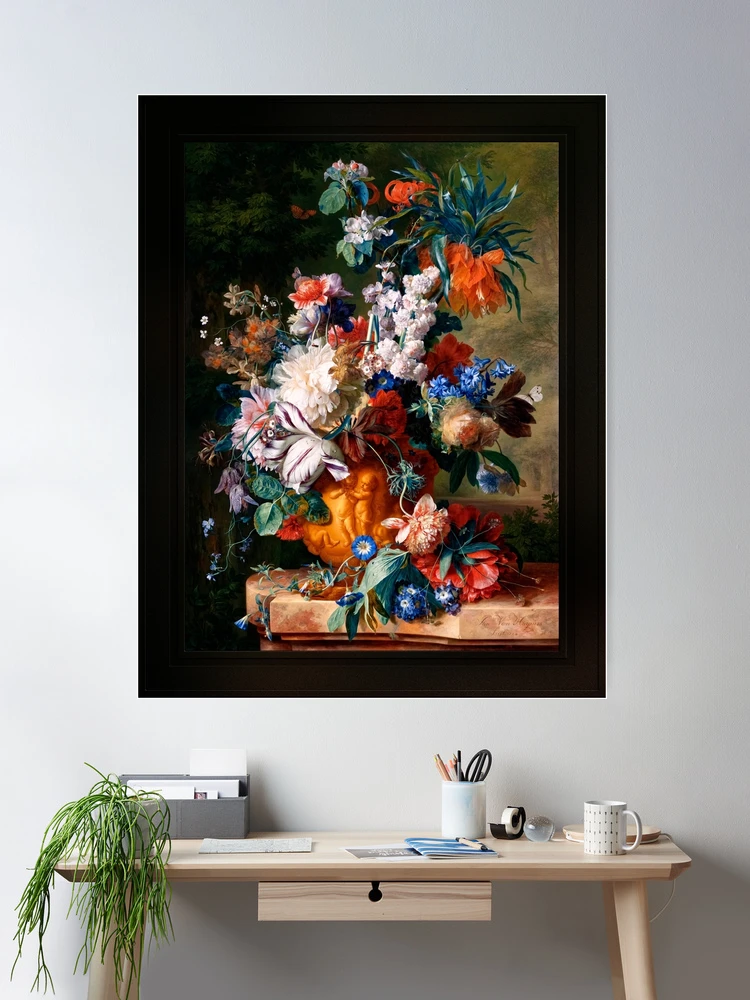
Jan van Huysum’s “Bouquet of Flowers in an Urn,” נוצר ב 1724, stands as a prime example of the Dutch Golden Age’s mastery of still life painting. Known for his exceptional skill in rendering florals with lifelike detail and vibrant color, van Huysum (1682 – 1749) captured the beauty of nature with an extraordinary level of finesse.
This particular painting features a large, ornate urn brimming with a diverse and carefully arranged assortment of flowers, capturing the delicate interplay between light and shadow, the textures of petals, and the intricate details of each bloom. The work embodies the flourishing Dutch Baroque style, where floral still lifes were not only symbolic of wealth and prestige but also a testament to the artist’s virtuosity.
תוכן העניינים
הנושא העיקרי: The Flower Bouquet
At the heart of the composition lies a stunning bouquet, overflowing from the mouth of a classical urn. The flowers are presented in vivid detail, with each petal, leaf, and stem rendered in a naturalistic style that blurs the line between painting and reality.
The centerpiece of the bouquet includes lilies, tulips, roses, and violets, each flower meticulously painted to showcase its texture and fragility. The delicacy of the petals contrasts beautifully with the rich, lush tones of the surrounding foliage, demonstrating van Huysum’s exceptional ability to portray both the softness of flowers and the robustness of their greenery.
Among the notable elements in the arrangement, the bright red-orange lily stands out, drawing the viewer’s eye due to its size and vibrant hue. Its contrasting colors, alongside the soft whites and purples of the smaller flowers, create a harmonious visual balance.
The inclusion of several varieties of flowers, some in full bloom, others just beginning to open, adds depth and variety, giving the painting a sense of dynamic movement as if the bouquet were alive and flourishing. The artist’s meticulous attention to detail is evident in the veins of the leaves, the way the light reflects off the dew drops on the petals, and the subtle shading that adds three-dimensionality to the composition.
The Urn: Symbolism and Structure
The urn that holds the bouquet is not merely a vessel but a symbol of wealth, taste, ותחכום. Its classical form, decorated with intricate motifs, serves as a nod to ancient Greek and Roman art, drawing a link between the florals and the timelessness of classical antiquity.
The urn itself is set on a stone pedestal, which emphasizes its importance within the composition. העומק, golden yellow hue of the urn contrasts beautifully with the colorful flowers, while the urn’s smooth texture creates a sense of permanence, a subtle counterpoint to the ephemeral nature of the blooms it holds.
The urn’s material seems to have a soft gleam, almost as though it were made of fine porcelain or terracotta, adding a realistic texture that invites closer inspection. Two cherub-like figures decorate the urn’s surface, their cherubic forms subtly molded into the ceramic. These figures are rendered with graceful fluidity, their childlike faces framed by delicate foliage, acting as a soft visual link between the natural world of the flowers and the artistic world of sculpture.
שטח ורקע
ברקע, the artist paints a soft, distant landscape of verdant trees and foliage, which gently fade into a haze of light. This gives the impression of a lush garden or private estate, adding a sense of depth and space to the painting.
The outdoor scene contrasts with the indoor focus on the flowers, suggesting that the bouquet might have been picked from a garden and brought indoors to be admired. The light that spills across the scene highlights the freshness of the flowers, creating a play between the natural world outside and the curated beauty inside the vase.
The backdrop is not overly detailed but suggests an idealized view of nature, green and flourishing, untouched and serene. This peaceful terrain serves to enhance the visual splendor of the flowers in the foreground, making them appear even more exquisite in comparison.
חומרים וטכניקה
Jan van Huysum employed oil paints, a medium that allowed him to capture the fine textures and complex interplay of light and shadow. His technique involved layering thin glazes to create depth, building up the surface so that the light could reflect from each individual flower petal with a naturalistic glow.
The fine details in the leaves, petals, and urn demonstrate a mastery of both texture and transparency. The smooth transitions between light and dark, as well as the fine highlights and delicate shadows on each surface, reveal van Huysum’s virtuosity with the oil painting technique.
The artist’s use of light is particularly striking in this piece. He employs a soft, diffused light that appears to bathe the entire composition, adding warmth and emphasizing the lush vibrancy of the flowers.
This skillful treatment of light and shadow makes the bouquet feel alive, inviting the viewer to linger on the painting, marveling at the realistic rendering of each petal, leaf, and bloom. The overall effect is both calming and awe-inspiring, conveying a deep appreciation for the fleeting beauty of nature.
סִגְנוֹן, נוֹשֵׂא, ומצב רוח
The Dutch Baroque style, with its focus on intricate detail and realism, is fully embodied in this work. The theme of transience is hinted at through the depiction of flowers, symbols of fleeting beauty and mortality.
Van Huysum’s bouquet, with its variety of blooms, presents a visual celebration of life’s ephemeral nature. עדיין, it also speaks to the triumph of the artist’s skill, as if capturing this temporary beauty in paint allows it to endure forever.
The mood of the painting is one of serene contemplation. There is a quiet elegance in the way the flowers are arranged and displayed, and the viewer is drawn into a world where nature’s beauty is appreciated and preserved in the stillness of the canvas. The juxtaposition of the fragile flowers and the enduring urn evokes a sense of quiet dignity and timelessness.
זר פרחים בכד c1724 מאת הצייר ההולנדי יאן ואן הויסום (1682 – 1749), מארי-ז'נבייב בודרי כמוזה מאת ז'אן-מארק נאטיאר, מארי-ז'נבייב בודרי כמוזה מאת ז'אן-מארק נאטיאר.
זהו יפהפה סצנת טבע דומם של זר גדול של פרחים מכל הסוגים השונים הכולל פרחים אדומים, פרחים לבנים, פרחים כתומים, פרחים כחולים, פרחים סגולים, ורדים זהב, סחלבים לבנים וסגולים, גפנים, וצמחים ירוקים; שהונחו בכד קרמי גדול שמוטבע סביב היקפו עם פוטי (ילד זכר קטן ושמנמן, בדרך כלל עירום ביצירת אמנות).
הכד או האגרטל יושבים על שולחן שיש מפוסל בצבע חום ושזוף שהוצב בגינה גדולה או ביער עם עצים מאחוריו משמאל ועוד עצים מימין דהויים מעט מהעין לאורך שביל כדי לציין מרחק.
על הפרחים והמעופפים סביבם נוכל לראות כמה מינים של פרפרים, נמלים וצרעה; כשעל חלק מהפרחים טיפות מים מוגדרות בבירור.
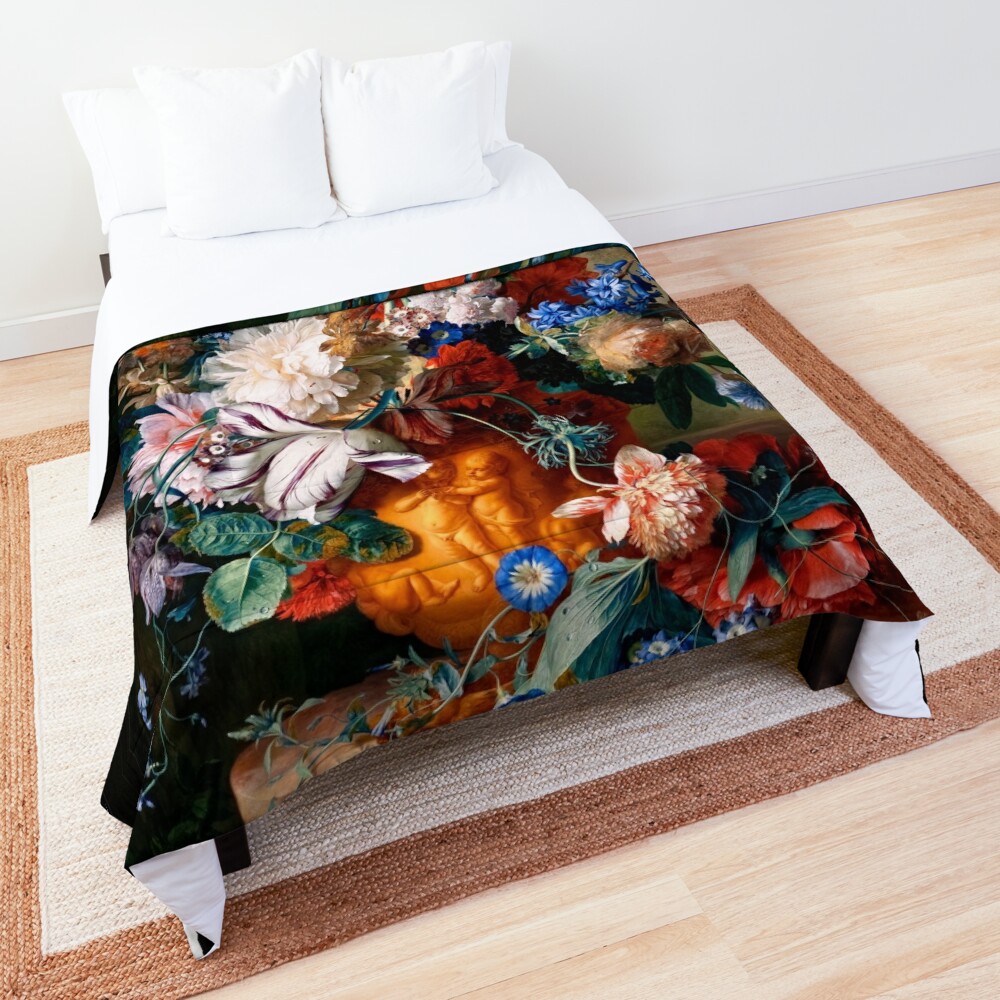
זהו רפרודוקציה של אמנות דיגיטלית מחודשת של תמונת תחום ציבורי זמינה כהדפס קנבס באינטרנט.
ביו אמן
מידע למטה נגזר Wikipedia.org ו Britannica.com
יאן ואן הויסום היה בנו הבכור של צייר הפרחים ההולנדי תור הזהב יוסטוס ואן הויסום (1659 – 1716), ובא ממשפחה של אמנים.
אחיו הצעיר שנפטר בגיל 22 היה גם צייר מוכשר כמו אחותו מריה; ובתו פרנקינה מרגרטה ואן הויסום (1707 – 1789) היה גם צייר פרחים.
יאן למד בהדרכתו של אביו ומיומן שפותח יעלה מאוחר יותר על כישוריו של אביו.
ההתמחות שלו הייתה בציור סידורי פרחים מפוארים, שהוא יצר בדייקנות ובעדינות יתרה.