

Schlass Wanterlandschaft Mat Skater op engem gefruerenen Floss
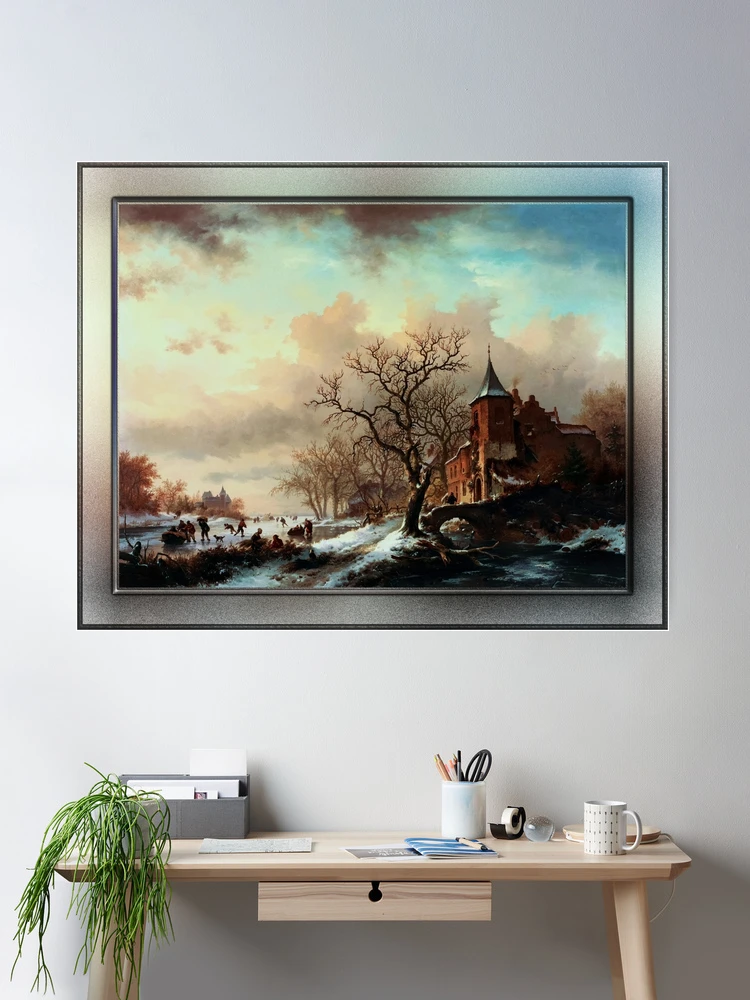
Schlass Wanterlandschaft Mat Skater op engem gefruerenen Floss erstallt ronderëm 1855 ass eng evokativ Wanterlandschaft vum Frederik Marinus Kruseman, en hollännesche Moler gebuer an 1816 a passéiert an 1882 Kruseman, e kompetente Meeschter fir d'Essenz vum hollännesche Land am 19. Joerhonnert z'erfaassen, ass am beschten bekannt fir seng atmosphäresch Wierker déi dacks Landschaften mat markantem Realismus an detailléierter Naturbildungen duergestallt hunn.
Dëst Bild ass e quintessentlecht Beispill vum Kruseman seng Fäegkeet fir de grandiose mam Alldag ze bestueden, eng roueg Wanterszene festzehuelen déi souwuel d'Majestéit vun der Natur an déi roueg Einfachheet vum ländleche Liewen vermëttelt. Seng Notzung vu Liicht, Schatten, an Perspektiv, zesumme mat enger nuancéierter Faarfpalette, bitt en Abléck an déi roueg Schéinheet vum hollännesche Wanter an déi mënschlech Verbindung mam Land an dëser Saison.
Inhaltsverzeechnes
De Kader a Kompositioun
D’Kompositioun vum Bild entfalt sech virun eis an enger breeder a panoramescher Landschaft, mat engem Schwéierpunkt op eng grouss, bal antik Buerg am Hannergrond nestled. De Kënschtler setzt fäeg d'Festung liicht aus dem Zentrum, gëtt dem Betrachter e Gefill vun Déift an erlaabt dem natierlechen Ëmfeld harmonesch mat der gebauter Struktur ze interagéieren. Déi imposant Schlass, seng rau Steemetzerei vun Zäit verwiddert, sëtzt op enger sanfter Steigung, ëmgi vun barre Beem, déi hir Skelett Glieder an den Himmel strecken, wéi wann an engem Moment vu roueger Iwwerleeung gefaangen ass.
E gefruerene Floss leeft iwwer déi ënnescht Halschent vum Canvas, seng Äis glänzend ënner engem mëllen, diffus Wanter Sonn. De Floss, an enger Decken vum Schnéi beschichtet, ass de Brennpunkt vun der Szen, mat Gruppe vu Leit, déi Skatestrecken a spillen, hir donkel Formen kontrastéieren géint de wäisse a blass Hannergrond. Dës Skater, verkleed an einfach awer waarm 19. Joerhonnert Kleedung, e liewege mënschlecht Element an déi soss friddlech Landschaft fügen, eng dynamesch Interaktioun tëscht de Figuren an hirem Ëmfeld schafen.
Wanterlandschaft an Atmosphär Effekter
Dem Kruseman seng Wanterlandschaft ass net nëmmen eng Ofdreiwung vun der Natur an enger statescher Form, awer eng suergfälteg konstruéiert Atmosphär. D'Keelt vun der Wanterloft ass palpabel, mat dem Kënschtler seng delikat Pinselwierk, déi d'Textur vum schneebedeckte Buedem erfaasst, d'Knappheet vum Himmel, and the slight haze that often accompanies the winter chill. The snow is rendered with remarkable realism, each flake seeming to glisten with an icy sharpness, contrasting with the muted tones of the surrounding trees and castle.
The sky, filled with soft clouds in shades of pink, lavender, and pale blue, suggests an early afternoon or late morning, where the light is low yet still bright enough to cast long, soft shadows across the landscape. The atmospheric lighting in this piece not only accentuates the textures of the snow and ice but also imbues the scene with a serene yet melancholic mood. The interplay of light and shadow within the painting is a masterful aspect of Kruseman’s technique, enhancing the viewer’s sense of immersion into the wintry setting.
De Mënsch Element: Skater an Alldag
En zentralen Aspekt vum Bild ass d'Präsenz vun de Skater, déi d'Szen mat Liewen a Vitalitéit infuséieren. Verschidde Figuren rutschen graziéis iwwer d'Äis, hir Bewegungen gefruer Mëtt-Aktioun, bitt eng zäitlos Porträt vun der Wanterfräizäit. D'Skater erschéngen a klenge Gruppen, e puer engagéiert a geeschtege Aktivitéiten wéi géigesäiteg verfollegen, während anerer Paus fir ze raschten, hiren Otem sichtbar an der kaler Loft. Dës Zuele sinn, obwuel sekundär zu der natierlecher Landschaft, representéieren e wichtegt mënschlecht Element am Kruseman senger Duerstellung vum ländleche Liewen. Hir donkel Kleeder, meeschtens aus Mäntel besteet, Schal, an Hutt, kontrastéiert staark mam Wäiss vum Schnéi, betount déi mënschlech Widderstandsfäegkeet am Gesiicht vum Wanterhär.
Dës Skater fügen d'Narrativ vum Alldag während de Wanterméint an Holland aus dem 19. Schlittschong war e populär Zäitverdreif während haarde Wanteren, wann Flëss a Kanäl géifen afréieren. D'Figure sinn net nëmmen Ergänzunge vun der Szen, mee droen zum Thema vum Bild vun der Harmonie tëscht Mënsch an Natur bäi, déi freedeg Interaktioun mat den Elementer ze weisen.
Architektonesch Elementer: D'Schlass a seng Ëmgéigend
D'Schlass, eng herrlech awer e bëssen déif Struktur, commandéiert d'Opmierksamkeet mat senge Wénkellinnen an héije Spir. Gebaut am goteschen oder Renaissance Stil, seng zerbriechlech Form hindeit datt et den Test vun der Zäit an haarde Wantere widderstoen huet. D'Präsenz vun der Buerg an der Landschaft féiert e Gefill vun der Geschicht, suggeréiert datt dës Regioun zënter Jorhonnerte bewunnt ass. D'Struktur steet als stille Zeien zum Vergaangenheet vun der Zäit, während d'Skater drënner sinn eng Erënnerung un d'Liewen weider, despite the cold and the passage of seasons.
Around the castle, the land is dotted with trees that appear barren, their branches twisted and bare, signaling the end of autumn and the full embrace of winter. Dës Beem, like the castle, stand in stark contrast to the skaters, who are in motion. The stillness of the natural elements surrounding the human figures enhances the sense of a serene, almost timeless moment, as if capturing the fleeting essence of winter itself.
Stëmmung an Thema vum Konschtwierk
D'Stëmmung vum Schlass Wanterlandschaft Mat Skater op engem gefruerenen Floss ass ee vun der Rou, mixed with a quiet sense of nostalgia. There is a peaceful solitude conveyed through the desolate trees and the vastness of the snow-covered landscape. Trotzdem, there is also an underlying warmth in the activity of the skaters, which serves as a contrast to the coldness of the environment. D'Szen erënnert e Gefill vu Verbindung tëscht mënschlech Aktivitéit an der natierlecher Welt, wou souguer an de kältste vun de Joreszäiten, Liewen geet weider mat Freed a Kraaft.
D'Thema vum Wanter als Erausfuerderung an als Schéinheet ass zentral an der Aarbecht. Dem Kruseman seng Duerstellung vun enger Landschaft, déi am Schnéi bedeckt ass, reflektéiert d'Häregkeet vum Wanter, trotzdem bidden d'Skateer en optimisteschen Konterpunkt, den Zuschauer drun erënnert, datt och an de kältste Méint, D'Liewen huet seng Momenter vu Gnod a Liewenslechkeet.
Castle Winter Landscape With Skaters On A Frozen River ass eng retouched digital Konscht al Master Reproduktioun vun engem Public Domain Bild.
Dës digital Konscht Kreatioun, wéi mat all de Konschtwierker, déi op der Xzendor7 Websäit fonnt kënne ginn, ass online a verschiddene Materialformater ze kafen, dorënner Canvas Prints, acryl Prints, Metallofdréck, Holzdrécker, cadréiert Printen, Plakater, a wéi gewalzt Canvas Printen a ville Gréissten vun 12 Zoll zu 72 Zoll ofhängeg vun der Gréisst vum aktuellen Konschtwierk an dem Print-on-Demande Buttek vun deem Dir gewielt hutt d'Konscht ze kafen.
D'Konschtwierk ass och op eng breet Palette vu Männer- a Fraekleedung verfügbar, Becher, totes, Schal, Notizbicher an Zäitschrëften a vill Heemdekoratiounsprodukter.
Iwwer de Kënschtler
Info drënner ofgeleet vun Wikipedia.org
De Frederik krut seng éischt Zeechnung vum Still Life Moler Jan Reekers (1790 – 1858), deen deemools Direkter vun der Royal Acadamy of Fine Arts zu Amsterdam war; an deen och säi Cousin Jan Adam enseignéiert hat[ iwwerdeems op enger Beruffsschoul zu Haarlem aus 1832 an 1833.
An 1833 hien huet dunn ugefaang Molerei mam hollännesche Moler ze studéieren, Graveur, Lithograph, Aquarellist an Illustrator Nicolaas Johannes Roosenboom (1805 – 1880).
Den Émile Vernon war e Student an der Fine Arts School zu Tours, wou hien den éischte Präis fir Zeechnen gewonnen huet 1835 hien ass op Het Gooi am Zentrum vun den Nidderlanden geplënnert, wou hien fortgeschratt Studien mam hollännesche Landschaftsmoler Jan van Ravenswaay gemaach huet (1789 – 1869); wéi och fir eng kuerz Zäit studéiert mam hollännesche Landschaftsmoler a Lithograph Barend Cornelis Koekkoek (1803 – 1862).
Duerno ass hien zréck op Haarlem a vun do op Kleve am Nordweste vun Däitschland, wou hien Landschaften gemoolt huet, ier Dir heem zréckkoum 1839.
An 1841 hien ass op Bréissel geplënnert a blouf do bis 1852, ausser enger kuerzer Period vun e puer Méint, wéi hien op Paräis gaangen ass. An 1852 hien ass zréck op Haarlem heem gaang an ass véier Joer do bliwwen, duerno ass hien an d'Belsch gaangen, wou hie bis zu sengem Doud an 1882.