

Children Fishing c1788
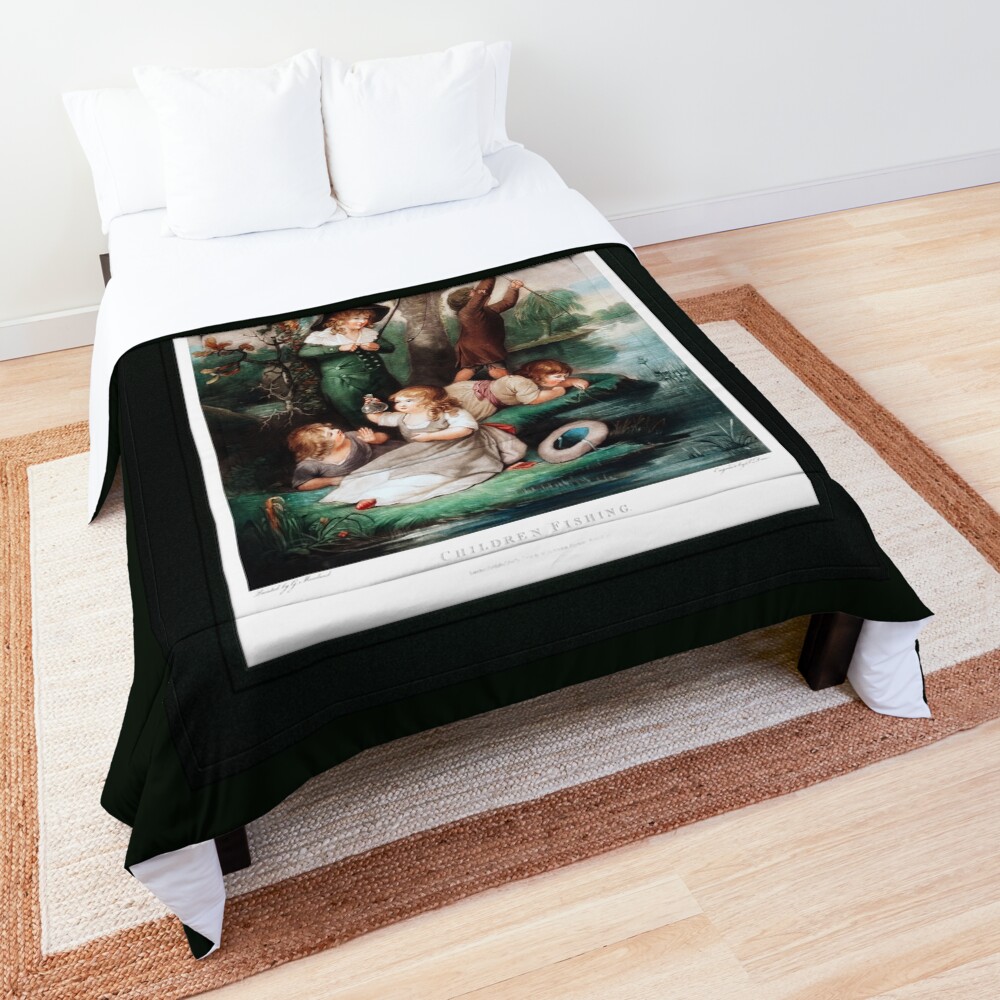
“Children Fishing” c.1788 by British Painter George Morland (1763 – 1804)
George Morland’s painting Children Fishing, criado em torno 1788, is a vivid portrayal of childhood innocence and the simple pleasures of life during the late 18th century. Nascido em 1763, Morland became famous for his works that often depicted rural scenes, domestic life, and animals. His artistic style was grounded in the traditions of English realism, a style that he developed with remarkable skill, and his ability to capture the nuances of light and color became one of his defining characteristics. This artwork reflects Morland’s fascination with depicting children and their interactions with nature, capturing a moment of leisure and joy.
Índice
Assunto Principal e Tema
O tema central do Children Fishing is a group of young children engaging in the timeless activity of fishing by a calm river. The children’s expressions and posture suggest an idyllic scene of rural life, filled with both innocence and a gentle spirit of adventure.
There are five children in the painting, each with distinct roles in the activity. A boy, dressed in a green jacket, stands on the bank with a fishing rod in hand, his stance one of focus and concentration. Another boy, similarly dressed in a brown coat, casts his line into the water with skillful precision. Em contraste, a girl with golden curls is seated on the bank, engaged in conversation with a younger child, whose eyes are wide with wonder as she holds a small bottle, perhaps a jar of bait or a playful trinket.
The diverse range of poses and interactions between the children creates a sense of movement and vitality. Each figure, while small in comparison to the landscape, stands out due to the way their clothing is rendered with vibrant hues that contrast with the natural tones of the surrounding environment. The painting captures a sense of peaceful enjoyment, portraying a moment of tranquility where childhood and nature exist in harmony.
Terreno e plano de fundo
The scene is set in a serene rural landscape, typical of Morland’s work, where nature takes center stage. The children are surrounded by a lush forest and the soft ripples of a river or pond. A large tree with sprawling branches provides shade, creating a cool, dappled light over the figures. The tree’s canopy stretches above the children, its leaves in a state of gentle motion, indicating the breeze that stirs the atmosphere.
The terrain itself is soft and lush, with patches of green grass and wildflowers carpeting the ground, further enhancing the sense of serenity and calm. The children’s feet rest upon this soft terrain, while their fishing poles extend into the water, adding a gentle dynamic element to the otherwise peaceful scene.
The water in the background is reflective and placid, allowing the viewer to see the quiet interaction between the figures and their surroundings. Morland uses the reflection in the water as a visual technique, heightening the sense of calm and stillness within the landscape.
The sky above is light and cloud-filled, lending a softness to the overall mood of the painting. The use of soft blues and light browns in the sky contrasts with the richer tones of the tree foliage and the children’s clothing, creating a harmonious balance between land, water, and sky.
Objetos e Materiais
Morland’s rendering of the children’s clothing is noteworthy for its attention to detail. The children wear simple, yet carefully depicted, late 18th-century attire that suggests both their social standing and the period in which they lived. The clothing is crafted from a variety of materials such as wool, cotton, and leather, typical of the time.
The green jacket of the standing boy contrasts with the brown coat of the other child, whose posture suggests both focus and excitement. The children’s accessories, such as the small bottles and the wide-brimmed hats, further enhance the sense of realism in the painting. Os objetos na cena, such as the fishing poles and the nearby straw hat, are rendered with impressive attention to detail, making them almost tangible to the viewer.
The presence of the fishing gear itself — poles, lines, and small baskets — speaks to a time when outdoor pastimes were integral to the rural experience. The simple fishing poles, with their straight rods and hand-tied lines, provide a subtle connection to the past, adding historical context to the artwork. The girl’s bottle might hint at an earlier tradition of collecting small, delicate creatures or perhaps even an innocent curiosity about the natural world.
Estilo e humor
In terms of style, Children Fishing embodies a soft realism that is characteristic of Morland’s approach. The colors are rich but not overpowering, with a gentle use of light and shadow to define the figures. The soft palette of greens, blues, and browns creates a naturalistic environment that feels both real and dreamlike, inviting the viewer into the scene. Morland’s use of light is particularly notable, as he captures the soft illumination of the sun filtering through the trees, casting a gentle glow on the children and the surrounding landscape.
The mood of the painting is one of peacefulness, inocência, and quiet joy. The children, while engaged in a common activity, seem removed from the chaos of the outside world, existing in a moment of pure bliss and simplicity. The scene evokes a sense of nostalgia, a longing for a simpler time when nature and childhood were intertwined, and leisure was found in the quiet moments of everyday life.
The tender expressions on the children’s faces convey an emotion of calm contentment, suggesting that the act of fishing is not just about catching fish but about the shared experience of being in nature, free from the pressures of society.
Conclusão
Children Fishing by George Morland is an exquisite representation of 18th-century childhood, capturing a moment of serenity and harmony with nature. Through his use of light, cor, e composição, Morland creates an environment where time seems to slow, allowing the viewer to pause and appreciate the beauty of youth and the natural world.
The figures of the children are imbued with life and energy, while the surrounding landscape enhances the sense of peace that permeates the painting. This work is not only a depiction of a pastime but also an exploration of innocence, leisure, and the enduring connection between people and the world around them.
Esta é uma reprodução remasterizada de arte digital de antigos mestres de uma imagem de domínio público que está disponível como um impressão em tela on-line.
Biografia do artista
Information Below Is Derived From: Wikipédia.org e NGA.gov
George was born in London, England on June 26, 1763 to British Portrait Painter Henry Robert Morland (1716-19 – 1797) and Jenny Lacam; and was the grandson of British Portrait Painter George Henry Morland (? – 1789).
He was the eldest of five children and began his artistic career at the age of three years old producing drawings which were copies pictures and plaster cast, and by the age of ten years became an honorary exhibitor of sketches at the Royal Academy of the Arts.
Seeing his sons immense talent, his father Henry in 1777 took full charge of his sons training and George began copying even more works of art to the benefit of his father’s profit.
His first work of art to be engraved occurred in 1780 e em 1781 he exhibited his first painting at the Royal Academy of the Arts; while in 1782 exhibited 26 works at the Free Society of Artists.
Though Morland had extreme talent and was a prolific producer of art his drinking life and poor choice in associates got the better of him and he was often in debt, doing his best to avoid creditors.
This finally led to him being arrested in 1799 where he was arrested and committed to the Kings Bench for three years; and upon his release in 1802, he spent the remaining two years of his life with his brother who owned a picture shop on Dean Street in Soho; as his work and health deteriorated, he finally died of brain fever on October 29, 1804.