

彼女の男を選ぶ
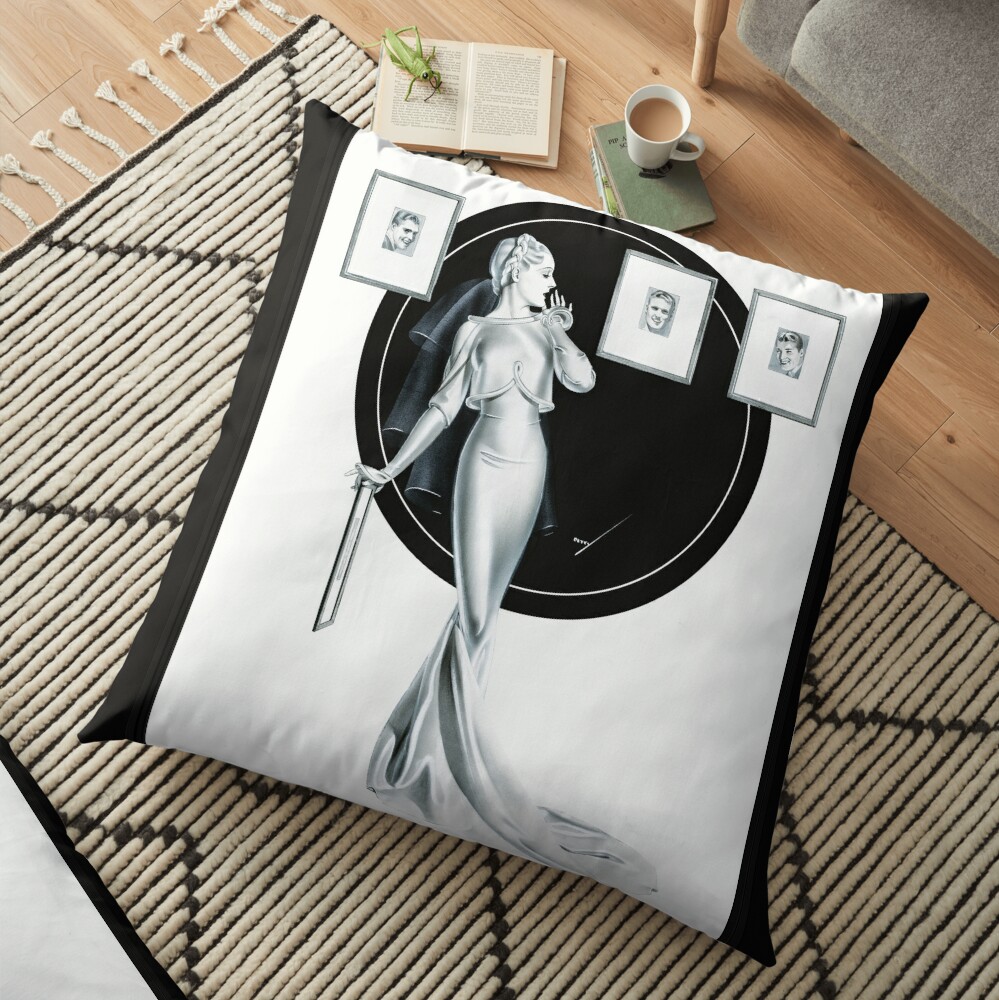
彼女の男を選ぶ, c.1936-37, アメリカの画家ジョージ・ブラウン・ペティ4世作 (1894 – 1975)
“彼女の男を選ぶ,” アメリカのアーティストによって作成されました ジョージブラウンペティIV in the years 1936-37, presents an intriguing exploration of femininity and romantic selection in a stylized, almost surreal manner. Known for his pin-up illustrations and commercial art, Petty’s work often emphasizes beauty and idealized forms, focusing on the human figure and its portrayal within carefully constructed scenes. この特定の作品, steeped in the glamour and visual aesthetics of its era, offers a compelling glimpse into the refined and sensual atmosphere of the late Art Deco period.
目次
主な主題と構成
The focal point of this artwork is an elegant, poised woman, her figure rendered with stunning precision and an almost ethereal quality. She stands tall, elegantly composed, in a long, flowing silver gown that contours to her body with impeccable grace. ガウン, designed in a sleek and smooth manner, highlights her poised, confident stature. The model’s hands are delicately placed in a subtle gesture, with one hand gently touching her lips as if in deep contemplation. This pose suggests a moment of hesitation, possibly symbolizing the process of making an important decision — in this case, the act of “choosing her man.”
She is framed by a strong geometric design, with the circular black backdrop drawing the viewer’s attention inward, accentuating the woman’s figure and emphasizing her position as the center of the narrative. 彼女の上に, three smaller framed photographs hang on the wall, depicting male portraits. The faces in these frames are subtly evocative, their expressions faintly drawn and almost mysterious. These men serve as the potential suitors, subtly placed within the composition to give a narrative to the woman’s decision-making process. The portraits stand as symbolic representations of the choices that await her, their subtle yet distinct presence adding a layer of psychological depth to the image.
Thematic and Symbolic Elements
The theme of the piece revolves around the idea of choice and romantic selection. The juxtaposition of the female figure with the framed portraits of men brings attention to the emotional and intellectual process of selecting a partner. The model’s contemplative expression suggests internal conflict or thoughtful consideration, presenting the choice as not merely superficial but a deeper, more thoughtful evaluation of each individual. The stark contrast between the bold circular form in the background and the fragile elegance of the woman’s figure speaks to the tension between the decisiveness of the choice and the gentleness of femininity. The work suggests that the decision is not made lightly, but with both elegance and purpose.
長い, flowing gown worn by the woman may be seen as a metaphor for the ideal of grace, 美しさ, and sophistication — qualities often associated with the feminine ideal of the time. The silver hue of the gown, almost metallic in its shine, connects with the era’s Art Deco aesthetics, where modernity and luxury were often symbolized through such materials. The use of smooth, fluid lines in the gown also contrasts with the hard-edged geometric forms that surround the central figure, emphasizing a harmony between femininity and structure.
スタイルと雰囲気
“彼女の男を選ぶ” is undeniably rooted in the Art Deco style, which dominated the visual arts from the 1920s through the 1940s. The precision, 対称, and elegance of the design align with the aesthetic ideals of the movement, characterized by sleek lines, bold colors, and a fascination with modernity and glamour. Petty’s careful use of black and white, with the occasional silver detail, further reinforces the refined mood of the piece, while the absence of color gives the work a timeless quality. This minimalist approach places emphasis on form and contrast, where the woman’s figure remains the central element amidst the stark background and the framed images.
The mood of the artwork is both contemplative and alluring, with the woman’s expression evoking a sense of quiet introspection. The decision she is facing, represented by the three portraits of men, seems both important and personal. There is a sense of suspense and anticipation, as if the viewer is witnessing a moment of pivotal emotional weight. The stark contrast between the woman’s soft, flowing form and the sharp, geometric lines of the background creates a subtle tension, symbolizing the inner conflict between the emotional and the rational aspects of making a decision.
オブジェクト, 地形, および材料
The physical elements in the piece, such as the woman’s gown, the photograph frames, and the background circle, are all presented with careful precision. The photographs, although not overtly detailed, are intricately framed and placed in such a way as to reinforce the theme of choice and evaluation. They are small and unobtrusive, yet they play an essential role in creating the story within the artwork. The frames themselves are finely detailed, contributing to the luxurious and polished aesthetic of the composition.
The terrain or setting of the piece is minimalistic — an abstracted interior space that prioritizes the visual impact of the figures and forms over the realism of a traditional setting. The lack of other physical details suggests that the scene is more about the emotional and intellectual climate of the moment rather than a depiction of a specific, physical location.
Petty’s use of materials is also noteworthy. The monochromatic color scheme, punctuated only by the metallic sheen of the woman’s gown, adds a sense of high-class sophistication. The style and treatment of the image resemble the polished look of commercial art and fashion illustrations of the era, designed to appeal to the upper-class sensibilities of the time.
結論
“彼女の男を選ぶ” by George Brown Petty IV (NS. 1936-37) is a striking piece that embodies the elegance and sophistication of the Art Deco era. Through the careful portrayal of a woman poised in the act of selecting a partner, Petty examines the intersection of femininity, choice, そして魅力. The artwork speaks to the emotional complexity of romantic decision-making while showcasing the artist’s mastery of form, 構成, とテーマの深さ. With its precise execution and thoughtful symbolism, “彼女の男を選ぶ” remains a powerful reflection of its time and a timeless commentary on the delicate process of selection in matters of the heart.
これは、オンラインでキャンバス プリントとして入手できるパブリック ドメインのイメージのリマスターされたデジタル アートの古いマスターの複製です。.
アーティスト略歴
以下の情報から派生 Wikipedia.org
ジョージ・ペティが初めて世間の注目を集めたのは高校時代, 彼は学校新聞のスタッフアーティストでした.
ジョージは高校に通いながら、ルース・ヴァンシックル・フォードの指導の下、シカゴ美術アカデミーの夜のクラスに入学しました。.
アカデミーにいる間、ジョージは彼自身の描画コースを教えていました, クラスメートにセッションごとに 5 ドルを請求する; 父の写真店で働き、エアブラシの技術を学んだ。.
その後、ジョージはパリに行き、アカデミー・ジュリアンでジャン=ポール・ローレンスらに師事し、 1916, 第一次世界大戦が勃発したとき, 大使マイロンTを引き起こした. ヘリック, すべてのアメリカ人にパリを離れてアメリカに戻るよう命じる.
帰国後, ジョージは、シカゴの地元の印刷会社でエアブラシのレタッチャーとして働いていました。; 後にフリーランスのアーティストとしての地位を確立, The Household のカレンダーの女の子と雑誌の表紙を描く; そしてによって 1926 彼は自分のスタジオを開いた.
ジョージは、エスクァイア パブリケーションのために描いたピンナップ ガール ペインティングのペティ ガール シリーズで特に知られています。, の秋から 1933 終えた 1956.
ジョージはピンナップガールの脚を比較的長く描いていることが多い, 彼の実際のモデルよりも比較的小さいヘッド.
彼の作品は、主にエスクァイアとフォーセット パブリケーションに掲載されました。 – True としても知られる True, ザ・マンズ・マガジン; エスクァイアが販売するカレンダーにもありました, True とオハイオ州ノース リッジビルの Ridgid Tool Company, に設立されました 1923.