

Kristus myrskyssä Galileanmerellä
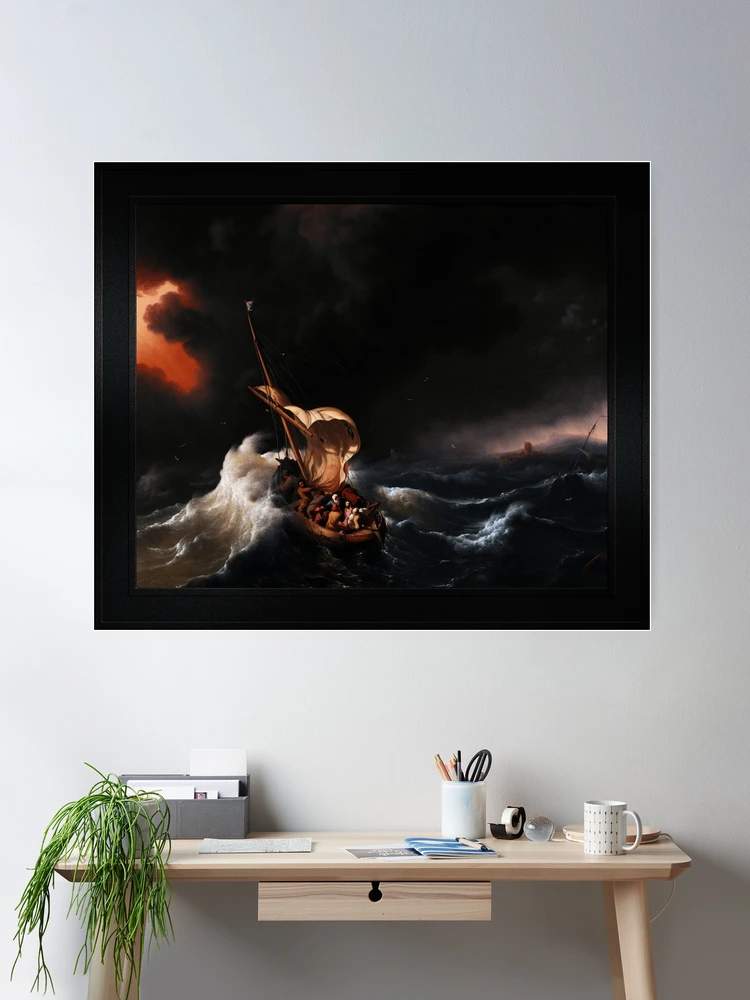
Teos nimeltä “Kristus myrskyssä Galileanmerellä”, luotu vuonna 1695 by the German-Dutch painter Ludolf Backhuysen (1630 – 1708), powerfully conveys a dramatic moment of biblical history. Backhuysen, known for his skillful mastery of maritime landscapes, utilizes his expertise to depict both the ferocity of nature and the calm authority of Christ amidst a violent storm. This painting is part of a broader tradition of maritime paintings during the Dutch Golden Age, with a specific focus on the themes of human struggle against nature, jumalallinen väliintulo, and the Christian narrative.
Sisällysluettelo
Main Subject and Narrative
The primary subject of the painting is the biblical story from the Gospel of Matthew, where Jesus Christ calms the storm on the Sea of Galilee. Backhuysen chooses to focus on the intense moment of chaos aboard the boat, capturing the panic of the disciples and the calm demeanor of Christ. Etualalla, the viewer sees a group of men, likely disciples, struggling against the wind and waves. Their expressions reveal fear and desperation as the storm rages around them. The turbulent sea, dark clouds, and relentless waves all serve to heighten the sense of danger that envelops the boat.
Amidst the turmoil, Christ remains serene and composed, the central figure of the composition. His presence is both reassuring and commanding, symbolizing divine authority over nature and the human condition. The artist uses the contrast between the violent sea and the peaceful figure of Christ to underscore the miraculous nature of the event. Christ’s stillness contrasts with the frenetic energy of the storm, making His divine role clear.
Esineet ja symboliikka
The boat itself is a critical object in this piece, representing both the literal vessel in the biblical story and the symbolic “ship” of the Christian church navigating through the turbulent waters of the world. The ship is crafted with great detail, and the artist’s ability to render the movement of the water around it adds a sense of realism. The storm is not just a natural occurrence, but also a visual metaphor for the trials and tribulations of life, which are often beyond human control.
The figures in the boat are also symbolic. The disciples, depicted in various stages of panic and struggle, reflect the human response to overwhelming challenges. One figure leans over the edge of the boat, possibly to throw up, while another clutches the mast, his face twisted in fear. These expressions of human vulnerability are contrasted by Christ’s calmness, suggesting faith and the belief that divine intervention will provide salvation.
Lisäksi, the elements of the storm—raging waves, dark clouds, and flashes of lightning—add to the intensity of the scene. The dark sky, with its dramatic lighting, represents the chaotic forces of nature and, metaphorically, the trials of life. Yet the light breaking through the clouds hints at hope and the divine presence that promises peace and guidance.
Maasto ja materiaalit
The scene unfolds on the turbulent waters of the Sea of Galilee, mikä, in Backhuysen’s portrayal, are dark, foamy, and churning. The waves are masterfully painted, showing a range of textures from the frothy white caps to the deep, threatening blue and green depths. The artist’s command of light is particularly notable in the way it reflects off the surface of the water and highlights the contours of the figures, lending a sense of realism to the otherwise supernatural scene.
taivas, a striking backdrop to the action, is filled with ominous dark clouds, their heavy masses suggesting the sheer power and chaos of the storm. The dramatic interplay of light and dark contributes to the overall mood of the painting, amplifying the tension in the narrative. A small area of light appears through a break in the clouds, potentially indicating the divine presence, adding an aura of hope amidst the turmoil.
Tyyli, Teema, ja mieliala
Ludolf Backhuysen’s style is one of the defining characteristics of the Dutch Golden Age. Known for his ability to capture the mood and texture of the sea, Backhuysen demonstrates an extraordinary talent for conveying motion and emotion. The turbulence of the water, the billowing sails, and the energy of the storm all exhibit a mastery of the seascape genre.
The theme of the painting merges the natural with the divine, showing human struggle against the overpowering forces of nature, only to be saved through divine intervention. The mood is one of awe and reverence, evoking a sense of the sublime in the viewer. The dynamic clash between the forces of the storm and the calm figure of Christ is a powerful visual metaphor for faith, trust, and divine power.
Väripaletti, while dominated by darker hues of stormy skies and deep ocean blues, also contains areas of lighter tones that reflect the divine light shining through the chaos. The contrast between light and dark creates a dramatic tension in the composition, emphasizing the miracle at the heart of the scene.
In terms of technique, Backhuysen uses fine brushwork to create a vivid depiction of the storm, with each wave and cloud rendered in intricate detail. The fluidity of the water and the dramatic effects of the sky demonstrate Backhuysen’s technical prowess and his ability to transport the viewer into the heart of the storm.
Johtopäätös
“Kristus myrskyssä Galileanmerellä” by Ludolf Backhuysen stands as a testament to both the artistic skill of the artist and the theological depth of the subject matter. The painting is a dramatic visualization of the biblical narrative, combining natural and divine elements in a way that speaks to the viewer on both an emotional and spiritual level. The intensity of the storm, the vulnerability of the disciples, and the calm authority of Christ all combine to create a powerful visual experience, offering a meditation on faith, divine protection, and human endurance.
A Back Story Of The Artwork
Tämä näyttää olevan teos, joka on kopioitu Rembrandt van Rijnilta (1606 – 1669) pala, “The Myrsky Galileanmerellä c1633″.
Vaikka alkuperäinen versio on luonut Rembrandt on lähietäisyydeltä ja koko painopiste on veneessä Jeesuksen ja hänen kanssaan 12 opetuslapset veneessä hänen kanssaan; tämä versio ottaa paljon laajemman näkökulman.
Tämä versio näyttää Jeesuksen purjeveneessä ylimääräisenä 8 miehet, koska suuri aalto iskee sen kyljelleen; ja tapahtumapaikan oikealla puolella näemme maston osan vedestä ulos työntyvän ja kauempana toisen merimyrskyn joutuneen purjeveneen.
Kaukana näemme rannalla kaksi rakennelmaa useiden kilometrien päässä toisistaan, joitakin vuoria yhden rakenteen takana sekä suuria tummia myrskypilviä, joiden pilvissä on pieni selkeys, joka on väriltään oranssi auringon takia; kun venettä valaisee kirkas valkoinen valo.
Kristus myrskyssä Galileanmerellä on remasteroitu digitaalisen taiteen vanhojen mestareiden kopio julkisesta kuvasta, joka on saatavilla kankaalle printti verkossa.
Tämä digitaalisen taiteen luomus, Kuten kaikki taideteokset, jotka löytyvät Xzendor7-verkkosivustolta, ovat ostettavissa verkosta useissa eri materiaalimuodoissa, mukaan lukien kanvasvedokset, akryyliprintit, metalliprintit, puu tulosteita, kehystetyt printit, julisteita, ja kun valssatut kangastulosteet ovat erikokoisia 12 tuumaa 72 tuumaa riippuen todellisen taideteoksen koosta ja tilauspainatusliikkeestä, josta haluat ostaa taiteen.
Taideteoksia on saatavana myös laajassa valikoimassa miesten ja naisten vaatteita, mukeja, totes, huivit, muistikirjat ja päiväkirjat sekä monet kodin sisustustuotteet.
Taiteilijabio
Alla olevat tiedot ovat peräisin Wikipedia.org
Ludolf syntyi Emdenissä, Itä -Frisia, Ala-Saksin osavaltiossa Saksassa 1630 ja noin vuoden iässä 20 meni Amsterdamiin, Hollannissa ja sai työpaikan kalligrafina ja kauppiaana.
Tänä aikana hän huomasi, että hänellä oli suuri kyky maalata, ja omisti aikansa tälle yritykselle, jättää nykyisen työnsä; aluksi piirtänyt kynäpiirroksia ja opiskellut myös kuuluisan hollantilaisen kultakauden maalareiden Allaert van Everdingenin johdolla. (1621 – 1675), maalari, taidegraafikko ja etsaaja sekä Hendrick Dubbels (1621 – 1707), meri- ja talvimaisemamaalari.
Luonnonopiskelijana Ludolf meni usein merelle avoimella veneellä tutkimaan aaltojen luonnetta myrskytapahtumien aikana; koska hänen pääpainonsa oli meritaide, jossa painotetaan kohtauksia myrskyisistä valtameren aalloista.