

Consuelo Vanderbilt c1906
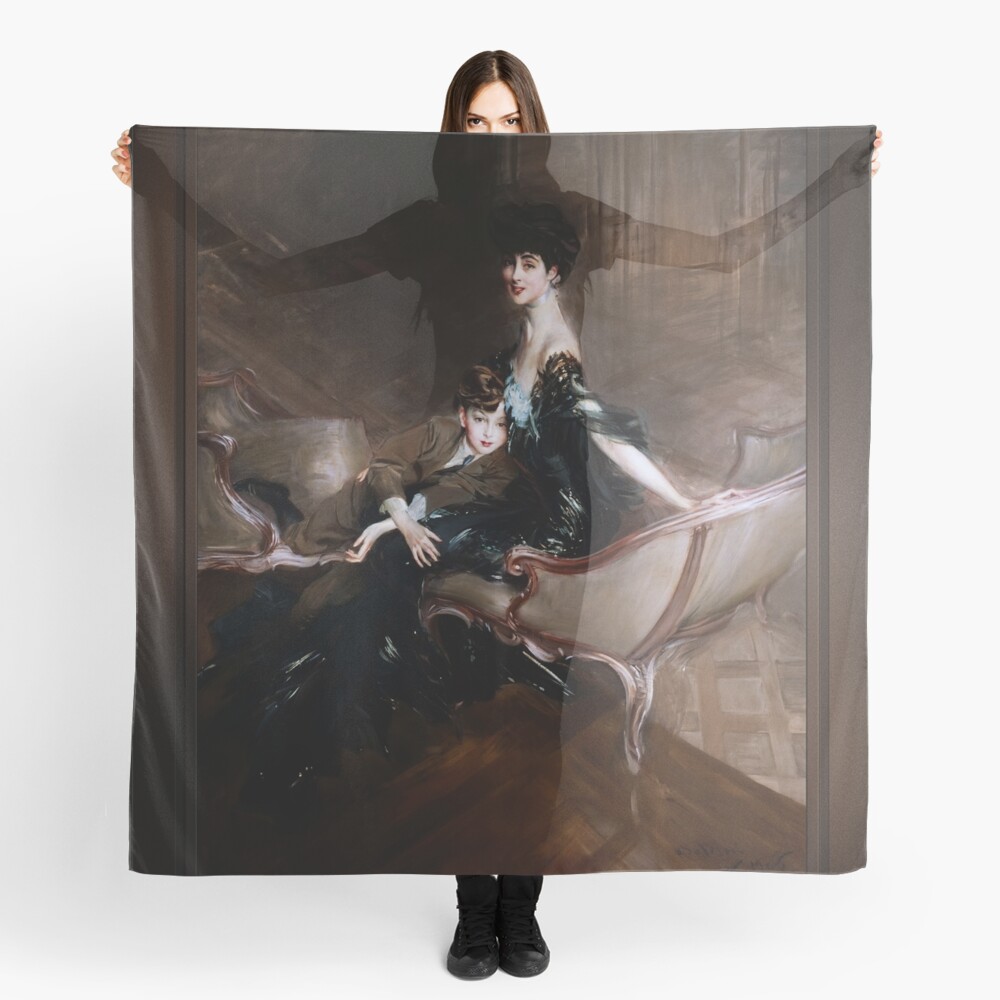
Malování “Consuelo Vanderbilt c1906” od známého italského malíře Giovanni Boldini (1842 – 1931) nabízí úžasný pohled do světa bohatství, milost, a šlechtická kultura na přelomu 19. a 20. století. Na tomto portrétu, Boldini zachycuje eleganci a vyrovnanost Consuelo Vanderbilt (1876 -1964), vévodkyně z Marlborough, a Jejího Syna, Lord Ivor Spencer-Churchill (1898 – 1956), americká dědička, která byla jednou z nejobdivovanějších postav své doby.
Toto mistrovské dílo, vytvořeno kolem 1906, je příkladem sofistikovaného šarmu a dynamiky období Belle Époque, období, které se vyznačovalo prosperitou, krása, a rafinované sociální kruhy. Portrét vyzařuje dojem nadčasového půvabu, mísí tradiční portrétování s moderními technikami té doby, ustanovil Boldiniho jako mistra svého řemesla.
Obsah
Hlavní předmět a složení
Ústředním bodem obrazu je samotná Consuelo Vanderbilt, zobrazený půvabně sedící na lehátku. Je elegantně oblečená v černé róbě, která se třpytí přepychem, jeho vlající látka téměř stékala z plátna. Textura látky je odborně vykreslena, zachycující luxusní kvalitu materiálu. Boldiniho použití široké, tekuté tahy štětcem propůjčují šatům pocit pohybu, jako by se šaty zachytily v okamžiku pohybu. Kontrast mezi měkkými, splývavá černá látka a ostré detaily Consuelona klidného, ale vyrovnaného výrazu vytvářejí nápadnou rovnováhu mezi formálností a živostí.
Vanderbiltova pozice je uvolněná sebevědomí, vyzařující aristokratickou vyrovnanost. Její držení těla, with one arm placed delicately over the back of the chaise longue, contributes to the overall elegant demeanor. In the painting, she is seen looking slightly to the side, a gentle smile gracing her lips, suggesting an air of mystery and quiet introspection. Her dark hair, swept into an intricate updo, frames her face delicately, while the diamond earrings that dangle from her ears shimmer with understated elegance.
Beside Consuelo, sitting somewhat closer to her, is her son. The child is dressed in a brown suit, contrasting sharply with the grandeur of Vanderbilt’s attire. The child’s expression appears somewhat pensive, with a relaxed posture that mirrors the woman’s grace. This inclusion of the child adds a layer of narrative depth, symbolizing the continuation of the Vanderbilt legacy and perhaps hinting at the familial relationships that were often central to the societal dynamics of that time.
Okolní prostředí a objekty
The background of the portrait is a softly blurred, almost abstract depiction of a lavish interior. The rich brown tones and the hazy light suggest a warm, luxurious atmosphere. The lack of specific detailing in the background, where the figure of the chaise longue blends into the undefined surroundings, directs the viewer’s focus entirely on the figures of Consuelo and her child. This technique exemplifies Boldini’s skill in emphasizing the human subjects while creating a sense of depth and sophistication in the overall composition.
The chaise longue itself is an elegant piece of furniture, upholstered in soft, tlumené tóny, which complements the color palette of the entire painting. Its curved, sweeping lines are emblematic of the furniture styles that were popular during the late 19th and early 20th centuries, emphasizing a luxurious lifestyle. The gently reflective surface of the polished wood of the chair adds a slight gleam, catching the viewer’s eye. nicméně, the furniture does not detract from the figures at the center of the portrait; spíše, it serves to frame them within the setting of a grand, aristocratic home.
Styl, Technika, a nálada
Boldini’s style is immediately recognizable for its fluidity, vitality, and movement. He was known for his masterful brushwork and ability to convey motion and life through the manipulation of light and shadow. Na tomto portrétu, the brushstrokes are dynamic and expressive, creating a sense of immediacy and energy. While the detailed areas, such as the face and hands of Consuelo, show the artist’s attention to realism, the flowing gown and background elements are treated with a freer, almost impressionistic technique.
The mood of the portrait is one of serene sophistication. Consuelo’s relaxed yet poised demeanor, v kombinaci s měkkým, inviting tones of the painting, conveys a sense of calm confidence and timeless beauty. The portrait does not try to overemphasize any particular emotion, but rather captures the subject at a moment of tranquility, possibly reflecting her position in society as a woman of great wealth and influence. The inclusion of the child suggests that the figure of the mother is one of both personal and familial importance, further enhancing the aristocratic atmosphere of the scene.
Boldini’s work is also marked by his ability to integrate the subject into the environment, making the background and surroundings essential to the narrative of the portrait. The slightly abstract treatment of the background allows the viewer to focus more on the subject while still giving the impression of a luxurious setting. The interplay between the formal portrait style and the more dynamic brushwork is characteristic of Boldini’s approach, making this work a powerful example of the Italian painter’s legacy.
Odkaz Giovanniho Boldiniho
Giovanni Boldini was an Italian painter who spent much of his career in Paris, where he became known for his portraits of the high society. His subjects were often wealthy and influential individuals, much like Consuelo Vanderbilt, who was a prominent figure in both American and European aristocracy. Boldini’s portraits are known for their graceful fluidity, exquisite technique, and emphasis on elegance and refinement. He captured the spirit of his time with a sense of movement and drama, making him one of the most celebrated portrait painters of the late 19th and early 20th centuries.
“Consuelo Vanderbilt c1906” is a prime example of Boldini’s ability to merge realism with an almost painterly abstraction. Through his vibrant brushwork and subtle tonal contrasts, he immortalized his subject not only as an individual but also as a reflection of the social and cultural environment in which she lived. The portrait remains a testament to the grandeur of the Belle Époque era, showcasing both the artist’s technical skill and his ability to capture the essence of his subjects.
Toto je remasterovaná reprodukce starých mistrů digitálního umění obrázku ve veřejné doméně, který je dostupný jako a tisk na plátno online.
Umělec bio Wikipedia.org
Boldini was born in Ferrara, prosince v Itálii 31, 1842, synovi malíře náboženských témat. v 1862 ve věku 20, odešel na šest let do Florencie studovat a věnovat se malbě.
Výuku na Akademii výtvarných umění navštěvoval jen výjimečně, ale ve Florencii, se setkal s dalšími realistickými malíři známými jako Macchiaioli, kteří byli italskými předchůdci impresionismu.
Their influence is seen in Boldini’s landscapes which show his spontaneous response to nature, i když se stal nejznámějším díky svým portrétům
Moving to London, Boldini attained success as a portraitist. He completed portraits of premier members of society including Lady Holland and the Duchess of Westminster.
v 1872 he moved to Paris, where he met and became friends with Edgar Degas. During the late 19th century he became the most fashionable portrait painter in Paris, with a dashing style of painting that highlights some of the Macchiaioli influence and a brio reminiscent of the work of younger artists, such as John Singer Sargent and Paul Helleu.
v 1889, he was nominated commissioner of the Italian section of the Paris Exposition, and received the Légion d’honneur for this appointment. v 1897 he had a solo exhibition in New York City; and he also participated in the Venice Biennale in 1895, 1903, 1905, a 1912.