

Cressida
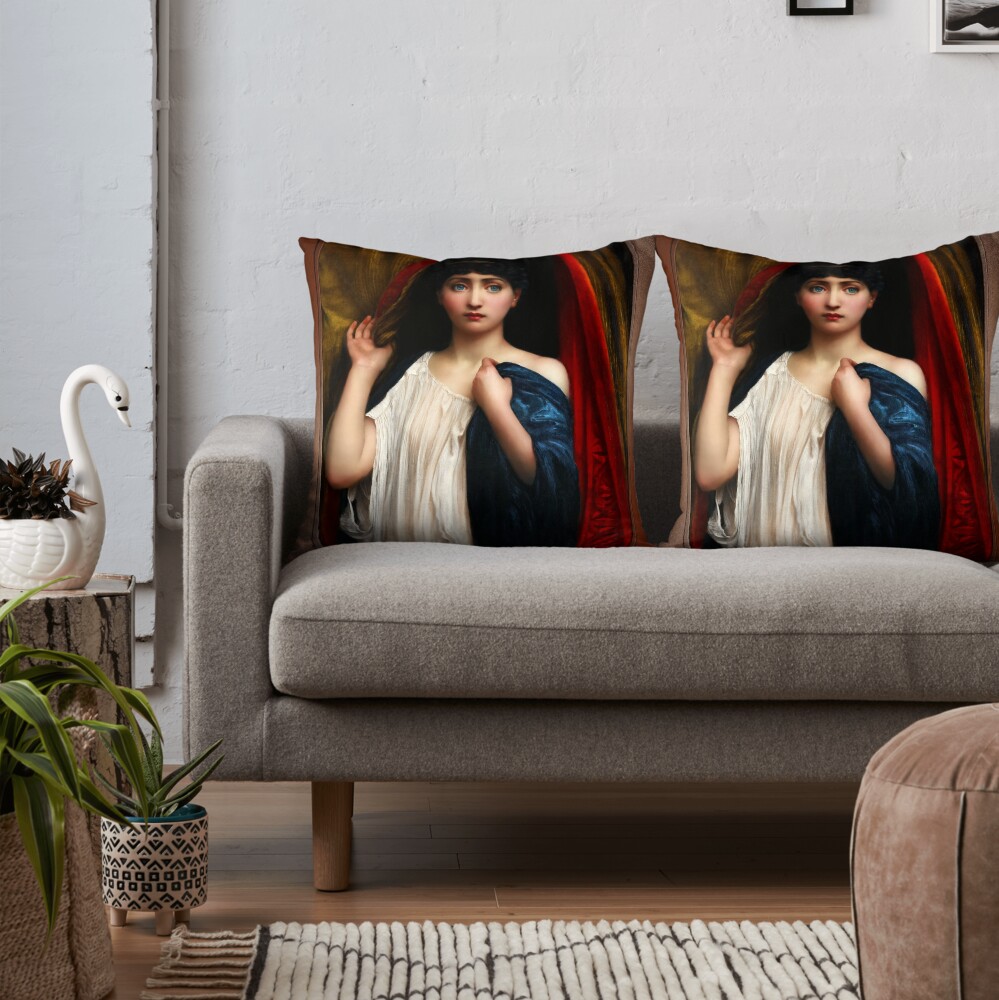
Introduction and Overview ה דְיוֹקָן artwork “Cressida” by British painter Edward John Poynter (1836 – 1919), painted in the 19th century, showcases the artist’s expertise in capturing figures from classical mythology and Shakespearean drama with the refined techniques of the Academic tradition. This piece depicts the tragic figure of Cressida from Shakespeare’s Troilus and Cressida, a character whose beauty and emotional complexity have fascinated many artists. Poynter’s rendering of her, bathed in soft light and delicate hues, invites the viewer to step into a moment of quiet reflection, capturing her vulnerability and emotional depth. הציור, executed with precision and an almost photographic level of detail, draws upon classical themes, blending realism with allegory.
תוכן העניינים
הנושא המרכזי: Cressida
At the heart of the composition is Cressida herself, a young woman with deep blue eyes that seem to gaze directly into the viewer’s soul, evoking a sense of melancholy. Her expression is pensive, כמעט ערמומי, hinting at her inner turmoil and the conflicted emotions she endures in the play. Cressida stands in a poised, graceful position, her figure draped in a delicate, white garment that clings to her form, suggesting both her vulnerability and her beauty. The fabric is meticulously painted, capturing every fold and texture with remarkable realism. Over her shoulder, עשיר, deep blue cloak cascades down, adding a striking contrast to the pale tones of her attire.
Her right hand gently touches the fabric of the cloak near her shoulder, while her left hand rests lightly against a curtain of deep red and golden hues. This placement of her hands creates a sense of composure, as if she is both at ease and yet emotionally caught in a moment of private contemplation. The luxurious materials, silk and velvet, play a significant role in enhancing the visual richness of the painting, adding depth and a sense of opulence to the scene. The artist’s attention to fabric and the way it interacts with the human form reveals his mastery over texture and material.
הרקע וההגדרה
The background of the painting is composed of dark, draped curtains in deep reds and golds, which frame the subject. These rich, warm colors not only enhance the figure of Cressida but also convey a sense of intimacy and drama, creating a stage-like setting that echoes the themes of the play. The drapery is rendered in a way that emphasizes both its weight and softness, almost suggesting the presence of a theatrical space. The choice of such vivid tones behind Cressida acts as a visual metaphor for the passionate and often tragic emotions that she experiences throughout the play.
ההגדרה, although somewhat undefined beyond the drapery, contributes to the overall mood of the painting. הכבד, sumptuous fabrics suggest that Cressida exists within a world of aristocracy and courtly intrigue, a realm of opulence and moral complexity. This backdrop, though simple, enhances the psychological depth of the scene, suggesting a private moment of introspection in an otherwise tumultuous world.
טֶכנִיקָה, חומרים, וסגנון
Poynter’s approach to painting in “Cressida” reflects the precision and detail typical of the Academic style. הטכניקה שלו, often characterized by highly polished surfaces and an almost photographic attention to detail, is evident in every aspect of the piece. The meticulous rendering of textures, from the delicate sheen of Cressida’s garment to the soft, voluminous folds of her cloak, speaks to the artist’s deep understanding of materials and his ability to translate these onto canvas with remarkable fidelity.
The light in the painting is soft and diffused, highlighting the subject’s features in a naturalistic way. Poynter employs a careful balance between light and shadow, creating a sense of three-dimensionality and depth that draws the viewer’s eye to the subject’s face and posture. The use of light to accentuate Cressida’s facial features, particularly her eyes, further intensifies the emotional resonance of the piece, allowing the viewer to feel her vulnerability and the weight of her emotional state.
In terms of color palette, Poynter’s choices are both sophisticated and evocative. The cool tones of Cressida’s dress and the contrasting warm hues of the backdrop create a visual harmony that enhances the emotional impact of the painting. The artist’s use of vivid, saturated colors adds a dramatic effect, while the subtle transitions between light and dark convey the complex interplay of emotions that define Cressida’s character in Shakespeare’s play.
נושא ומצב רוח
The overarching theme of the painting is one of emotional complexity and vulnerability. Poynter’s “Cressida” is not merely a portrait of a woman in an opulent setting; it is a study of a character caught between love, loyalty, and betrayal. Cressida’s eyes, wide and filled with an almost innocent sadness, reflect her inner conflict and emotional turmoil. תנוחתה, composed yet delicate, suggests a woman who is in the midst of a private struggle, uncertain of her place in the world around her.
The mood of the painting is somber and reflective, underscored by the warm, dark tones of the background and the soft, diffused light that envelops Cressida. The emotional weight of her expression, coupled with the luxurious materials of her attire, suggests a tension between her outer beauty and the inner turmoil she faces. This duality is at the heart of the painting, as Poynter captures not only the physical beauty of his subject but also the emotional depth that lies beneath the surface.
מַסְקָנָה
“Cressida” by Edward John Poynter is a masterful depiction of one of Shakespeare’s most complex and tragic female characters. The artist’s skillful use of color, אוֹר, and texture creates a rich visual experience that mirrors the emotional depth of the subject. The painting serves not only as a technical achievement but also as an exploration of the human condition, capturing a moment of introspection and emotional vulnerability. דרך העבודה הזו, Poynter invites the viewer to engage with Cressida’s inner world, offering a poignant meditation on love, betrayal, and the complexities of the human heart.
זהו רפרודוקציה של אמנות דיגיטלית מחודשת של אמן ישן של תמונה ברשות הרבים הזמינה בתור א הדפסת קנבס באינטרנט.
אמן ביו שמקורו Wikipedia.org
אדוארד נולד בפריז, צרפת לאדריכל בריטי ומייסד המכון לאדריכלים בריטיים (c1834) אמברוז פוינטר (1796 – 1886) ואמה פרסטר (? – 1848); וזמן קצר לאחר לידתו חזרו הוריו לבריטניה הגדולה.
אדוארד למד בקולג' ברייטון ובבית הספר איפסוויץ', אך נאלץ לעזוב מוקדם עקב בריאות לקויה; מה שהוביל אותו לבלות את חורפיו במדיירה, פורטוגל וברומא, אִיטַלִיָה.
כשהוא היה 17 שנים, בזמן ברומא הוא פגש את הצייר הבריטי פרדריק לייטון, והפגישה ההיא עשתה רושם משמעותי על; כזה שכאשר חזר ללונדון הוא נרשם לאקדמיית ליי, אשר הוקמה על ידי ג'יימס מתיוס לי (1808 – 1860) ובסופו של דבר יהפוך היום לבית הספר הת'רלי לאמנות; והוא גם ילמד בבתי הספר של האקדמיה המלכותית.
משם נסע לפריז כדי ללמוד בסטודיו של הצייר הקלאסיקאי השוויצרי מארק גבריאל שארל גלייר (1806 – 1874).
במהלך הקריירה שלו אדוארד מילא מספר תפקידים רשמיים שכללו פרופסור סלייד באוניברסיטת קולג' בלונדון (1871 – 1875), מנהל בית הספר הלאומי להכשרה לאמנות (1875 – 1881) ומנהל הגלריה הלאומית (1894 – 1904); מפקח על פתיחת גלריית טייט.
אדוארד נודע כצייר של ציורים היסטוריים גדולים לאורך הקריירה שלו, עם יצירות כמו ישראל במצרים ב-1867, ואחריו סנט ג'ורג' לאנגליה ב-1869, מתאר את ג'ורג' הקדוש והדרקון ואולי מגיע לשיא בביקור מלכת שבא אצל שלמה המלך 1884-90.