

A Chailin agus a Saluki
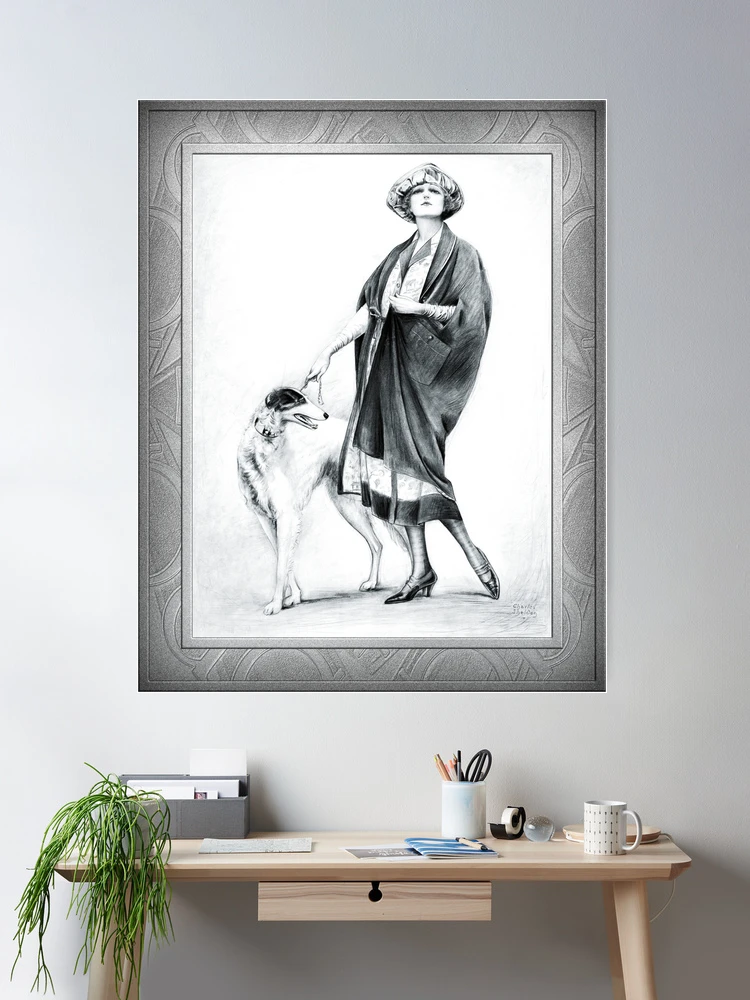
An obair ealain le tiotal A Chailin agus a Saluki a chruthachadh le Charles Gates Sheldon (1889 – 1961) a-steach 1920, chomharraich peantair ainmeil Ameireaganach airson na rinn e de bhoireannaich is de bheathaichean. Chaidh BSheldon aithneachadh airson a sgil ann a bhith a’ glacadh eireachdas agus bòidhchead an duine, gu sònraichte tro dhealbhan.
A Chailin agus a Saluki na eisimpleir de a mhaighstireachd air loidhnichean fìnealta agus cho math sa tha e an dà chuid a chuspairean agus a àrainneachd. Tha an Art Nouveau tha sealladh a’ nochdadh sealladh deiseil, boireannach uaislean còmhla ri a saluki, gnè a tha aithnichte airson a ghràs agus a shùbailteachd. Tha Sheldon a’ toirt buaidh air a’ phìos seo le mothachadh air an dà chuid suaimhneas agus cumhachd seòlta, a’ cruthachadh ìomhaigh a tha a’ conaltradh eireachdas tràth san 20mh linn.
Clàr-innse
Am Prìomh Chuspair: The Damsel
At the center of the composition stands the damsel, a woman dressed in sophisticated attire that reflects the high-society fashion of the 1920s. She is posed with an air of self-assurance, her posture upright and graceful. The woman’s dress, with its flowing lines and luxurious fabric, evokes a sense of refinement. She wears a fitted gown, with a soft collar that rests elegantly around her neck. The dress flows smoothly to the floor, with subtle folds that suggest movement. A wide belt is visible around her waist, adding structure to the otherwise soft fabric of her gown. Her clothing also seems to convey a sense of quiet dignity, with the dark tones of her attire emphasizing her calm presence.
A h-aodann, though delicately drawn, is the focal point of the portrait. With soft features and a serene expression, she gazes slightly to the side, conveying a sense of inward reflection. Her hair is styled in an elegant updo, a fashionable choice for women of the period. The carefully placed curls and waves frame her face, adding to her sense of grace and refinement. The soft shading around her features enhances her ethereal presence, and her expression gives off a sense of quiet nobility. The positioning of her hands, gracefully placed along her side, contributes to the formal tone of the portrait.
The Saluki: A Noble Companion
Standing beside the damsel is her saluki, a symbol of nobility and elegance in itself. The breed is often associated with royalty, particularly in the Middle East, and Sheldon’s rendering of the animal emphasizes its grace and poise. The dog is shown in profile, with its body elongated and posture poised. Its fur is depicted in fine, detailed strokes, giving the impression of sleekness and softness.
The saluki’s face is noble, with an almost human-like expression that suggests intelligence and awareness. The gentle eyes of the dog seem to mirror those of the woman, suggesting a deep bond between the two. Its collar, sìmplidh ach eireachdail, serves as a subtle indication of its status as a companion to someone of high social rank.
An talamh: An Intimate Interior
The setting of the artwork is intimate, with an undetermined interior space that serves as a quiet backdrop. The background is relatively subdued in detail, a’ leigeil leis an fhòcas fuireach air figearan na h-ìghne agus a saluki. Tha dìth sgeadachadh toinnte a’ cruthachadh faireachdainn de aonaranachd, mar gum biodh an neach-coimhead air a dhol a-steach gu prìobhaideach, àite sàmhach.
Tha an dubhar bog air a’ chùl eadar-dhealaichte ri dealbh mionaideach nan cuspairean, ag àrdachadh an làthaireachd agus a’ tarraing aire gu an uaislean. Chan eil dragh sam bith san àrainneachd; an àite sin, tha an àrainneachd minimalist a’ cur ri eireachdas nam figearan fhèin.
Stuthan agus innleachd
Tha am pìos air a chuir gu bàs le aire shònraichte gu mion-fhiosrachadh, gu sònraichte ann a bhith a’ toirt seachad inneach leithid aodach èideadh boireannaich agus an rud grinn, bian sìoda na saluki. Tha e coltach gur e grafait no peansail am meadhan, bha fios aig Sheldon meadhanach a bhith ag obair leis, a leigeas le ìrean fìnealta de sholas is dubhar. The use of fine lines and careful shading in the woman’s attire contrasts beautifully with the smoother, softer textures of the dog’s fur.
This contrast not only highlights the physical differences between the two subjects but also serves to enhance the overall composition. The monochromatic color palette, consisting solely of varying shades of gray, emphasizes the timeless quality of the image, further underscoring its sense of elegance and refinement.
Stoidhle, Cuspair, agus Mood
An stoidhle aig A Chailin agus a Saluki is rooted in the early 20th-century academic tradition, characterized by fine detailing and the use of classical techniques. The composition is orderly, with both the woman and her dog placed in balanced positions. This balance reflects a harmonious relationship between the two figures, reinforcing the theme of companionship and elegance.
The overall mood of the piece is one of quiet sophistication. The woman and her saluki are presented as a pair, symbolizing a shared sense of nobility and grace. The lack of overt emotion in their expressions gives the piece a contemplative tone, as though both the woman and her dog are lost in quiet thought. The subdued atmosphere, with its focus on the figures’ suidheachadh, exudes a feeling of timelessness, as if capturing a moment frozen in history.
Is e seo ath-riochdachadh seann mhaighstirean ealain didseatach ath-leasaichte de ìomhaigh raon poblach a tha ri fhaighinn mar a clò-bhualadh canabhas air-loidhne.
Artist Bio Information Derived From
Fineartphotographyvideoart.com
Rugadh Teàrlach ann an Worcester, Massachusetts Na Stàitean Aonaichte, ach chuir e seachad a' chuid bu mho d'a bheatha ann an Springfield, Massachusetts.
Thòisich e na sgrùdaidhean ealain aige aig Lìog nan Oileanach Ealain ann am Baile New York aig 215 57 Sràid an Iar, a chaidh a stèidheachadh ann an 1875 agus an toiseach bha e ann an seòmraichean air màl aig 16mh sràid agus 5mh Avenue.
Chruthaich Teàrlach obair-ealain anns an Art Nouveau, Eideirdeach (a tha a 'dol thairis air, ach leis an stoidhle Eideird mòran nas sìmplidhe a thaobh dealbhadh) a bharrachd air stoidhlichean Art Deco agus nuair a chuir e crìoch air a chuid ionnsachaidh aig Lìog nan Oileanach Ealain, shiubhail e gu Paris san Fhraing gus sgrùdadh a dhèanamh fon Pheantair Seiceach Alphonse Mucha (Alfons Maria Mucha 1860 – 1939).
Nuair a thill e dha na Stàitean Aonaichte, thòisich e a’ dèanamh dhealbhan fasan airson Foillseachadh Ladies Home Journal; agus dhèanadh e ealain sanasachd do luchd-dèiligidh leithid an Fox Shoe Company, Gainsborough, Bruisean fuilt Fiberloid, Air fàs & Bigelow agus La Vogue Lingerie anns an d’ fhuair e a’ chiad choimisean aige ann an 1918 airson dealbh pinup.
Bhiodh e cuideachd a’ dèanamh còmhdaichean airson Iris Collier, The Saturday Evening Post, Companach Dachaigh nam Ban, Iris Taigh-cluiche agus Photoplay bho 1925 – 1930; a chuir air bhog a chùrsa-beatha mar neach-ealain còmhdach dhealbhan.
Mar thoradh air an aithne seo fhuair e coimiseanan bho bhoireannaich ainmeil bho air feadh an t-saoghail, a shuidh dha aig an stiùidio aige ann an Talla Carnegie; suidhichte ann am Baile New York, Na Stàitean Aonaichte.
Mar thoradh air seo bha mòran de rionnagan Hollywood aig an àm nan seasamh dha leithid Mae West, Greta Garbo, Màiri Pickford, Sìne Harlow, Clara Bow, Shirley Temple agus mòran, mòran eile de Linn Òir Hollywood.