

Els rars ('t Fraay Curious)
Els rars ('t Fraay Curious) c1718 del pintor holandès Willem van Mieris (1662 – 1747); escultor i gravador de finals del segle XVII i principis del XVIII.
Això és bonic i encantador escena de gènere en què un Savoia meravellat s'atura a casa d'una família de pagesos que està formada per nens petits, adolescents de nois i noies, mare i pare; mostrar-los és un gabinet de visualització.
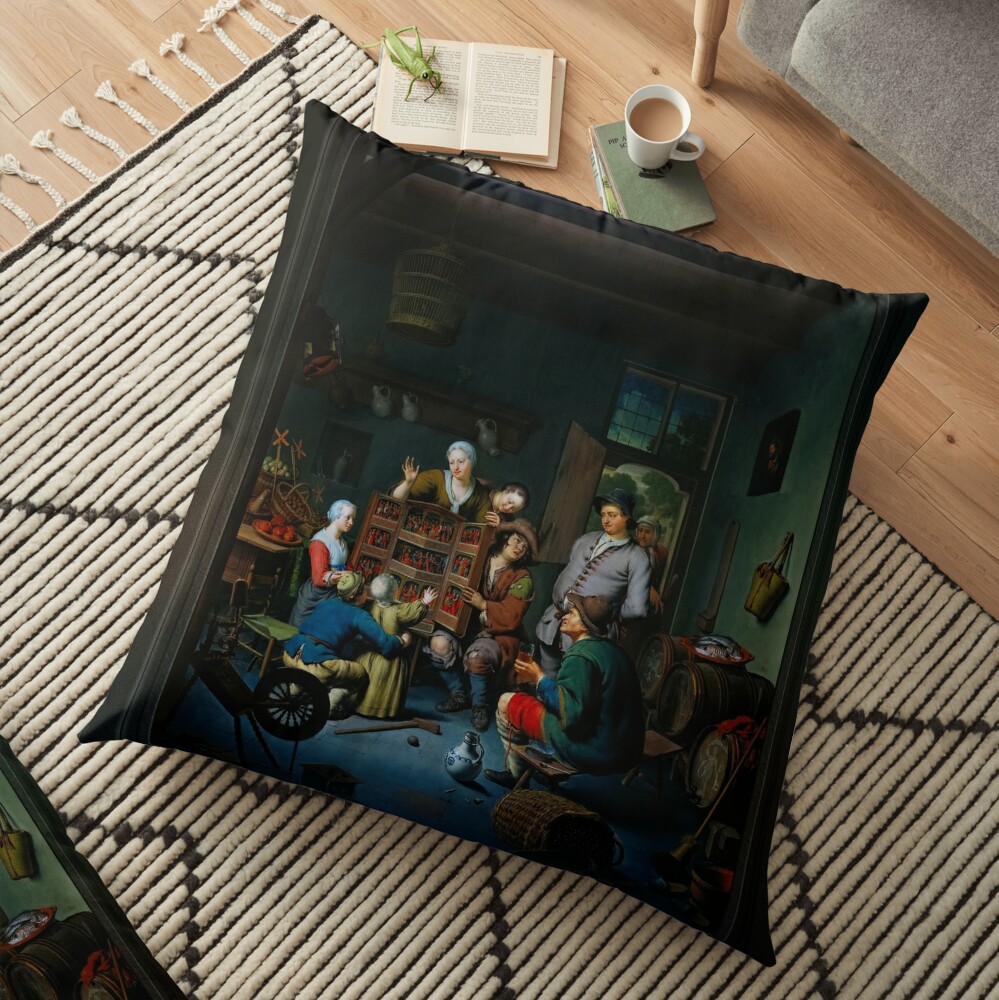
Els nens més petits queden sorpresos amb el gabinet de visualització, mentre el pare assegut en un banc amb una copa de vi a la mà esquerra i el tabac i la pipa a l'esquerra mira atentament l'obra d'art..
Mentre la seva dona saluda a la seva filla molt petita, que és recuperada pel gabinet; i al fons al costat de la porta, that has the top portion open is a female neighbor that is looking on as well.
The viewing cabinet is a rarekiek scene that depict scenes from knights or popular novels; in this scene we see a King and Queen and the rest of the nobility in nine scenes.
The central room where the family is view the rarekiek is populated with a spinning wheel, baskets of fruit and fish that are situated on a table barrels, which may contain wine, slippers, a broom, a wooden bucket, benches and chairs, a framed picture on the wall, a bird cage with a bird in it hanging from the ceiling, a tote bag hanging on the wall, a jug of wine hang from a wooden post and a shelf withe vases hanging from hooks.
Es tracta d'una reproducció d'antics mestres d'art digital remasteritzada d'una imatge de domini públic que està disponible com a Impressió de tela en línia.
La informació a continuació es deriva de Wikipedia.org
Willem was born to genre painter Frans van Mieris the Elder (1635 – 1682), que va ser un retratista d'èxit holandès de l'Edat d'Or i el principal membre d'una família de pintors de Leiden que també incloïa el seu altre fill Jan van Mieris. (1660–1690), així com el seu nét Frans van Mieris el Jove (1689 – 1763).
Tot i que Willem no va tenir tant èxit com el seu pare, va aconseguir un èxit moderat i va rebre el suport de diversos mecenes que van encarregar i col·leccionar algunes de les seves obres d'art.; que consistia principalment en escenes de gènere i retrats, alguns paisatges i algunes escultures.
En 1681 Willem es va fer càrrec del taller del seu pare després de morir, amb prou feines acabada la seva formació; i passaria dos anys més abans que pogués entrar al gremi de pintors de Leiden, que va passar a 1685.
When he took over his fathers studio he finished the works that were left incomplete due to his fathers death, showing his fathers influence in his technique, style and subject matter; working to uphold his fathers reputation as a Leiden Fijnschilder (Dutch Golden Age painters who, aproximadament 1630 a 1710, strove to create as natural a reproduction of reality as possible in their meticulously executed, often small-scale works.); which was made popular by Dutch Golden Age Painter Gerrit Dou (1613 – 1675).
Though Willem did mostly portraiture and genre paintings, he was also an accomplished landscape painter, draughtman and etcher; and also dabbled in historical painting with great results.
A l'edat de 31 he acted as headman and once as dean of the Leiden Guild of St. Luke and a year later in 1694 found along with Dutch Painters Jacob Toorenvliet (1636 – 1719) and Carel de Moor (1655 – 1738); which he and Moor directed until 1736, when he was forced to stop working due to partial blindness.