

De rarekiek ('t Fraay Curiosoa)
De rarekiek ('t Fraay Curiosoa) c1718 by Dutch Painter Willem van Mieris (1662 – 1747); sculptor and etcher of the late 17th and early 18th century.
This is a beautiful and enchanting genero eszena in which a wondering Savoy stops by the home of a peasant family that is comprised of small children, teenagers of boys and girls, mother and father; showing them is viewing cabinet.
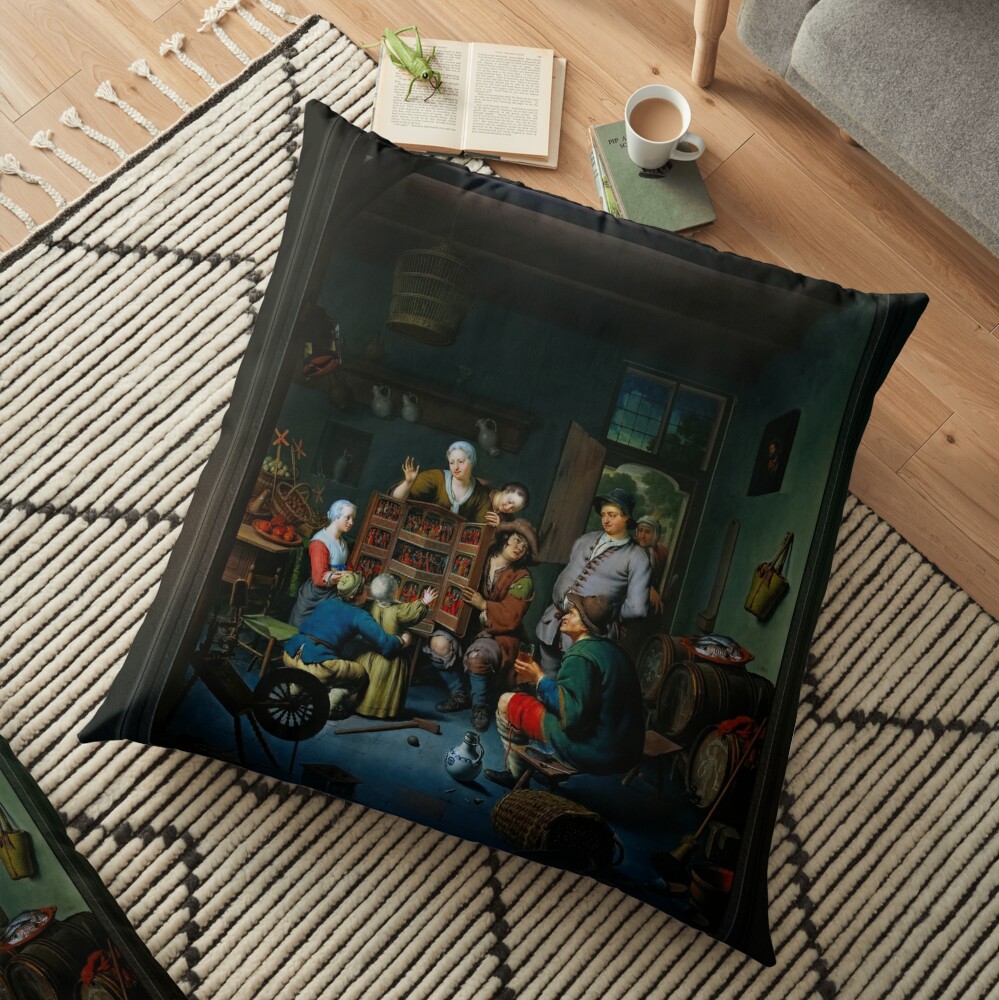
The younger children are amazed by the viewing cabinet, while the father sitting on a bench with a glass of wine in his left hand and his tobacco and smoking pipe on his left side watches intently at the work of art.
While his wife waves at her very young daughter that is taken back by the cabinet; and in the background by the door, goiko zatia irekita daukana begira dagoen emakume bizilaguna da.
Ikuspegiko armairua zaldunen edo eleberri ezagunen eszenak irudikatzen dituen eszena rarekiek bat da; eszena honetan Errege eta Erregina bat eta gainerako noblezia bederatzi eszenatan ikusiko ditugu.
Rarekiek familia ikusten duen erdiko gela biraka gurpil batez beteta dago, Mahai bateko upeletan kokatutako fruta eta arrain saskiak, ardoa eduki dezakeena, zapatilak, erratza bat, egurrezko ontzi bat, bankuak eta aulkiak, marko bat horman, sabaitik zintzilik txori bat duen txori-kaiola, horman zintzilik dagoen poltsa bat, ardo pitxer bat egurrezko zutoin batetik zintzilik eta kakoetatik zintzilik dauden loreontziak dituen apal bat.
Domeinu publikoko irudi baten erreprodukzioa da mihise inprimatu sarean.
Beheko informazioa hemendik eratorria da Wikipedia.org
Willem Frans van Mieris Zaharra genero margolariarengandik jaio zen (1635 – 1682), who was a successful Dutch Golden Age Portrait Painter and the leading member of a Leiden family of painters which also included his other son Jan van Mieris (1660–1690), as well as his grandson Frans van Mieris the Younger (1689 – 1763).
Though Willem was not as successful as his father he did achieve moderate success and was supported by several patrons who commissioned and collected some of his artwork; which consisted mostly of genre scenes and portraiture, some landscapes and some sculptures.
In 1681 Willem took over his fathers workshop after he passed away, having barely finished his training; and would be another two years before he was able to enter the Leiden painters guild, which happened in 1685.
Bere aitaren estudioa hartu zuenean bere aitaren heriotzagatik amaitu gabe geratu ziren lanak amaitu zituen, bere aitaren eragina bere teknikan erakutsiz, estiloa eta gaia; Leiden Fijnschilder gisa bere aitaren ospea zaintzeko lanean (Holandako Urrezko Aroko margolariek, ingurutik 1630 to 1710, Errealitatearen erreprodukzioa ahalik eta naturalena sortzen ahalegindu ziren beren zorroztasunez exekutatuta, sarritan eskala txikiko lanak.); Gerrit Dou Herbehereetako Urre Aroko margolariak ezagun egin zuena (1613 – 1675).
Nahiz eta Willem-ek erretratuak eta genero margolanak egin zituen batez ere, paisaia-margolari bikaina ere izan zen, marrazkilaria eta grabatzailea; eta pintura historikoan ere ibili zen emaitza bikainekin.
Urtean 31 buru eta behin St. Leiden Guild-eko dekano gisa jardun zuen. Luke eta urtebete geroago 1694 Jacob Toorenvliet pintore holandarrekin batera aurkitu zen (1636 – 1719) and Carel de Moor (1655 – 1738); which he and Moor directed until 1736, when he was forced to stop working due to partial blindness.