

Diane et ses nymphes dans un paysage boisé
“Diane et ses nymphes dans un paysage boisé” de Frans Francken le Jeune (1581-1642)
Frans Francken le Jeune “Diane et ses nymphes dans un Paysage Boisé,” créé au début du 17ème siècle, est une œuvre remarquable de l'art baroque flamand qui explore les thèmes de la mythologie classique, la nature, et le divin féminin. Le tableau capture un moment du mythe de Diane, la déesse romaine de la chasse, fécondité, et la lune.
Accompagnée de ses nymphes, Diana est représentée dans un décor boisé serein et idyllique, dégageant la grâce calme d'une silhouette en harmonie avec la nature. Cette œuvre est emblématique de la période baroque, mettant en valeur des détails complexes, contrastes profonds d'ombre et de lumière, et une représentation vivante de paysages luxuriants. L'artiste, Frans Francken le Jeune, un éminent peintre flamand, travaillé en collaboration avec Alexander Keirincx, un peintre paysagiste expert, pour donner vie au monde naturel avec des détails exquis.
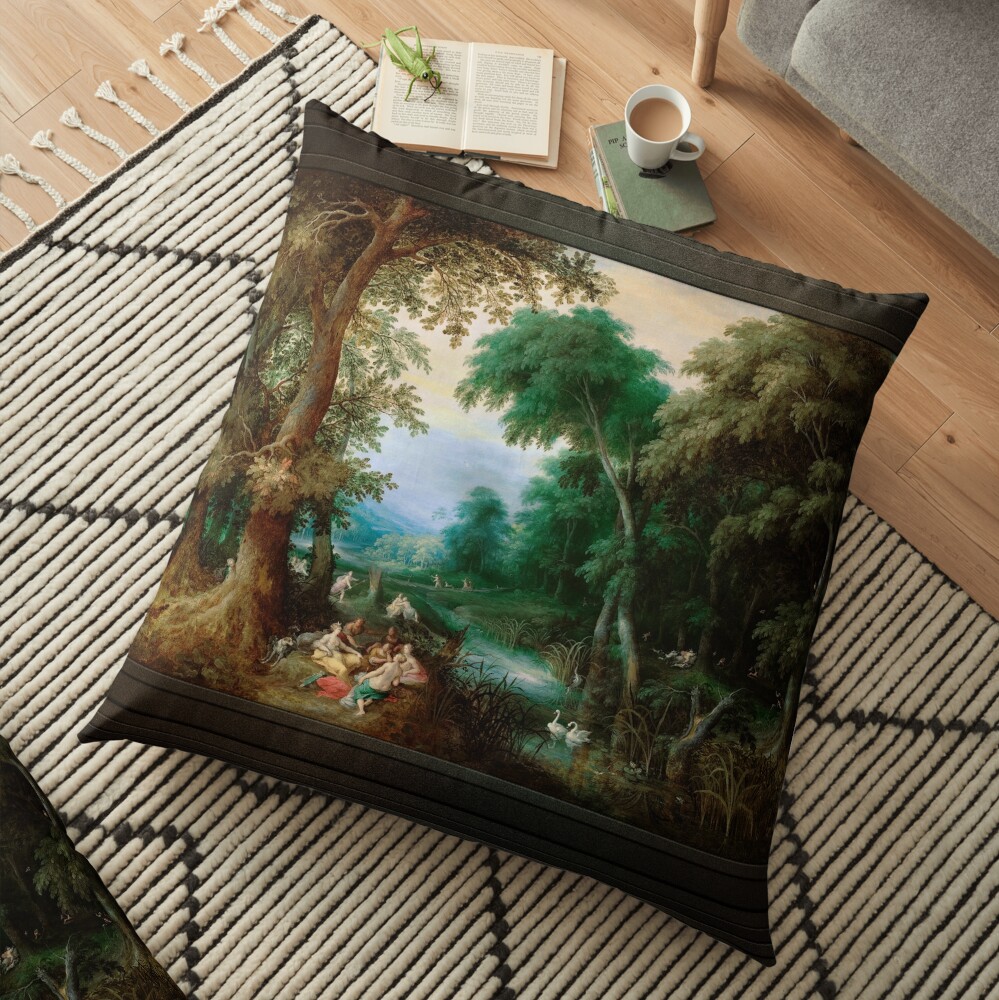
Table des matières
Le sujet principal: Diane et ses nymphes
Le point central du tableau est la déesse Diane, qui est représentée dans un moment de tranquillité alors qu'elle s'allonge dans une position naturelle, forêt intacte. Diane, traditionnellement associé à la chasse, est souvent représenté dans un contexte plus dynamique; pourtant, dans ce cas, elle est sereine, presque contemplatif, alors qu'elle se repose au milieu de ses nymphes.
La déesse est considérée comme une figure idéalisée, vêtu d'une robe blanche fluide qui contraste magnifiquement avec le feuillage vert foncé environnant. Sa silhouette est gracieuse et allongée, dégageant la pureté divine souvent associée à son personnage mythique.
Ses nymphes, qui sont ses compagnons et disciples, sont montrés dans diverses poses, engaged in the peaceful activities of their daily lives, such as gathering flowers, bathing, or resting. One nymph kneels by the water, gently touching the surface, while another reclines nearby, enjoying the stillness of the moment. The nymphs’ interaction with Diana and their proximity to the goddess enhances the idea of the sacred feminine and a harmonious relationship with nature.
Paysage et éléments naturels
The landscape itself is lush and enchanting, occupying a large portion of the composition. The dense trees, soft grass, and flowing water create a secluded, almost enchanted atmosphere. The background reveals an open, yet private space where the figures are immersed in nature’s embrace.
This choice of setting highlights the connection between the mythological figures and the natural world, a theme that was common in Baroque art. The trees are rich in texture, with their leaves casting dappled shadows that add depth and vibrancy to the scene.
The body of water, a small stream or pond that runs through the foreground, is gently rippling with the movement of the nymphs, and it reflects the soft light filtering through the trees. Two swans glide peacefully along the water’s surface, embodying the purity and grace that are central to Diana’s symbolism.
The artist’s skillful use of light enhances the scene’s mood, drawing the viewer’s eye to the central figures of Diana and her nymphs while allowing the surrounding landscape to unfold in a rich, atmospheric background.
The choice of a wooded landscape, with its dense trees and lush foliage, souligne en outre le thème de la nature en tant que sanctuaire pour Diana et ses disciples. Le décor forestier sert de représentation à la fois littérale et symbolique du domaine indompté de Diana., sacré, et un espace où la déesse et ses nymphes sont libérées des contraintes du monde humain.
L'humeur: Tranquillité et présence divine
L'ambiance générale du tableau est sereine et paisible. L'éclairage tamisé, le traitement délicat des personnages, et la disposition harmonieuse des éléments naturels s'associent pour créer une sensation de calme. Il n'y a aucun sentiment d'urgence ou de lutte sur la scène; plutôt, l'atmosphère est celle d'une tranquillité intemporelle, avec la déesse et ses nymphes incarnant la beauté éternelle et l'harmonie de la nature.
L'utilisation de la lumière et de l'ombre est particulièrement efficace pour évoquer cette ambiance.. The soft light that bathes the figures highlights their serene expressions and the flowing forms of their bodies. En revanche, the deeper shadows in the surrounding forest suggest a quiet, sacred space, untouched by human hands. This interplay between light and dark, known as chiaroscuro, was a hallmark of Baroque painting and served to deepen the emotional resonance of the scene.
The viewer is invited into a world of divine peace, où le temps semble s'être arrêté, and the forces of nature and mythology are woven together in a perfect balance. Diane, the moon goddess, is portrayed not as a fierce huntress, but as a figure of grace and divine serenity, reinforcing the idea of the goddess as a protector of the natural world and the feminine spirit.
Le style artistique: Influences baroques et flamandes
“Diane et ses nymphes dans un paysage boisé” exemplifies the Baroque style, which is known for its dramatic use of light, couleurs riches, et une expression émotionnelle intense. Les personnages sont rendus avec des détails exquis, avec un accent particulier sur les textures des tissus, peau, et feuillage. Le drapé fluide de la robe de Diana est peint avec un réalisme presque tactile., mettant en valeur l’habileté de l’artiste à rendre le tissu.
Art flamand, dont Francken faisait partie, est réputé pour ses paysages détaillés et son utilisation de couleurs vives. La contribution d’Alexander Keirincx au paysage est évidente dans le doux, représentation naturaliste des arbres, eau, Et léger. Sa technique de superposition de couleurs pour créer de la profondeur dans le feuillage et l'eau reflète l'influence des traditions flamandes., tandis que les personnages de Francken donnent vie au récit mythologique dans un style classique.
La composition est équilibrée et harmonieuse, avec un premier plan clair, juste milieu, et le contexte, attirer le regard du spectateur plus profondément dans le paysage. The interaction between the figures and their environment is masterfully arranged, with each element contributing to the overall sense of peace and divine presence.
Conclusion
Frans Francken le Jeune “Diane et ses nymphes dans un paysage boisé” is a stunning representation of classical mythology and nature, rendered in the rich and detailed style of Flemish Baroque painting. The serene portrayal of Diana and her nymphs invites the viewer into a world of tranquility, where the divine and natural worlds coexist in perfect harmony. The lush woodland setting, the careful attention to detail, and the mood of peace and serenity make this painting a timeless example of the Baroque period’s fascination with light, la nature, and mythological themes.
Diana et ses nymphes est une reproduction de maîtres anciens d'art numérique remasterisée d'une image du domaine public qui est disponible en tant que impression sur toile.
Cette création d'art numérique, comme toutes les œuvres d'art disponibles sur le site Web Xzendor7, elles sont disponibles à l'achat en ligne dans une variété de formats de matériaux, y compris des impressions sur toile., impressions acryliques, impressions métalliques, gravures sur bois, impressions encadrées, affiches, et sous forme d'impressions sur toile roulées dans une variété de tailles de 12 pouces à 72 pouces en fonction de la taille de l'œuvre d'art réelle et de la boutique d'impression à la demande auprès de laquelle vous choisissez d'acheter l'art.
L’œuvre d’art est également disponible sur une large gamme de vêtements pour hommes et femmes., tasses, fourre-tout, écharpes, cahiers et journaux et de nombreux produits de décoration intérieure.
À propos de l'artiste
Informations ci-dessous dérivées de Wikipedia.org
Frans Francken Le Jeune
Frans est né dans une famille d'artistes et deviendra le plus connu des membres de sa famille. Il est né de Frans Francken l'Ancien (un élève du peintre flamand historique Frans Floris (1519 – 1570)) et Elisabeth Mertens; et son père était l'un des plus importants créateurs de retables en Flandre.
Frans et son frère Hieronymus Francken II (1578 – 1623), tous deux formés sous leur père Frans l'Ancien; et peut avoir reçu une formation supplémentaire dans l'atelier de leurs oncles Hieronymus Francken I (1540 – 1610), qui se trouvait à Paris, La France.
Après avoir terminé sa formation, Frans a travaillé dans l'atelier familial, et de là est devenu maître indépendant dans la guilde anversoise de Saint-Luc en 1605; devenir diacre de la Guilde en 1616.
Frans était un peintre diversifié qui a créé des œuvres d'art dans de nombreux genres différents; avec beaucoup de ses œuvres basées sur des personnages historiques et bibliques; et au fil des ans, il est devenu un peintre très réussi et a exploité un atelier, qui a produit des copies de compositions originales.
Alexandre Keirincx
Alexander était le fils de Matthijs Keirincx et Anna Mason et s'est spécialisé comme peintre paysagiste, qui était connu pour ses scènes boisées avec des personnages, Châteaux et maisons de campagne anglais; et devint maître dans la guilde anversoise de St. Luc quelque part entre 1618 ou alors 1619.