

Diana, Chasseresse: A Study in Classical Beauty and Light by Jules Joseph Lefebvre
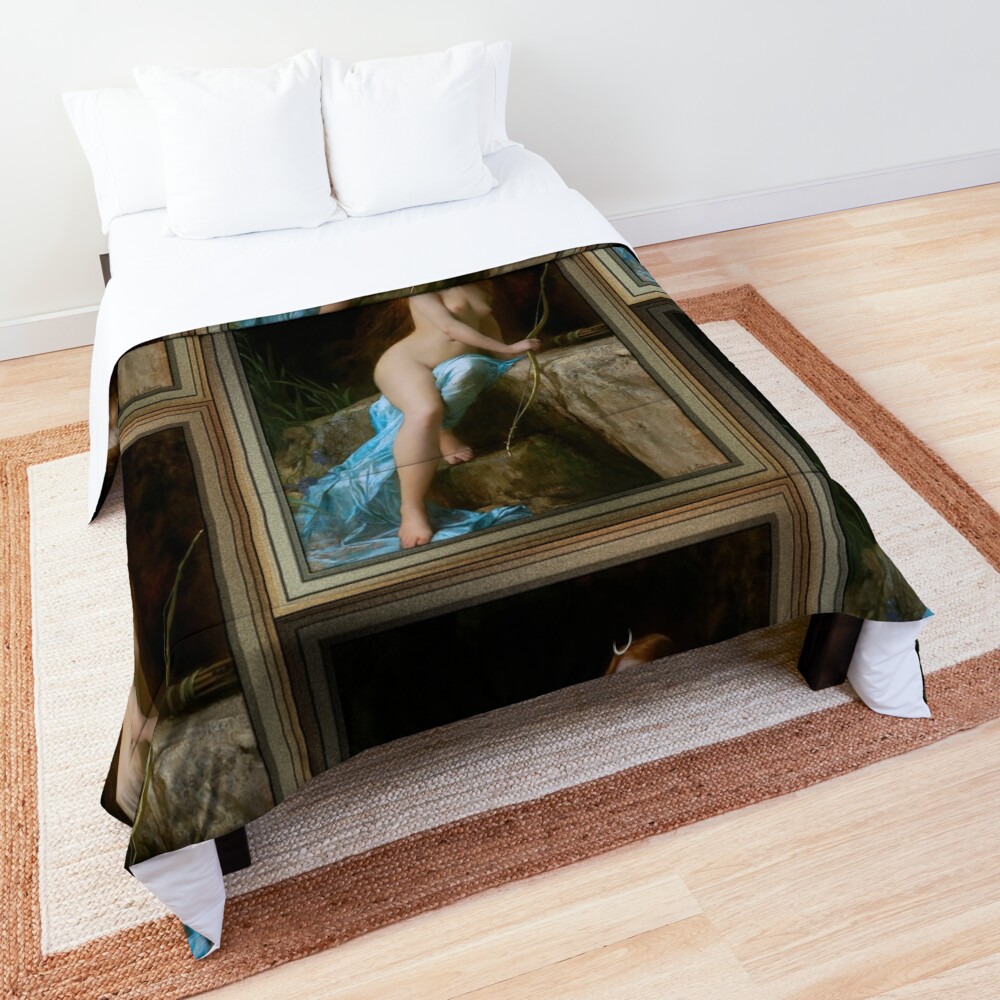
Diana Huntress de Jules Joseph Lefebvre (1836-1911) was a prominent French academic painter known for his allegorical and mythological scenes rendered with meticulous detail and a distinctive emphasis on light. “Diana, Chasseresse,” meaning “Diana, the Huntress, aŭ Diino de la Ĉasado” exemplifies these qualities, presenting a captivating vision of the Roman goddess in a secluded woodland setting. The painting is not merely an illustration of mythology; it’s a carefully constructed study of form, teksturo, and illumination, showcasing Lefebvre’s mastery of academic techniques.
Enhavtabelo
Komponaj Elementoj & Agordo
La kunmetaĵo centras sur Diana mem, poziciigita elstare ene de ŝtona groto aŭ alkovo. La fono paliĝas en profundan ombron, kreante draman kontraston, kiu elstarigas la helan haŭton kaj fluantan drapaĵojn de la figuro. Lefebvre utiligas piramidan strukturon por ankri la kunmetaĵon; Diana formas la apekson, kun la ĉirkaŭaj ŝtonoj kaj foliaro disponigante stabilan bazon.
Tiu aranĝo tiras la okulon de la spektanto rekte al ŝia formo dum samtempe surgrundigante ŝin ene de la natura medio. La groto mem ne estas prezentita kiel realisma kaverno sed prefere kiel idealigita spaco - scenejo por la ĉeesto de la diino.. La densa vegetaĵaro laŭflankanta Diana sugestas sovaĝan, nedresita pejzaĝo, plifortikigante ŝian asocion kun la ĉaso kaj la potenco de la naturo.
The Figure of Diana
Diana estas portretita nuda, yet the painting avoids any sense of vulgarity or impropriety. Lefebvre’s treatment of the figure emphasizes idealized beauty – smooth skin, graceful curves, and an air of serene composure. Her pose is relaxed but alert; she sits upon a rocky outcrop, one arm resting on her thigh while the other supports a bow and quiver.
The bow itself is rendered with remarkable detail, its polished wood gleaming in the light. A crescent moon adorns her forehead, a traditional symbol associated with Diana/Artemis, representing lunar cycles, intuicio, and feminine energy. Ŝi longe, flowing red hair cascades down her shoulders and back, adding to the overall sense of movement and dynamism within the otherwise static pose.
Lumo & Kolora Paletro
Lefebvre’s skillful use of light is arguably the most striking aspect of “Diana, Chasseresse.” The painting employs a dramatic chiaroscuro effect – a stark contrast between light and shadow – to create depth and highlight Diana’s form. Unuopa, unseen source illuminates her skin, causing it to glow with an almost ethereal radiance.
This light also catches on the bow and quiver, drawing attention to these details. The color palette is relatively restrained, dominated by earthy tones of brown, Verda, and gray in the background, which serve to accentuate the pale flesh tones of Diana’s body and the vibrant blue of her draped cloth. The subtle gradations of light and shadow create a sense of volume and realism, despite the painting’s idealized subject matter.
Academic Technique & Influoj
“Diana, Chasseresse” is firmly rooted in the academic tradition of 19th-century French painting. Lefebvre’s meticulous attention to detail, his emphasis on anatomical accuracy, and his skillful rendering of textures all reflect this influence. The work echoes the style of artists like William-Adolphe Bouguereau and Alexandre Cabanel, who similarly specialized in mythological and allegorical subjects rendered with a high degree of technical proficiency. Tamen, Lefebvre’s use of light distinguishes him from some of his contemporaries; his dramatic chiaroscuro creates a more theatrical and emotionally evocative atmosphere.
Simboleco & Interpreto
Beyond its aesthetic qualities, “Diana, Chasseresse” is rich in symbolism. Diana, as the Roman goddess of the hunt, wilderness, wild animals, the Moon, and chastity, embodies a complex set of attributes. Her nudity can be interpreted not as an invitation to sensuality but rather as a symbol of purity and connection with nature. The bow and quiver represent her skill as a hunter and protector of the natural world. The crescent moon signifies her association with lunar cycles and feminine intuition. Entute, the painting presents Diana as a figure of grace, forto, and independence – a timeless representation of feminine power in harmony with the wilderness.
Heredaĵo & Signifo
Jules Joseph Lefebvre’s work enjoyed considerable popularity during his lifetime, kaj “Diana, Chasseresse” remains one of his most celebrated paintings. It exemplifies the enduring appeal of classical mythology and the power of academic painting to create images of beauty and grandeur. The painting continues to be admired for its technical virtuosity, its evocative atmosphere, and its timeless depiction of a powerful female figure. It serves as a testament to Lefebvre’s skill as an artist and his ability to capture the essence of classical ideals in a modern context.
Ĉi tio estas retuŝita cifereca arto malnova majstra reproduktaĵo de publika domajna bildo kiu estas disponebla interrete kiel a rolled print.