

Diana, Huntress: A Study in Classical Beauty and Light vum Jules Joseph Lefebvre
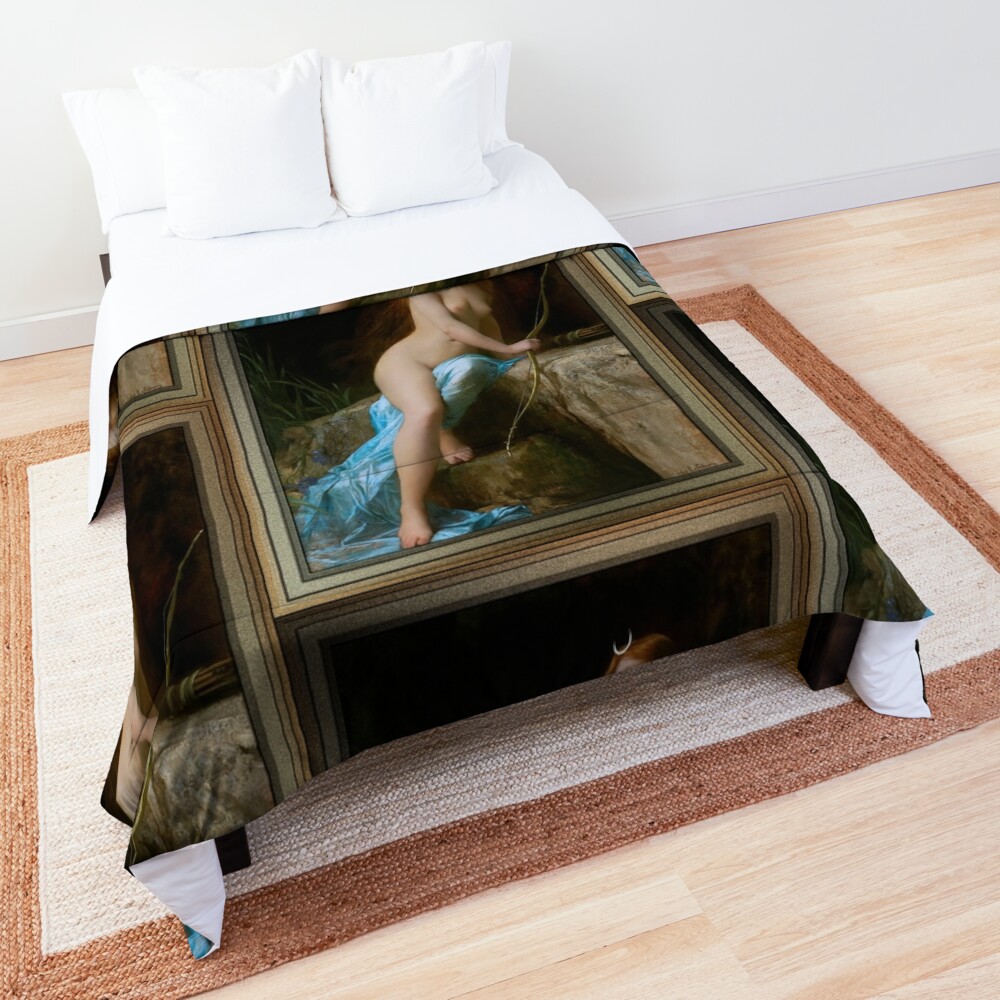
Diana Huntress vum Jules Joseph Lefebvre (1836-1911) war e prominente franséische akademesche Moler bekannt fir seng allegoresch a mythologesch Szenen, déi mat virsiichteg Detailer an engem markanten Akzent op Liicht gemaach goufen. “Diana, Huntress,” heescht "Diana, der Huntress, oder Gëttin vun der Juegd" illustréiert dës Qualitéiten, eng faszinéierend Visioun vun der réimescher Gëttin an engem ofgesécherten Bëschland ze presentéieren. D'Bild ass net nëmmen eng Illustratioun vun der Mythologie; et ass eng suergfälteg konstruéiert Etude vu Form, Texture, an Beliichtung, weist dem Lefebvre seng Meeschterleeschtung vun akademeschen Techniken.
Inhaltsverzeechnes
Zesummesetzung & Astellung
D'Zesummesetzung konzentréiert sech op d'Diana selwer, positioned prominently within a rocky grotto or alcove. The background fades into deep shadow, creating a dramatic contrast that highlights the figure’s luminous skin and flowing drapery. Lefebvre utilizes a pyramidal structure to anchor the composition; Diana forms the apex, with the surrounding rocks and foliage providing a stable base.
This arrangement draws the viewer’s eye directly to her form while simultaneously grounding her within the natural environment. The grotto itself is not depicted as a realistic cave but rather as an idealized space – a stage for the goddess’s presence. The dense vegetation flanking Diana suggests a wild, onheemlech Landschaft, reinforcing her association with the hunt and nature’s power.
D'Figur vun Diana
Diana is portrayed nude, trotzdem vermeit d'Bild all Gefill vu Vulgaritéit oder Ongerechtegkeet. D'Behandlung vu Lefebvre vun der Figur ënnersträicht idealiséierter Schéinheet - glat Haut, graziéis Kéiren, an eng Loft vu roueger Kompositioun. Hir Pose ass entspaant awer alert; si sëtzt op engem Fiels, een Aarm läit op hirem Oberschenkel, während deen aneren e Bogen a Quiver ënnerstëtzt.
De Bogen selwer gëtt mat bemierkenswäerten Detail gemaach, seng poléiert Holz glänzend am Liicht. E Halsmound schméiert hir Stir, eng traditionell Symbol mat Diana assoziéiert / Artemis, Moundzyklus representéiert, Intuitioun, a feminin Energie. Hir laang, fléissend rout Hoer kaskaden hir Schëlleren an zréck, bäidréit zum Gesamtsënn vu Bewegung an Dynamik an der soss statesch Pose.
Liicht & Faarfpalette
Dem Lefebvre seng kompetent Notzung vu Liicht ass wuel dee markantste Aspekt vun “Diana, Huntress.” The painting employs a dramatic chiaroscuro effect – a stark contrast between light and shadow – to create depth and highlight Diana’s form. Eng eenzeg, unseen source illuminates her skin, causing it to glow with an almost ethereal radiance.
This light also catches on the bow and quiver, drawing attention to these details. The color palette is relatively restrained, dominated by earthy tones of brown, Gréng, and gray in the background, which serve to accentuate the pale flesh tones of Diana’s body and the vibrant blue of her draped cloth. The subtle gradations of light and shadow create a sense of volume and realism, despite the painting’s idealized subject matter.
Akademesch Technik & Afloss
“Diana, Huntress” is firmly rooted in the academic tradition of 19th-century French painting. Dem Lefebvre seng virsiichteg Opmierksamkeet op Detailer, säi Schwéierpunkt op anatomesch Genauegkeet, a seng kompetent Rendering vun Texturen reflektéieren all dësen Afloss. D'Aarbecht widderhëlt de Stil vu Kënschtler wéi William-Adolphe Bouguereau an Alexandre Cabanel, déi sech och op mythologesch an allegoresch Themen spezialiséiert hunn, déi mat engem héije Grad vun der technescher Kompetenz gemaach goufen. Allerdéngs, Dem Lefebvre seng Benotzung vu Liicht ënnerscheet hien vun e puer vu sengen Zäitgenossen; seng dramatesch Chiaroscuro schaaft eng méi theatralesch an emotional evokativ Atmosphär.
Symbolismus & Interpetatioun
Iwwert seng ästhetesch Qualitéiten, “Diana, Huntress” ass räich u Symbolismus. Diana, als Réimesch Gëttin vun der Juegd, Wüst, wëll Déieren, de Mound, an Chastitéit, verkierpert eng komplex Rei vun Attributer. Hir Plakegkeet kann net als Invitatioun op Sensualitéit interpretéiert ginn, mee éischter als Symbol vu Rengheet a Verbindung mat der Natur. De Bogen an de Quiver representéieren hir Fäegkeet als Jeeër a Protecteur vun der natierlecher Welt. De Moundkrees bedeit hir Associatioun mat Moundzyklen a weiblech Intuition. Allgemeng, d'Molerei presentéiert d'Diana als eng Gnod, Staang, an Onofhängegkeet - eng zäitlos Duerstellung vun feminin Kraaft an Harmonie mat der Wüst.
LegMacat & Bedeitung
Dem Jules Joseph Lefebvre seng Aarbecht huet eng bedeitend Popularitéit wärend senger Liewensdauer genoss, an “Diana, Huntress” bleift ee vu senge meeschte gefeiert Biller. Et illustréiert den dauerhaften Appel vun der klassescher Mythologie an der Kraaft vun der akademescher Molerei fir Biller vu Schéinheet a Grandeur ze kreéieren. D'Molerei gëtt weider fir seng technesch Virtuositéit bewonnert, seng evokativ Atmosphär, a seng zäitlos Duerstellung vun enger mächteger weiblecher Figur. Et déngt als Testament fir dem Lefebvre seng Fäegkeet als Kënschtler a seng Fäegkeet d'Essenz vu klassesche Idealer an engem modernen Kontext ze erfassen..
Dëst ass eng retouched digital Konscht al Master Reproduktioun vun engem Public Domain Bild dat online verfügbar ass als gewalzt Drécken.