

Vzorek bot (Kování obuvi), c1918
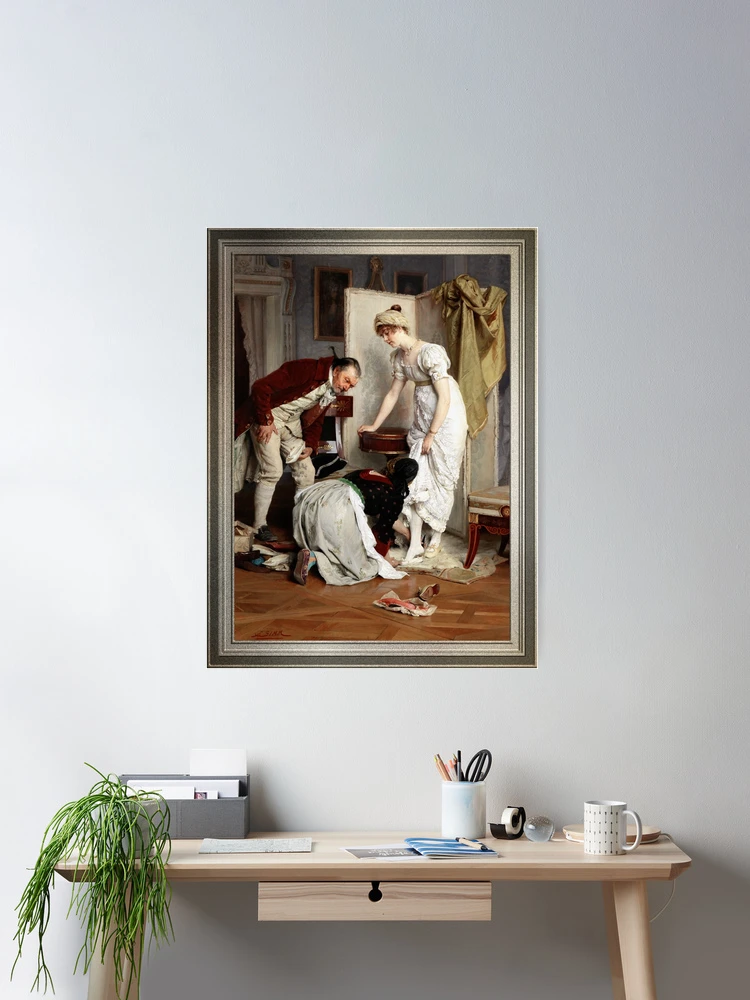
“Vzorek bot (Kování obuvi)” je jemně detailní, elegantní malba vytvořená v 1918 od rakouského umělce Franze Xavera Simma, narozen v 1853 a zemřel v 1918. Obraz zapouzdřuje intimní a poněkud divadelní moment v dobře situované evropské domácnosti. Simm, významný umělec konce 19. a počátku 20. století, byl známý pro své živé zobrazení každodenního života, zejména ty, které předvádějí sociální interakce v rafinovaných prostředích. Tento obraz odráží jeho mistrovství v zachycení jemných výrazů, textur, a emoce.
Scéna se odehrává uvnitř, ve velkém, dobře vybavený pokoj, který naznačuje směs aristokratického vkusu a klasické elegance. Simmova technika zde hovoří o jeho akutní pozornosti k detailu. Místnost samotná se vyznačuje kombinací dekorativních prvků, zdobený nábytek, realistický bohaté textilie, a přepychové podlahy, které poskytují pocit prostoru, luxus, a zdokonalování. Barvy jsou teplé, s jemnou souhrou přirozeného světla procházejícího místností, zdůrazňující bohatost dřevěné podlahy a oblečení postav zapojených do scény.
Obsah
Předmět a obrázky
Ústředním bodem obrazu je intimní okamžik mezi postavami, tři jedinci v různých fázích interakce. V popředí, stojí dobře oblečená mladá žena, připravený s atmosférou milosti. Její oblečení, jemné bílé šaty zdobené jemnou krajkou, evokuje styl konce 18. nebo počátku 19. století, kývnutí na módu v období rokoka a raného regentství.
Zabývá se montáží bot, přičemž jednu z jejích bot pečlivě upravovala služebná klečící na podlaze u jejích nohou. Sluha, v tradičním oblečení, skromné oblečení, se soustředí na svůj úkol, s mírně prohnutými zády, když se stará o boty dámy. Gesto klečícího sluhy zdůrazňuje dobovou společenskou dynamiku, kde ženy z nižší třídy sloužily těm z vyšší třídy s pokorou a péčí.
Vlevo od kompozice, starší muž v červené bundě se předkloní, zdánlivě kontroluje proces montáže obuvi. Jeho postoj je autorita a zájem, jak se naklání, naklonil hlavu k mladé ženě. Starší muž se jeví jako pozorný pozorovatel, možná otec ženy nebo vlivná postava v jejím životě, kdo sleduje s výrazem znepokojení nebo souhlasu.
Tato interakce mezi postavami, elegantně oblečená mladá žena, skromný sluha, a starostlivý starší muž, naznačuje příběh domácího života ve šlechtické nebo bohaté domácnosti. Postavy ztělesňují smysl pro hierarchii, kde sluha zaujímá nejnižší pozici, zatímco muž a žena zaujímají mocenské a rafinované pozice.
Řeč těla sluhy, s hlavou skloněnou v pokoře, ostře kontrastuje s rovným postojem ženy, která ztělesňuje půvab a vyrovnanost očekávanou od žen v tak vysoké společnosti.
Objekty a podrobnosti
Několik klíčových objektů ve scéně dále dodává luxusní atmosféru místnosti. Precizně zpracovaný dřevěný nábytek, skříň a malý stolek, se objeví na pozadí. Tyto objekty, navržený se složitými řezbami, odrážejí dobový vkus pro zdobené řemeslo. Na podlaze, hned napravo od klečícího sluhy, pár bot a kus látky jsou nedbale rozházené, budí dojem, že proces montáže obuvi již nějakou dobu probíhá.
Samotné boty, i když ne úplně podrobně, Zdá se, že naznačují vysokou módu, v souladu s vytříbeným stylem ústřední ženské postavy. Tyto objekty, spolu s jemným koberečkem pod nohama postav, vyvolat pocit bohatství a pohodlí.
Pozadí obrazu je vyplněno jemnými detaily, jako je zarámovaný portrét a měkká drapérie visící ze strany, které napovídají o celkovém přepychu místnosti. Stěny zdobí světlé barvy a výtvarné umění, případně odrážející vkus obyvatel domácnosti, který zahrnuje portréty a odkazy na klasická témata.
Nálada a téma
Nálada obrazu je důstojná a přitom intimní, se základním pocitem tiché interakce. Nastavení, i když formální a elegantní, mluví s soukromějším, domácí moment, který kontrastuje s často velkolepějšími a veřejnějšími momenty aristokratického života.
Téma nazouvání bot by mohlo symbolizovat všední, ale zásadní rituály každodenního života, pozice a oblečení ženy naznačují hluboké spojení s jejím postavením a její sociální rolí. Mluví o tématech milosti, krása, a všudypřítomná hierarchie ve společnosti v tomto období.
V atmosféře panuje výrazný klid, přerušovaný pouze akcí sluhy, když se ohýbá, aby si upravila botu. Starší muž, i když není přímo zapojen do procesu, přidává prvek otcovského nebo autoritativního dohledu, což umocňuje představu o postavení ženy a jejím vztahu k lidem kolem ní.
Výběr tématu v “Kování obuvi” odhaluje Simmův zájem o zobrazení vytříbeného společenského řádu, kde jsou třídní rozdíly viditelné v nejintimnějších prostředích. Pečlivé ztvárnění látek, textur, a souhra světla a stínu, to vše přispívá k celkovému smyslu obrazu pro realitu a eleganci. Tato scéna, který mohl být snadno svědkem v kterékoli šlechtické domácnosti té doby, zapouzdřuje svět propracovanosti a komplexní dynamiku mezi třídami, pohlaví, a autorita.
Styl a technika
Styl tvorby Franze Xavera Simma se vyznačuje vysoce realistickým zobrazením a pečlivou pozorností k detailům oblečení., výrazy, a výzdoba interiéru. Jeho použití světla a stínu k vytvoření hloubky a atmosféry, v kombinaci s jemnou barevnou paletou, přispívá k celkovému harmonickému a rafinovanému vzhledu obrazu. Detailní kresba štětcem zachycuje texturu oblečení, nábytek, a kůži s pozoruhodnou přesností, předvádí Simmovy schopnosti malíře domácích scén.
Samotné složení, s figurami umístěnými kolem centrální akce kování boty, je dobře vyvážený a dodává dílu smysl pro řád. Způsob, jakým světlo jemně zalévá postavy, zdůrazňuje jejich role ve scéně, s mírně zastíněným sluhou, muž jasně osvětlený, a žena zachytila jemný záblesk světla na její tváři a oděvu.
Simm's “Vzorek bot” je ukázkovým příkladem hnutí historického realismu, kde se umělci snažili představit život takový, jaký byl, se všemi jeho texturami, emoce, a vztahy.
Toto je retušovaná reprodukce starého umění digitálního umění obrazu veřejného díla.