

Dolce Far niente
“Dolce Far niente,” criado pelo pintor britânico John William Godward em 1904, incorpora a essência da tranquilidade de lazer na arte clássica. John William Godward (1861 – 1922) é conhecido por sua dedicação em retratar cenas serenas e opulentas inspiradas na Roma e na Grécia antigas, muitas vezes focando em mulheres bonitas em ambientes idealizados.
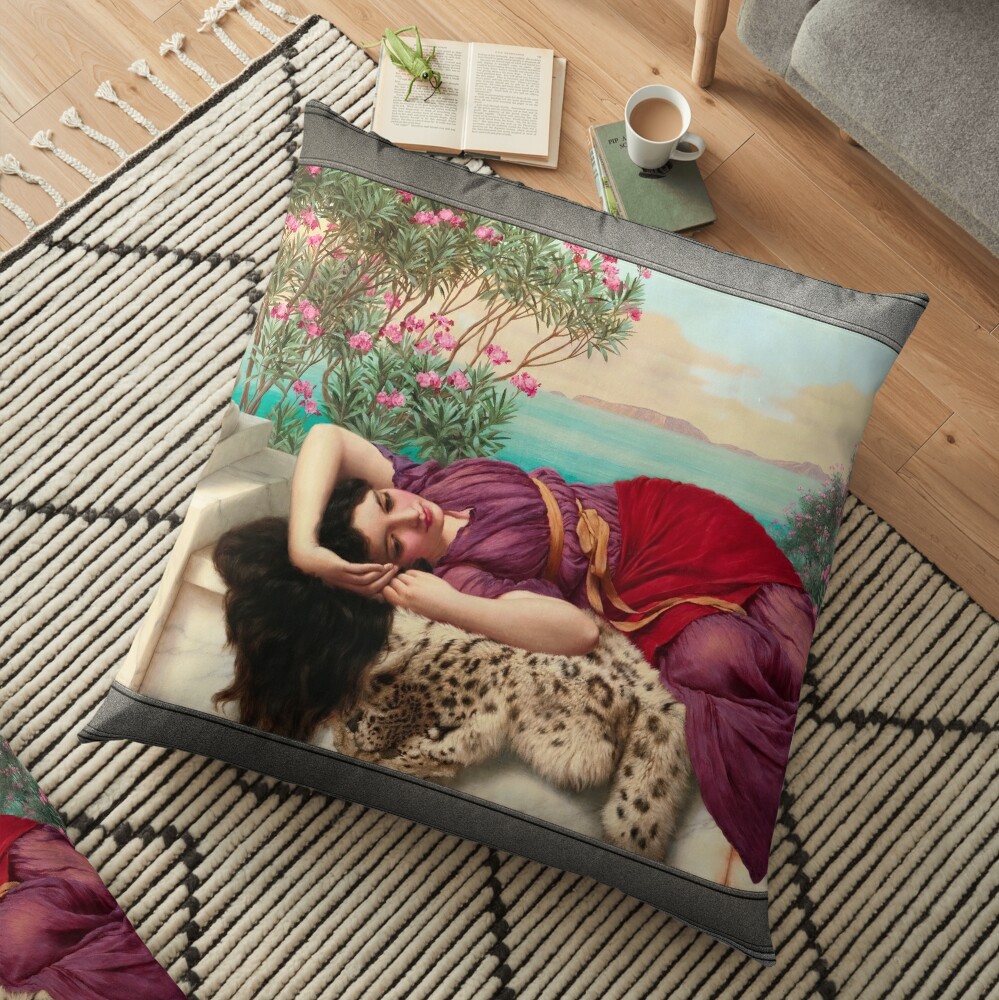
Nesta pintura, Godward captura um momento de puro relaxamento, onde o sujeito reclina em um ambiente luxuoso, oferecendo ao espectador uma janela para um mundo de elegância sem pressa. O título, que se traduz do italiano como “A doçura de não fazer nada,” é uma descrição adequada do humor da pintura. Este tema de langor e contentamento é uma marca registrada do trabalho de Godward e reflete um ideal clássico de viver em harmonia com a natureza e o luxo..
Índice
O assunto principal: A Reclining Woman
At the heart of the composition lies a young woman, the focal point of the painting. Draped in flowing, rich fabrics, she reclines languidly on a marble terrace. Her pose suggests both comfort and contemplation, her head resting gently on her right arm, while her other hand lies relaxed by her side. The woman’s attire is a blend of classical Greek and Roman influences, with a deep red robe cinched at the waist by a golden sash, flowing loosely around her body.
The fabric of her clothing flows with remarkable realism, draping gracefully over her form and pooling around her on the marble. The woman’s expressive face is calm and serene, exuding a sense of peace and satisfaction. Seu longo, dark hair tumbles softly over her shoulder and down her back, enhancing her delicate beauty.
The figure is sculpted in a manner that emphasizes classical ideals of beauty, graceful, slender, and harmonious. The figure’s serene expression is a key aspect of Godward’s work, reinforcing the theme of repose and quiet indulgence. Her classical beauty is not only visual but also imbued with the quiet strength of timeless femininity. Her natural poise suggests an air of nobility or refinement, which Godward often associated with the ancient world.
The Surrounding Environment
The setting is a classical terrace that overlooks a tranquil, Mediterranean-style landscape. The woman is positioned in front of a marble railing, part of a larger architectural structure, perhaps an ancient villa or temple. The terrace’s polished marble surface reflects light beautifully, its smooth, lustrous quality enhancing the overall luxurious atmosphere. The colors of the marble subtly contrast with the rich hues of the woman’s attire, bringing attention to her figure.
Beyond the terrace, the landscape stretches into a serene view of the sea. The coastline is bathed in soft, golden sunlight, with distant hills rolling gently toward the horizon. This idyllic landscape evokes a sense of peace and isolation, where nature and human beauty coexist harmoniously. Several clusters of lush foliage, including pink and purple flowers, border the scene, enhancing the natural beauty of the environment. The plants are rendered with incredible attention to detail, their vibrant colors and intricate shapes adding depth and dimension to the scene.
The landscape, with its gentle slopes and clear skies, reinforces the theme of relaxation and the gentle passage of time. The sea, calm and expansive, suggests infinity and timelessness, while the distant hills provide a sense of tranquility and permanence. These natural elements frame the scene in a way that invites the viewer to contemplate the idyllic stillness of the moment.
Materiais e Técnicas
Godward’s expertise in depicting texture and light is evident in his meticulous rendering of the materials in the painting. The marble terrace is finely detailed, its polished surface capturing the play of light and shadow in a way that heightens the realism of the scene. Os tecidos luxuosos dos trajes femininos são pintados com tanta precisão que quase se pode sentir a maciez e o peso do tecido.. Os vermelhos e roxos vívidos de seu manto contrastam lindamente com os tons mais suaves da paisagem., chamando a atenção do espectador para sua figura.
A pincelada de Godward é delicada e refinada, com foco em superfícies lisas e clareza de forma. A luz na pintura é suave e uniforme, contribuindo para a sensação geral de calma e atemporalidade. Não há contrastes fortes ou sombras nítidas, que enfatiza o clima tranquilo da peça. O uso da cor pelo artista também é notável, enquanto ele emprega uma paleta rica, mas harmoniosa, para evocar calor e serenidade. A composição geral é equilibrada, with each element of the scene working together to create a cohesive and pleasing visual experience.
The Style and Mood of the Artwork
“Dolce Far niente” embodies the style of academic realism, a movement that prioritized the accurate depiction of human figures, classical themes, and idealized settings. Godward was a part of the late Victorian tradition, and his works often aligned with the aesthetic tastes of the time, which favored classical themes and polished finishes. The painting’s subject matter, a beautiful woman at rest in an idyllic classical setting, is typical of Godward’s oeuvre, where he often sought to create timeless moments of beauty and serenity.
The mood of the painting is one of complete relaxation and peace. There is no urgency or turmoil; em vez de, the viewer is invited to share in the quiet pleasure of the woman’s repose. This sense of timeless, unhurried contentment is central to the painting’s appeal. The serene landscape, the softness of the light, and the tranquility of the scene combine to evoke feelings of nostalgia for a more harmonious and slower-paced world. The theme of “Dolce Far niente” reminds the viewer of the simple joys of leisure, free from the pressures of modern life.
Conclusão
“Dolce Far niente” is a masterful example of John William Godward’s ability to evoke the beauty of the classical world through the lens of academic realism. The painting captures a moment of pure relaxation, where the lines between the natural world and human beauty blur, creating a sense of timeless serenity. The luxurious setting, coupled with the delicate portrayal of the reclining woman, invites the viewer to step into a world where tranquility reigns and time seems to stand still.
Dolce Far Niente is a remastered digital art old masters reproduction of a public domain image that is available as a impressão em tela on-line.
Esta criação de arte digital, assim como todas as obras de arte que podem ser encontradas no site do Xzendor7 estão disponíveis para compra on-line em uma variedade de formatos de materiais, incluindo impressões em tela, impressões acrílicas, impressões metálicas, gravuras em madeira, impressões emolduradas, cartazes, e como impressões em tela enrolada em vários tamanhos, desde 12 polegadas para 72 polegadas, dependendo do tamanho da obra de arte real e da loja de impressão sob demanda em que você escolher comprar a arte.
A arte também está disponível em uma ampla variedade de roupas masculinas e femininas, canecas, bolsas, lenços, cadernos e diários e muitos produtos de decoração para casa.
Biografia do artista
Informações abaixo de Wikipédia.org
John William Godward era o mais velho de cinco filhos, e recebeu o nome de seu pai John e de seu avô William.
Expôs na Royal Academy de 1887. Quando ele se mudou para a Itália com uma de suas modelos em 1912, sua família rompeu todo contato com ele e até cortou sua imagem das fotos de família. Godward retornou à Inglaterra em 1921, morreu em 1922, e está enterrado no Cemitério de Brompton, Oeste de Londres.
Uma de suas pinturas mais conhecidas é Dolce far Niente (1904), que foi adquirido para a coleção de Andrew Lloyd Webber em 1995. Como no caso de várias outras pinturas, Godward pintou mais de uma versão; nesse caso, um anterior (e menos conhecido) 1897 versão com mais 1906 versão.
Suicidou-se com a idade de 61 e diz-se que escreveu em sua nota de suicídio que “o mundo não é grande o suficiente para [ambos] eu e um Picasso”.
Sua família distante, que desaprovava que ele se tornasse um artista, ficaram com vergonha de seu suicídio e queimaram seus papéis. Sabe-se que apenas uma fotografia de Godward sobreviveu.
Godward era um neoclassicista vitoriano, e portanto, em teoria, um seguidor de Frederic Leighton. No entanto, ele é mais aliado estilisticamente de Sir Lawrence Alma-Tadema, com quem partilhou uma propensão para a representação da arquitectura clássica – em particular, características estáticas da paisagem construídas em mármore.
A grande maioria das imagens existentes de Godward apresentam mulheres em trajes clássicos posadas contra elementos da paisagem.; embora existam algumas figuras semi-nuas e totalmente nuas incluídas em sua obra, sendo um exemplo notável “No Tepidário c1913”.
Um título partilhado com uma controversa pintura de Alma-Tadema do mesmo tema que reside no “Galeria de Arte Lady Lever”. Os títulos refletem a fonte de inspiração de Deus; que foi a civilização clássica, mais notavelmente o da Roma Antiga; um assunto que liga Deus intimamente a Alma-Tadema artisticamente.
Dado que os estudos clássicos eram mais difundidos entre o público potencial de suas pinturas durante sua vida do que nos dias atuais, a pesquisa meticulosa de detalhes foi importante para se posicionar como artista neste gênero.
Alma-Tadema foi arqueólogo e também pintor, que visitou locais históricos e colecionou artefatos que mais tarde usou em suas pinturas: Em direção a Deus, também, estudou detalhes como arquitetura e vestimenta, a fim de garantir que suas obras tivessem o selo de autenticidade.
Além disso, Godward representou meticulosa e meticulosamente outras características importantes em suas pinturas., peles de animais das quais as pinturas “Meio-dia de descanso c1910” e “Um retiro legal c1910” contém exemplos de tal representação, bem como flores silvestres “Nerissa c1906” e “Flores de verão c1903”.
A aparição de belas mulheres em poses estudadas em tantas telas de Godward faz com que muitos recém-chegados às suas obras o classifiquem erroneamente como sendo pré-rafaelita., particularmente porque sua paleta costuma ser de cores vibrantes. A escolha do assunto (civilização antiga versus, por exemplo, Lenda arturiana) é mais propriamente o do neoclassicismo vitoriano.
Em comum com numerosos pintores contemporâneos dele, Godward era um ‘alto sonhador vitoriano’, produzindo imagens de um mundo idealizado e romantizado que, no caso de Godward e Alma-Tadema, passou a ser criticado como uma visão de mundo dos vitorianos em togas.
Em direção a Deus “rapidamente estabeleceu uma reputação por suas pinturas de mulheres jovens em um cenário clássico e por sua capacidade de transmitir com sensibilidade e domínio técnico a sensação de texturas contrastantes de carne, mármore, peles e tecidos.
A propensão de Godward para criar obras de arte ambientadas no período clássico provavelmente veio da época em que ele nasceu; pois foi o último renascimento clássico em grande escala nas pinturas ocidentais, que floresceu na Inglaterra da década de 1860 até a década de 1890.