

נערת חלומות
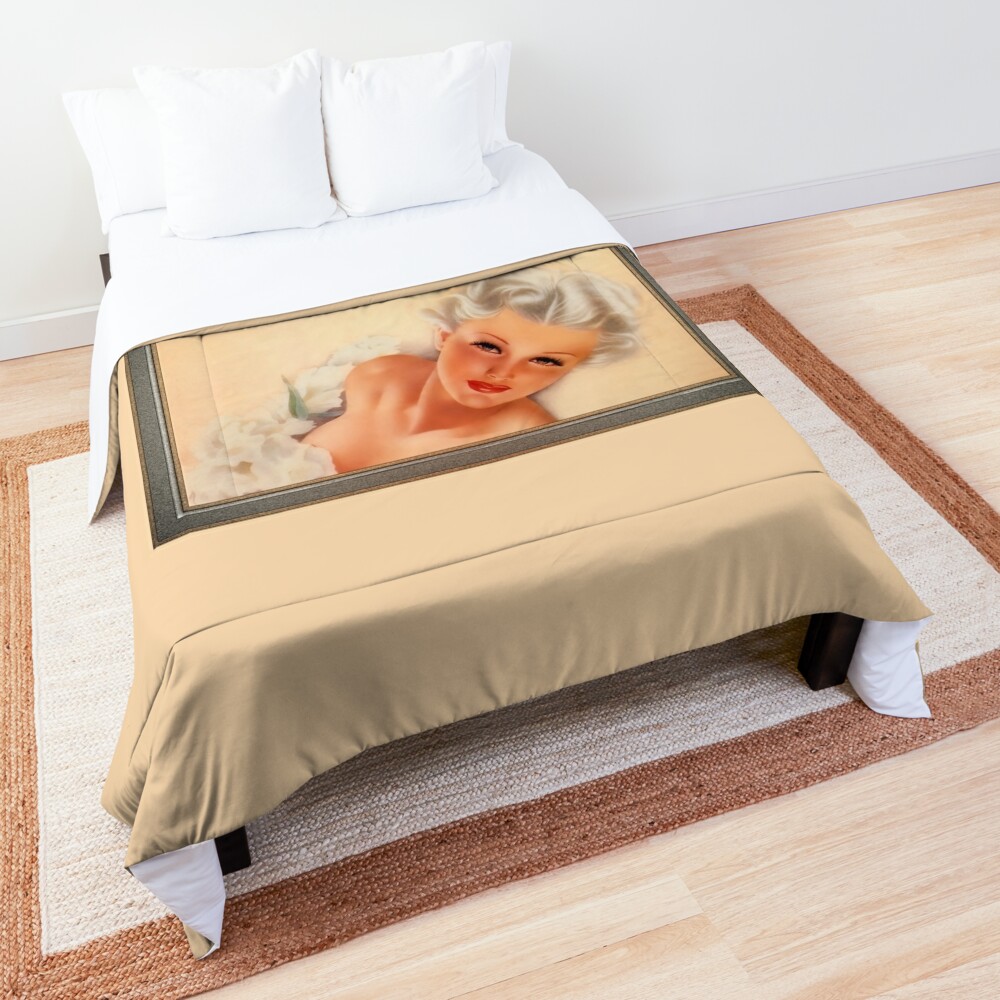
“נערת חלומות,” created by Peruvian artist תמונת מציין מיקום של אלברטו ורגאס (1896 – 1982) in the 1940s, captures the seductive allure of feminine beauty and elegance with a style that epitomizes the glamour of mid-century pin-up art. Known for his meticulous attention to detail, Vargas expertly combines delicate elements of portraiture with soft, dreamlike qualities that evoke an air of both innocence and sensuality.
This artwork, which draws viewers into a serene and nostalgic world, remains one of his most iconic pieces. Vargas’s unmistakable flair for capturing the human form in a manner that is both realistic and idealized is fully on display in “Dream Girl.”
תוכן העניינים
נושא והרכב
בְּבוֹעַסִים “נערת חלומות” lies a beautiful, youthful woman. She gazes up softly, her expression one of serenity and quiet allure. The subject’s features are gracefully rendered, showcasing a high level of refinement in the artist’s technique. Her glowing skin, with its porcelain-like smoothness, seems almost ethereal against the muted background.
The delicate play of light on her face highlights the softness of her expression, emphasizing her large, dark eyes, שפתיים מלאות, and smooth, gently arched eyebrows. The faint curve of her neck leads down to her soft shoulders, enhancing her graceful and feminine figure.
The woman’s platinum blonde hair is styled in soft waves that cascade gently across her head, framing her face like a halo of silk. The tousled effect of her hair gives a sense of motion, as though it were caught in a gentle breeze, further adding to the dreamlike quality of the image. This characteristic of movement is contrasted with her calm, passive demeanor, inviting the viewer into a world of poised elegance.
Objects and Elements
Surrounding the subject are subtle hints of nature, including soft white flowers that rest delicately around her, almost as if they have grown from the same delicate dreamlike state in which she exists. These floral elements are painted with soft strokes that blend seamlessly into the rest of the image, emphasizing the ethereal quality of the portrait. The flowers themselves appear almost weightless, with their petals depicted in a way that mimics the softness and fragility of the woman’s figure.
The background of the piece is a gentle wash of warm beige and peach tones, which enhances the overall softness of the scene. The delicate lightness of the background contrasts with the vividness of the subject’s face, which is the focal point of the painting. Vargas’s use of soft gradients in the background creates a hazy, dreamlike atmosphere, further inviting the viewer into a moment of quiet reverie.
חומרים ובינוני
Alberto Vargas was a master of his medium, and his work with oil paints in “נערת חלומות” is a testament to his exceptional technique. The use of oils allowed him to achieve a smooth, flawless surface that enhances the lifelike quality of the subject’s skin and features.
הצבעים משתלבים בהרמוניה, with an emphasis on soft pastels and subtle gradients that evoke a feeling of warmth and intimacy. Vargas’s brushwork is meticulous, showing his skill in capturing the delicate nuances of light, צֵל, ומרקם.
The soft transition between tones is key to the image’s mood, and the fluidity of Vargas’s strokes gives the subject a sense of being caught in a fleeting moment of time, as though the image could melt away or shift with a simple breath of wind. The final effect is one of polished elegance and timeless beauty, which was characteristic of Vargas’s signature pin-up art.
סגנון וטכניקה
“נערת חלומות” embodies the signature style of Alberto Vargas, a renowned artist known for his pin-up illustrations that graced the covers of magazines and advertisements in the mid-20th century. His work is deeply rooted in the tradition of American pin-up art but goes beyond the typical representations of the time. While Vargas’s women were often depicted in playful, seductive poses, he infused each of his subjects with a sense of grace and sophistication that set him apart from other pin-up artists.
His style is a blend of realism and idealization, where the human form is rendered with a high degree of detail while maintaining an almost fantastical allure. The women in Vargas’s portraits, such as the one in “נערת חלומות,” are idealized depictions of beauty, captured in moments of tranquility that evoke a sense of fantasy. היצירה הזו, בִּפְרָט, reflects his mastery of creating an intimate connection with the viewer through the subject’s gaze and the tenderness of the scene.
נושא ומצב רוח
הנושא המרכזי של “נערת חלומות” revolves around the celebration of femininity, יוֹפִי, וחסד. The mood is one of serenity, לְהַרְגִיעַ, and fantasy. The subject is neither overtly sexualized nor overly stylized in a way that detracts from her natural beauty. במקום זאת, the piece invites contemplation of the soft allure that exists in quiet moments. The colors and gentle composition exude warmth, calmness, ואלגנטיות נצחית, echoing the fantasy worlds of the golden era of Hollywood glamour.
The overall mood is also one of nostalgia, as the viewer is transported back to an earlier time when such portraits of women were emblematic of both class and allure. הרך, ethereal qualities of the image serve as a reminder of a more innocent, yet enchanting, vision of feminine beauty, one that is untainted by the complexities of modern life.
מַסְקָנָה
“נערת חלומות” by Alberto Vargas stands as a magnificent example of mid-20th-century art that celebrates the beauty of the human form and captures the viewer’s imagination through delicate realism and idealized femininity. Through his use of soft tones, graceful composition, and mastery of oil painting, Vargas brings to life an image that is both a product of its time and timeless in its elegance.
The woman in this piece is an ethereal vision, whose quiet charm and beauty continue to captivate audiences even decades after its creation. This artwork is not just a portrait; it is a dream captured in paint, an embodiment of grace, יוֹפִי, and the fantasy of perfect femininity.
זהו רפרודוקציה של אמנות דיגיטלית מחודשת של תמונה ברשות הרבים הזמינה לרכישה מקוונת בתור הדפס קנבס מגולגל.
ביו אמן
מידע למטה מ Wikipedia.org
נולד בארקיפה, פרו, הוא היה בנו של הצלם הפרואני המפורסם מקס טי. ורגאס. אלברטו ורגאס עבר לארצות הברית 1916 לאחר לימודי אמנות באירופה, ציריך, וז'נבה לפני מלחמת העולם הראשונה.
בזמן שהותו באירופה הוא הגיע למגזין הצרפתי La Vie Parisienne, עם כריכה מאת רפאל קירשנר, שלדבריו הייתה השפעה רבה על עבודתו.
הקריירה המוקדמת שלו בניו יורק כללה עבודה כאמן עבור ה- Ziegfeld Follies ועבור אולפנים הוליוודיים רבים. זיגפלד תלה את הציור שלו של אוליב תומאס בתיאטרון, והיא נחשבה לאחת מבנות ורגאס המוקדמות ביותר.
ורגאס’ היצירה המפורסמת ביותר של עבודת הסרט הייתה עבור הפוסטר של ה 1933 הסרט "חטאה של נורה מורן"., אשר מציגה זיטה יוהאן כמעט עירומה בתנוחת ייאוש. הכרזה מכונה לעתים קרובות אחת מכרזות הסרטים הגדולות ביותר שנעשו אי פעם.
הוא זכה לציון נרחב בשנות ה-40 של המאה ה-20 כיוצר ה-pin-אפים האיקוניים של תקופת מלחמת העולם השנייה עבור מגזין Esquire הידוע בשם “בנות ורגאס.” בֵּין 1940 ו 1946 ורגאס מיוצר 180 ציורים למגזין.
אמנות האף של מטוסים רבים ממלחמת העולם השנייה של אמריקאים ובעלות הברית נוצרה בהשראת והותאמות מהסיכות הללו של Esquire, כמו גם אלה של ג'ורג' פטי, ואמנים נוספים.