

Drömflicka
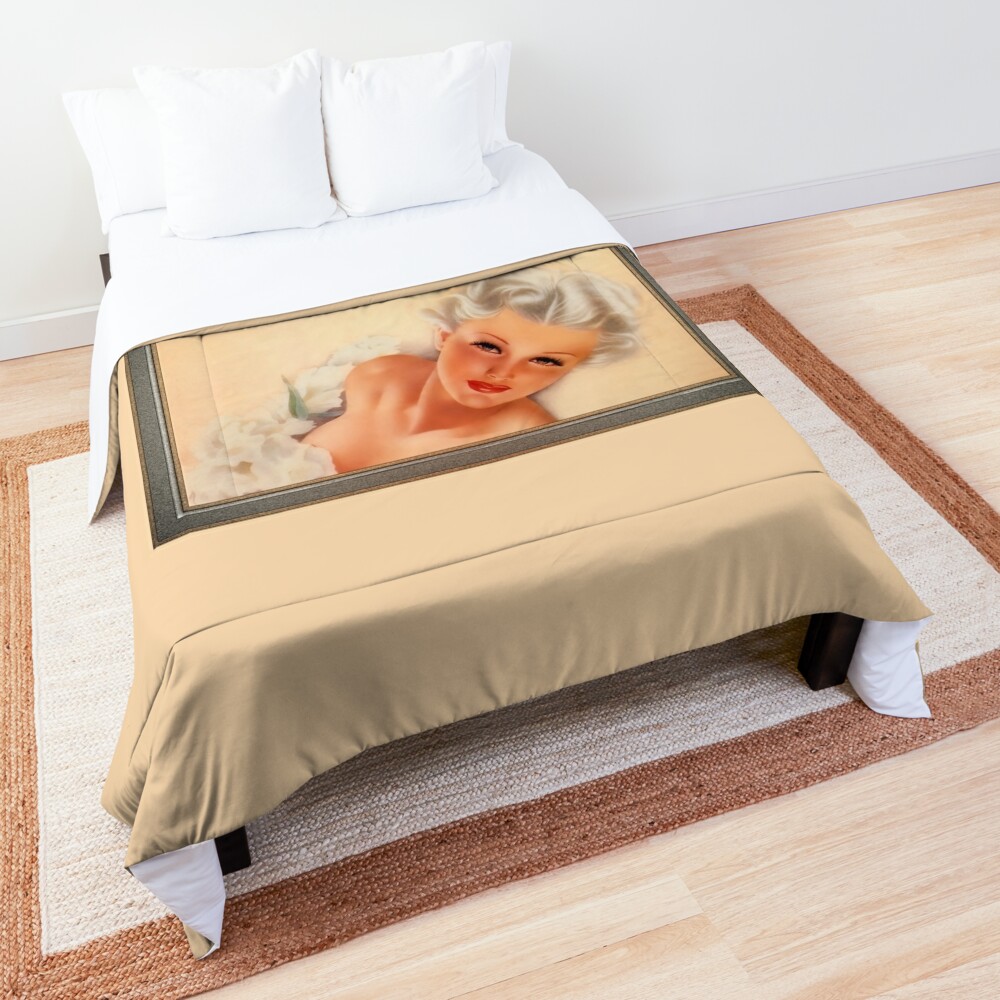
“Drömflicka,” skapad av peruansk konstnär Platshållarbild för Alberto Vargas (1896 – 1982) på 1940-talet, fångar den förföriska tjusningen av feminin skönhet och elegans med en stil som symboliserar glamouren från mitten av århundradets pin-up konst. Känd för sin noggranna uppmärksamhet på detaljer, Vargas kombinerar sakkunnigt känsliga delar av porträtt med mjuk, drömlika egenskaper som framkallar en känsla av både oskuld och sensualitet.
Detta konstverk, som drar tittarna in i en fridfull och nostalgisk värld, är fortfarande en av hans mest ikoniska verk. Vargas omisskännliga känsla för att fånga den mänskliga formen på ett sätt som är både realistiskt och idealiserat visas fullt ut i “Drömflicka.”
Innehållsförteckning
Ämne och komposition
I hjärtat av “Drömflicka” ligger en vacker, ungdomlig kvinna. Hon tittar mjukt upp, hennes uttryck ett av lugn och stilla lockelse. Ämnets funktioner är graciöst återgivna, uppvisar en hög nivå av förfining i konstnärens teknik. Hennes glödande hud, med sin porslinsliknande släthet, verkar nästan eteriskt mot den dämpade bakgrunden.
Det delikata ljusspelet i hennes ansikte framhäver mjukheten i hennes uttryck, betonar hennes stora, mörka ögon, fylliga läppar, och slät, försiktigt välvda ögonbryn. Den svaga kurvan på hennes nacke leder ner till hennes mjuka axlar, förstärker hennes graciösa och feminina figur.
Kvinnans platinablonda hår är stylat i mjuka vågor som sakta faller över hennes huvud, ramar in hennes ansikte som en gloria av siden. Den rufsiga effekten av hennes hår ger en känsla av rörelse, som om den var fångad i en mild bris, further adding to the dreamlike quality of the image. This characteristic of movement is contrasted with her calm, passive demeanor, inviting the viewer into a world of poised elegance.
Objekt och element
Surrounding the subject are subtle hints of nature, including soft white flowers that rest delicately around her, almost as if they have grown from the same delicate dreamlike state in which she exists. These floral elements are painted with soft strokes that blend seamlessly into the rest of the image, emphasizing the ethereal quality of the portrait. The flowers themselves appear almost weightless, with their petals depicted in a way that mimics the softness and fragility of the woman’s figure.
The background of the piece is a gentle wash of warm beige and peach tones, which enhances the overall softness of the scene. The delicate lightness of the background contrasts with the vividness of the subject’s face, which is the focal point of the painting. Vargas’s use of soft gradients in the background creates a hazy, dreamlike atmosphere, further inviting the viewer into a moment of quiet reverie.
Material och medium
Alberto Vargas was a master of his medium, and his work with oil paints in “Drömflicka” is a testament to his exceptional technique. The use of oils allowed him to achieve a smooth, flawless surface that enhances the lifelike quality of the subject’s skin and features.
The colors blend harmoniously, with an emphasis on soft pastels and subtle gradients that evoke a feeling of warmth and intimacy. Vargas’s brushwork is meticulous, visar sin skicklighet i att fånga ljusets känsliga nyanser, skugga, och struktur.
Den mjuka övergången mellan toner är nyckeln till bildens stämning, och smidigheten i Vargas slag ger motivet en känsla av att vara fångad i ett flyktigt ögonblick, som om bilden kunde smälta bort eller förskjutas med en enkel vindfläkt. Den slutliga effekten är en av polerad elegans och tidlös skönhet, vilket var karakteristiskt för Vargas signatur pin-up konst.
Stil och teknik
“Drömflicka” förkroppsligar Alberto Vargas signaturstil, en känd konstnär känd för sina pin-up-illustrationer som prydde omslagen till tidningar och annonser i mitten av 1900-talet. Hans verk är djupt rotat i traditionen av amerikansk pin-up-konst men går utöver tidens typiska representationer. While Vargas’s women were often depicted in playful, seductive poses, he infused each of his subjects with a sense of grace and sophistication that set him apart from other pin-up artists.
His style is a blend of realism and idealization, where the human form is rendered with a high degree of detail while maintaining an almost fantastical allure. The women in Vargas’s portraits, such as the one in “Drömflicka,” are idealized depictions of beauty, captured in moments of tranquility that evoke a sense of fantasy. Det här stycket, särskilt, reflects his mastery of creating an intimate connection with the viewer through the subject’s gaze and the tenderness of the scene.
Tema och humör
Det centrala temat för “Drömflicka” revolves around the celebration of femininity, skönhet, och nåd. The mood is one of serenity, lugna, and fantasy. Ämnet är varken öppet sexualiserat eller överdrivet stiliserat på ett sätt som förringar hennes naturliga skönhet. I stället, verket inbjuder till kontemplation av den mjuka tjusningen som finns i lugna stunder. Färgerna och den milda kompositionen utstrålar värme, stillhet, och tidlös elegans, som ekar fantasivärldarna från Hollywoods glamours gyllene era.
Den övergripande stämningen är också en av nostalgi, som betraktaren förs tillbaka till en tidigare tid då sådana porträtt av kvinnor var symboliska för både klass och lockelse. Den mjuka, bildens eteriska egenskaper tjänar som en påminnelse om en mer oskyldig, ändå förtrollande, vision av feminin skönhet, en som är obefläckad av det moderna livets komplexitet.
Slutsats
“Drömflicka” by Alberto Vargas stands as a magnificent example of mid-20th-century art that celebrates the beauty of the human form and captures the viewer’s imagination through delicate realism and idealized femininity. Through his use of soft tones, graceful composition, and mastery of oil painting, Vargas brings to life an image that is both a product of its time and timeless in its elegance.
The woman in this piece is an ethereal vision, whose quiet charm and beauty continue to captivate audiences even decades after its creation. This artwork is not just a portrait; it is a dream captured in paint, an embodiment of grace, skönhet, and the fantasy of perfect femininity.
Detta är en remastrad digital konst reproduktion av en allmän egendomsbild som är tillgänglig för köp online som en rullat canvastryck.
Konstnärsbio
Info nedan från Wikipedia.org
Född i Arequipa, Peru, han var son till den uppmärksammade peruanska fotografen Max T. Vargas. Alberto Vargas flyttade till USA i 1916 efter att ha studerat konst i Europa, Zürich, och Genève före första världskriget.
Medan han var i Europa stötte han på den franska tidningen La Vie Parisienne, med omslag av Raphael Kirchner, som han sa var ett stort inflytande på hans arbete.
Hans tidiga karriär i New York inkluderade arbete som konstnär för Ziegfeld Follies och för många Hollywoodstudior. Ziegfeld hängde sin tavla av Olive Thomas på teatern, och hon betraktades som en av de tidigaste Vargas -tjejerna.
Vargas’ det mest kända filmverket var för affischen av 1933 filmen The Sin of Nora Moran, som visar en nästan naken Zita Johann i en situation av desperation. Affischen kallas ofta för en av de bästa filmaffischerna som någonsin gjorts.
Han blev allmänt känd på 1940-talet som skaparen av ikoniska pin-ups från andra världskriget-eran för Esquire-tidningen, känd som “Vargas Girls.” Mellan 1940 och 1946 Vargas producerad 180 målningar till tidningen.
Noskonsten på många amerikanska och allierade flygplan från andra världskriget inspirerades och anpassades från dessa Esquire-pin-ups, liksom George Petty, och andra artister.