

Duke Karl Insulting the Corpse of Klaus Fleming
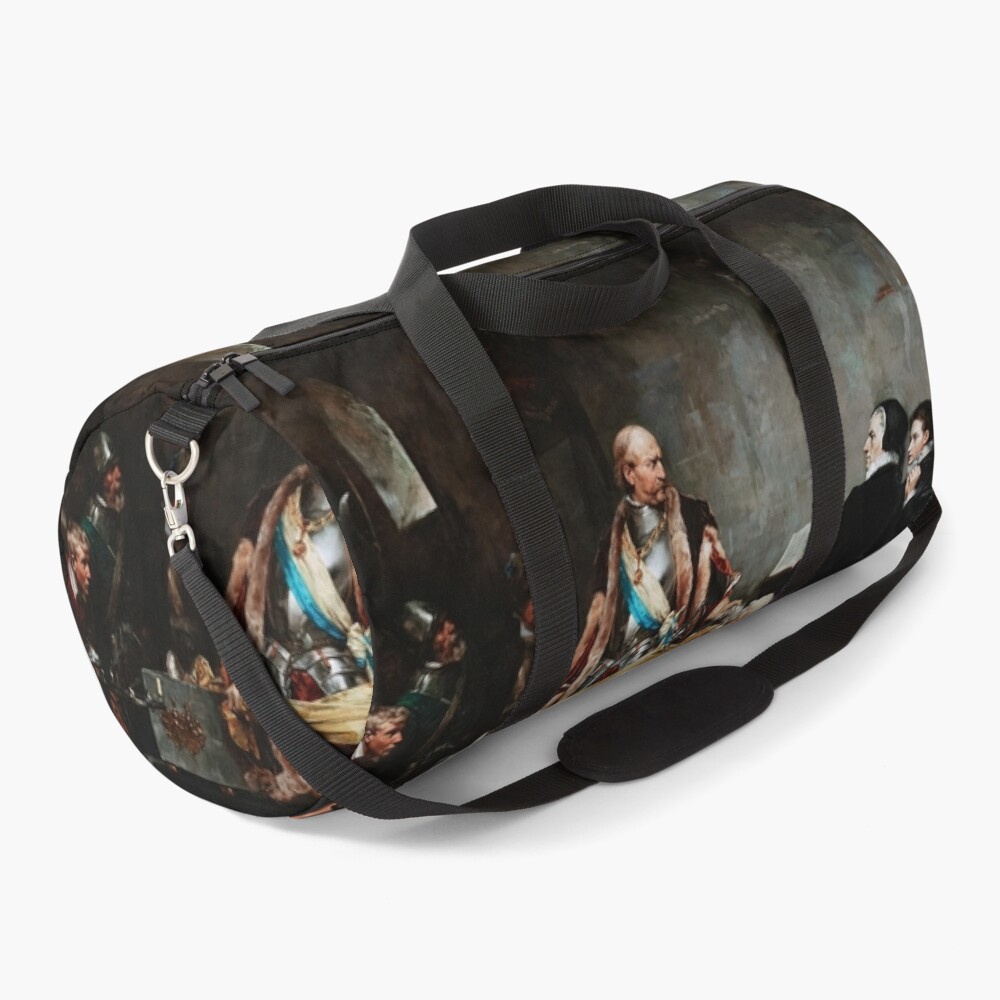
Le duc Karl insultant le cadavre de Klaus Fleming c1878 par le peintre finlandais Albert Edelfelt (1854 – 1905); noted for his natural and realist approach to painting historical scenes and portraits.
This captivating classical work of art depicts a harsh scene with Duke Charles IX of Sweden (1550 – 1611) who reigned as King of Sweden from 1604 à 1611; even though he was Sweden’s virtual ruler from 1599 à 1604.
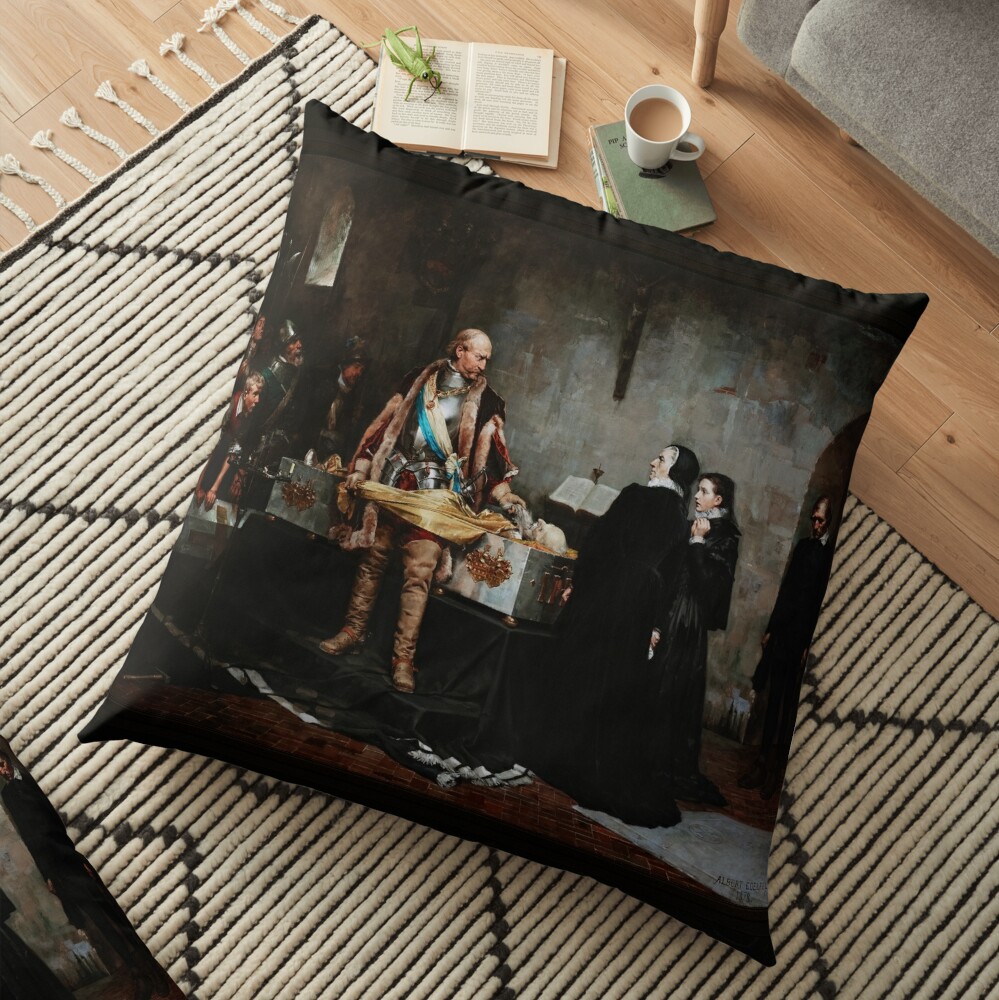
The Duke is pulling on the beard of the dead Klaus Fleming (1535 – 1597); a Finnish born member of the Swedish nobility, admiral and a trustee of King John III (1537 – 1592) and King Sigismund Vasa (1566 – 1632); while he lays in his coffin.
Standing at the head of the coffin while this disrespectful act takes places is the wife and daughter of Klaus Fleming, avec sa femme jetant un regard négatif au duc et sa fille est déconcertée.
Aux côtés de la femme et de la fille se trouve le gardien, et au pied du cercueil se trouve un jeune homme tenant le couvercle du cercueil, tandis que des soldats en uniforme et armés se tiennent derrière lui.
Il s'agit d'une reproduction de maîtres anciens d'art numérique remasterisée d'une image du domaine public qui est disponible sous forme d'impression sur toile en ligne.
Informations ci-dessous dérivées de Wikipedia.org
Albert est né de l'architecte suédois Carl Albert Edelfelt (1818 – 1869); qui vivait en Finlande et Alexandra Brandt (1833–1901) en juillet 21, 1854 en Finlande.
Il a commencé ses études artistiques à l'âge de 15 ans, à l'École de dessin de la Société finlandaise des arts à Helsinki, Finlande et a continué comme élève du peintre de genre finlandais Adolf von Becker (1831 – 1909) de 1871 à 1873.
Afterwards he received an art scholarship from the Finnish Government to study history painting at the Royal Academy of Fine Arts in Antwerp, la Belgique; where he studied under Belgian Historical and Portrait Painter Nicaise de Keyser (1813 – 1887) de 1873 à 1874, which led to him winning an award of excellence for the deathbed painting of Alexander the Great.
Puis à partir de 1874 à 1878 he studied in Paris, France under the French Painter Jean-Léon Gérôme (1824 – 1904) at the École Nationale des Beaux-Arts.
Dans 1878 his work Duke Charles IX of Sweden insulting the corpse of his enemy Klaus Fleming enjoyed great success in Finland though it did not get much attention in Paris; but a year later he had his first Paris Salon success, with his piece The Burnt Village; which portrayed a scene of the Finnish peasant revolt of 1596.
During the 1880s Albert began to include some of the characteristics of the Impressionist movement into his natural outdoor painting settings, but stayed well within the realist movement, concentrating on the precise details and complex color palate.
As an accomplished portrait painter Albert painted my famous individuals including that of the French chemist Louis Pasteur (1822 – 1895) and Finnish Soprano Opera Singer Aino Ackté (1876 – 1944), without posing his subjects; but capturing them in their natural everyday environment.