

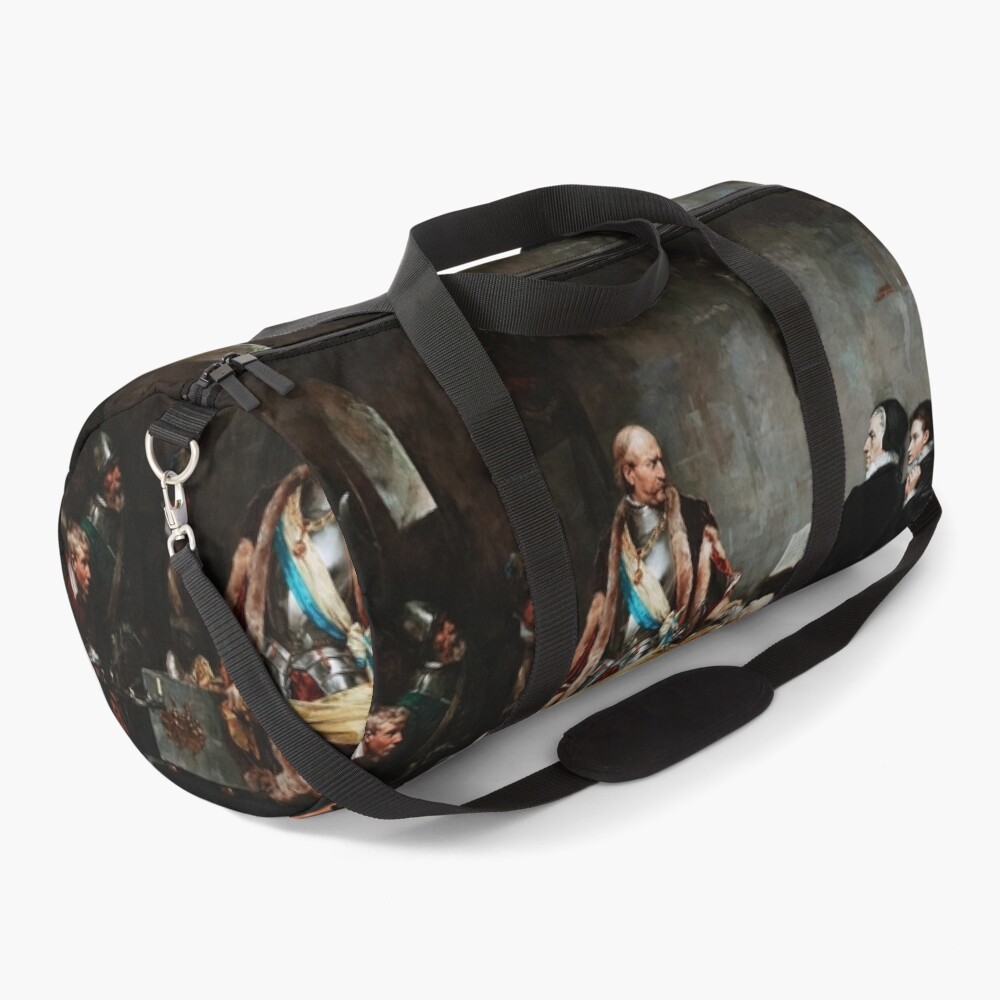
Duke Karl Insulting the Corpse of Klaus Fleming
Książę Karol znieważający zwłoki Klausa Fleminga ok. 1878 r. autorstwa fińskiego malarza Alberta Edelfelta (1854 – 1905); noted for his natural and realist approach to painting historical scenes and portraits.
This captivating classical work of art depicts a harsh scene with Duke Charles IX of Sweden (1550 – 1611) who reigned as King of Sweden from 1604 do 1611; even though he was Sweden’s virtual ruler from 1599 do 1604.
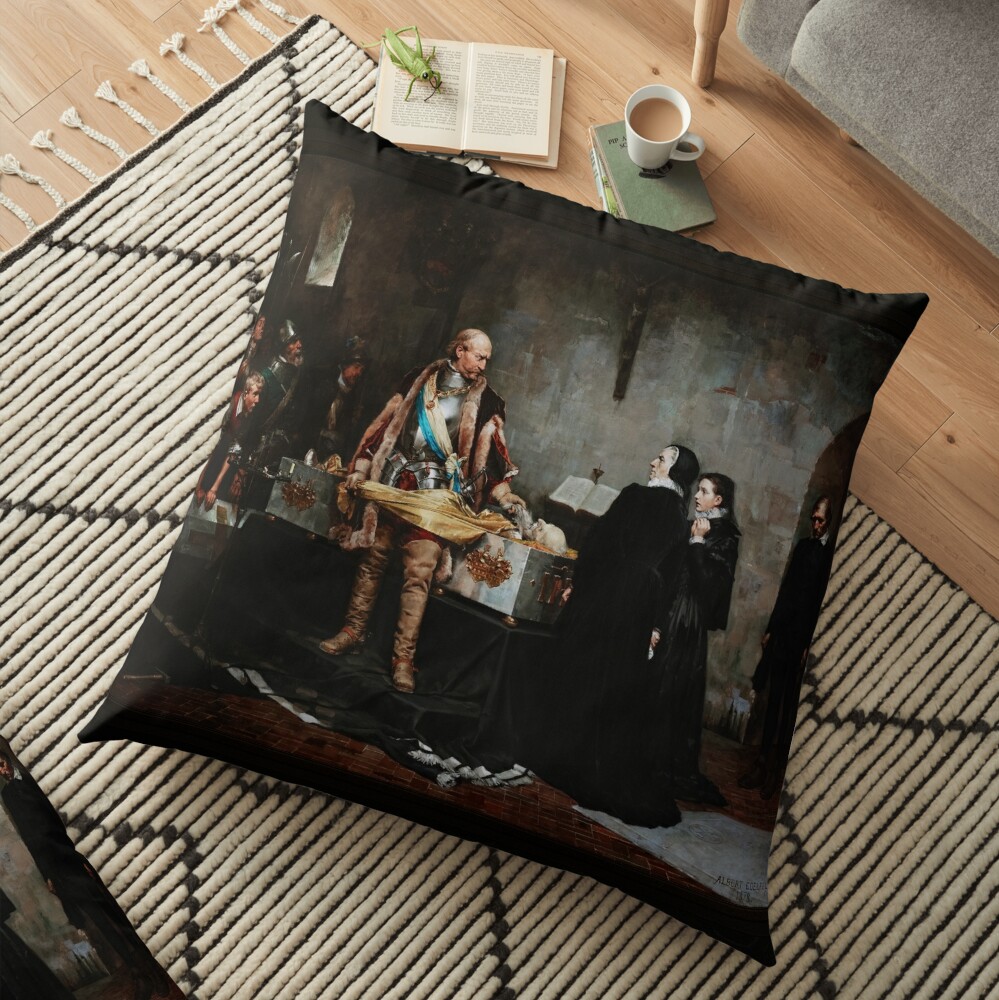
The Duke is pulling on the beard of the dead Klaus Fleming (1535 – 1597); a Finnish born member of the Swedish nobility, admiral and a trustee of King John III (1537 – 1592) and King Sigismund Vasa (1566 – 1632); while he lays in his coffin.
Standing at the head of the coffin while this disrespectful act takes places is the wife and daughter of Klaus Fleming, with his wife giving the Duke a negative stare and his daughter is taken aback.
To the side of the wife and daughter appears to be the caretaker, and at the foot of the coffin is a young man holding the lid of the coffin, while soldiers in uniform and armament stand behind him.
Jest to zremasterowana reprodukcja starych mistrzów sztuki cyfrowej obrazu należącego do domeny publicznej, która jest dostępna jako druk na płótnie online.
Informacje poniżej pochodzą z Wikipedia.org
Albert was born to the Swedish architect Carl Albert Edelfelt (1818 – 1869); who lived in Finland and Alexandra Brandt (1833–1901) on July 21, 1854 in Finland.
He began his artistic studies when he was 15 lat, at the Drawing School of the Finnish Art Society in Helsinki, Finland and continued as a student of Finnish Genre Painter Adolf von Becker (1831 – 1909) z 1871 do 1873.
Następnie otrzymał stypendium artystyczne od rządu fińskiego na studia malarstwa historycznego w Królewskiej Akademii Sztuk Pięknych w Antwerpii, Belgia; gdzie studiował u belgijskiego malarza historycznego i portretowego Nicaise de Keyser (1813 – 1887) z 1873 do 1874, co doprowadziło do zdobycia przez niego nagrody za doskonałość za obraz Aleksandra Wielkiego na łożu śmierci.
Następnie od 1874 do 1878 studiował w Paryżu, Francja pod rządami francuskiego malarza Jeana-Léona Gérôme’a (1824 – 1904) w École Nationale des Beaux-Arts.
W 1878 jego dzieło, książę szwedzki Karol IX, znieważające zwłoki swego wroga Klausa Fleminga, odniosło wielki sukces w Finlandii, choć w Paryżu nie wzbudziło większego zainteresowania; ale rok później odniósł swój pierwszy sukces w Salonie Paryskim, ze swoim utworem Spalona wioska; który przedstawiał scenę fińskiego buntu chłopskiego 1596.
During the 1880s Albert began to include some of the characteristics of the Impressionist movement into his natural outdoor painting settings, but stayed well within the realist movement, concentrating on the precise details and complex color palate.
As an accomplished portrait painter Albert painted my famous individuals including that of the French chemist Louis Pasteur (1822 – 1895) and Finnish Soprano Opera Singer Aino Ackté (1876 – 1944), without posing his subjects; but capturing them in their natural everyday environment.