

Elegância em Preto, American Sunday Cover Illustration
Elegância em Preto, American Sunday Cover Illustration c1912 by American Painter Rolf Armstrong (1889 – 1960); Artista Pinup, Pintor e Ilustrador, e que é considerado o padrinho da Pin-up Art americana.
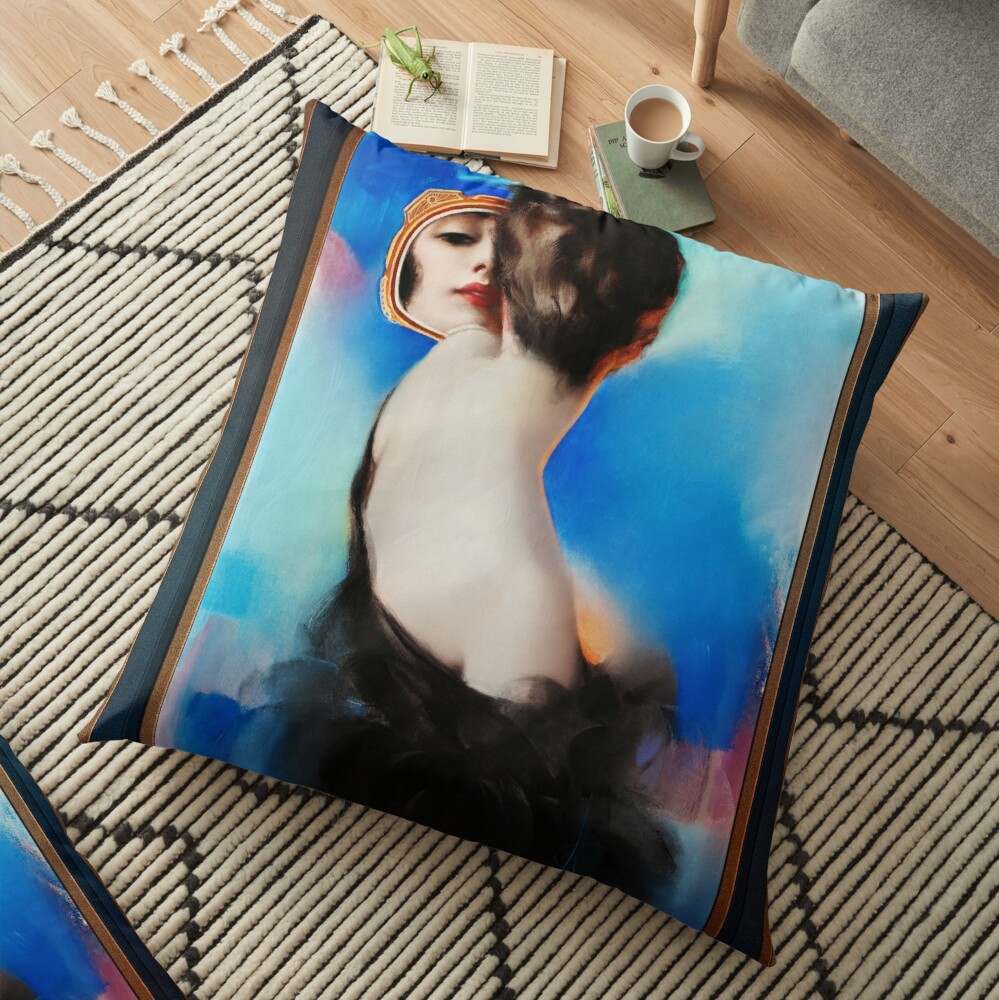
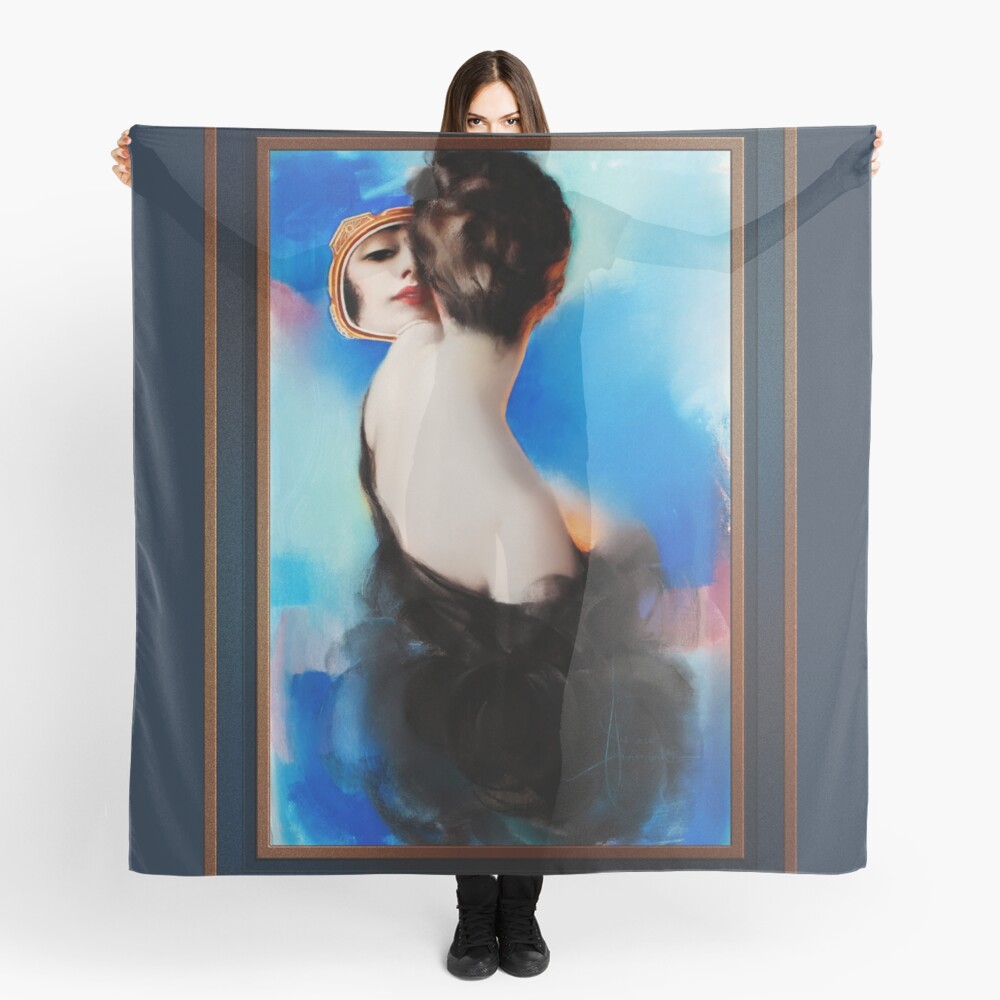
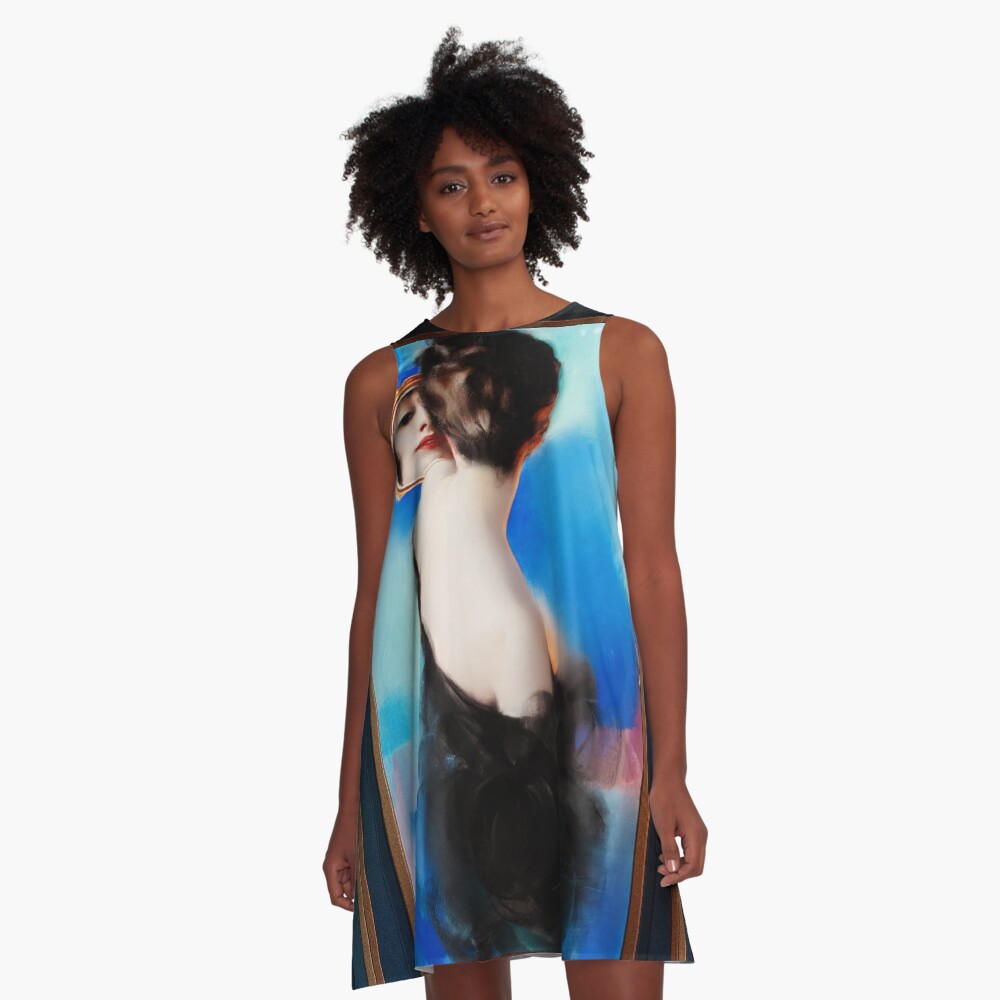
This is a late Art Nouveau period illustration of a young lady in an elegant black dress comprising large looping bows that create a floral like appearance.
She is looking into a small hand mirror with a decorative frame that is held close to her left shoulder so that we can see part of her face as we view the back of her head and bare shoulders.
The background is awash with different hues of blue and white with added touches of orange, pink and a little grey completing the piece.
Esta é uma reprodução remasterizada de arte digital de antigos mestres de uma imagem de domínio público que está disponível como um canvas art online.
Informações abaixo de Wikipédia.org
Rolf Armstrong was born John Scott Armstrong in Bay City, Michigan em abril 21, 1889, para Richard e Harriet (Scott) Armstrong. Seu pai era dono da Boy-Line Fire Boat Company, que incluía uma linha de navios de passageiros. Alguns foram implantados em Chicago para uso na Feira Mundial de Chicago, em 1893.
No entanto, os negócios e a família do pai estavam passando por dificuldades, e a propriedade da família foi perdida devido à execução hipotecária. Em 1899, a família mudou-se para Detroit, Michigan. O pai de Rolf morreu em 1903, e um ano depois ele e sua mãe se mudaram para Seattle, Washington, seguindo os passos de seu irmão mais velho, Guilherme, who had moved there a year earlier. By now Rolf’s artistic interests were emerging to more than a part-time pleasure.
He moved to Chicago in 1908, where he later studied at the Art Institute. He then went on to New York, onde estudou com Robert Henri. Depois de uma viagem a Paris em 1919 estudar na Académie Julian, ele voltou para Nova York e abriu um estúdio. Em 1921 ele foi para Minneapolis para estudar produção de calendários na Brown & Bigelow.
Durante as décadas de 1920 e 1930, seu trabalho apareceu em muitas partituras, bem como nas capas de muitas revistas, mais famoso por revistas de fãs de cinema, como Photoplay e Screenland. Seu trabalho consiste principalmente de mulheres; Maria Pickford, Bebe Daniels, e Greta Garbo são apenas alguns dos numerosos que pintou.
O trabalho de Armstrong para a Pictorial Review foi em grande parte responsável por aquela revista alcançar uma circulação de mais de dois milhões de exemplares. 1926. Um ano depois, ele foi o artista de calendário mais vendido na Brown & Bigelow. Em 1930, A RCA o contratou para pintar pin-ups para divulgar seus produtos, e em 1933 o Tomás D. Murphy Calendar Company signed him to produce a series of paintings for their line.
In March 1940, Jewel Flowers, a girl from Lumberton, North Carolina, sent a picture of herself to Armstrong in response to an advert he had placed in the New York Times. Armstrong, 50 at the time, had been based at the Hotel des Artistes on West 67th Street in Manhattan since 1939, and was looking for new models.
He invited Flowers for an interview. On March 25, 1940, Flowers started modeling for Armstrong. Their professional collaboration and friendship lasted for two decades. The first painting, titled “How am I doing?”, reportedly because Flowers, unused to modeling, repeatedly asked Armstrong “How am I doing?” during the modeling session, was first published after World War II had started.
It was Brown & Bigelow’s best selling calendar for 1942 at a time when the company sold millions of calendars in America, and it became one of Armstrong’s most reproduced pictures. Flowers was popular with American servicemen during World War II, some of whom sent her letters proposing marriage. Armstrong’s calendars and silhouettes of Flowers were copied onto bombers and other planes as nose art and painted on tank turrets.
She became so well known during the war, although more as a famous face than by name, that a serviceman’s letter addressed simply as “Jewel Flowers, New York City” was delivered correctly. For many American servicemen abroad, she represented the “Why We Fight” spirit. U.S. President Franklin D. Roosevelt’s government enlisted her to help promote war bonds.
The January 1, 1945 edition of TIME magazine included Armstrong’s “Toast of the Town” painting of Flowers in an article about Calendar Art. The article noted that calendars with “girl paintings” were “bought heavily by foundries, machine shops, auto-supply dealers.”
Flowers married in 1946. She and her husband lived in several places while he tried a number of business ventures, including Laguna Beach, California, Greenville, South Carolina, Reno, Nevada, where she reportedly worked in as a card dealer for a time, and New York City. According to Michael Wooldridge, coauthor of Pin up Dreams: A arte glamourosa de Rolf Armstrong, Armstrong ligou para ela várias vezes durante o período em que ela seguia o marido de um lugar para outro., para tentar persuadi-la a voltar para Nova York e ser modelo para ele.
Sua carreira de modelo terminou com a morte de Armstrong em 1960. Ele deixou uma grande parte de sua riqueza pessoal para Flowers. No total, Armstrong criou cerca de cinquenta a sessenta obras usando Flowers como modelo.
Rolf Armstrong morreu em 1960 na ilha de Oahu, Havaí como um dos melhores “pôster” artistas da primeira metade do século XX.