

Elizabeth Woodville
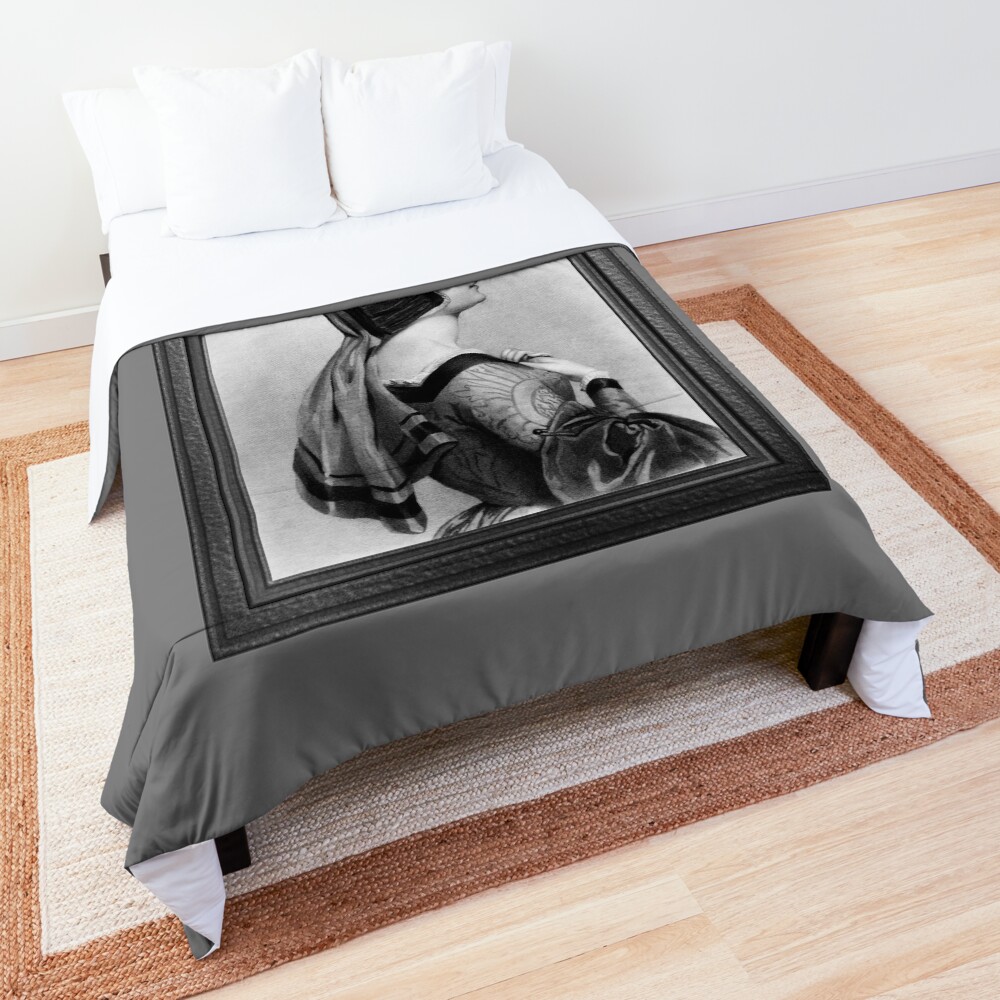
Elizabeth Woodville, Regina Elisabetta d'Inghilterra (1437 – 1492) c1465; wife of King Edward IV (1442 – 1483) of England.

Elizabeth is illustrated in a period costume of the day consisting of a ruffled hat, with a cap front and an attached kerchief at the back flows down to the lower back
She is also wearing a white blouse , underneath a patterned dress with a wide dark band along the top perimeter is matched on the sleeve cuff to a smaller extent; and a wide ruffle material that goes from part of the upper arm to the elbow.
Elizabeth is depicted wearing no jewelry, and she is looking up into the distance with her hands folded across her chest.
Questa hè una ripruduzzione di l'antichi maestri d'arte digitale retouched di una maghjina di duminiu publicu chì hè dispunibule in linea cum'è a rolled canvas art print.
Sottu Info Courtesy Wikipedia.org
Elizabeth Woodville (also spelled Wydville, Wydeville, or Widvile) (c. 1437 – 8 Ghjugnu 1492) was queen of England as the spouse of King Edward IV from 1464 finu à a so morte in 1483.
At the time of her birth, her family was of middle rank in the English social hierarchy. Her mother, Jacquetta of Luxembourg, had previously been an aunt-by-marriage to Henry VI. Elizabeth’s first marriage was to a minor supporter of the House of Lancaster, Sir John Grey of Groby. He died at the Second Battle of St Albans, leaving Elizabeth a widowed mother of two sons.
Her second marriage to Edward IV was a cause célèbre of the day, thanks to Elizabeth’s great bellezza and lack of great estates. Edward was the first king of England since the Norman Conquest to marry one of his subjects, and Elizabeth was the first such consort to be crowned queen. Her marriage greatly enriched her siblings and children, but their advancement incurred the hostility of Richard Neville, Earl of Warwick, ‘The Kingmaker’, and his various alliances with the most senior figures in the increasingly divided royal family.
This hostility turned into open discord between King Edward and Warwick, leading to a battle of wills that finally resulted in Warwick switching allegiance to the Lancastrian cause, and to the execution of Elizabeth’s father, Richard Woodville, in 1469.
After the death of her husband in 1483, Elizabeth remained politically influential even after her son, briefly proclaimed King Edward V of England, was deposed by her brother-in-law, Richard III. Edward and his younger brother Richard both disappeared soon afterward, and are presumed to have been murdered.
Elizabeth subsequently played an important role in securing the accession of Henry VII in 1485. Henry married her daughter Elizabeth of York, ended the Wars of the Roses, and established the Tudor dynasty. Through her daughter, Elizabeth was a grandmother of the future Henry VIII. Elizabeth was forced to yield pre-eminence to Henry VII’s mother, Lady Margaret Beaufort; her influence on events in these years, and her eventual departure from court into retirement, remain obscure.