

Enchantress: A Glimpse into Exotic Beauty by Luis Ricardo Falero
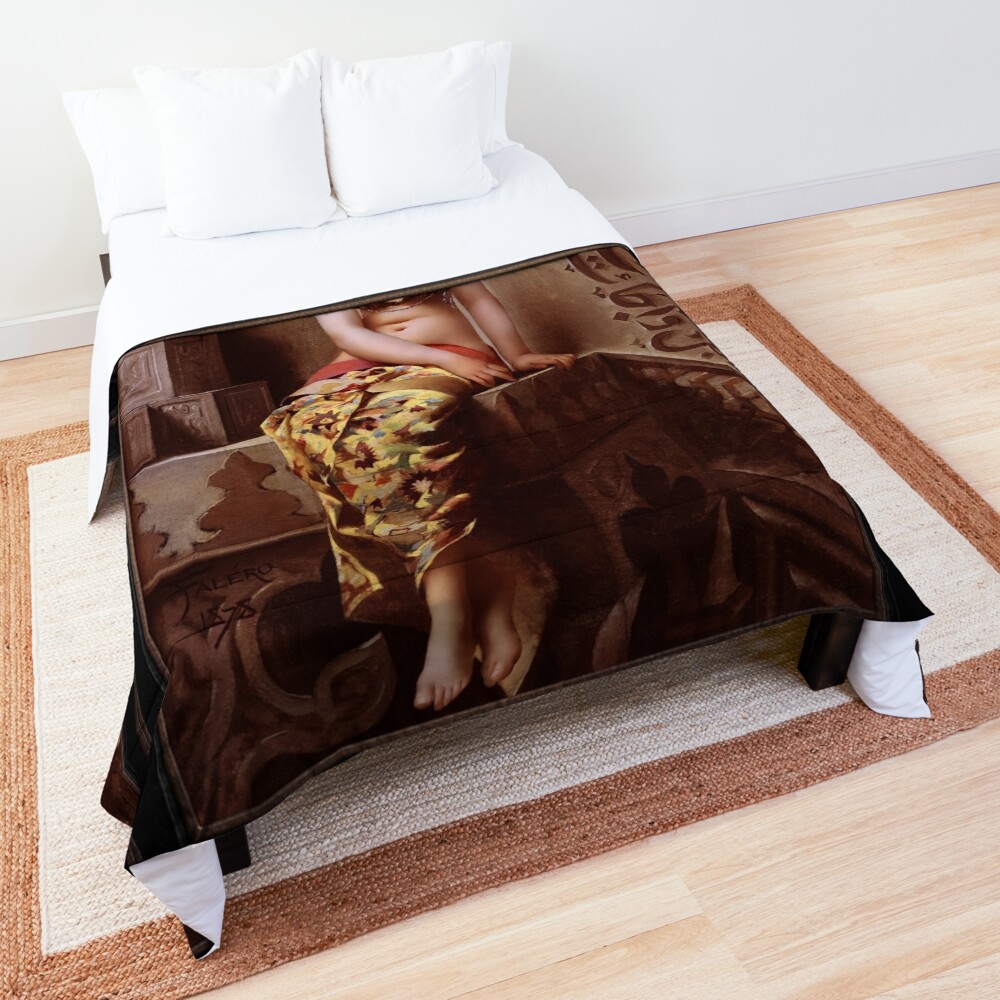
Enchantress by Luis Ricardo Falero (1851-1896) was a Spanish painter known for his depictions of idealized figures within richly detailed, often exotic settings. His work frequently explored themes of beauty, Sensualitéit, and the allure of faraway lands, reflecting the popular Orientalist trends prevalent in 19th-century European art. “Enchantress,” gemoolt an 1878, exemplifies these characteristics with remarkable clarity and technical skill. The painting presents a captivating scene featuring a young woman seated upon an ornate architectural structure, evoking a sense of mystery and quiet contemplation.
Inhaltsverzeechnes
Zesummesetzung & Astellung
The composition is carefully structured to draw the viewer’s eye towards the central figure. Falero utilizes a triangular arrangement, with the woman forming the apex and the surrounding architecture providing a stable base. The setting appears to be an interior space, possibly within a palace or temple, suggested by the elaborate carvings and decorative elements that frame the scene on either side. These architectural details are rendered with meticulous precision, showcasing Falero’s mastery of perspective and his ability to create a convincing sense of depth. The background is softly blurred, further emphasizing the figure and isolating her from the surrounding environment. This technique creates an intimate atmosphere, inviting the viewer into the woman’s private world.
D'Figur: Pose & Kleedung
The young woman occupies the majority of the canvas space, commanding attention with her graceful pose and captivating gaze. She is seated in a relaxed yet poised manner, one leg slightly extended while she rests against the architectural ledge. Her body language suggests a state of quiet introspection or perhaps a wistful longing. The figure’s attire contributes significantly to the painting’s overall aesthetic. She wears a revealing bodice adorned with intricate beading and a flowing shawl draped across her lap and shoulders. The shawl is patterned with vibrant floral motifs in shades of yellow, Gold, a brong, providing a striking contrast against her pale skin tone. The combination of these elements creates an image that is both alluring and refined.
Faarfpalette & LIGEL
Dem Falero seng Benotzung vu Faarf ass masterful, employing a warm and muted palette to create a sense of intimacy and tranquility. Earth tones – browns, ocher, and creams – dominate the scene, reflecting the natural materials of the architecture and complementing the woman’s skin tone. The vibrant colors of the shawl provide a focal point, d'Aen ze zéien an visuell Interessi ze addéieren. Lighting plays a crucial role in shaping the mood of the painting. A mëll, diffused light source illuminates the figure from above, casting gentle shadows that accentuate her form and create a sense of depth. This lighting technique also contributes to the overall atmosphere of mystery and enchantment.

Gesiichtsausdrock & Detailer
The woman’s face is rendered with remarkable detail, capturing a subtle expression of melancholy or perhaps quiet amusement. Hir Aen sinn erofgefall, suggesting introspection, while her lips are slightly parted in an enigmatic smile. Falero’s attention to detail extends to the woman’s hair, which is styled in elaborate curls and adorned with delicate jewelry. The rendering of skin tones is particularly noteworthy, demonstrating Falero’s skill in capturing the nuances of human anatomy and conveying a sense of realism.
Kënschtleresch Afloss & Kontext
“Enchantress” reflects several artistic trends prevalent during the 19th century. The Orientalist movement, which gained popularity throughout Europe, sought to romanticize cultures from the Middle East and North Africa, often portraying them through an idealized lens. Falero’s painting aligns with this trend by depicting a woman in exotic attire within a richly decorated setting. Zousätzlech, the work demonstrates influences from Academic art, charakteriséiert duerch seng Schwéierpunkt op technesch Fäegkeet, realistesch Representatioun, a klassesch Zesummesetzung. Déi virsiichteg Detail, equilibréiert Zesummesetzung, and refined aesthetic all point to Falero’s training within the traditional academic system.
Signature & Datum
The painting is signed “Falero 1878” in elegant script at the bottom left corner, confirming its authorship and date of creation. This signature adds a layer of authenticity and historical significance to the artwork. The presence of the date provides valuable insight into the context within which the painting was created, reflecting the artistic trends and cultural values of the late 19th century.
Kënschtler Bio ofgeleet Wikipedia.org
De Falero gouf zu Granada gebuer an huet ursprénglech eng Karriär an der spuenescher Marine verfollegt, awer huet et seng Elteren Enttäuschung opginn; wéi hien decidéiert huet op Paräis ze reesen, wou hien Konscht studéiert huet, Chimie a Maschinnebau.
Wärend ass Studien a Chimie a Maschinnebau; hien huet d'Experimenter als déi hien huet misse maachen ze geféierlech betruecht, sou datt hien dozou féiert seng Opmierksamkeet eleng op Molerei ze fokusséieren.
Als Resultat gouf hie Student vum franséische Portraitmoler an Orientalist Gabriel-Joseph-Marie-Augustin Ferrier (1847 – 1914). No Paräis, hien ass op London geplënnert, wou hie weider studéiert huet, a schliisslech niddergelooss.
De Falero hat e besonneschen Interêt un der Astronomie an huet Himmelskonstellatiounen a ville vu senge Wierker agebaut, sou wéi “D'Bestietnes vun engem Koméit” an “Zwilling Stars”. Säin Interesse a Wësse vun der Astronomie hunn hien och dozou bruecht d'Wierker vum Camille Flammarion ze illustréieren.
An 1896, d'Joer vu sengem Doud, De Maud Harvey huet de Falero wéinst Pappa verklot. De Kostüm behaapt datt de Falero den Harvey verféiert huet wéi se war 17, als éischt säin Heemechtsdéngscht, an duerno säi Modell. Wéi hien entdeckt hatt war schwanger, hien huet hatt entlooss.
Si huet de Fall gewonnen a gouf fënnef Shilling pro Woch ausgezeechent fir hir Kanner z'ënnerstëtzen. De Falero ass am University College Hospital gestuerwen, London, am Alter vun 45
Dëst ass eng retouched digital Konscht al Master Reproduktioun vun engem Public Domain Bild dat als verfügbar ass gerullt online online.