

서정시의 에라토 뮤즈
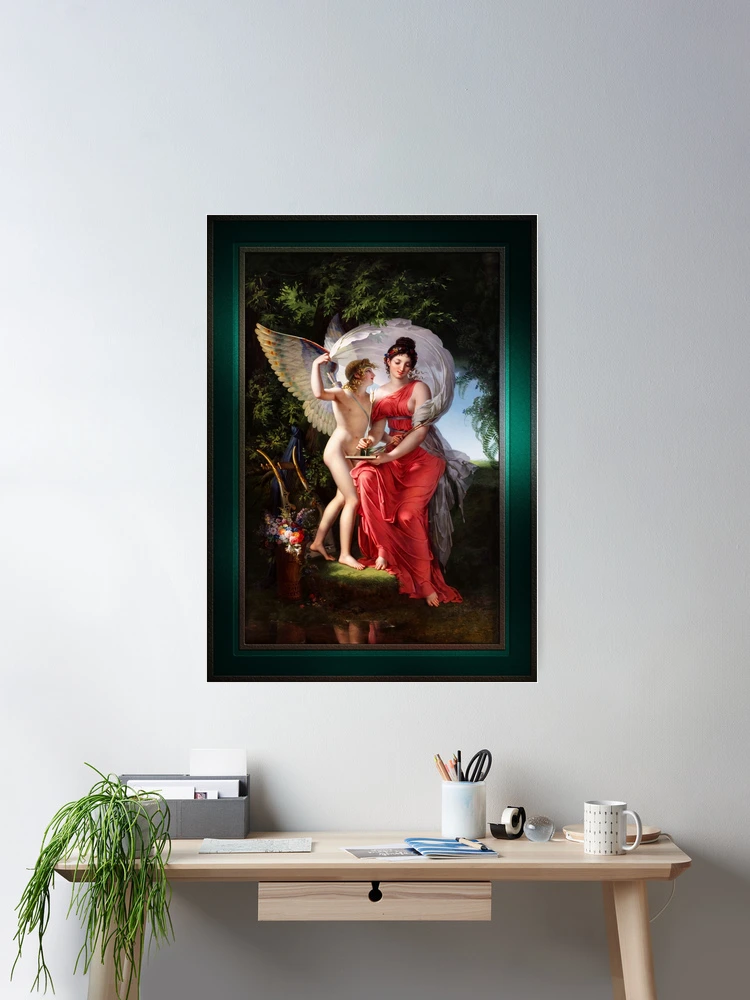
제목의 그림 에라토, Muse of Lyrical Poetry, 주위에 만들어졌습니다 1800 프랑스 예술가의 찰스 마이니어 (1763-68 -1832), is a classical work that evokes a sense of ethereal beauty and harmonious unity between the divine and mortal realms. It is a stunning example of Neoclassical art, a period characterized by the revival of classical forms, 이상, and themes. This particular piece embodies the spirit of the Enlightenment era, which sought to reconnect with the intellectual and aesthetic traditions of Ancient Greece and Rome. Meynier’s representation of Erato, the Muse of lyrical and love poetry, is both tender and allegorical, capturing the harmonious blend of art, 사랑, 그리고 신성한.
목차
주제와 구성
At the heart of the composition is the figure of Erato, depicted as a young, radiant woman dressed in flowing classical attire. She sits gracefully on a grassy knoll, with her posture relaxed yet poised. Her red drapery, which clings delicately to her form, enhances her elegance while contrasting beautifully with the soft greens of the surrounding landscape.
The rich texture of her dress and the fluidity of the fabric suggest the weightlessness and ethereal quality associated with the Muse. Her delicate features and serene expression convey both the wisdom and beauty of the Muse, embodying the ideals of classical femininity and intellectual grace.
Erato holds a lyre, the symbol of her domain as the Muse of lyrical poetry. The lyre, finely crafted, is an important object within the painting, symbolizing the connection between the Muse and the poetic arts. Its precise depiction in the artist’s brushwork emphasizes the importance of music and poetry in the classical tradition.
With one hand, Erato gently cradles the instrument, while with her other hand, she touches a quill poised above a writing tablet, reinforcing her role as a conduit between divine inspiration and human creativity. The interplay between the quill and the lyre further accentuates the dual nature of lyrical poetry: the written word and the music of the soul.
Accompanying Erato is a youthful figure, a cherubic, winged male figure, possibly representing Cupid or another divine presence associated with love and inspiration. He is shown standing behind Erato, his wings extending in soft, feathered curves. His posture is playful yet tender as he gazes at Erato, and his involvement with the scene adds an element of divine support, perhaps suggesting that love is an essential muse for the creation of lyrical poetry. The youthful figure holds a bow in one hand, a symbol of love’s power, while the other hand supports a golden arrow.
The background of the artwork consists of a dense, 그러나 섬세합니다, 자연 환경. 부드러운, verdant landscape stretches out into the distance, where a gentle stream and foliage blend seamlessly into the sky. The light that bathes the scene is soft and natural, suggesting an idealized landscape bathed in divine light. The tranquil and harmonious background enhances the serene mood of the work and reinforces the notion of a celestial world that is intertwined with human emotions and artistic creation.
스타일과 테크닉
Charles Meynier’s style is firmly rooted in the Neoclassical tradition. The artist employs clean lines, 이상적인 비율, and smooth brushwork to convey the beauty of the human form. The figures are rendered with meticulous attention to detail, especially the soft folds of the clothing and the play of light and shadow on the skin.
붓놀림, though precise, possesses a certain fluidity, which enhances the liveliness of the figures, especially Erato and her youthful companion. Meynier’s mastery of light and color is particularly evident in the way the figures seem to glow against the darker backdrop of foliage, evoking a sense of divine radiance.
The artist’s use of color further contributes to the overall mood of the painting. The rich red of Erato’s dress symbolizes passion and vitality, 부드러운 동안, almost translucent whites of her veil and wings signify purity and otherworldliness. The soft greens and browns of the landscape ground the figures in nature, yet they are bathed in a celestial light that elevates the scene to a divine level. The warm tones of the cherub’s skin and the delicate pinks and blues in the flowers of the foreground all work together to create an atmosphere that is both tranquil and harmonious.
테마와 분위기
The primary theme of 에라토, Muse of Lyrical Poetry is the divine inspiration that guides poets and musicians. The connection between love, 미술, and poetry is central to the Neoclassical ideals of intellectual and emotional balance. The serene and harmonious composition of the painting conveys a sense of tranquility, making it a celebration of the arts as a means of expressing the beauty and complexity of the human experience. The depiction of Erato as a graceful and nurturing figure, surrounded by symbols of love and poetry, conveys a message that creation, whether through music, 시, or art, is divinely inspired.
The mood of the painting is one of reverence, 침착한, 그리고 영감. The figures of Erato and the youthful companion are depicted in a tender moment of interaction, their gazes soft yet full of meaning. This creates a contemplative mood, inviting the viewer to reflect on the themes of divine inspiration, creativity, 그리고 사랑.
The natural elements in the background, lush foliage, gentle light, and distant skies—suggest an idealized world where art and nature coexist in harmony. The soft light and glowing figures also evoke a sense of reverence for the classical world, a world where the divine and human realms are interconnected.
사물과 상징주의
In addition to the lyre and the quill, several other objects in the painting contribute to its allegorical meaning. The bouquet of flowers at the foot of the scene symbolizes the beauty and fragility of life, much like the fleeting nature of poetic inspiration. The cherub’s bow and arrow, 앞서 언급했듯이, represent love—an essential source of poetic creation in many classical traditions. These objects work together to weave a narrative of divine inspiration, 미술, and the eternal connection between beauty, 사랑, 그리고 창의성.
프랑스 화가의 서정시의 에라토 뮤즈 c1800 찰스 마이니어 (1763-68 – 1832); 18세기 후반과 19세기 초반의 역사적, 신화적 주제.
이것은 잔디 덮인 선반에 물가에 앉아 있는 젊은 여성의 아름다운 초상화입니다, 그것은 하늘의 빛으로 비춰진다..
그녀는 장미 핑크색 가운과 천상의 힘에 의해 부분적으로 바람에 날리는 순백의 천 위에 그리스 복장을 입고 있습니다..
그녀는 에라토에 앉아 화살을 날개 달린 에라토로 사용하여 두 개의 점토판에 시를 쓰고 있습니다., 그리스 신화의 아홉 뮤즈 중 하나, 서정적이고 에로틱한 시 또는 찬송가의 후원자로 알려진, 그녀의 오른쪽 귀에 속삭이는 말.
에라토는 왼손에 두 개의 추가 화살을 들고 있습니다. 이 화살은 오른쪽 팔 아래에 있고 왼쪽 팔뚝에 약간 놓여 있습니다.; 그는 또한 두 개의 추가 화살이 있는 화살통을 오른쪽 어깨에 메고 있습니다..

그는 또한 가장자리로 바람에 날리는 하얀 얇은 천을 가장자리로 잡고 있습니다. , 그것은 젊은 여성 뒤에 작은 캐노피를 형성합니다..
(메모: 이 그림에서, Meynier는 Erato를 남성으로 해석했습니다., Erato는 일반적으로 여성으로 묘사됩니다.)
에라토 옆, 그의 뒤에 그리고 그림의 왼쪽에는 그의 거문고가 있다 (악기와 같은 초기 하프), 그것은 부분적으로 금과 금 끈으로 덮여 있습니다., 그리고 형형색색의 아름다운 야생화가 가득 담긴 커다란 바구니.
이것은 리터칭된 디지털 아트로 사용할 수 있는 공개 도메인 이미지의 오래된 마스터 복제입니다. Boucher는 Guay의 작품으로 일련의 그림을 그리고 Madame de Pompadour가 조각하여 호의를 받는 궁정에게 잘 묶인 책으로 배포했습니다..
아래에서 파생 된 정보 Wikipedia.org
Meynier는 재단사의 아들이었습니다.; 그리고 어린 나이는 예술에 재능을 보였다, 프랑스 드래프트맨과 조각가인 피에르 필립 쇼파드의 멘토링 하에 훈련을 시작했습니다. *1731 – 1809).
프랑스 신고전주의 및 역사 화가 François-André Vincent의 학생으로서 (1746 – 1816), Meynier는 2등상을 수상했습니다. 1789 로마 경쟁의 가격; Anne-Louis Girodet de Roussy-Trioson이 1위를 차지한 동안. 4년 후 1793 Meynier는 파리로 돌아왔다.
에 1815 Meynier는 로마에 있는 프랑스 아카데미 회원이 되었습니다.; 그리고 그 사이의 기간 동안 1819 NS 1822, 그는 루브르 박물관의 천장을 위한 웅장한 장식을 만들었습니다.; 뿐만 아니라 나폴레옹의 전설을 영화롭게 한 수많은 작품을 만들었습니다., 대부분 Château de Versailles에 남아 있습니다..
그는 또한 개선문과 파리 증권 거래소의 부조와 동상을 디자인했습니다.. 에서 1816 앞으로, Meynier는 Academy of Fine Arts의 회원이었습니다.; 그리고 1819 그는 École des Beaux-Arts의 교사로 임명되었습니다..