

Esquire Calendar Girl c1946
“Esquire Calendar Girl 1946” is a striking example of mid-20th-century pin-up art created by the renowned Peruvian-American artist Alberto Vargas, whose works became emblematic of the golden age of American illustration. natu in 1896 and passing away in 1982, Vargas was celebrated for his glamorous depictions of women that captivated and embodied the spirit of the post-war era. This particular piece, designed for Esquire magazine’s iconic calendar series, was created in 1946 and features one of the artist’s most memorable pin-up girls, an idealized representation of feminine beauty and sensuality that remains an iconic symbol of its time.
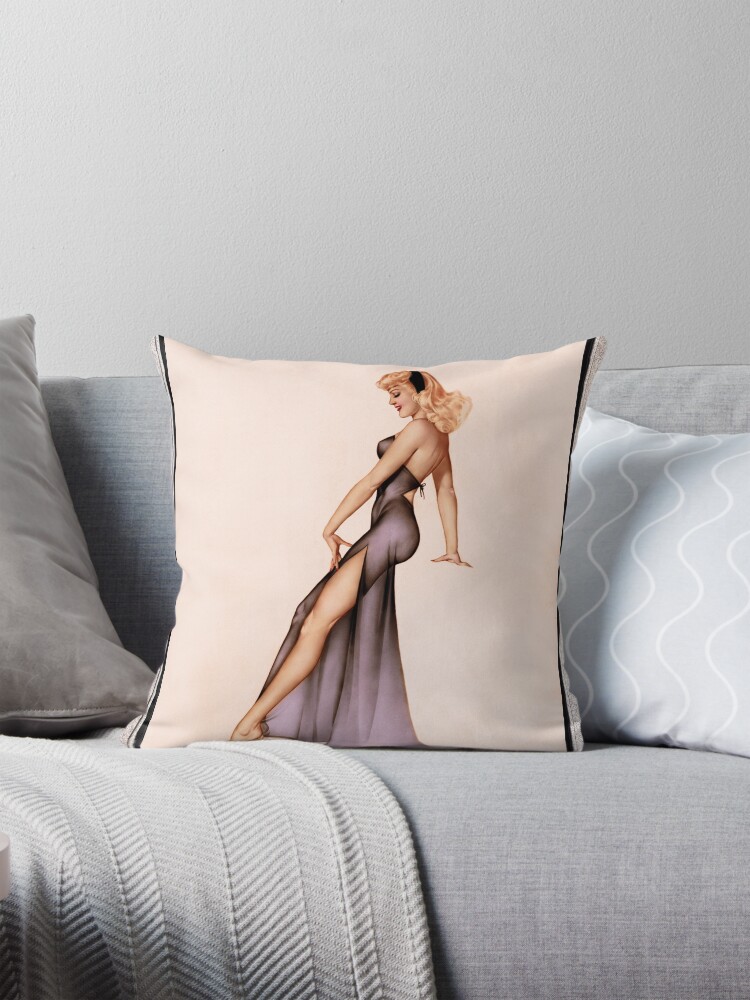
Table of Contents
U sughjettu: The Pin-Up Girl
À u core di “Esquire Calendar Girl 1946” stands a poised and elegant woman, gracefully posed with an air of self-assurance and charm. She is dressed in a slinky, form-fitting gown made from a translucent, soft fabric that drapes smoothly over her body, creating both a sensual and sophisticated visual effect.
The gown is a muted shade of lavender that shifts to a slightly darker hue at the edges, emphasizing the woman’s curvaceous silhouette as she turns slightly to the side. The fabric, though revealing, retains an aura of modesty as it is designed to highlight her graceful, feminine form rather than expose it overtly. Her delicate hand rests lightly on her waist, her fingers gently curling as though interacting with the viewer in a subtle yet intimate invitation.
Vargas’s skill in capturing the model’s curves and contours through the fluid drapery of the gown speaks to his mastery of rendering the human body in an idealized manner that is both glamorous and empowering. A faccia di a donna, with a serene expression, gazes downward, her soft, blond hair styled in a voluminous, vintage wave that falls gently over her shoulders and neck. A simple black headband ties her hairstyle together, adding a touch of retro chic that aligns with the fashion of the period.
The Setting and Composition
U fondu di “Esquire Calendar Girl 1946” is kept deliberately simple, allowing the woman herself to dominate the composition. The pastel pinkish hue of the backdrop serves to emphasize the cool tones of her gown while also evoking a sense of softness and tranquility. There is no discernible landscape or detailed setting behind the figure, which is a typical approach in Vargas’s pin-up work. The clean, neutral background ensures that the viewer’s focus remains on the subject, highlighting the figure’s curves and beauty in an uncluttered, almost ethereal space.
The composition is framed with a sense of balance and elegance. The model’s position creates a slight S-curve in her posture, with one hip slightly lifted and her weight shifted onto one leg, showcasing the artful way in which Vargas captures the human form in motion. The way the fabric of the gown flows, accentuating the curves of her body, is a testament to Vargas’s sensitivity to both the figure and the materials he depicted. This pin-up girl exudes confidence and allure, yet there is a sense of grace and poise that elevates her beyond mere sensuality.
Stile è tecnica
Alberto Vargas’s pin-up style is characterized by smooth, precise lines and an almost photographic quality to his depictions of women. His artistic technique in this piece is grounded in traditional illustration methods, where he combined oil painting skills with fine brushwork to achieve a highly detailed, polished look. The soft gradations of color used on the woman’s skin and gown give the painting a three-dimensional depth, while the smooth, flawless complexion of the model’s face and body highlights the idealized beauty that Vargas was known for. U vestitu hè bellu, almost translucent fabric is rendered with a masterful blend of light and shadow, creating a sense of movement and texture.
The painting’s lighting is soft and diffused, which works to flatter the subject and highlight her feminine curves. Vargas’s careful use of light and shadow is particularly evident in the way the gown and skin catch the light, lending the figure an almost glowing, otherworldly quality. U sottile, luminous effects of the fabric emphasize the flowing nature of the dress, which further enhances the sense of elegance and refinement.
The mood of the artwork is sensuous yet elegant, invoking the sophisticated glamour of the 1940s. Vargas’s work, though undeniably sensual, was not vulgar; piuttostu, it was imbued with a sense of grace and romanticism, capturing the feminine ideal of the era. The subject’s serene demeanor and poised posture suggest a quiet strength and confidence, presenting a woman who is in full command of her beauty.
Umore è tema
L'umore di “Esquire Calendar Girl 1946” is one of gentle allure and sophistication. The subject’s pose, combined with the soft, muted color palette, conveys a sense of quiet sensuality rather than overt sexuality. The delicate yet confident expression on her face hints at an underlying depth of character, as if she is aware of her beauty but not consumed by it. U so sguardu, directed slightly downward, conveys a sense of self-reflection and grace, in contrast to the more common overtly flirtatious expressions seen in pin-up art.
The theme of beauty and femininity is central to this work, reflecting the post-war desire for glamour and escapism. Duranti stu tempu, pin-up art became a symbol of a return to normalcy and a celebration of feminine allure after the hardships of the war. Vargas’s work was popular not only for its aesthetic qualities but also for how it embodied the optimism and rejuvenation of the period.
In “Esquire Calendar Girl 1946,” the artist encapsulates the delicate balance between sensuality and elegance, presenting a woman who is not just an object of desire but also a figure of grace and dignity. The artwork serves as a timeless representation of feminine beauty, offering viewers a glimpse into the cultural ideals of mid-century America while remaining an enduring example of Vargas’s mastery as a pin-up artist.
Esquire Calendar Girl 1946 hè una ripruduzzione di l'antichi maestri di l'arte digitale ritoccata di una maghjina di duminiu publicu.
Biografia di l'artista Da Wikipedia.org
Natu in Arequipa, Peru, era u figliolu di u notu fotografu peruvianu Max T. Vargas.[1] Alberto Vargas si trasfirìu à i Stati Uniti in 1916 dopu avè studiatu l'arte in Europa, Zurich, è Ginevra prima di a Prima Guerra Munniali. Mentre era in Auropa, ghjunse à a rivista francese La Vie Parisienne, cù una copertina di Raphael Kirchner, chì hà dettu chì era una grande influenza in u so travagliu.
A so prima carriera in New York includeu u travagliu cum'è artista per i Ziegfeld Follies è per parechji studi di Hollywood. Ziegfeld hà appiccicatu a so pittura di Olive Thomas à u teatru, è hè stata pensata cum'è una di e prime Vargas Girls. Guai’ u pezzu più famosu di u travagliu cinematograficu era per u poster di u 1933 filmu U peccatu di Nora Moran, chì mostra una Zita Johann quasi nuda in una pose di disperazione. U poster hè spessu chjamatu unu di i più grandi poster di film mai fatti.
Hè diventatu largamente nutatu in l'anni 1940 cum'è u creatore di pin-up iconichi di l'era di a seconda guerra mundiale per a rivista Esquire cunnisciuta cum'è. “Vargas Girls.” Trà 1940 è 1946 Vargas hà pruduttu 180 paintings for the magazine.[1] L'arte di u nasu di parechji aerei americani è alleati di a seconda guerra mundiale hè stata inspirata è adattata da questi pin-up Esquire., è ancu quelli di George Petty, è altri artisti.