

Merch Calendr Esquire c1946
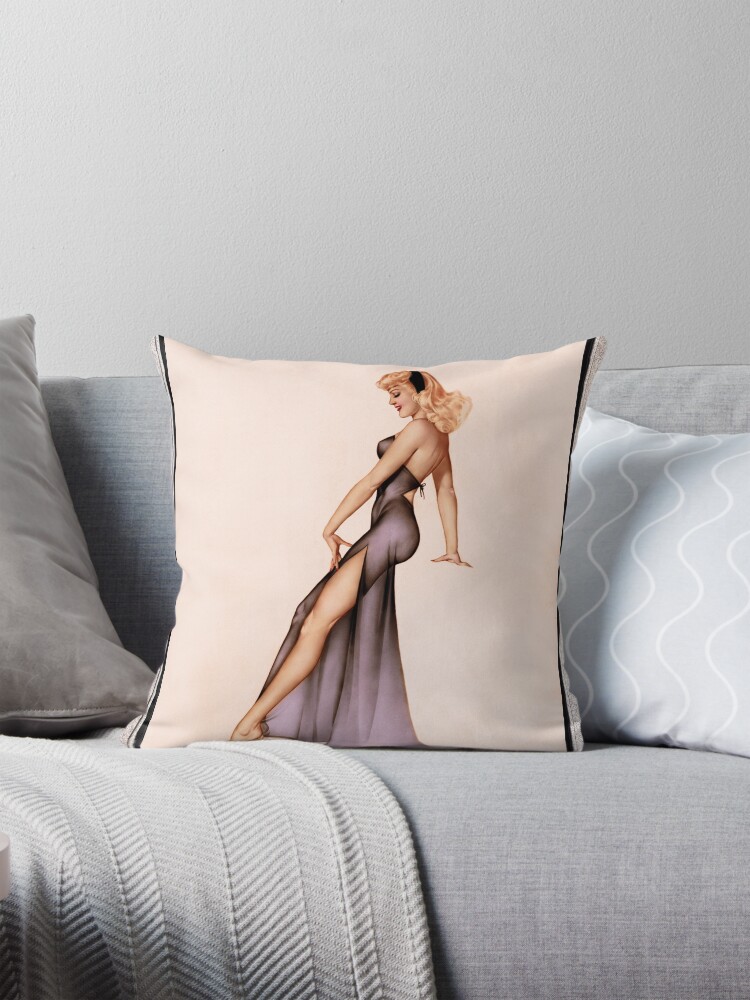
“Merch Calendr Esquire 1946” yn enghraifft drawiadol o gelf pin-yp o ganol yr 20fed ganrif a grëwyd gan yr artist enwog Periw-Americanaidd Delwedd deiliad Alberto Vargas, daeth ei weithiau yn arwyddluniol o oes aur darlunio Americanaidd. Ganwyd yn 1896 a marw i mewn 1982, Dathlwyd Vargas am ei ddarluniau cyfareddol o fenywod a oedd yn swyno ac yn ymgorffori ysbryd y cyfnod ar ôl y rhyfel.. Y darn arbennig hwn, wedi'i gynllunio ar gyfer cyfres galendr eiconig cylchgrawn Esquire, ei greu yn 1946 ac mae'n cynnwys un o ferched pin-yp mwyaf cofiadwy'r artist, cynrychioliad delfrydol o harddwch benywaidd a cnawdolrwydd sy'n parhau i fod yn symbol eiconig o'i gyfnod.
Tabl Cynnwys
Y Pwnc: Y Ferch Pin-Up
Wrth wraidd “Merch Calendr Esquire 1946” yn sefyll gwraig barod a chain, gracefully posed with an air of self-assurance and charm. She is dressed in a slinky, form-fitting gown made from a translucent, soft fabric that drapes smoothly over her body, creating both a sensual and sophisticated visual effect.
The gown is a muted shade of lavender that shifts to a slightly darker hue at the edges, emphasizing the woman’s curvaceous silhouette as she turns slightly to the side. The fabric, though revealing, retains an aura of modesty as it is designed to highlight her graceful, feminine form rather than expose it overtly. Her delicate hand rests lightly on her waist, her fingers gently curling as though interacting with the viewer in a subtle yet intimate invitation.
Vargas’s skill in capturing the model’s curves and contours through the fluid drapery of the gown speaks to his mastery of rendering the human body in an idealized manner that is both glamorous and empowering. The woman’s face, with a serene expression, gazes downward, her soft, blond hair styled in a voluminous, vintage wave that falls gently over her shoulders and neck. A simple black headband ties her hairstyle together, adding a touch of retro chic that aligns with the fashion of the period.
Y Gosodiad a'r Cyfansoddiad
Mae cefndir “Merch Calendr Esquire 1946” is kept deliberately simple, allowing the woman herself to dominate the composition. The pastel pinkish hue of the backdrop serves to emphasize the cool tones of her gown while also evoking a sense of softness and tranquility. There is no discernible landscape or detailed setting behind the figure, which is a typical approach in Vargas’s pin-up work. The clean, neutral background ensures that the viewer’s focus remains on the subject, highlighting the figure’s curves and beauty in an uncluttered, almost ethereal space.
The composition is framed with a sense of balance and elegance. The model’s position creates a slight S-curve in her posture, with one hip slightly lifted and her weight shifted onto one leg, showcasing the artful way in which Vargas captures the human form in motion. The way the fabric of the gown flows, accentuating the curves of her body, is a testament to Vargas’s sensitivity to both the figure and the materials he depicted. This pin-up girl exudes confidence and allure, yet there is a sense of grace and poise that elevates her beyond mere sensuality.
Arddull a Thechneg
Alberto Vargas’s pin-up style is characterized by smooth, precise lines and an almost photographic quality to his depictions of women. His artistic technique in this piece is grounded in traditional illustration methods, where he combined oil painting skills with fine brushwork to achieve a highly detailed, polished look. The soft gradations of color used on the woman’s skin and gown give the painting a three-dimensional depth, tra y llyfn, flawless complexion of the model’s face and body highlights the idealized beauty that Vargas was known for. The gown’s soft, almost translucent fabric is rendered with a masterful blend of light and shadow, creating a sense of movement and texture.
The painting’s lighting is soft and diffused, which works to flatter the subject and highlight her feminine curves. Vargas’s careful use of light and shadow is particularly evident in the way the gown and skin catch the light, lending the figure an almost glowing, otherworldly quality. The subtle, luminous effects of the fabric emphasize the flowing nature of the dress, which further enhances the sense of elegance and refinement.
The mood of the artwork is sensuous yet elegant, invoking the sophisticated glamour of the 1940s. Vargas’s work, though undeniably sensual, was not vulgar; yn hytrach, it was imbued with a sense of grace and romanticism, capturing the feminine ideal of the era. The subject’s serene demeanor and poised posture suggest a quiet strength and confidence, presenting a woman who is in full command of her beauty.
Naws a Thema
Mae naws “Merch Calendr Esquire 1946” is one of gentle allure and sophistication. The subject’s pose, wedi'i gyfuno â'r meddal, muted color palette, conveys a sense of quiet sensuality rather than overt sexuality. The delicate yet confident expression on her face hints at an underlying depth of character, as if she is aware of her beauty but not consumed by it. Ei syllu, directed slightly downward, conveys a sense of self-reflection and grace, in contrast to the more common overtly flirtatious expressions seen in pin-up art.
The theme of beauty and femininity is central to this work, reflecting the post-war desire for glamour and escapism. Yn ystod y cyfnod hwn, pin-up art became a symbol of a return to normalcy and a celebration of feminine allure after the hardships of the war. Vargas’s work was popular not only for its aesthetic qualities but also for how it embodied the optimism and rejuvenation of the period.
Yn “Esquire Calendar Girl 1946,” the artist encapsulates the delicate balance between sensuality and elegance, presenting a woman who is not just an object of desire but also a figure of grace and dignity. The artwork serves as a timeless representation of feminine beauty, offering viewers a glimpse into the cultural ideals of mid-century America while remaining an enduring example of Vargas’s mastery as a pin-up artist.
Merch Calendr Esquire 1946 yn atgynhyrchiad hen feistri celf ddigidol wedi'i atgynhyrchu o ddelwedd parth cyhoeddus.
Artist Bio From Wikipedia.org
Ganed yn Arequipa, Periw, roedd yn fab i'r ffotograffydd Periw nodedig Max T.. Vargas.[1] Symudodd Alberto Vargas i'r Unol Daleithiau yn 1916 ar ôl astudio celf yn Ewrop, Zurich, a Genefa cyn y Rhyfel Byd Cyntaf. Tra'r oedd yn Ewrop daeth ar y cylchgrawn Ffrengig La Vie Parisienne, gyda chlawr gan Raphael Kirchner, a ddywedodd ei fod yn ddylanwad mawr ar ei waith.
Roedd ei yrfa gynnar yn Efrog Newydd yn cynnwys gwaith fel arlunydd ar gyfer y Ziegfeld Follies ac i lawer o stiwdios Hollywood. Crogodd Ziegfeld ei lun o Olive Thomas yn y theatr, a meddyliwyd amdani fel un o'r Merched Vargas cynharaf. Vargas’ roedd y darn enwocaf o waith ffilm ar gyfer poster y 1933 ffilm The Sin of Nora Moran, sy'n dangos Zita Johann bron yn noeth mewn sefyllfa o anobaith. Yn aml, enwir y poster yn un o'r posteri ffilm mwyaf a wnaed erioed.
Daeth yn enwog yn y 1940au fel crëwr pin-ups eiconig o'r Ail Ryfel Byd ar gyfer cylchgrawn Esquire o'r enw “Merched Vargas.” Rhwng 1940 a 1946 Cynhyrchwyd Vargas 180 paentiadau ar gyfer y cylchgrawn.[1] Cafodd celf trwyn llawer o awyrennau America a'r Cynghreiriaid o'r Ail Ryfel Byd ei hysbrydoli a'i haddasu o'r pin-ups Esquire hyn, yn ogystal â rhai George Petty, ac artistiaid eraill.