

Evening Glamour
Amerikkalainen taiteilija Walt Otto Evening Glamour (1895 – 1963)
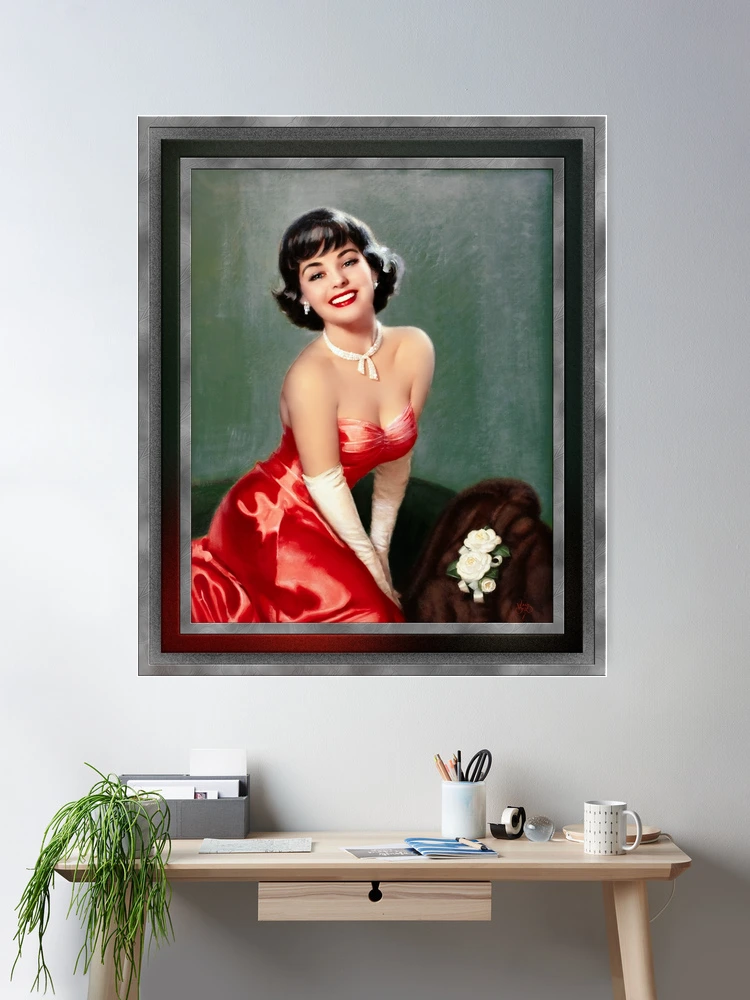
“Evening Glamour” is a captivating portrait painted by the American artist Walt Otto. Otto (1895 – 1963), known for his remarkable skill in capturing the elegance of the 20th century, focuses here on a glamorous woman who epitomizes the beauty and sophistication of the era. The composition reflects Otto’s deft attention to detail, his mastery in portraying both the grace and the opulence of post-war American society, as seen in the luxurious textures and the graceful posture of the subject. Tämän työn kautta, Otto illustrates the golden age of American glamour, blending elements of fashion, kauneus, and refined luxury that were popular in the 1950s.
Sisällysluettelo
Pääaihe: The Glamorous Woman
Koostumuksen ytimessä, the viewer’s attention is immediately drawn to the beautiful woman dressed in an exquisite red evening gown. Her attire is meticulously rendered, showcasing Otto’s ability to depict fabric with life-like detail. Puku, made of satin or a similarly luxurious material, gleams under the soft lighting of the scene, highlighting the subtle folds and curves of the fabric. The rich red color of the dress serves as a striking contrast to the woman’s pale skin, creating a sense of depth and dimension in the portrait.
Her posture is elegant and poised, with a gentle curve to her back as she leans slightly forward, resting her hands on her knees. Hänen ilmaisunsa on rauhallinen, yet engaging, with a warm smile that radiates confidence and allure. The subject’s dark, neatly styled hair complements her soft features, which are delicately accentuated by the luminous skin tones and the glint of jewelry adorning her. She wears a pearl necklace around her neck, a classic symbol of luxury and refinement, along with matching earrings that add to her sophisticated air. The simplicity of her hairstyle and the elegance of her accessories underscore her high-class persona, inviting the viewer into a world of glamour and exclusivity.
Setting and Mood
The background of the portrait is a soft gradient of green hues that envelop the woman, drawing focus to her without overwhelming the composition. The greenish backdrop suggests a calm, subdued atmosphere, which serves to highlight the rich color of the gown and the subject’s radiant features. Oikealle, an armchair is partially visible, upholstered in a dark fabric that complements the colors in the woman’s dress. The armchair, while subtle, adds an element of luxury to the scene, enhancing the overall theme of wealth and refinement.
There is a sense of intimacy within the setting, as if the viewer is catching a glimpse of a private moment. Pehmeä valaistus, coupled with the subject’s relaxed yet poised demeanor, creates a mood of quiet sophistication. The viewer is transported into a world of 1950s glamour, where every detail—from the subject’s attire to her pose—is carefully crafted to reflect the social and cultural ideals of beauty and elegance of the time.
Esineet ja symboliikka
The artwork features several notable objects that enhance the thematic content of the piece. Perhaps the most striking is the white rose resting gently on the armchair, near the subject’s side. The rose is symbolic of purity, kauneus, ja ajatonta eleganssia, aligning with the subject’s glamorous persona. Its delicate presence in the artwork enhances the feeling of sophistication, acting as a subtle yet powerful complement to the woman’s attire and expression.
The pearl necklace that the woman wears, another significant object in the composition, speaks to wealth and high society. Pearls, often associated with refinement, armo, and exclusivity, further elevate the subject’s status. These elements, alongside the opulent gown and accessories, reinforce the idea of the woman as a representation of idealized feminine beauty, eleganssi, and grace in the post-war era.
Taiteellinen tyyli ja tekniikka
Otto’s technique in “Evening Glamour” showcases his ability to blend realism with a touch of idealization. The fine detail in the depiction of the gown, korut, and the subject’s features demonstrates his skill as a portrait artist. His attention to the interplay of light and shadow allows the fabrics to come alive, with the red satin of the gown shimmering against the soft backdrop. The use of light highlights the subject’s face, accentuating her radiant smile and her sparkling eyes, which contribute to the overall sense of warmth and charm that emanates from the portrait.
The brushwork in the piece is smooth and polished, allowing for a highly finished look that is characteristic of the glamour portraits of the time. While the artist does not shy away from realistic details, there is an undeniable sense of stylization that is typical of mid-century portraiture. The carefully composed color palette, soft lighting, and the subject’s graceful demeanor all work together to evoke a sense of timeless elegance that transcends the specific moment in time.
Johtopäätös: A Moment of Timeless Elegance
“Evening Glamour” is not just a portrait of a beautiful woman; it is a statement of the elegance and sophistication of the post-war era. Through the interplay of light, väri-, ja muoto, Walt Otto captures the essence of the time, presenting an idealized vision of femininity and luxury. The combination of opulent attire, refined accessories, and the subject’s serene, yet captivating expression places the viewer in the heart of a glamorous world, evoking feelings of admiration and longing for the golden age of American high society.
Tämä on retusoitu digitaalisen taiteen vanhojen mestareiden kopio julkisesta kuvasta.
Taiteilijabio
Walt Otto oli amerikkalainen pin-up-maalari, jonka ura ulottui 1920-luvulle, 1930s ja 1940-luvulla; erikoistunut kauniisiin lumoaviin nuoriin naisiin maaseudun teemaympäristöissä.
Oton työt olivat esillä kalentereissa, lehtien kansissa, kuten The Saturday Evening Post ja Women’s Weekly sekä mainokset yhdysvaltalaisten suurten tuotemerkkien, kuten Alka Seltzerin, mainostauluilla, Anheuser-Bush, Kellloggs, Shell öljy, Schilitz Beer ja monet muut.
Otton kiinnostus taiteeseen alkoi hänen ollessaan nuori ja ura sai alkunsa, kun hän kävi taiteen kirjekurssin, joka johti lyhyeen työskentelyyn studiokuvaajana, kun hän avasi oman myymälänsä.
Sisään 1916 Otto liittyi armeijan ilmavoimiin ensimmäisen maailmansodan aikana, ja sodan jälkeen, muutti Chicagoon; saada työpaikka Edwards and Deutsch Lithography Companylle, ja iltaisin Chicagon taideakatemiassa ja Chicagon taideinstituutissa.
Toisen maailmansodan syttyessä hän värväytyi Yhdysvaltain ilmavoimiin ja käytti valokuvaustaitojaan ilmakuvaajana..